


Automatic Transformer Calibration: The Standard for Power Grid Reliability
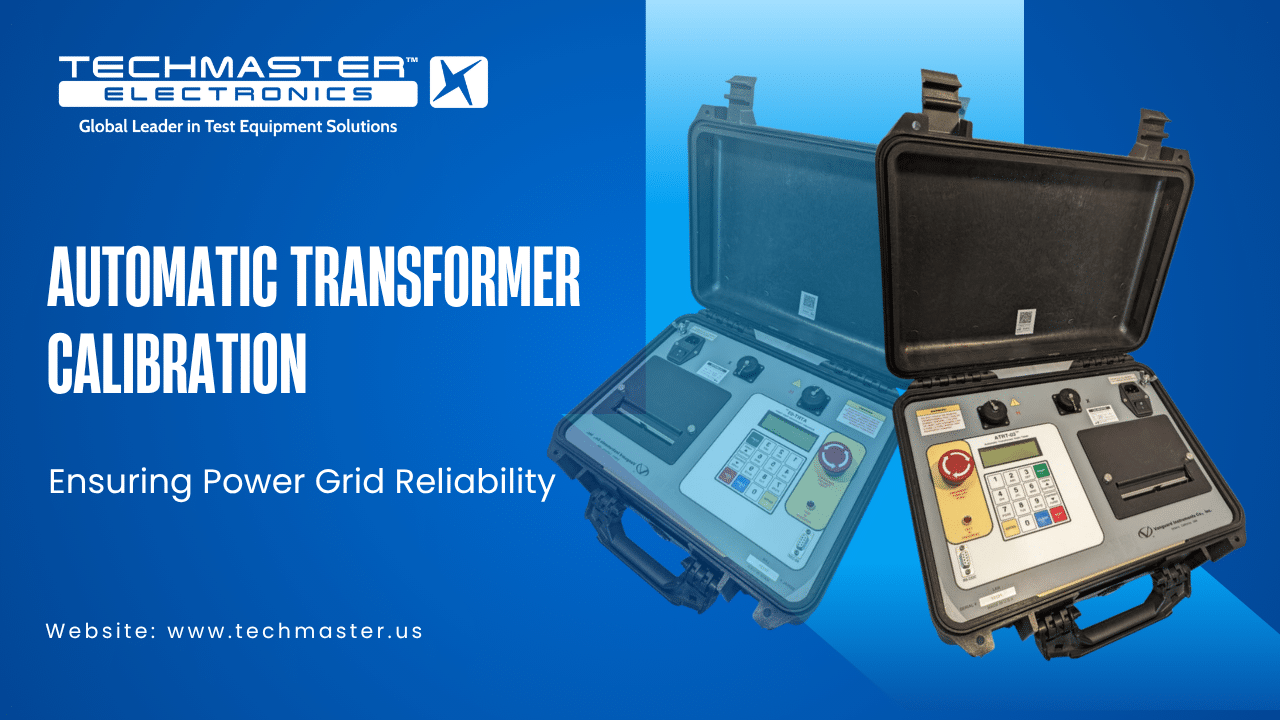
In power transmission and distribution systems, transformers play a vital role in maintaining stability and ensuring efficient energy flow. Often considered the “heart” of a substation, their performance directly affects overall system reliability. To keep this critical component operating accurately, engineers rely on precise measurements such as turns ratio, phase displacement, and excitation current. Even small deviations can indicate potential faults or long-term degradation. Automatic transformer testers provide fast and reliable diagnostics, but their accuracy must be ensured. That is why Automatic Transformer Calibration is a mandatory procedure—helping maintain measurement integrity, reduce risks, and protect high-value grid assets.
1. Operating Principle of Automatic Transformer Testers
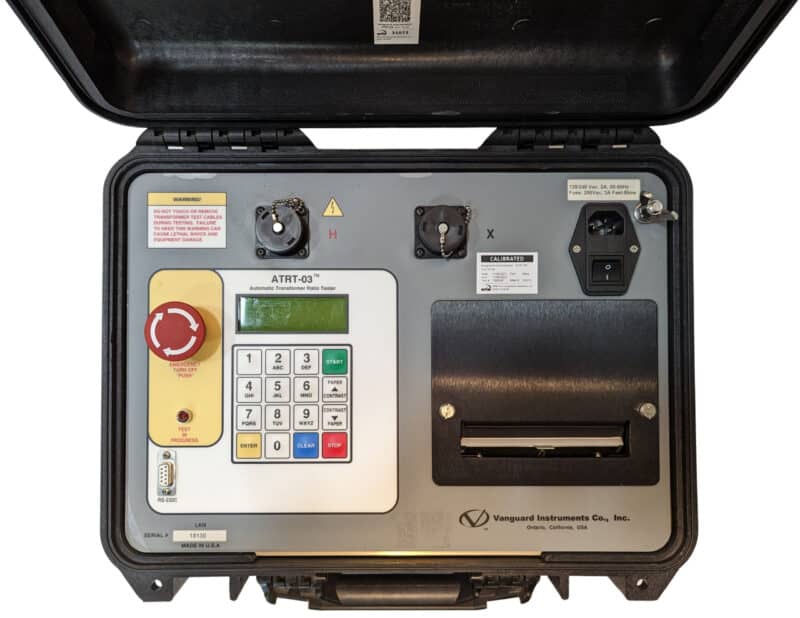
Automatic testers utilize digital bridge methods to determine the turns ratio by applying precise AC voltage to the primary winding and analyzing the induced response at the secondary winding.
Modern automatic transformer testers operate based on digital bridge measurement methods. Instead of manual balancing, the device automatically applies a precise AC voltage to the high-voltage (HV) winding and measures the induced voltage on the low-voltage (LV) side.
1.1. Turns Ratio Verification
The turns ratio is calculated using the formula $V_p / V_s$. An uncalibrated device may fail to identify shorted turns within the windings. Even a minor deviation exceeding the 0.5% threshold defined by IEEE standards significantly increases the risk of transformer overheating or explosive failure.
1.2. Phase Displacement Analysis
Automatic testers determine the exact angular displacement between the primary and secondary currents. This is critical when verifying vector groups (such as Dyn11 or Ynd1). Calibration ensures that the device’s internal logic correctly identifies even the smallest phase shifts measured in microseconds ($\mu s$).
1.3. Excitation Current Monitoring
The excitation current reveals the condition of the magnetic circuit. Without accurate measurement, engineers might overlook signs of core displacement or interlaminar shorts (shorts between the steel laminations of the core).
2. Practical Industrial Applications
2.1. Commissioning (Acceptance Testing)
At the commissioning stage, an automatic transformer tester is used to verify that a newly manufactured or installed transformer meets its design specifications. First, key parameters such as turns ratio, phase displacement, and excitation current are measured. As a result, engineers can confirm accuracy before the transformer is energized. This step is important because it ensures a safe start-up and helps prevent hidden defects from entering the power system.
2.2. Preventive Maintenance
During routine maintenance, the tester helps detect early signs of winding degradation. For example, changes in measurement results over time may indicate insulation aging, thermal stress, or overloading. Therefore, engineers can take action early before problems become serious. In the long run, this approach helps extend equipment life and improves overall system reliability.
2.3. Post-Fault Diagnosis
After abnormal events such as lightning strikes or short-circuits, the tester becomes a key diagnostic tool. By comparing current data with previous results, engineers can assess the internal condition of the transformer. As a result, they can decide whether the transformer can continue operating or needs repair. This not only reduces downtime but also helps prevent further risks to the power grid.
3. The Vital Role of Automatic Transformer Calibration
Error Analysis Over Time
Internal electronic components “drift” naturally. Professional calibration is the only way to maintain measurement certainty.
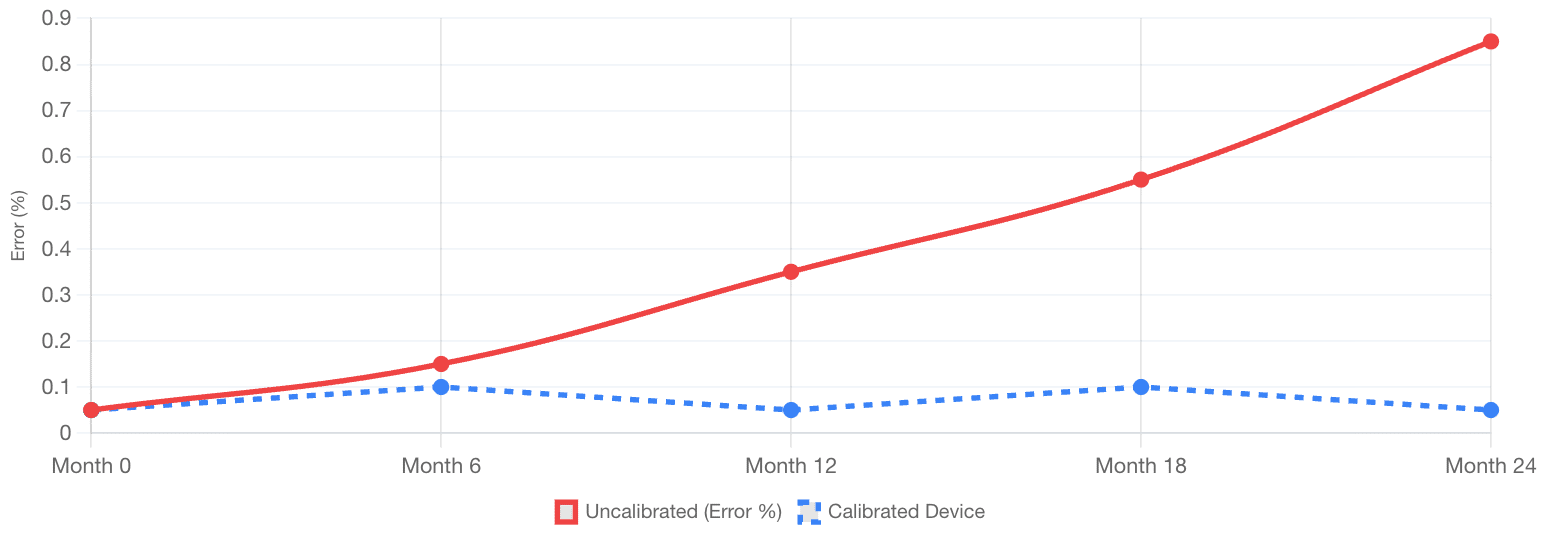
*In reference to IEEE C57.12.90 allowable error limits.
Why is Automatic Transformer Calibration indispensable? Using an uncalibrated high-tech tester is like using a warped ruler to measure the straightness of a wall. No matter how advanced the device is, if the internal electronic components have “drifted,” the results become meaningless.
3.1. Eliminating Electronic Component Drift
Internal voltage sensors and Analog-to-Digital (A/D) converters change their characteristics over time due to ambient temperature fluctuations and component aging. Annual calibration adjusts these deviations back to the manufacturer’s original specifications.
3.2. Ensuring Metrological Traceability
In the event of a safety audit or an insurance claim following a grid failure, measurement results only hold legal and technical weight if the equipment was calibrated by an ISO/IEC 17025 accredited laboratory. This process establishes an unbroken chain of comparison back to national and international measurement standards.
3.3. Compliance with IEEE & IEC Standards
International standards such as IEEE C57.12.90 and IEC 60076 demand extreme precision in turns ratio testing. Without documented Automatic Transformer Calibration, a facility cannot prove compliance with these rigorous global regulations.
4. The Techmaster Calibration Advantage
The Techmaster Workflow
We strictly adhere to ISO/IEC 17025 quality management systems.
01
Physical Inspection
Cleaning clamps and checking internal battery/power stability.
02
Standard Comparison
Direct cross-reference with national trace-grade simulators.
03
Linearity Check
Testing circuit stability at multiple voltage and ratio levels.
04
Certification
Issuing legal reports for grid commissioning and safety compliance.
At Techmaster, we follow a strict, multi-step protocol to ensure absolute reliability:
-
Functional Inspection: Verifying that all clamps and connectors are free from oxidation and that the unit functions stably.
-
Comparison with TTR Standards: Using high-stability reference standards with an accuracy ratio significantly higher than the Unit Under Test (UUT).
-
Multi-Point Verification: Testing across a wide range of ratios (from 0.8 to over 10,000) to ensure linearity across the entire scale.
-
Uncertainty Analysis: Providing a detailed report on the Uncertainty of Measurement, giving clients the confidence to make critical asset management decisions.
Conclusion
“Don’t let a small error lead to a massive failure. Automatic Transformer Calibration is the key to protecting the heart of your power system.”
TECHMASTER ELECTRONICS
Leading measurement and calibration solutions for the power and heavy industry sectors.
