


Digital Count Totalizers: Optimizing Production Efficiency and the Necessity of Digital Count Totalizer Calibration
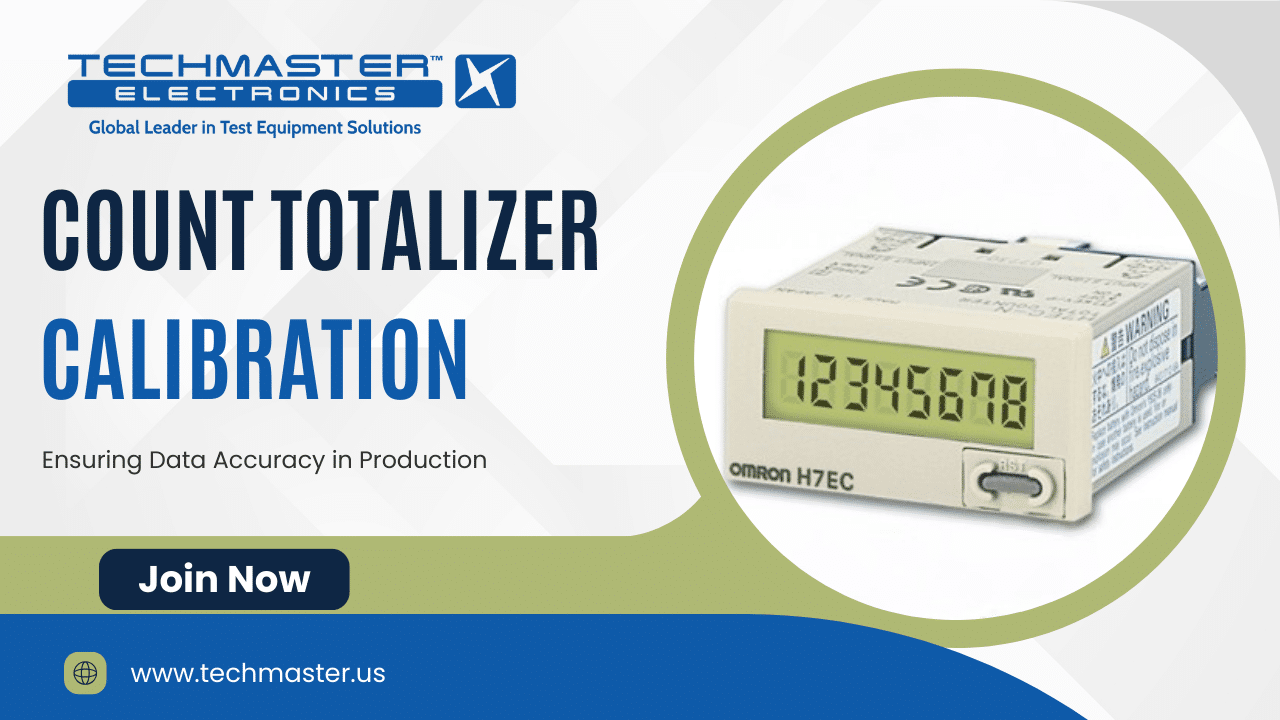
In modern industrial automation systems, accurately tracking product quantities, operating cycles, or machine run-time is a cornerstone of performance management. A digital Count Totalizer acts as the system’s “digital diary,” recording every event via electrical signal pulses. However, if this diary records inaccurate data, entire production reports and maintenance schedules become unreliable. Consequently, the Count Totalizer Calibration process is a mandatory solution for maintaining data integrity and operational transparency.
1. How Does a Digital Count Totalizer Operate?
What does it do?
Imagine a tireless assistant that records every product passing by, every machine hour,
or every liter of fluid flowing through your system.
That’s exactly what a Counter & Totalizer does.
- Receives pulse signals from sensors
- Accumulates counts with high accuracy
- Displays totalized values in real time

Before exploring its applications, one must understand how this device collects data. A count totalizer operates by receiving input signals, such as voltage pulses, dry contacts, or signals from proximity sensors.
Initially, the device’s internal microprocessor detects a valid incoming pulse. Subsequently, it adds a single unit to the accumulated total and displays the result on an LCD or LED screen. However, sensitive electronic components and internal quartz oscillators are susceptible to temperature fluctuations and electromagnetic interference (EMI). Without regular Count Totalizer Calibration, the device may suffer from “over-counting” due to noise or “under-counting” due to failing to detect weak pulses.
2. Practical Industrial Applications of Count Totalizers
Packaging
Maintenance
Flow Monitoring
Access Control
The count totalizer is a versatile tool utilized in everything from food processing lines to wastewater treatment plants.
2.1. Throughput Management on Packaging Lines
In the consumer goods industry, manufacturers install count totalizers to monitor the number of products passing along a conveyor belt. This information not only assists in inventory management but also serves as the basis for evaluating the productivity of each shift. Accurate counting ensures that businesses avoid product shortages during shipping or waste caused by overproduction.
2.2. Run-Time Tracking and Preventive Maintenance
Beyond counting physical items, engineers often configure these devices as “Hour Meters” to log total machine operating time. Based on these figures, maintenance teams know exactly when to change oil, replace bearings, or perform routine inspections. A minor error in time counting can lead to late maintenance, resulting in severe equipment failure and unplanned downtime.
2.3. Pulse-Based Flow Measurement
In fluid management systems, count totalizers frequently pair with flow sensors. As liquid passes through the system, the sensor generates a specific number of pulses per liter. The totalizer accumulates these pulses to display the total volume of water or chemicals used. This precision is vital for maintaining correct chemical ratios in mixing processes.
2.4. Security and Traffic Monitoring
Furthermore, organizations apply totalizers to count people entering a facility or vehicles passing through a checkpoint. This data allows managers to analyze traffic patterns and make informed decisions regarding personnel allocation and security protocols.
3. Why is Count Totalizer Calibration Crucial?
Impact of Contact Bounce (Noise)
Comparing raw uncalibrated data vs. filtered signal data. Uncalibrated sensors often double-count due to mechanical vibration.

Many users mistakenly assume that digital devices are immune to error. In reality, periodic Count Totalizer Calibration is essential for the following reasons:
-
Eliminating “Contact Bounce”: Mechanical switches often generate a rapid string of false pulses when they close. If a meter is not calibrated to filter these correctly, it will produce wildly inaccurate totals.
-
Ensuring Oscillator Accuracy: For devices tracking time, the drift of the internal quartz oscillator due to heat can cause the clock to run faster or slower than reality. Calibration adjusts this drift back to a negligible level.
-
Compliance with Quality Standards: To achieve ISO 9001 certification or other strict manufacturing standards, every measurement device affecting product quality must hold a valid calibration certificate.
-
Operational Cost Optimization: When counts are precise, businesses can optimize raw materials and labor, significantly reducing errors in asset auditing and inventory control.
Timer Stability (Quartz Drift)
Cumulative drift in totalized hours due to thermal effects on internal oscillators over a 12-month period.

4. The Professional Laboratory Calibration Procedure
Visual inspection & button response check
Apply certified reference pulse signals
Test at low and high counting speeds
Compare results and adjust if required
Seal, label, and issue calibration certificate
Metrology experts perform Count Totalizer Calibration using standardized equipment through a series of rigorous steps:
-
Functional Inspection: First, the technician checks the display clarity and the responsiveness of the reset buttons.
-
Utilizing a Pulse Generator: Technicians use a high-precision signal generator to send a specific number of pulses (e.g., exactly 1,000 or 10,000 pulses) into the totalizer.
-
Multi-Frequency Testing: Calibration involves testing both quantity and speed. The technician tests the device at low frequencies (to check contact handling) and high frequencies (to verify the microprocessor’s response time).
-
Comparison and Adjustment: The lab compares the totalizer’s reading against the actual pulses emitted by the generator. If the error exceeds the manufacturer’s tolerance, the technician realigns the device.
-
Certification: Finally, the lab issues a formal Calibration Certificate and applies a calibration sticker to the device.
5. Maintenance Tips to Sustain Accuracy After Calibration
To preserve the effectiveness of your Count Totalizer Calibration, users should follow these best practices:
-
EMI Shielding: Avoid routing signal wires near high-power cables or variable frequency drives (VFDs) to prevent unwanted noise pulses.
-
Battery Maintenance: For devices with internal batteries, replace them periodically to prevent the loss of accumulated totals during power outages.
-
Environmental Protection: Ensure the device is installed in a well-sealed electrical cabinet to prevent dust and moisture from entering the circuitry.
Conclusion
The digital count totalizer is a small component with a massive impact on the accuracy of an entire production management system. Investing in regular Digital Count Totalizer Calibration does more than protect the hardware; it safeguards a company’s reputation and profitability. Ensure that every number displayed on your screen represents the absolute truth through professional calibration services.
