


Industrial calibration plays a crucial role in ensuring measurement accuracy, process consistency, and regulatory compliance. Among the wide range of calibration tools, precision calibrators, process calibrators, and documenting calibrators are the three most commonly used categories. Each serves a unique purpose and is designed for different levels of complexity in industrial environments.
This guide breaks down how these calibrators work, their key differences, and how to choose the right one for your application.

1. What Is an Industrial Calibrator?
An industrial calibrator is a device used to test, verify, and adjust instruments such as pressure sensors, temperature transmitters, flow meters, controllers, and other measurement equipment.
Its main purpose is to ensure that the equipment performs within defined accuracy standards.
Industrial calibrators vary in capability — from simple output generators to advanced devices that automate documentation and compliance.
2. Precision Calibrators: High Accuracy for Lab & Bench Work
What They Are
Precision calibrators (or “reference calibrators”) are designed for high-accuracy, low-tolerance measurements, often used in laboratory settings or controlled environments.

Key Features
-
Extremely high accuracy and stability
-
Ideal for verifying other calibrators or standards
-
Used for calibration labs, metrology centers, R&D, and QA testing
Best For
-
Reference-level calibration
-
Tight-tolerance measurements
-
Environments requiring minimal uncertainty
If accuracy is the priority, precision calibrators are the top choice.
3. Process Calibrators: Versatile Tools for Field Technicians
What They Are
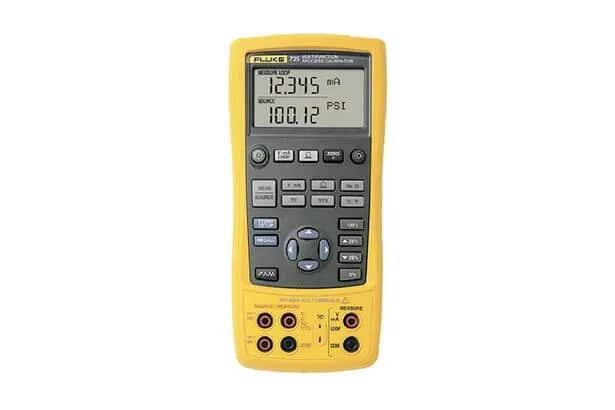
Process calibrators are multifunction devices used in industrial plants, production lines, and field maintenance. They can generate, simulate, and measure typical process signals such as pressure, temperature, voltage, current, and frequency.
Key Features
-
Portable and rugged for field use
-
Measures & sources common process signals (ex: 4–20 mA, RTD, thermocouple)
-
Supports troubleshooting and routine maintenance
Best For
-
On-site calibration
-
Loop checks
-
Daily maintenance work
-
Multi-signal measurement tasks
They offer flexibility, making them the go-to choice for technicians working directly in the plant.
4. Documenting Calibrators: Automation & Compliance
What They Are
Documenting calibrators are advanced process calibrators equipped with automated documentation, enabling users to store calibration results, generate reports, and comply with standards like ISO 17025, GMP, and FDA 21 CFR Part 11.

Key Features
-
Automated test procedures
-
Electronic data storage & report generation
-
Integration with calibration management software
-
Reduces human error and paperwork
Best For
-
Regulated industries (pharma, biotech, food, energy)
-
Plants with strict documentation requirements
-
Teams needing traceability and audit readiness
These are ideal when accuracy AND compliance matter simultaneously.
5. Side-by-Side Comparison
| Feature / Purpose | Precision Calibrator | Process Calibrator | Documenting Calibrator |
|---|---|---|---|
| Accuracy | ⭐⭐⭐⭐⭐ | ⭐⭐⭐ | ⭐⭐⭐⭐ |
| Primary Use | Lab, QA, metrology | Field work | Regulated industries |
| Documentation | Manual | Basic | Automated, digital |
| Portability | Low | High | Medium-high |
| Multi-Function Signals | Limited | Broad | Broad, with automation |
| Cost | Medium–High | Medium | High |
6. How to Choose the Right Calibrator
When selecting a calibrator, consider:
✔ Accuracy Requirements
If you need tight tolerances → choose precision calibrator.
✔ Work Environment
For field work and versatility → go with process calibrator.
✔ Compliance Needs
If audits and traceability matter → choose documenting calibrator.
✔ Supported Signals
Match the calibrator with the instruments you maintain (pressure, temperature, electrical, etc.).
✔ Budget vs. Functionality
Documenting calibrators cost more but save time in the long run.
Conclusion
Precision, process, and documenting calibrators each serve a crucial role in industrial calibration.
By understanding their strengths and differences, technicians and plant engineers can choose the right tool to maintain accuracy, ensure safety, and optimize plant reliability.
