


TRMS Clamp Meter Calibration: Key Applications and the Vital Role of Precision
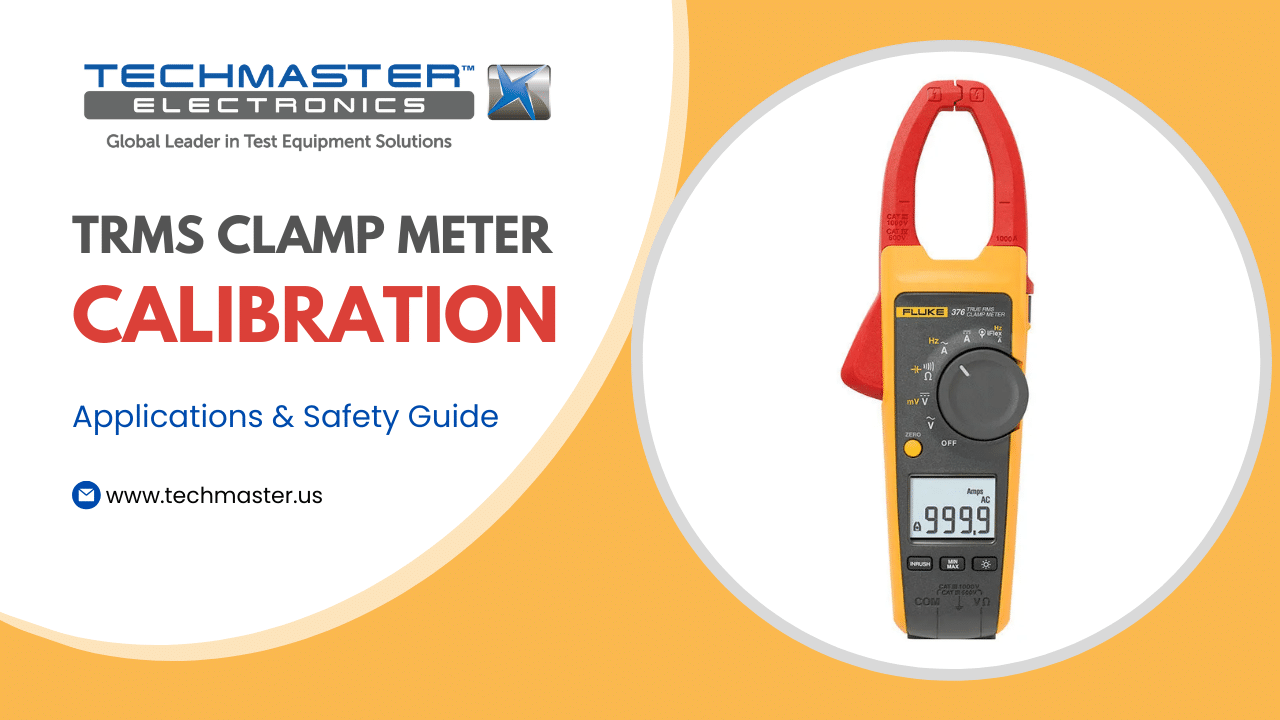
In the complex landscape of modern electrical engineering, precision serves as the primary safeguard against system failure. As industries transition toward non-linear loads, such as variable frequency drives (VFDs) and sophisticated power supplies, the demand for accurate measurement grows exponentially. Consequently, engineers rely on True Root Mean Square (TRMS) clamp meters to navigate these challenges. However, the reliability of these tools depends entirely on professional TRMS CLAMP METER Calibration. This article explores why this technology is essential and how calibration ensures operational safety.
1. Understanding True RMS (TRMS) Technology

Modern loads (VFDs, UPS, SMPS) draw non-sinusoidal current. Average-responding meters may produce errors up to 40%.

To begin with, we must distinguish between standard average-responding meters and TRMS technology. In a traditional electrical environment, power follows a perfect sine wave. However, modern electronic devices often distort these waves, creating “dirty” power or harmonics.
If a technician uses a basic average-responding meter on a distorted wave, the device will likely provide a reading that is up to 40% inaccurate. In contrast, a TRMS clamp meter utilizes complex mathematical algorithms to calculate the actual effective value of the current, regardless of the wave shape. Because TRMS meters handle these distortions accurately, they have become the industry standard. Nevertheless, the internal sensors of these advanced tools can drift over time. Therefore, TRMS CLAMP METER Calibration is the only way to verify that your readings remain truthful and reliable.
2. Real-World Industrial Applications
VFD
Accurate motor current measurement under PWM switching.
HVAC
Inrush current monitoring for compressors.
SOLAR
Reliable inverter current measurement.
DATA CENTER
Neutral & phase balance verification.
TRMS clamp meters act as a diagnostic powerhouse across various high-stakes industries. By utilizing these tools, specialists can identify hidden issues before they escalate into costly shutdowns.
2.1. Monitoring Variable Frequency Drives (VFDs)
Nowadays, most manufacturing plants use VFDs to control motor speeds. These drives output non-sinusoidal voltage waves that carry significant high-frequency noise. Maintenance technicians use TRMS clamp meters to measure the output current accurately. Without the precision of a calibrated TRMS tool, engineers might misconfigure motor parameters, which significantly increases the risk of motor burnout.
2.2. HVAC and Compressor Maintenance
Within large commercial buildings, HVAC systems consume a massive portion of the total energy. Specialists use clamp meters to monitor “inrush current” during compressor startup. By tracking these specific values, they can detect early signs of mechanical wear or electrical overload. Furthermore, accurate readings allow managers to optimize energy consumption and reduce utility costs.
2.3. Renewable Energy and Solar Power Systems
Additionally, solar power systems utilize inverters to convert DC power into AC power. This conversion process naturally introduces harmonics into the electrical stream. Consequently, technicians rely on TRMS clamp meters to measure the efficiency of energy conversion. These accurate measurements ensure that the solar array operates at peak performance.
2.4. Data Center Power Management
Inside modern data centers, thousands of switching power supplies create heavy harmonic loads on neutral conductors. Technicians use TRMS clamp meters to check for phase balance and prevent the neutral wire from overheating. In this high-density environment, even a small measurement error could lead to a catastrophic power outage.
3. Why Prioritize TRMS CLAMP METER Calibration?
No matter how advanced an instrument is, its internal electronic components will eventually age and lose sensitivity. Regular TRMS CLAMP METER Calibration provides several indispensable benefits:
3.1. Guaranteeing Personnel Safety:
Clamp meters often operate in high-voltage environments (CAT III or CAT IV). If a meter provides a false low reading, a technician might mistakenly believe a circuit is safe to touch. Therefore, calibration directly prevents arc flash incidents and electrocution.
3.2. Optimizing System Performance:
When a device provides 100% accurate data, businesses can operate their systems at the highest possible load without fear of hidden overloads.
3.3. Ensuring Regulatory Compliance:
International standards such as ISO 9001 require companies to maintain documented evidence of equipment calibration. This ensures that all production data remains traceable and legally defensible.
3.4. Extending Equipment Life:
The calibration process also serves as a comprehensive health check. A calibration specialist can identify physical wear on the jaw hinges or the degradation of the Hall-effect sensor before the tool fails completely.
4. The Professional Calibration Procedure
Performing a TRMS CLAMP METER Calibration requires specialized equipment and a strictly controlled environment. The process typically follows these rigorous steps:
Step 1: Physical Inspection and Cleaning
Initially, the technician cleans the contact surfaces of the clamp jaws. Even a microscopic layer of dust or rust on the iron core of the jaws can create a magnetic gap, which leads to significant measurement errors.
Step 2: Reference Standard Alignment
Next, the specialist utilizes a multi-product calibrator and a high-accuracy current coil. This setup allows the technician to simulate currents ranging from a few amperes to several thousand amperes. Subsequently, they align the clamp meter within the magnetic field of the coil to begin the test.
Step 3: Multi-Point Testing
The technician tests the meter at multiple points across its entire range. Specifically, for TRMS devices, the expert may apply non-sinusoidal waves to test the meter’s ability to handle harmonics. They also verify secondary functions, such as voltage, resistance, and frequency accuracy.
Step 4: Data Recording and Certification
Finally, the expert compares the meter’s readings against the allowable tolerance levels set by the manufacturer. If the device passes the test, the laboratory issues a formal Calibration Certificate and applies a verification sticker to the unit.
5. Essential Maintenance Tips for Users
Beyond scheduled calibration, your daily handling of the tool determines its long-term accuracy. To maintain peak performance, consider the following best practices:
-
Keep the Jaws Pristine: Always wipe the mating surfaces of the jaws with a clean, lint-free cloth. Any debris that prevents the jaws from closing perfectly will result in inaccurate current readings.
-
Monitor Battery Health: Low battery voltage is a frequent cause of erratic readings or display flickering. Always replace batteries as soon as the low-power indicator appears.
-
Avoid Strong Magnetic Fields: Do not store your clamp meter near large transformers or permanent magnets. Such exposure can magnetize the jaw’s iron core, causing a permanent “offset” in DC measurements.
-
Use Protective Cases: Always store the device in a padded shockproof bag. Protecting the sensitive Hall-effect sensors from physical impact ensures the device stays within its calibration limits longer.
Conclusion
In summary, the TRMS clamp meter remains an essential tool for maintaining the stability of modern electrical grids. However, the value of the tool depends entirely on its precision. By committing to regular TRMS CLAMP METER Calibration, organizations protect their infrastructure, ensure the safety of their workers, and maintain high operational standards. Remember, in the electrical industry, precision is not just a luxury—it is the foundation of safety.
