


Pipe Clamp Calibration: The Essential Guide to Precision Temperature Measurement in Modern Industry

In the high-stakes world of HVACR (Heating, Ventilation, Air Conditioning, and Refrigeration) and industrial process management, temperature is more than just a number—it is a diagnostic heartbeat. To capture this heartbeat accurately, technicians rely on the pipe clamp temperature probe. While these tools are designed for rugged use, their accuracy is not permanent. To ensure your systems run at peak efficiency, Pipe Clamp Calibration must be a cornerstone of your maintenance strategy.
1. Understanding the Mechanics of a Pipe Clamp Probe
What is a Pipe Temperature Clamp?
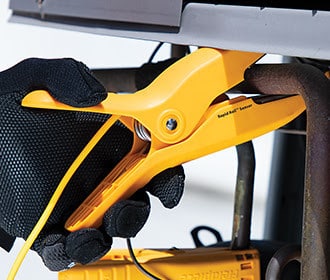
A pipe clamp typically integrates a Type K thermocouple inside a spring-loaded clamp. It ensures stable surface contact while minimizing environmental heat loss errors.
A pipe clamp probe is a specialized sensor, typically utilizing a Type K thermocouple or a thermistor, integrated into a spring-loaded jaw. Unlike standard immersion probes that measure the temperature of a fluid from the inside, a pipe clamp measures the surface temperature of the conduit.
The brilliance of the design lies in its convenience. It allows for “hands-free” monitoring of refrigerant lines, copper pipes, or stainless steel tubes without the need for thermal paste or messy tape. However, because it measures from the outside, the physics of heat transfer are working against you. Ambient air, wind, and even the grip strength of the clamp can influence the reading. This makes the initial and periodic Pipe Clamp Calibration vital to ensure the sensor is “seeing” the pipe temperature, not the surrounding environment.
2. Critical Applications: Where Seconds and Degrees Count
HVAC & Refrigeration
Measures Superheat and Subcooling. A 1°C error may damage compressors.
Boilers & Hot Water
Monitor steam traps and return lines to optimize combustion efficiency.
Chemical & Food Processing
Monitor pipe surface temperature without cutting pipelines.
Energy Efficiency
Accurate readings ensure proper system load and reduce power waste.
In many industrial scenarios, a deviation of just 1°C or 2°C can trigger a chain reaction of system failures. Here is where the pipe clamp proves its worth:
2.1. HVACR Diagnostics: Superheat and Subcooling
For any refrigeration technician, the terms “Superheat” and “Subcooling” are daily bread. To calculate these, you need the pressure of the refrigerant and the exact temperature of the pipe. If your pipe clamp is uncalibrated and reads even slightly high, you might believe the system is overcharged when it is actually balanced. This leads to technicians “fixing” problems that don’t exist, potentially damaging the compressor.
2.2. Boiler and Hydronic System Balancing
In large-scale commercial heating, balancing the flow of hot water through various zones is essential for energy efficiency. Pipe clamps allow for rapid “delta-T” (temperature difference) checks across heat exchangers. If the sensors are not aligned through professional Pipe Clamp Calibration, the entire building’s climate control could become erratic and expensive to operate.
2.3. Chemical and Pharmaceutical Processing
Many chemical reactions are exothermic or endothermic, requiring precise temperature monitoring of the transfer lines. Pipe clamps offer a non-invasive way to monitor these flows without risking contamination or leaks that come with thermowells.
3. The Silent Drift: Why Calibration is Mandatory
Inaccuracy due to Weak Spring (Simulation)

Weak clamping leads to significant lag and lower-than-actual readings.
A common misconception in the field is that digital probes are “set it and forget it” tools. In reality, all sensors experience “drift.”
-
Thermocouple Oxidation: The wires inside the clamp are made of dissimilar metals. Over time, exposure to heat and moisture causes these metals to oxidize, subtly changing the voltage they produce.
-
Mechanical Fatigue: The accuracy of a pipe clamp depends on its ability to press the sensor firmly against the pipe. If the spring weakens or the jaw becomes misaligned, a “thermal gap” is created.
-
Electronic Aging: The internal circuitry that converts micro-volts into a digital temperature readout can degrade, leading to “noise” and inaccurate data.
Without regular Pipe Clamp Calibration, you are essentially flying blind, trusting a tool that may be slowly losing its sense of reality.
4. The Hidden Costs of Ignoring Calibration
Choosing to skip Pipe Clamp Calibration might save a few dollars today, but it invites massive costs tomorrow:
-
Energy Inefficiency: A system running on inaccurate temperature data often overworks its motors and compressors, leading to a spike in utility bills.
-
Shortened Equipment Lifespan: Overheating or improper refrigerant levels caused by bad readings put immense stress on hardware.
-
Safety Risks: In steam or high-pressure systems, an inaccurate temperature reading can lead to a failure in pressure relief protocols, posing a physical danger to personnel.
-
Audit Failures: For facilities following ISO 9001 or other quality standards, using uncalibrated measurement tools is a major non-compliance issue that can lead to lost certifications.
5. The Professional Pipe Clamp Calibration Process
5-Step Calibration Process
Visual Inspection
Reference Equipment Setup
Multi-Point Comparison
Repeatability Check
Certification
6. How to Maintain Your Probe Between Calibrations
While professional calibration is essential, how you treat your tool in the field matters too:
-
Clean the Contacts: Use an alcohol wipe to remove grease or oxidation from the sensor pad before every use.
-
Check the Pipe Surface: Sand away any heavy rust or paint on the pipe you are measuring. You want metal-to-sensor contact.
-
Store it Safely: Don’t throw your clamp into the bottom of a heavy toolbox. Impact can damage the delicate thermocouple junction.
-
Verify with Ice Water: A quick “slush bath” check (0°C) is a great way to see if your probe has drifted significantly between official calibration cycles.
7. Techmaster: The Gold Standard for Pipe Clamp Calibration
When accuracy is non-negotiable, you need a partner who understands the nuances of thermal measurement. Techmaster is the premier choice for companies requiring top-tier Pipe Clamp Calibration services.
Why Industry Leaders Choose Techmaster
At Techmaster, we don’t just “check” your tools; we ensure they meet the rigorous demands of your specific industry. Our laboratories are ISO/IEC 17025 accredited, which means our processes are audited and recognized globally.
-
Unrivaled Precision: We use state-of-the-art reference thermometers with ultra-low uncertainty, ensuring that your pipe clamps are as accurate as the day they left the factory.
-
Tailored Solutions: Whether you are in HVAC, food processing, or aerospace, Techmaster adapts the calibration points to match your actual working temperatures.
-
Fast Turnaround: We know that “time is money.” Our streamlined workflow ensures your tools are back in your hands quickly, without sacrificing the depth of our analysis.
-
Traceable Documentation: Every calibration comes with a comprehensive certificate, providing you with the “As-Found” and “As-Left” data required for your quality audits and compliance logs.
By choosing Techmaster, you are investing in a legacy of precision. We provide the peace of mind that allows your technicians to make critical decisions with 100% confidence.
Conclusion: Make Precision a Habit
In the grand scheme of an industrial facility, a pipe clamp might seem like a small tool. Yet, it is the primary interface between your technical expertise and the physical reality of your systems. A few degrees of error might seem minor, but compounded over thousands of hours of operation, they represent thousands of dollars in waste and risk.
Prioritizing Pipe Clamp Calibration is a sign of a professional organization. It shows a commitment to excellence, safety, and efficiency. Don’t leave your system’s health to chance. Partner with a leader like Techmaster and ensure that every measurement you take is the absolute truth.
TECHMASTER ELECTRONICS
ISO/IEC 17025 Accredited Laboratory
High-precision reference equipment
On-site calibration support
Experienced HVAC specialists
“Simplicity can be deceiving. Calibration is the key to long-term reliability.”
© 2026 Pipe Temperature Clamp Calibration – Techmaster electronics
