
Safety Analyzer Calibration
Accuracy across the range
How Safety Analyzer calibration works
- Intake & visual inspection
- Environmental stabilization
- As-found measurement
- Comparison to NIST-traceable standards
- Adjustment if required
- As-left results & certificate
Your calibration, covered
In-lab vs on-site calibration
In-lab calibration
- Accredited bench with full reference standards
- Best achievable measurement uncertainties
- Pickup & return logistics handled
- Ideal for precision and reference work
On-site calibration
- We calibrate the Safety Analyzer at your facility
- No shipping risk or transit downtime
- As-found data captured before any move
- Ideal for fixed, large or sensitive assets
In-depth guide
Keeping People and Equipment Safe: The Power of Electrical Testing

1. Understanding Electrical Safety Testers
1.1 The Basics
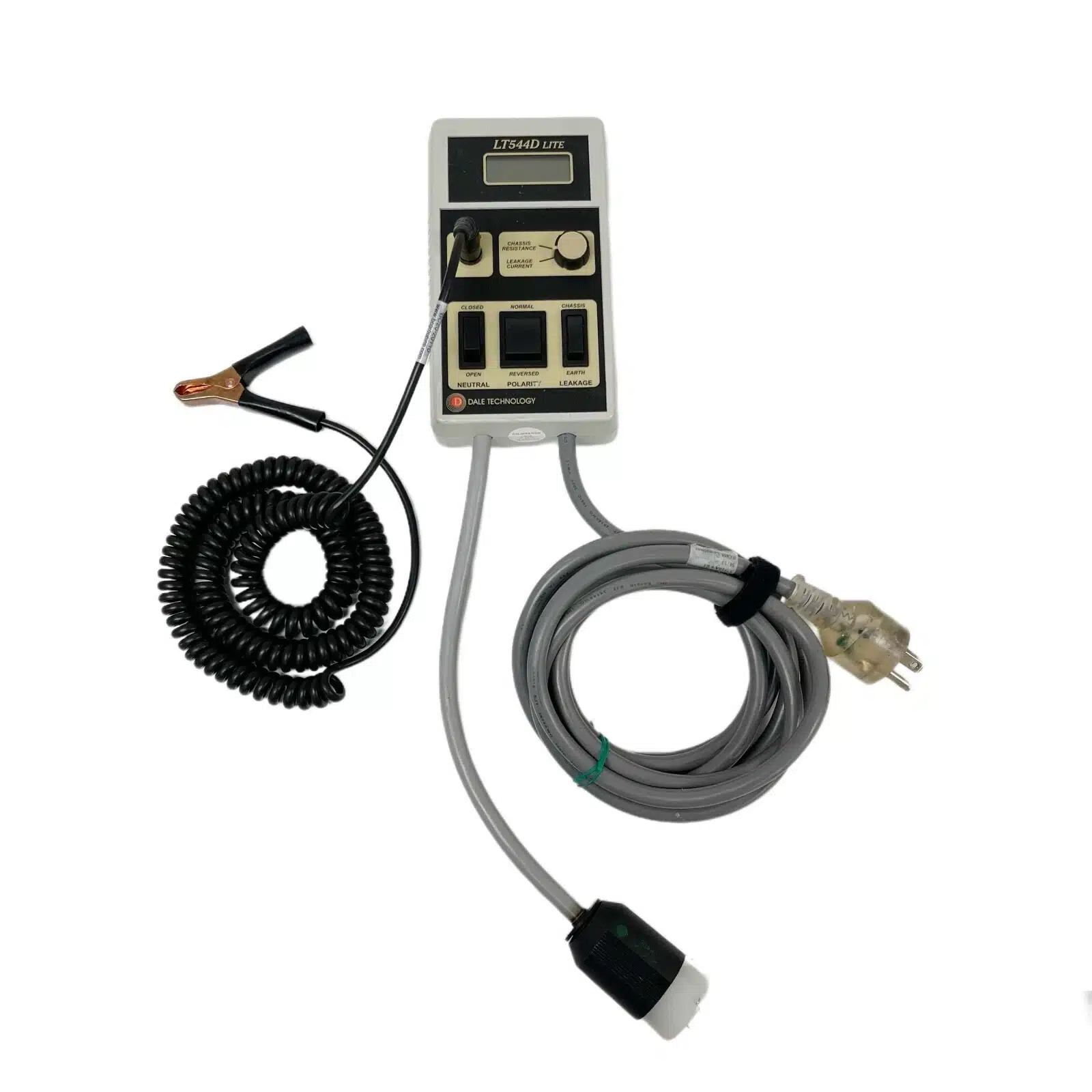
An electrical safety tester is a special tool built to confirm that devices are safe to handle. These instruments are a core part of the electrical measurement world. Specifically, they measure factors that show if a machine might cause a fire or a shock. Unlike a basic meter, a safety tester runs through several tests on its own. For instance, it can simulate “faults” to ensure the device stays safe even when something breaks inside.
1.2 How Safety is Measured
High-quality testers usually look at three main pillars of safety.
-
First, the tool checks the Ground Bond. This step makes sure that if a short circuit happens, the electricity can flow safely into the ground.
-
Next, the tester looks at Insulation Resistance. This test confirms that the internal wires are properly separated from the outer case.
-
Finally, the most vital check is the Leakage Current Test.
Because tiny amounts of electricity can disrupt a person’s heart, especially in a hospital, these testers find current “leaking” out of the device. Consequently, these combined tests give a clear picture of how safe a piece of equipment really is.
2. Protecting Key Sectors: Real-World Uses
🩺
Biomedical Engineering
Ensuring safety for ventilators, patient monitors, and diagnostic equipment.
🏭
Industrial Manufacturing
Final production-line safety testing to reduce recall risks.
Electrical safety testers are vital in places where there is no room for error.
2.1 Hospitals and Health Care
In medical settings, patients are often connected directly to machines. Therefore, technicians use safety testers to check everything from heart monitors to pumps. These testers can copy a “broken wire” state to see if the patient stays safe. By following these steps, hospitals stay in line with global rules and keep patients out of danger.
2.2 Factories and Manufacturing
On a busy factory floor, large machines use massive amounts of power. Also, companies use safety testers during the building phase to catch errors early. Technicians perform “Hipot” tests to see if a machine’s wiring can handle a sudden power spike. In turn, this prevents fires and protects the company from legal problems.
3. Why Accuracy is the “Heart” of the Tester
✔
Eliminating Measurement Drift
Temperature, humidity, and component aging gradually introduce measurement drift if calibration is neglected.
⚠
Protecting Human Life
In medical environments, even microamp-level leakage current errors can pose serious risks to patients.
📜
Regulatory & ISO Compliance
Supports compliance with ISO 9001, ISO/IEC 17025, and global quality audits.
While a tester finds hazards, calibration ensures the tool is telling the truth. In electrical testing, being right is a life-saving necessity.
-
Fixing Wear and Tear: Inside every electrical safety tester, sensitive electronic components handle voltage, current, and leakage measurements. Over time, these components naturally drift due to heat, vibration, and aging. For instance, if a tester’s readings are off by just 5%, it could incorrectly label a dangerous machine as “safe,” exposing operators to potential injury or fatal shock.
-
Legal and Compliance Protection: In regulated industries, test results are only valid when backed by a recognized calibration certificate. Without proper calibration, measurements have no legal standing during audits or inspections. Regular Safety Analyzer Calibration establishes a clear, traceable paper trail to international standards, such as ISO and IEC. As a result, routine calibration performed by an accredited laboratory becomes essential insurance, protecting not only compliance, but also your reputation and responsibility for safety.
4. The Professional Checkup Process
Checking a safety tester for accuracy requires a controlled room and perfect reference tools. The process usually follows these steps:
-
Environmental Stabilization: First, the lab places the analyzer in a temperature-controlled room. This step ensures that thermal expansion does not affect the electronic components during testing.
-
Preliminary Functional Testing: The technician inspects the leads, connectors, and display. In addition, they verify that the firmware operates without errors.
-
Reference Standard Comparison: The laboratory connects the analyzer to a high-precision calibrator. This calibrator acts as the “Standard.” For example, when the calibrator sends exactly 1.000 mA of leakage current, the analyzer must display the same value within its specified tolerance.
-
Multi-Point Verification: Technicians do not just test one value. Instead, they check the analyzer at multiple points, low, medium, and high. This multi-point approach ensures that the device remains linear across its entire range.
-
Adjustment and Final Validation: If the technician finds that the device is “Out of Tolerance,” they perform internal adjustments. Finally, they repeat the entire test sequence to confirm that the analyzer now meets all manufacturer specifications.
5. Conclusion: A Focus on Quality
Medical safety standard
Leakage current accuracy
Recommended calibration interval
Ensure Accuracy. Protect Lives. Pass Every Audit.
Electrical Safety Analyzer Calibration is not just a regulatory requirement, it is a critical investment in reliability, patient safety, and long-term operational confidence.
Frequently asked questions
What is Safety Analyzer Calibration?
How often should a Safety Analyzer be calibrated?
What standards apply to Safety Analyzer Calibration?
What is included on the certificate?
Can you calibrate the Safety Analyzer on-site?
Need Safety Analyzer calibration?
ANAB-accredited, NIST-traceable, fast turnaround, in-lab or on-site across the USA.
Contact us for a quoteReferences & industry standards
- ISO/IEC 17025 testing & calibration laboratory requirements
- NIST calibration services and measurement traceability
- A2LA / ANAB accreditation for calibration laboratories
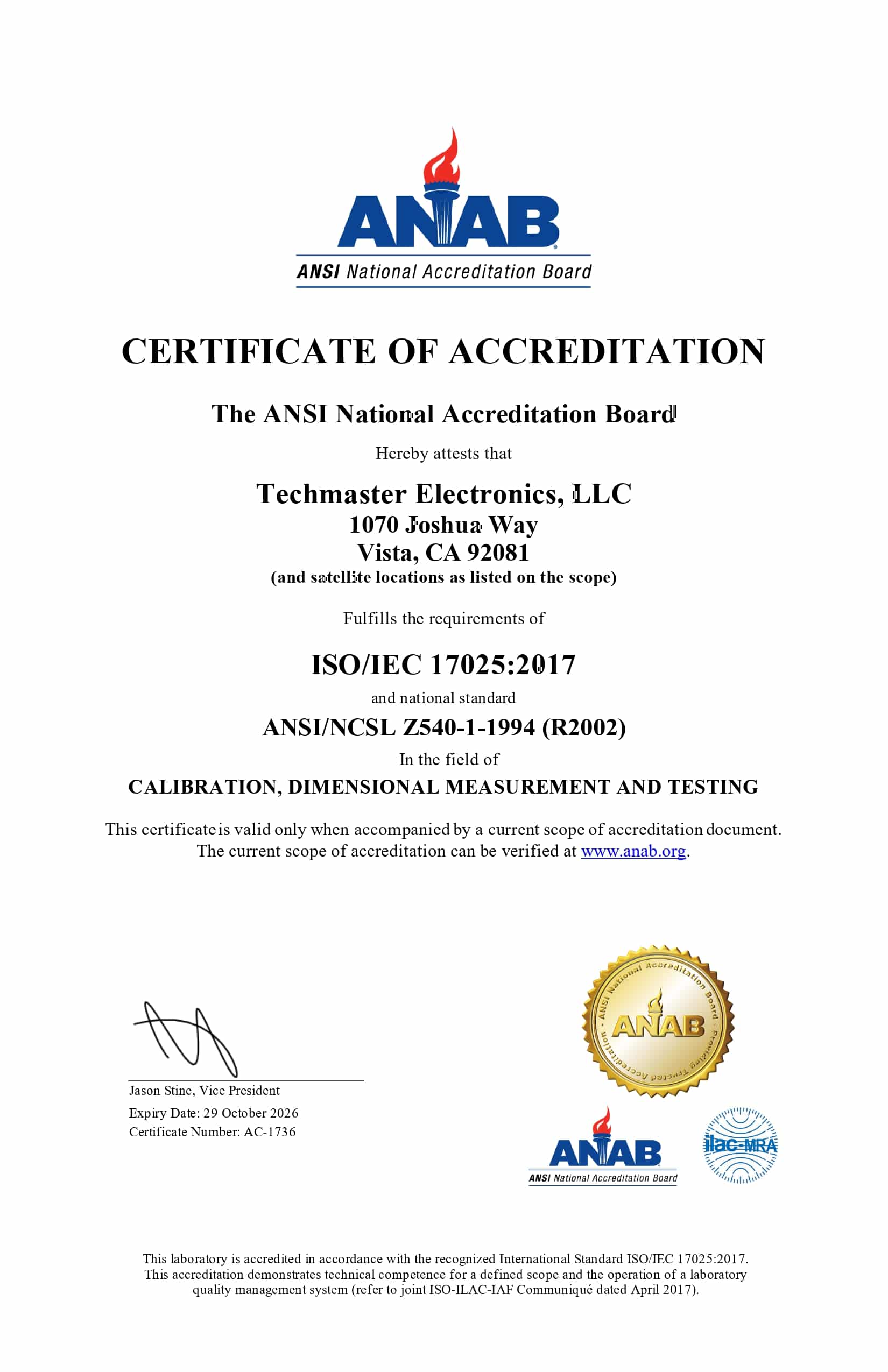
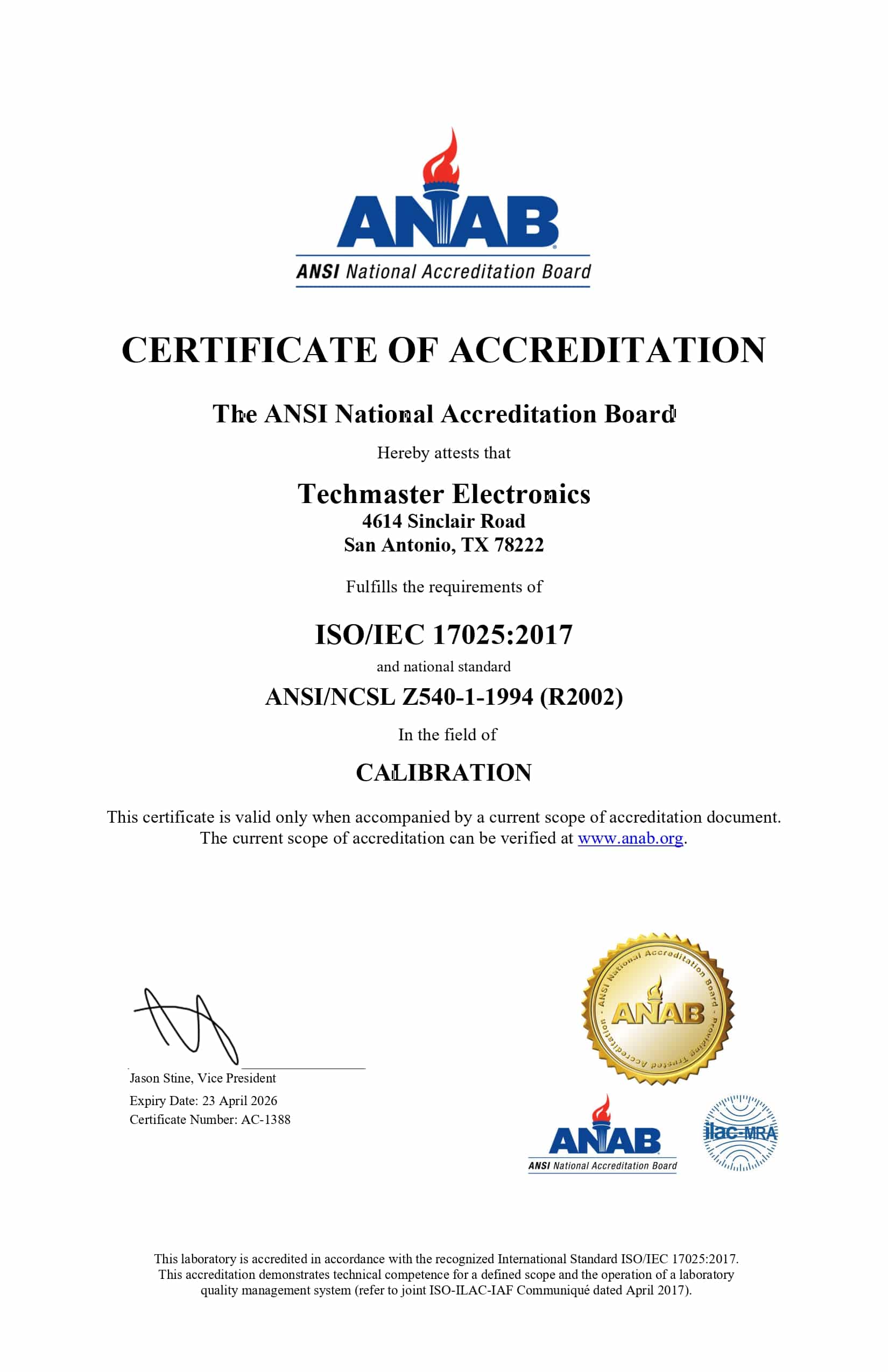
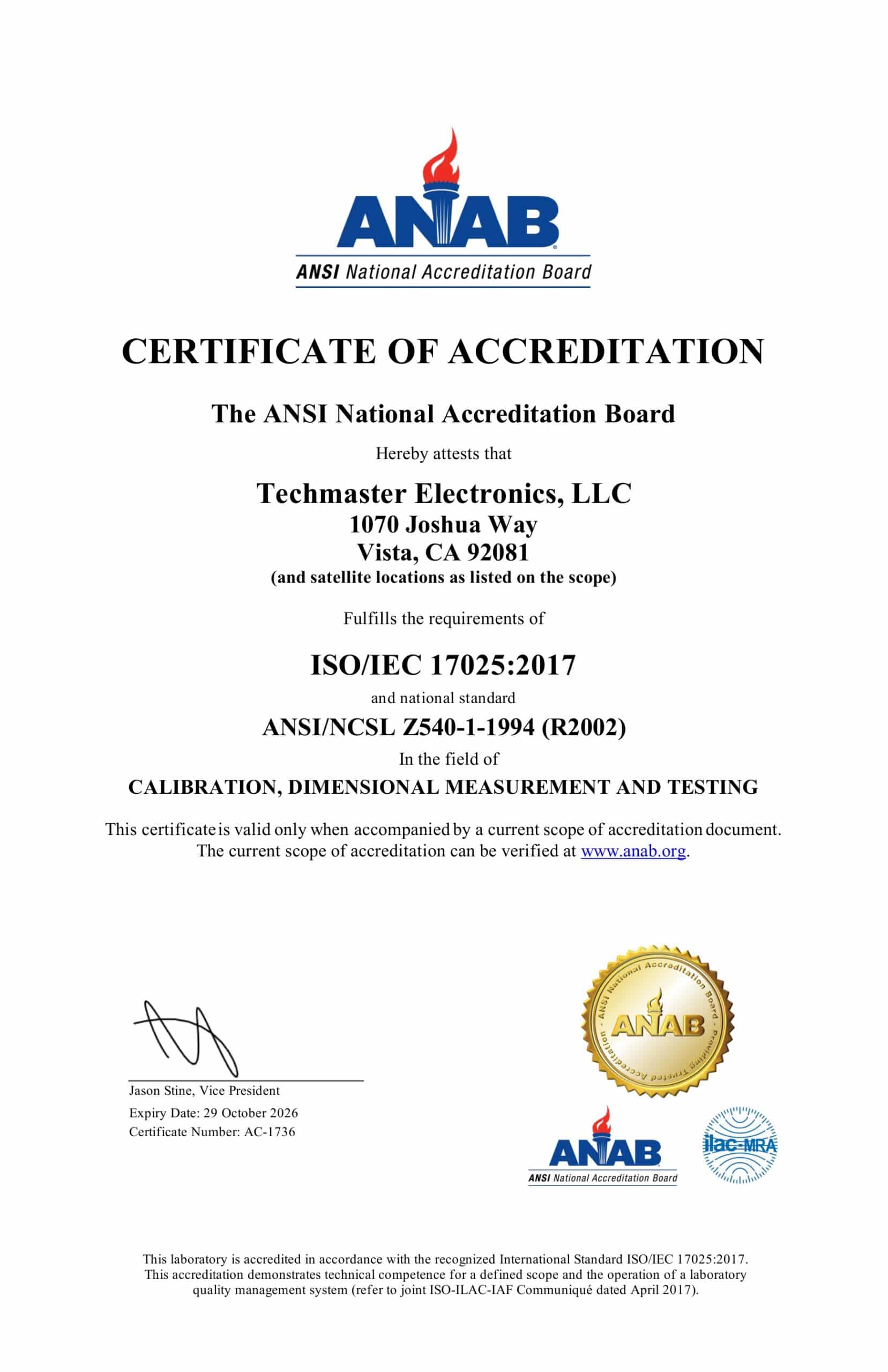
External standards bodies. Techmaster Electronics is an ISO/IEC 17025-accredited, NIST-traceable calibration laboratory.
Related reading: what an ISO/IEC 17025 ESU analyzer calibration verifies

Khanh Nguyen is the Marketing Manager at Techmaster Electronics, a B2B marketing leader covering the test, measurement, and ISO/IEC 17025 accredited calibration industry across the US and Vietnam markets.