
Hipot Junior Calibration
Accuracy across the range
How Hipot Junior calibration works
- Intake & visual inspection
- Environmental stabilization
- As-found measurement
- Comparison to NIST-traceable standards
- Adjustment if required
- As-left results & certificate
Your calibration, covered
In-lab vs on-site calibration
In-lab calibration
- Accredited bench with full reference standards
- Best achievable measurement uncertainties
- Pickup & return logistics handled
- Ideal for precision and reference work
On-site calibration
- We calibrate the Hipot Junior at your facility
- No shipping risk or transit downtime
- As-found data captured before any move
- Ideal for fixed, large or sensitive assets
In-depth guide
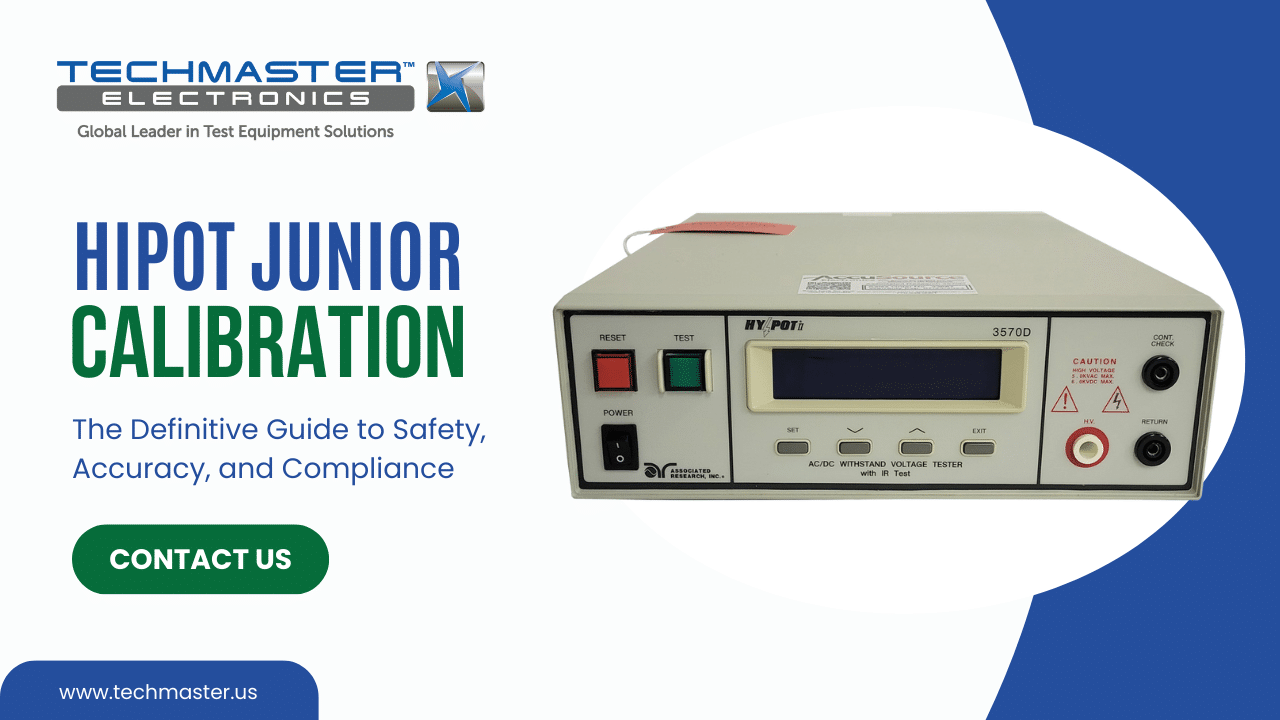
In the high-stakes world of electrical manufacturing and quality assurance, the integrity of insulation is the final line of defense between a functional product and a lethal hazard. High Potential (Hipot) testing, also known as Dielectric Withstand testing, is the industry standard for verifying this integrity. Among the most trusted tools for this task are compact, benchtop units often categorized as “Junior” testers due to their portability and focused feature sets. However, a tester is only as reliable as its last calibration. This article provides an in-depth analysis of the applications of these essential tools and why Hipot Junior Calibration is a non-negotiable requirement for modern industrial safety.
1. What is a Hipot Junior Tester?
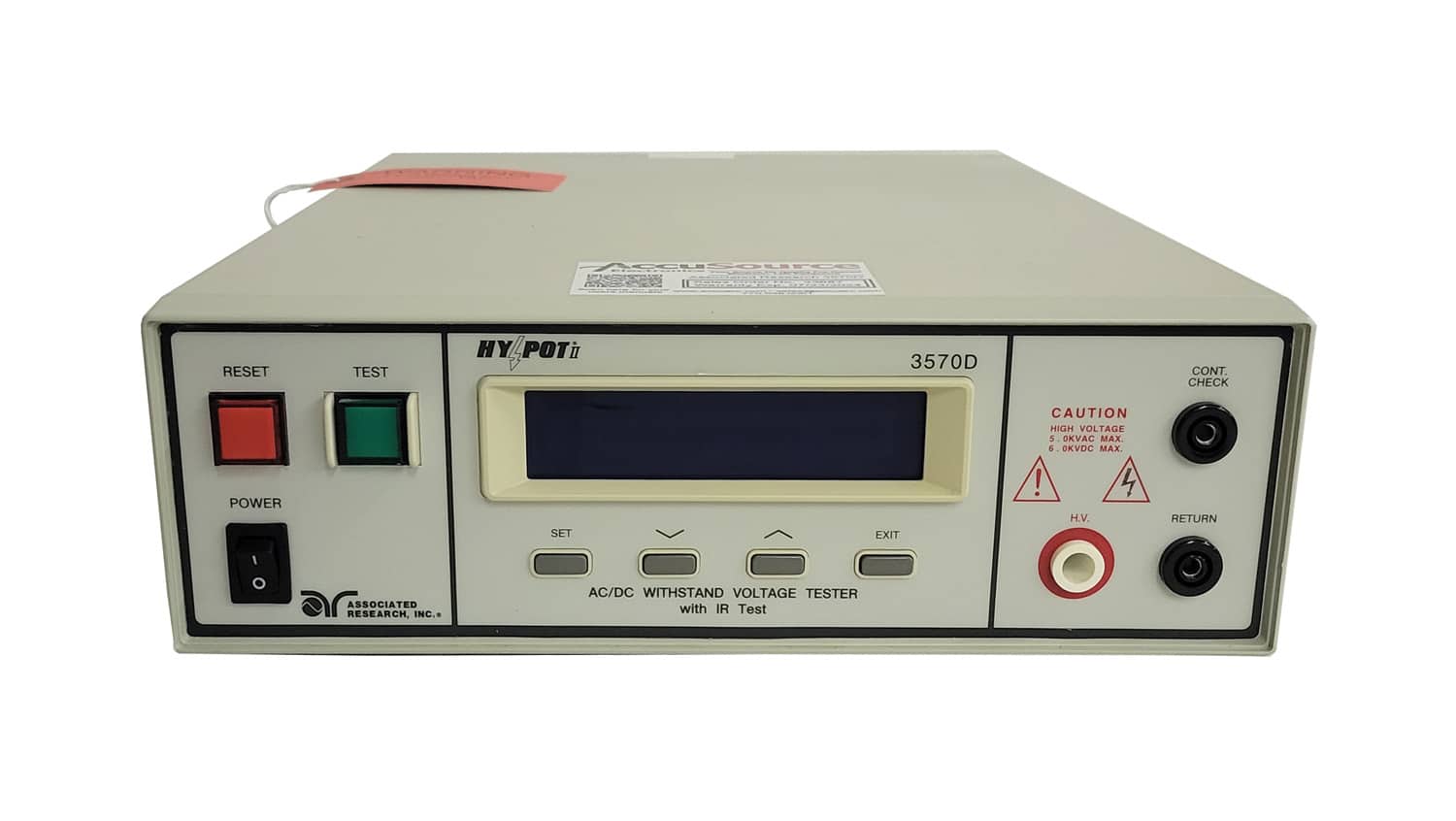
A “Junior” series Hipot tester is a specialized instrument designed to apply a high voltage, well beyond the normal operating voltage, to a device under test (DUT) to ensure the insulation can withstand the stress without breaking down.
Unlike larger, automated rack-mount systems, the “Junior” class focuses on simplicity and manual or semi-automated control, making it the go-to choice for benchtop R&D, small-scale production lines, and repair depots. Its primary function is to measure:
-
Dielectric Withstand: Does the insulation hold up?
-
Leakage Current: How much current is “escaping” through the insulation?
-
Insulation Resistance: What is the ohmic value of the barrier?
2. Critical Applications in Global Industry
🔌 PRODUCTION TESTING
🔍 MATERIAL ANALYSIS
🧪 R&D VALIDATION
The versatility of the Hipot Junior makes it a staple in various sectors. Its application is often mandated by safety agencies such as UL, CSA, and IEC.
2.1. Consumer Electronics Manufacturing
Every AC-powered device, from a simple toaster to a complex laptop power adapter, must undergo a Hipot test. The “Junior” tester is used at the end of the production line to ensure that no wires were pinched during assembly and that the transformer insulation remains intact.
2.2. Component Testing (Transformers and PCBs)
Manufacturers of sub-assemblies like transformers, motors, and printed circuit boards (PCBs) use these testers to verify the “Clearance and Creepage” distances. By applying a high voltage, engineers can detect if air gaps or surface distances are insufficient, which could lead to arcing in real-world use.
2.3. Medical Device Verification
In the medical field, the margin for error is zero. Hipot testing ensures that patients and healthcare providers are protected from leakage currents. Compact testers are often used in hospital bio-med departments to verify the safety of equipment after a major repair.
2.4. Aerospace and Defense
Weight and space are at a premium in aerospace. Smaller, “Junior” style testers are used to test complex wire harnesses and avionics modules where high-accuracy leakage measurement is required in a portable format.
3. Why Hipot Junior Calibration is Essential
Possessing a high-quality tester is a great start, but without a regular calibration schedule, the data produced is technically “unverified.” Hipot junior Calibration is the process of comparing the tester’s output against a traceable master standard to ensure it operates within specified tolerances.
3.1. The Danger of the “False Pass”
The most significant risk of an uncalibrated Hipot tester is a “False Pass.” If the voltage output has drifted low, the machine might indicate that a product passed the test when it was actually tested at an insufficient voltage. This leads to defective, dangerous products entering the market, resulting in recalls and potential lawsuits.
3.2. The Cost of the “False Fail”
Conversely, if a tester drifts high, it may apply excessive voltage that damages perfectly good components. This leads to unnecessary waste, lower production yields, and increased manufacturing costs.
3.3. Ensuring Operator Safety
A Hipot tester is, by definition, a source of dangerous high voltage. Calibration verifies that the safety interlocks and the “Trip” or “Cut-off” mechanisms are functioning correctly. If the machine fails to shut down during an arc or a breakdown, the operator is at risk of severe electrical shock.
4. The Technical Calibration Process
0️⃣1️⃣
Output Voltage Verification
0️⃣2️⃣
Trip Current Validation
0️⃣3️⃣
Arc Detection Check
0️⃣4️⃣
Insulation Resistance Test
A professional Hipot junior Calibration performed in an ISO/IEC 17025 accredited laboratory involves several critical checkpoints.
4.1. High Voltage Output Accuracy
Using a high-voltage probe and a precision digital multimeter (DMM), technicians measure the actual AC or DC voltage at the terminals. The error is calculated as:
This ensures that when you set the dial to 2500V, the DUT actually receives 2500V.
4.2. Leakage Current Sensitivity
The tester must accurately detect currents as small as microamps ( μA). Calibration involves using precision resistors to simulate a specific leakage current and verifying that the tester’s display matches the calculated value:
The “Trip” threshold is also tested to ensure the machine shuts down precisely when the limit is exceeded.
4.3. Timing Calibration
Most safety standards require the voltage to be applied for a specific duration (e.g., 60 seconds). Calibration verifies that the internal timer is accurate, as a shorter test might not allow enough time for a weak insulation point to fail.
Relative Error Calculation
Calibration accuracy is determined by comparing the Unit Under Test (UUT) with a certified reference standard.
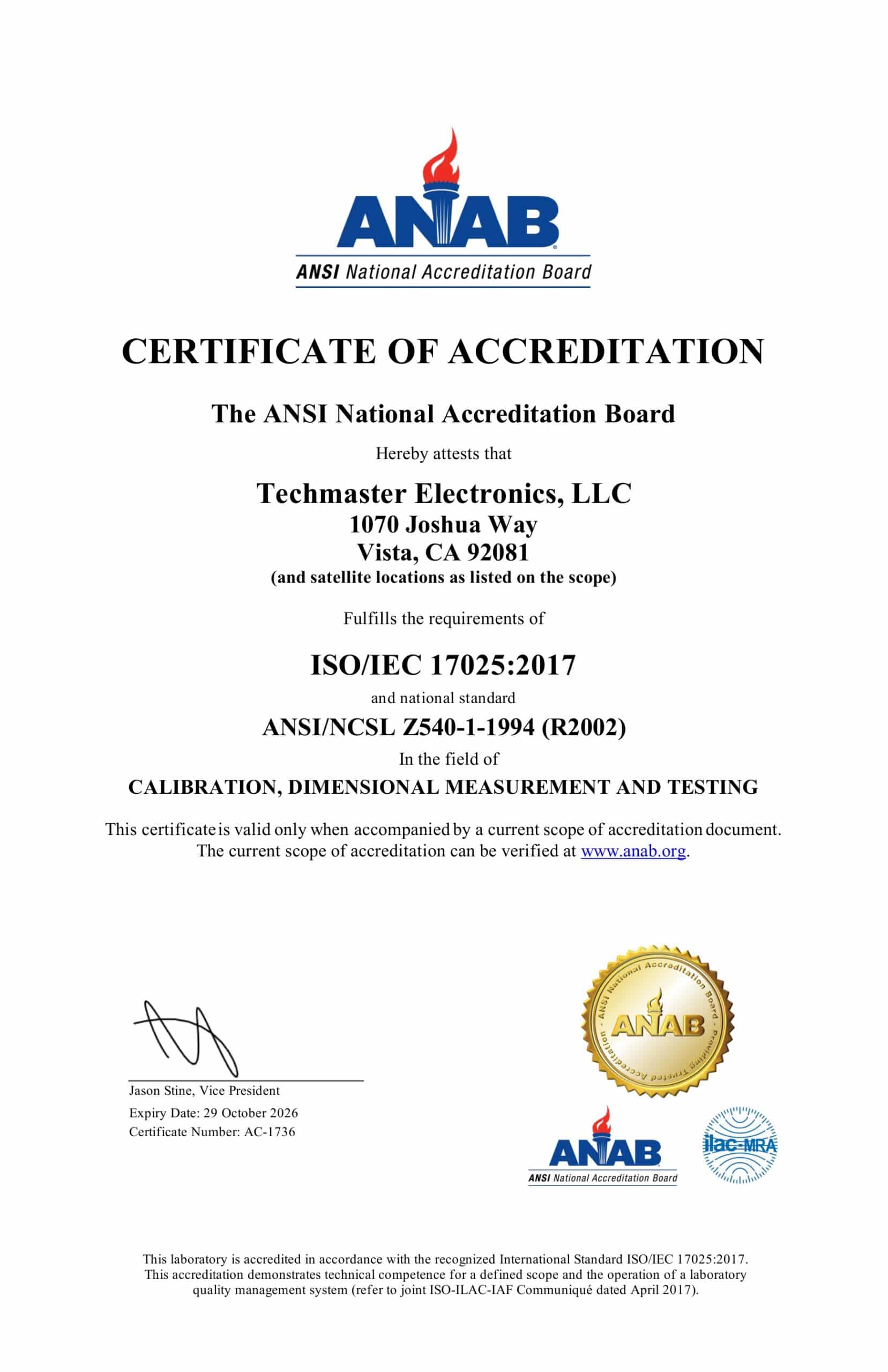
5. Compliance and Traceability (ISO 17025)
In today’s global market, traceability is the “passport” for your products. Hipot junior Calibration provides a documented trail from your device to national standards (like NIST).
-
ISO 17025: If your facility is ISO certified, you are required to have your test equipment calibrated by an accredited lab.
-
Audit Readiness: During a quality audit, the first document requested for an electrical test station is the Calibration Certificate. A valid certificate proves that your quality control process is robust.
6. Maintenance Tips for Longevity
To ensure your Hipot Junior stays within calibration limits for as long as possible:
-
Environment: Keep the unit in a clean, dry area. Dust and humidity can cause internal tracking and affect high-voltage accuracy.
-
Cable Care: Inspect test leads for cracks or wear. A frayed cable can cause “nuisance trips” and erratic readings.
-
Power Conditioning: Use a surge protector or a line conditioner to protect the sensitive internal electronics from power spikes.
-
Frequency: The industry standard for Hipot junior Calibration is every 12 months. However, if the unit is used in a high-volume 24/7 production environment, a 6-month cycle is recommended.
Conclusion
The “Junior” class of Hipot testers offers an excellent balance of power and portability, making them indispensable for modern electrical testing. However, the integrity of your safety testing is only as strong as your calibration program. Therefore, regular Hipot Junior calibration is essential to maintain measurement accuracy. In addition, it helps laboratories and manufacturers meet international safety and quality standards. Consequently, a well-maintained calibration program reduces operational risks and improves testing reliability. Most importantly, it ensures that when a device passes the test, “Safe” truly means safe.
Frequently asked questions
What is Hipot Junior Calibration?
How often should a Hipot Junior be calibrated?
What standards apply to Hipot Junior Calibration?
What is included on the certificate?
Can you calibrate the Hipot Junior on-site?
Need Hipot Junior calibration?
ANAB-accredited, NIST-traceable, fast turnaround, in-lab or on-site across the USA.
Contact us for a quoteReferences & industry standards
- ISO/IEC 17025 testing & calibration laboratory requirements
- NIST calibration services and measurement traceability
- A2LA / ANAB accreditation for calibration laboratories
External standards bodies. Techmaster Electronics is an ISO/IEC 17025-accredited, NIST-traceable calibration laboratory.

Khanh Nguyen is the Marketing Manager at Techmaster Electronics, a B2B marketing leader covering the test, measurement, and ISO/IEC 17025 accredited calibration industry across the US and Vietnam markets.