
Digital Manifold Calibration
Why calibration intervals matter
How Digital Manifold calibration works
- Intake & visual inspection
- Environmental stabilization
- As-found measurement
- Comparison to NIST-traceable standards
- Adjustment if required
- As-left results & certificate
Your calibration, covered
In-lab vs on-site calibration
In-lab calibration
- Accredited bench with full reference standards
- Best achievable measurement uncertainties
- Pickup & return logistics handled
- Ideal for precision and reference work
On-site calibration
- We calibrate the Digital Manifold at your facility
- No shipping risk or transit downtime
- As-found data captured before any move
- Ideal for fixed, large or sensitive assets
In-depth guide
Digital Manifold Calibration: Elevating Precision for HVAC/R Systems

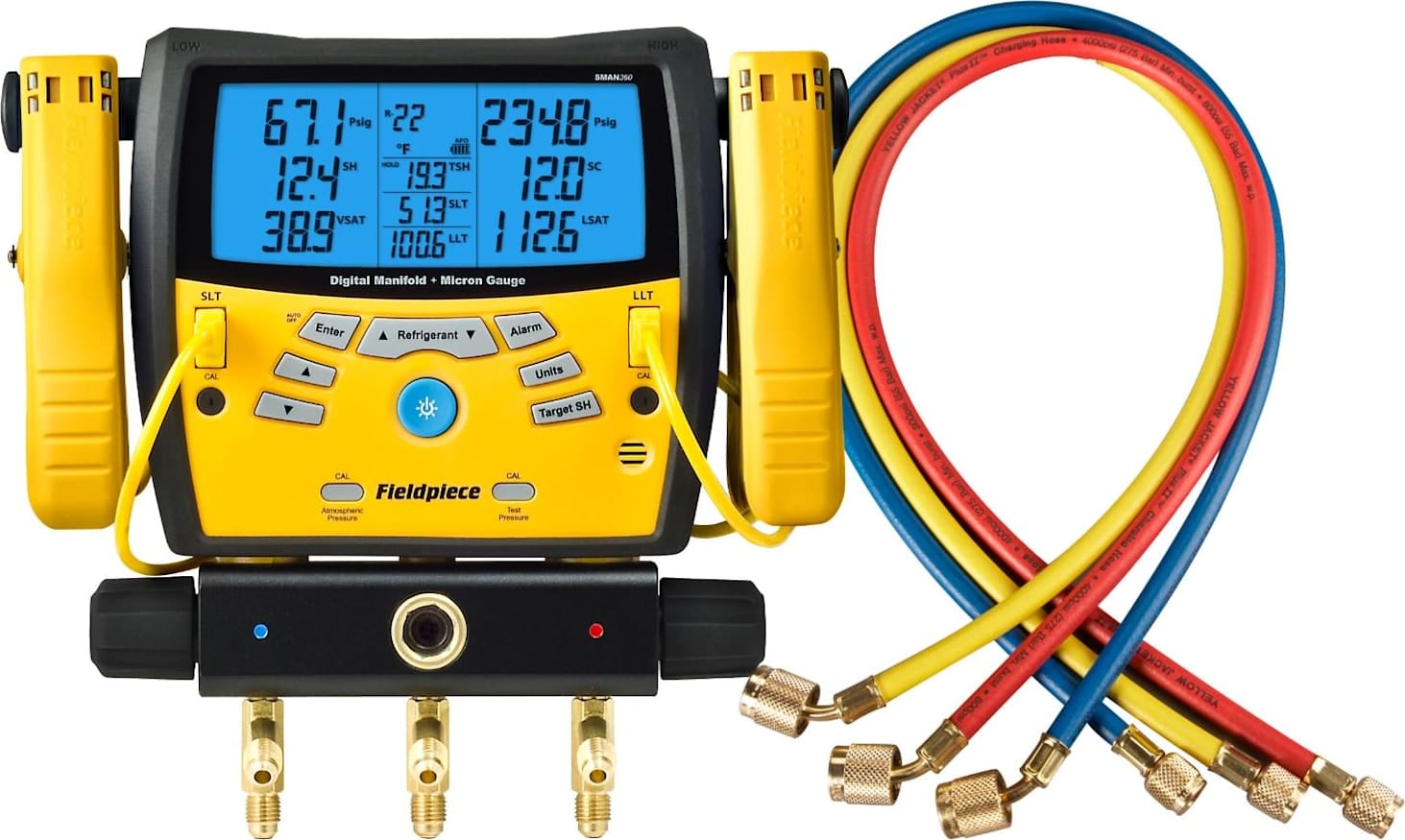
In the HVAC/R industry, the transition from traditional mechanical manifold gauges to Digital Manifolds has revolutionized operational efficiency. However, to fully use these advantages, Digital Manifold Calibration becomes a critical requirement rather than an optional step. Without proper calibration, even the most advanced device can produce inaccurate readings, leading to incorrect charging, inefficient system performance, or undetected faults. Therefore, regular calibration is essential to ensure measurement reliability, maintain system efficiency, and support long-term equipment performance in demanding HVAC/R applications.
1. Operating Principles of Digital Manifolds
Data Processing Principles
Semiconductor sensors receive pressure and alter resistance, then the A/D converter transforms analog signals into precise digital data.
Thermistor probes clamp directly to pipelines, capturing real-time refrigerant temperature data synchronized with pressure readings.
The microprocessor accesses PT Chart libraries to calculate Superheat and Subcooling metrics in real-time with 0.1 precision.
Error Rate: Analog vs Digital
To understand why Digital Manifold Calibration is essential, one must first grasp how these devices process data. Unlike mechanical gauges that use a Bourdon tube to convert pressure into physical needle movement, a digital manifold operates through a sophisticated blend of electronic sensors and microprocessors.
1.1. Pressure Signal Conversion
The heart of the device consists of pressure sensors, typically semiconductor diaphragms or quartz crystals. As refrigerant enters the manifold chamber, pressure is exerted on the sensor diaphragm. Micro-deformations in the diaphragm change the electrical resistance or capacitance within an electronic bridge circuit. This weak electrical signal is then amplified and converted into digital data via an A/D (Analog-to-Digital) converter.
1.2. Temperature Data Integration
A standout feature of digital manifolds is their ability to connect to temperature probes (Thermistors or K-type thermocouples). These probes clamp directly onto suction and liquid lines to measure the actual temperature of the refrigerant. Consequently, the device simultaneously captures two vital parameters: pressure and temperature.
1.3. Real-Time Processing Algorithms
Once raw data is collected, the internal microprocessor accesses a library of refrigerant profiles stored in its memory (PT Charts – Pressure/Temperature Charts). It performs complex calculations to provide critical KPIs:
-
Superheat: The difference between the actual suction line temperature and the saturated evaporation temperature.
-
Subcooling: The difference between the saturated condensing temperature and the actual liquid line temperature. The results are then displayed instantaneously on an LCD screen with decimal-point precision.
2. Practical Applications of Digital Manifolds in Industry
Optimal Charging
Leak Testing
Vacuum Process
Diagnostics
Digital manifolds are versatile, all-in-one measurement solutions designed to replace multiple traditional tools in HVAC/R servicing. By integrating pressure, temperature, and advanced calculation functions into a single device, they not only improve measurement accuracy but also simplify workflows for technicians. As a result, these instruments play a critical role in modern maintenance and diagnostics.
2.1. Accurate System Charging
First of all, digital manifolds allow technicians to monitor real-time pressure and temperature across a wide range of refrigerants with high precision. Also, built-in Superheat and Subcooling calculations are continuously updated, enabling accurate refrigerant charging. Therefore, technicians can avoid overcharging or undercharging, while also improving system efficiency and reducing refrigerant waste.
2.2. Leak Testing
In addition, these devices are equipped with highly sensitive digital pressure sensors that can detect even the smallest fluctuations in static pressure. Consequently, technicians are able to identify micro-leaks that traditional mechanical gauges often miss. This not only helps maintain system integrity but also supports compliance with environmental and safety standards.
2.3. Evacuation and System Dehydration
In addition, many advanced digital manifolds include integrated vacuum sensors (micron gauges) to monitor the evacuation process with high accuracy. As a result, moisture, air, and other non-condensable gases can be effectively removed from the system. In turn, this ensures the system meets required purity levels before operation and prevents long-term performance issues.
2.4. Diagnostics and Troubleshooting
Finally, digital manifolds offer data logging and digital graphing capabilities, allowing technicians to analyze system behavior over time. By doing so, they can identify performance trends in compressors, condensers, and evaporators. Ultimately, this leads to faster troubleshooting, more accurate repair decisions, and reduced system downtime.
3. The Core Role of Digital Manifold Calibration
Why Calibrate?
Electronic sensors drift over time due to thermal shock or physical impact. Professional calibration is the only way to maintain the “digital vision” of your toolkit.
Calibration Schedule
- 📅
Every 12 Months The industry standard for reliability maintenance.
- 💥
After Impact/Drops Physical shock can displace quartz sensor membranes.
- 🧪
New Refrigerants Verify software mapping with new gas properti
Despite their advanced sensor technology, the accuracy of digital manifolds can drift over time due to environmental temperature fluctuations, peak pressure strain, or component aging. This makes Digital Manifold Calibration vital for several reasons:
-
Ensuring Data Integrity: In HVAC/R, an error of just 1-2 PSI or a few degrees Celsius can lead to overcharging or undercharging. Periodic calibration aligns sensors and probes back to a traceable standard.
-
Optimizing Energy Efficiency: A system tuned based on inaccurate data will operate inefficiently, consuming more power and risking premature failure. Calibration helps technicians set ideal parameters for energy-saving performance.
-
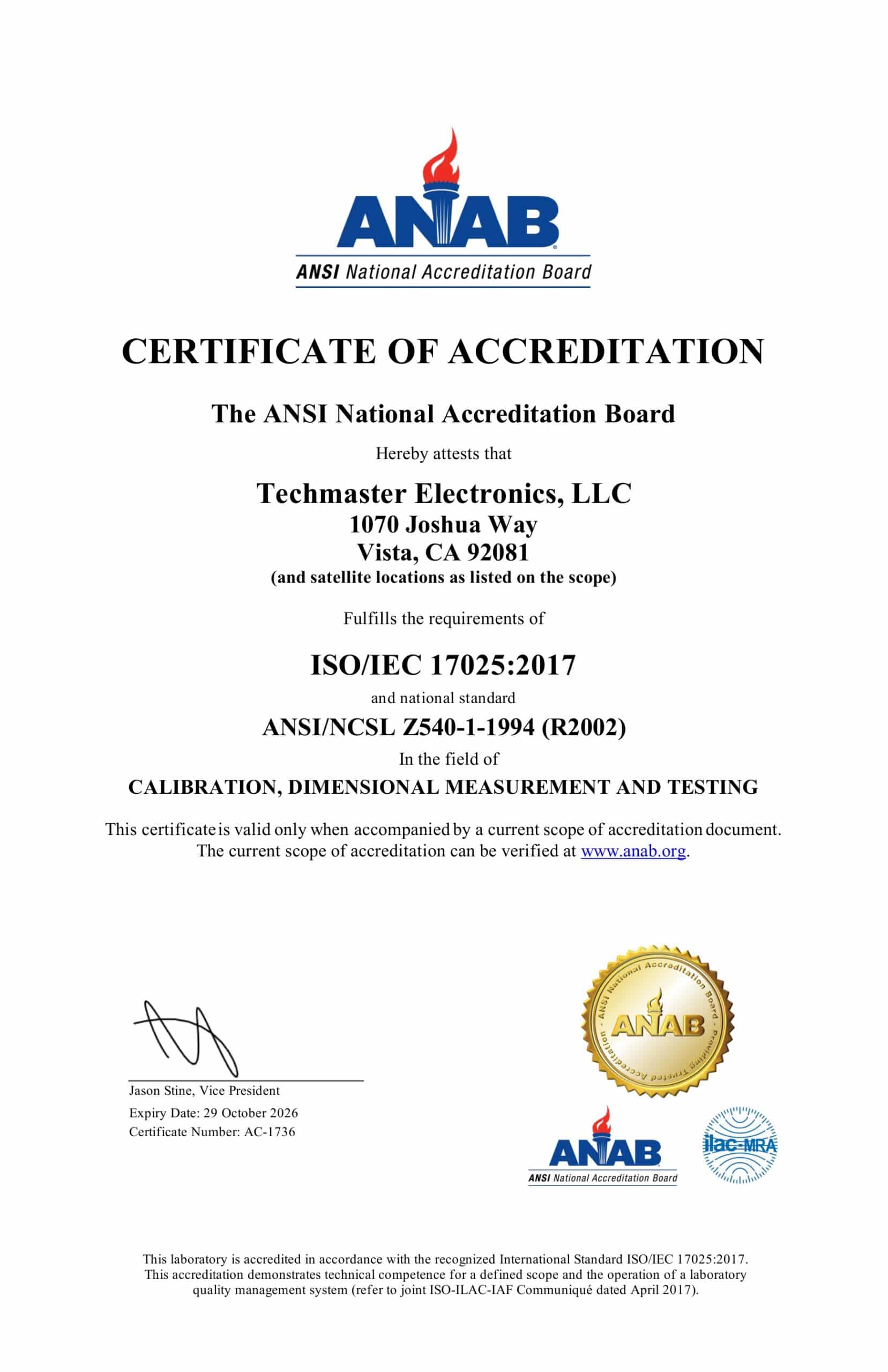
Compliance with International Standards: For professional contractors, using calibrated equipment is often a mandatory requirement to meet ISO 9001 or ISO/IEC 17025 standards. This serves as a “technical passport” for high-stakes industrial projects.
-
Extending Equipment Lifespan: During the calibration process, metrology experts can detect early signs of sensor fatigue or software glitches, allowing for preventative maintenance that avoids costly replacements.
4. When Should You Perform Digital Manifold Calibration?
Technicians should seek professional calibration in the following scenarios:
-
Annually (Every 12 Months): The standard recommended interval to maintain reliability.
-
After Significant Physical Impact: If the device is dropped or struck, internal sensors may shift.
-
When Working with New Refrigerants: To ensure software and sensors are accurately mapping the thermodynamic properties of new gases.
-
Upon Detecting Anomalies: If readings differ significantly when compared to a known reference or a second calibrated tool.
Conclusion
Digital Manifold Calibration is more than a mere technical formality; it is an investment in accuracy and safety. A well-calibrated device acts as a technician’s “sharp eyes,” eliminating subjective errors and delivering professional results. If you are operating critical cooling or heating systems, ensure your digital manifold is certified by a reputable calibration center to protect both your project value and your brand reputation.
Digital Manifold Calibration
Elevating HVAC/R system accuracy through advanced electronic sensor verification and microprocessor alignment.
Start Calibration ProcessFrequently asked questions
What is Digital Manifold Calibration?
How often should a Digital Manifold be calibrated?
What standards apply to Digital Manifold Calibration?
What is included on the certificate?
Can you calibrate the Digital Manifold on-site?
Need Digital Manifold calibration?
ANAB-accredited, NIST-traceable, fast turnaround, in-lab or on-site across the USA.
Contact us for a quoteReferences & industry standards
- ISO/IEC 17025 testing & calibration laboratory requirements
- NIST calibration services and measurement traceability
- A2LA / ANAB accreditation for calibration laboratories
External standards bodies. Techmaster Electronics is an ISO/IEC 17025-accredited, NIST-traceable calibration laboratory.

Khanh Nguyen is the Marketing Manager at Techmaster Electronics, a B2B marketing leader covering the test, measurement, and ISO/IEC 17025 accredited calibration industry across the US and Vietnam markets.