
Micro-gloss calibration
Accuracy across the range
How Micro-gloss calibration works
- Intake & visual inspection
- Environmental stabilization
- As-found measurement
- Comparison to NIST-traceable standards
- Adjustment if required
- As-left results & certificate
Your calibration, covered
In-lab vs on-site calibration
In-lab calibration
- Accredited bench with full reference standards
- Best achievable measurement uncertainties
- Pickup & return logistics handled
- Ideal for precision and reference work
On-site calibration
- We calibrate the Micro-gloss at your facility
- No shipping risk or transit downtime
- As-found data captured before any move
- Ideal for fixed, large or sensitive assets
In-depth guide
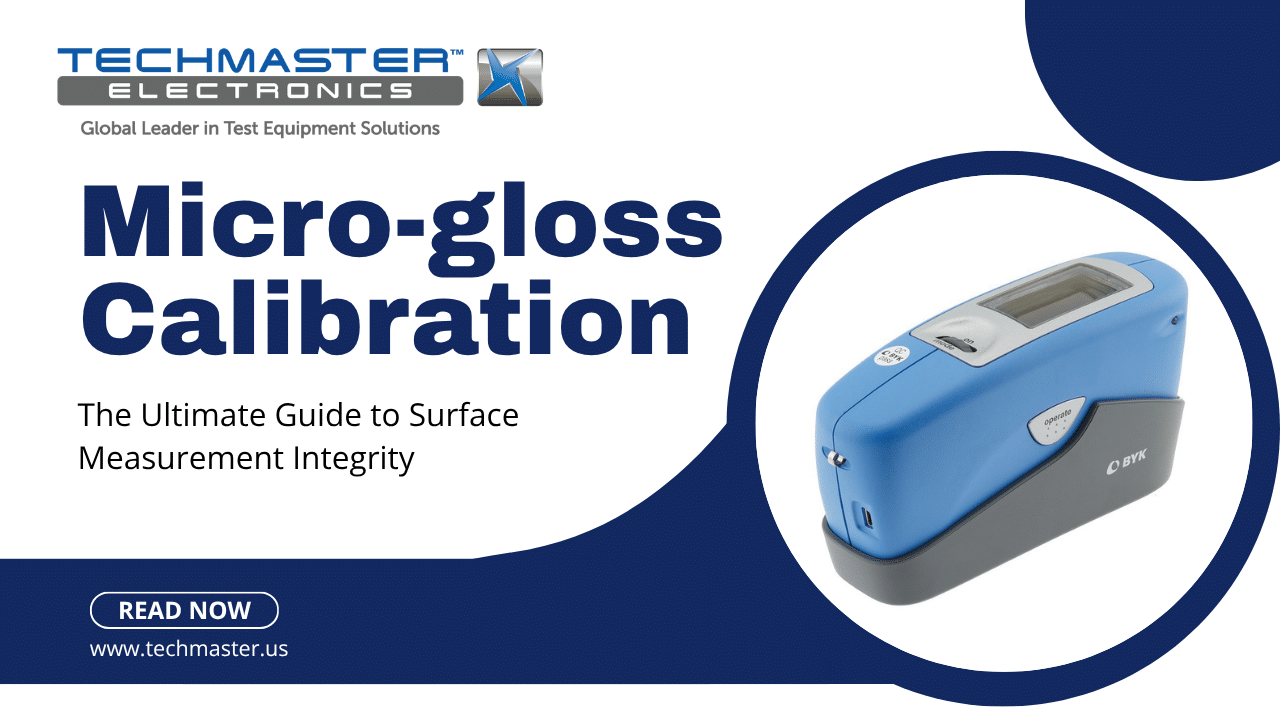
Micro-Gloss Calibration: The Ultimate Guide to Surface Measurement Integrity
In today’s competitive manufacturing landscape, the visual appeal of a product is often the first point of contact with a customer. Whether it is the sleek finish of a luxury electric vehicle, the polished surface of a smartphone, or the uniform coating on aerospace components, gloss levels serve as a primary indicator of quality and process control. However, maintaining this aesthetic consistency across global supply chains is a complex metrological challenge. This is where Micro-Gloss Calibration becomes an indispensable requirement. Without a robust, NIST-traceable calibration program, even the most advanced gloss meters can yield drifting data, leading to costly rejections, material waste, and brand damage.
1. Understanding the Science of Gloss Measurement
💡 Optical Principles
Standardized light source projects at fixed industrial angles.
Highly sensitive detectors capture light at opposite angles.
Before examining the necessity of Micro-Gloss Calibration, one must understand what “gloss” actually represents in a technical context. Gloss is an optical property that indicates how well a surface reflects light in a specular (mirror-like) direction.
1.1. The Physics of Specular Reflection
When light hits a surface, it scatters in different directions. A “high-gloss” surface reflects most of the light at an angle equal but opposite to the incident beam. A “matte” surface scatters light in many directions (diffuse reflection).
1.2. Geometry and Angles
Metrology standards, such as ASTM D523 and ISO 2813, define three main geometries for measurement:
-
20° Geometry: Used for high-gloss surfaces (paints, plastics, bright metals).
-
60° Geometry: The universal standard for mid-gloss surfaces, most commonly used in industrial quality control.
-
85° Geometry: Specialized for low-gloss or matte surfaces to improve measurement resolution.
2. Why Micro-Gloss Calibration is Mission-Critical
Eliminate errors from lamp aging or aperture debris.
Meet ISO 9001, IATF 16949, and AS9100 requirements.
A common misconception in many quality labs is that a gloss meter is a “set-and-forget” tool. In reality, the optical components of these devices are sensitive to environmental factors and physical wear.
2.1. Eliminating Measurement Drift
Over time, the standardized light source (LED or tungsten lamp) inside a gloss meter ages, and its intensity fluctuates. Additionally, microscopic debris, outgassing from plastic components, or airborne contaminants can settle on the internal lenses or the aperture. Micro-Gloss Calibration resets the device’s internal “logic” to account for these variables, ensuring that a reading of 90 GU (Gloss Units) today remains a true 90 GU six months from now.
2.2. NIST Traceability: The Gold Standard
For manufacturers operating in the US and Mexico, NIST (National Institute of Standards and Technology) traceability is not just a preference, it is often a legal or contractual mandate. Techmaster Electronics ensures that every Micro-Gloss Calibration is performed using certified reference tiles that have a direct, documented link to NIST standards. This ensures your data is defensible during audits from regulatory bodies or high-profile clients.
2.3. Compliance with Quality Management Systems
If your facility is certified to ISO 9001, IATF 16949 (Automotive), or AS9100 (Aerospace), regular calibration is a mandatory requirement. Auditors look for:
-
Calibration Certificates: Documenting the “As-Found” and “As-Left” data.
-
Uncertainty Budgets: Understanding the margin of error in every measurement.
-
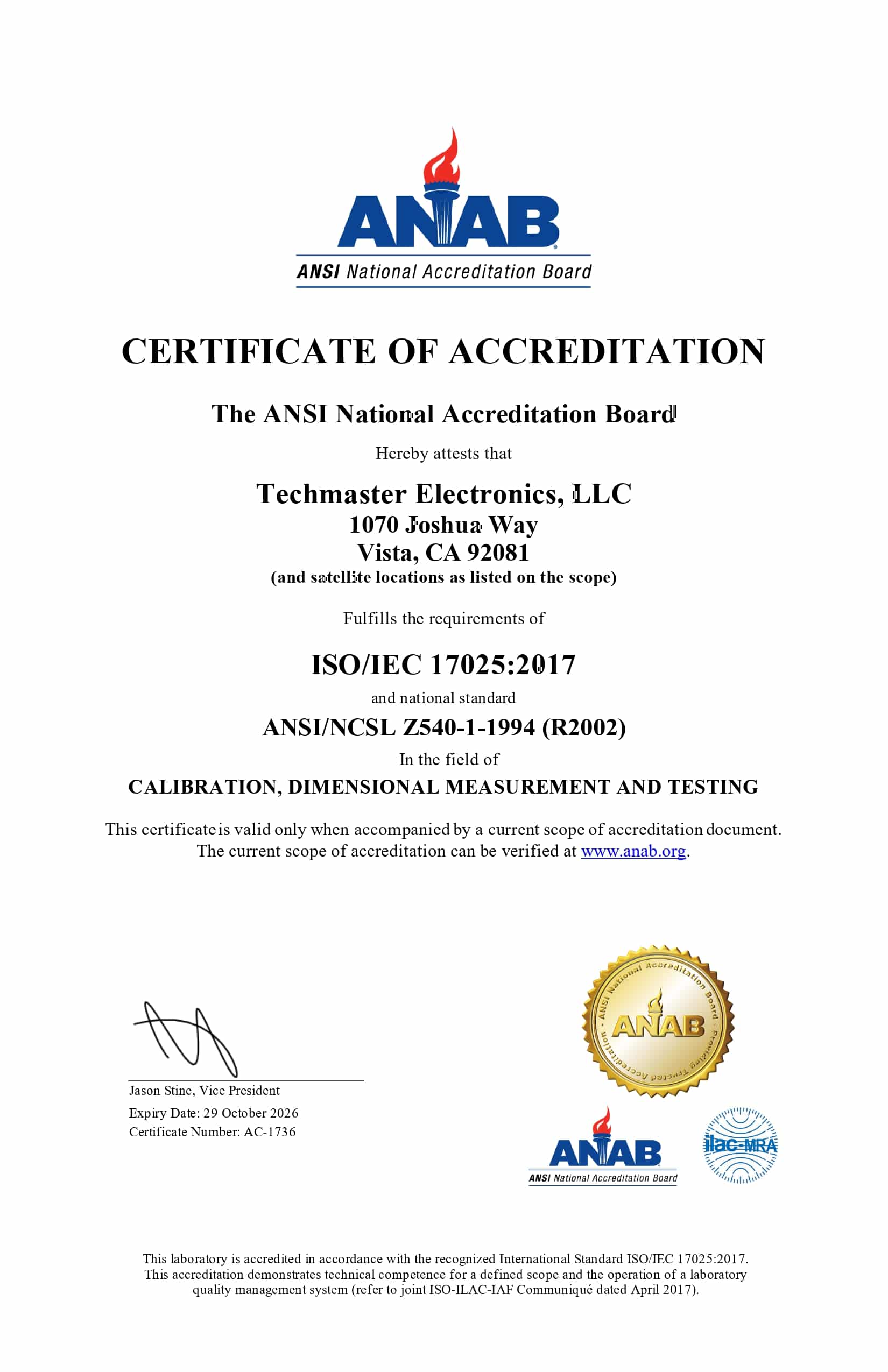
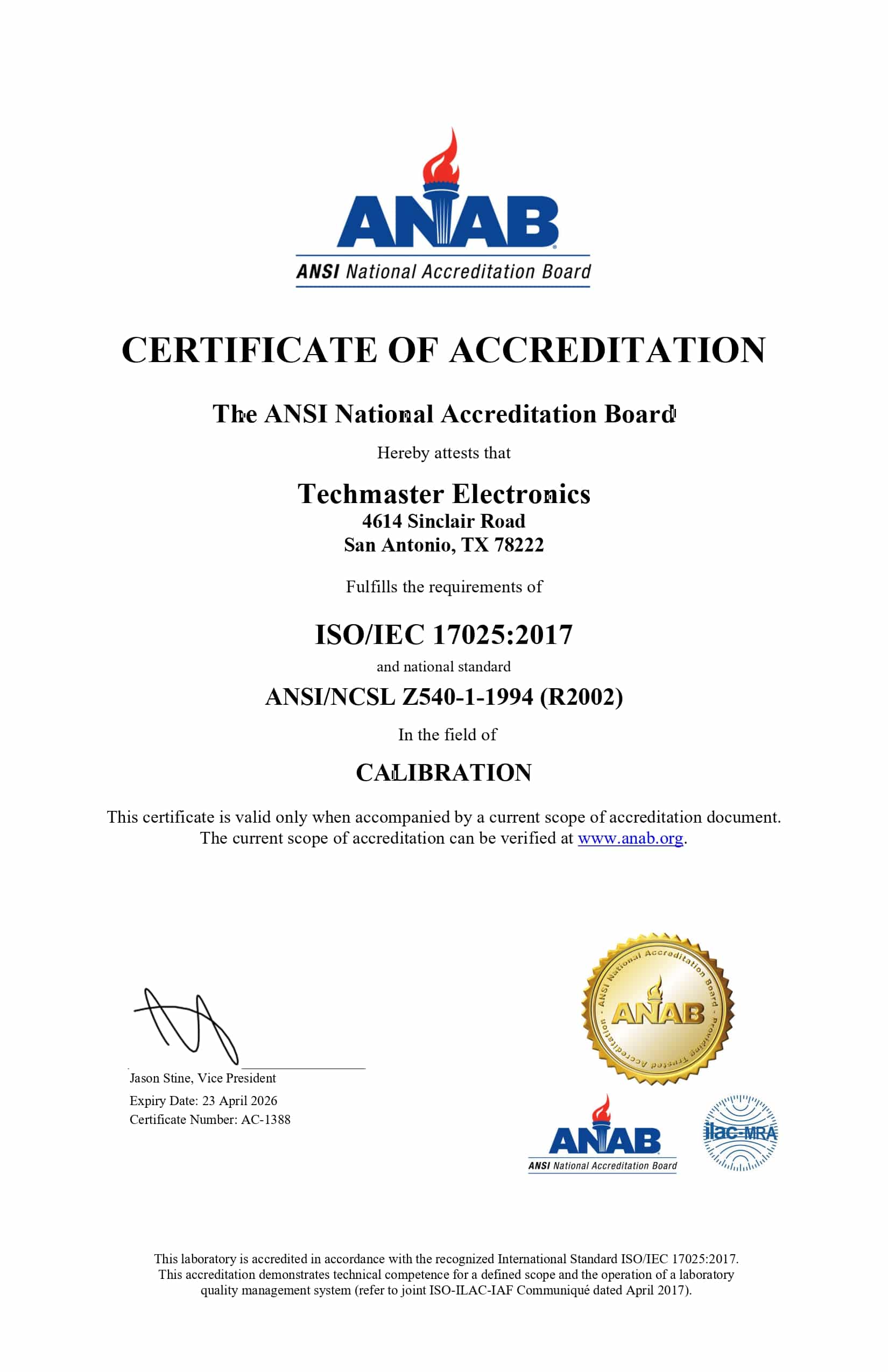
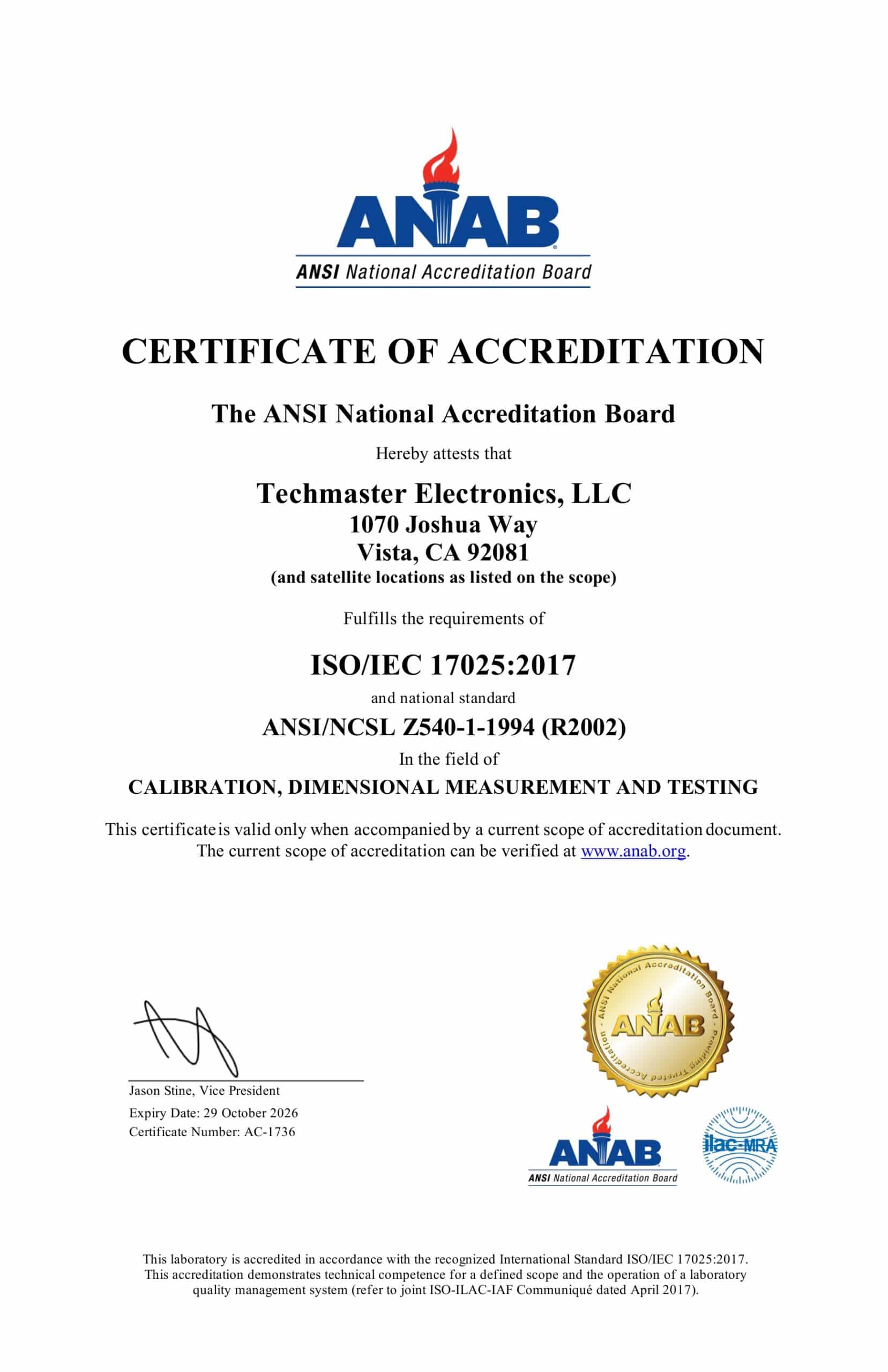
Accreditation Labels: Ensuring the lab performing the work is ISO/IEC 17025 accredited.
3. Applications Across Key Industries
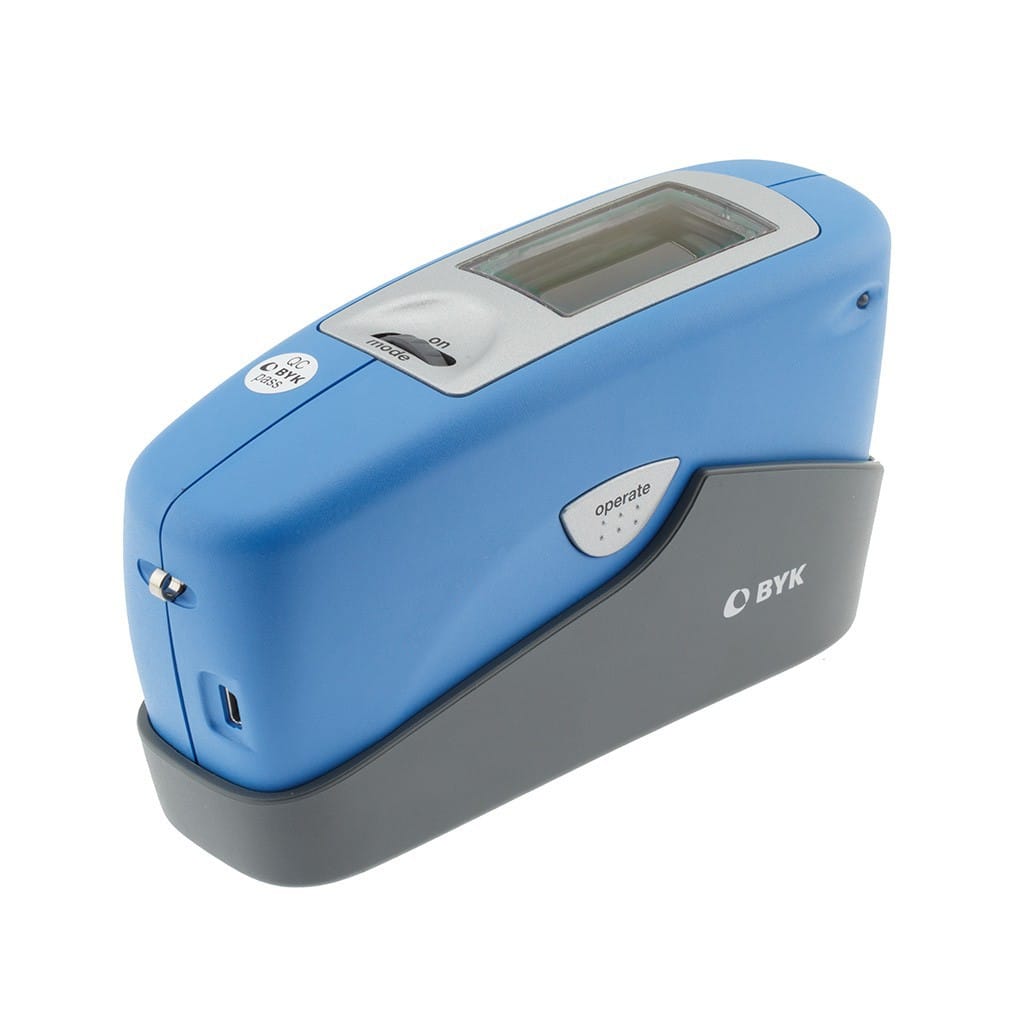
The impact of accurate gloss measurement spans across nearly every sector of modern manufacturing.
3.1. Automotive and Transportation
In the automotive world, color and gloss must match perfectly across different materials, metal hoods, plastic bumpers, and carbon fiber spoilers. If the gloss meter at the bumper supplier is not synchronized via proper Micro-Gloss Calibration with the meter at the assembly plant, the final vehicle will appear multi-toned, leading to expensive rework.
3.2. Aerospace and Defense
In aerospace, gloss control is often functional rather than purely aesthetic. Anti-glare coatings on cockpit instruments or stealth coatings on military aircraft rely on precise gloss levels to function correctly. Measurement errors in these environments can have safety implications.
3.3. Consumer Electronics
The “premium feel” of modern electronics is heavily dictated by surface finish. Tech giants rely on gloss measurement to ensure that thousands of units produced across different global factories maintain a singular, cohesive look.
4. The Anatomy of a Professional Calibration Process
When you send your equipment to a Techmaster Electronics laboratory, the process involves more than just a quick check.
Step 1: Cleaning and Inspection
The aperture and internal optics are inspected for scratches or contamination. Even a fingerprint on a reference tile can cause a deviation of several Gloss Units.
Step 2: “As-Found” Data Collection
We record the device’s performance before any adjustments are made. This data is vital for your quality team to determine if previous production batches may have been measured incorrectly.
Step 3: Multi-Point Verification
We don’t just check one point. A comprehensive Micro-Gloss Calibration involves testing the meter across its full range, from high-gloss mirrors to low-gloss ceramic tiles, to ensure linearity.
Step 4: Adjustment and “As-Left” Reporting
If the device is outside of the manufacturer’s specified tolerance, our technicians perform precision adjustments. The final “As-Left” data confirms the device is back to its peak operating state.
5. Choosing the Right Calibration Partner
Not all calibration labs are created equal. For high-precision optical instruments, the choice of a partner is vital.
5.1. ISO/IEC 17025 Accreditation
This is the single most important credential. It proves that a laboratory has the technical competence and quality systems to produce accurate results. Techmaster Electronics maintains rigorous accreditation across its network.
5.2. On-Site vs. Laboratory Services
For many high-volume manufacturers, shipping equipment off-site causes unacceptable downtime. Techmaster offers On-Site Micro-Gloss Calibration, bringing our NIST-traceable standards and expert technicians directly to your production floor in San Diego, Irvine, Orlando, or Mexico.
5.3. Expertise in Leading Brands
Whether you utilize BYK-Gardner, Konica Minolta, or Rhopoint equipment, our team is trained to handle the specific nuances of each manufacturer’s optical bench.
6. Conclusion: Protecting Your Brand Reputation
In an era of zero-defect manufacturing, measurement integrity is your strongest defense. Micro-Gloss Calibration is a small investment that protects a massive asset: your brand’s reputation for quality.
By partnering with Techmaster Electronics, you gain more than just a certificate. You gain the confidence that every measurement taken in your facility is backed by the highest standards of metrology in North America.
Mission-Critical Accuracy
Laboratory and On-Site services across San Diego, Orlando, and Mexico.
Frequently asked questions
What is Micro-gloss calibration?
How often should a Micro-gloss be calibrated?
What standards apply to Micro-gloss calibration?
What is included on the certificate?
Can you calibrate the Micro-gloss on-site?
Need Micro-gloss calibration?
ANAB-accredited, NIST-traceable, fast turnaround, in-lab or on-site across the USA.
Contact us for a quoteReferences & industry standards
- ISO/IEC 17025 testing & calibration laboratory requirements
- NIST calibration services and measurement traceability
- NIST RF electromagnetics metrology
- A2LA / ANAB accreditation for calibration laboratories
External standards bodies. Techmaster Electronics is an ISO/IEC 17025-accredited, NIST-traceable calibration laboratory.

Khanh Nguyen is the Marketing Manager at Techmaster Electronics, a B2B marketing leader covering the test, measurement, and ISO/IEC 17025 accredited calibration industry across the US and Vietnam markets.