
Temp Controller Calibration
Why calibration intervals matter
How Temp Controller calibration works
- Intake & visual inspection
- Environmental stabilization
- As-found measurement
- Comparison to NIST-traceable standards
- Adjustment if required
- As-left results & certificate
Your calibration, covered
In-lab vs on-site calibration
In-lab calibration
- Accredited bench with full reference standards
- Best achievable measurement uncertainties
- Pickup & return logistics handled
- Ideal for precision and reference work
On-site calibration
- We calibrate the Temp Controller at your facility
- No shipping risk or transit downtime
- As-found data captured before any move
- Ideal for fixed, large or sensitive assets
In-depth guide
Precision in Thermal Management: The Ultimate Guide to Temp Controller Calibration
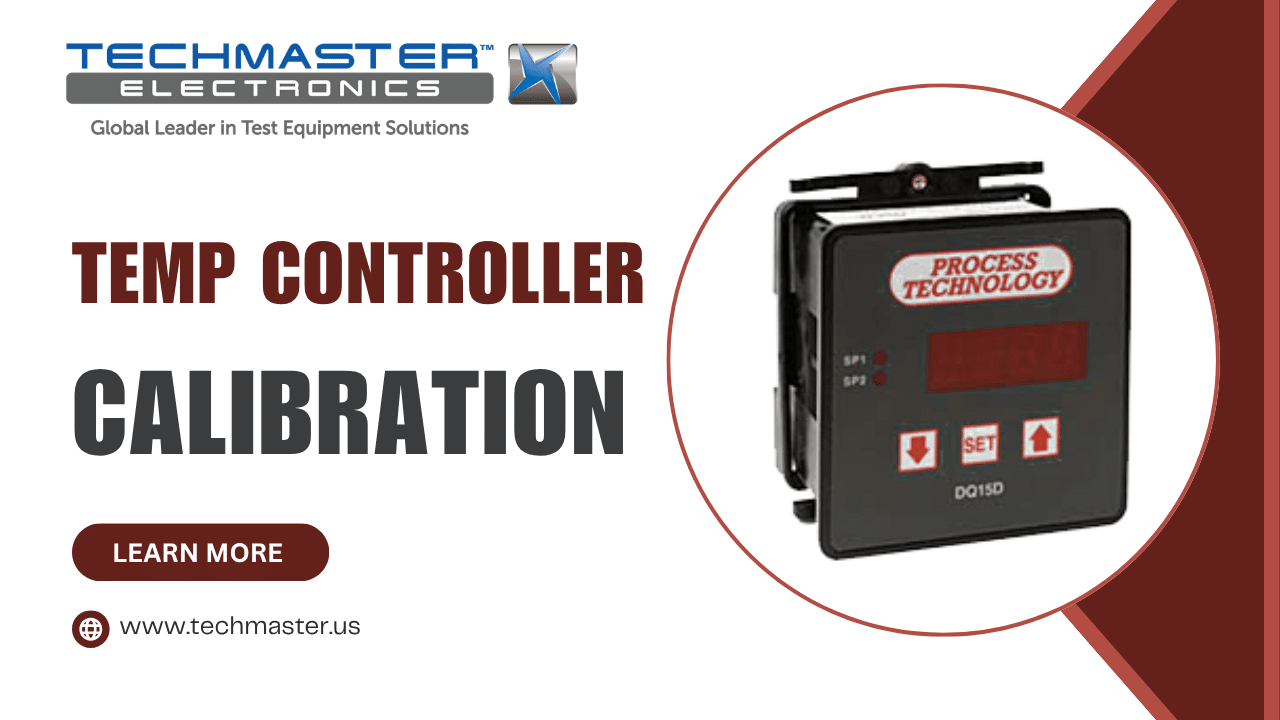
In the modern industrial landscape, temperature is arguably the most critical variable affecting product quality, safety, and operational consistency. From chemical processing to food production, maintaining a stable thermal environment is the primary responsibility of the Temp Controller. However, even the most advanced controllers can drift over time due to environmental factors or component aging. This makes Temp Controller Calibration an indispensable technical requirement for any facility aiming for excellence.
1. Understanding the Mechanics: How Temp Controllers Work
Signal Reception
Inputs from RTDs translated from electrical resistance.
PID Processing
Algorithms compare real-time data against Set Points.
Output Regulation
Adjusts power to heating/cooling elements to eliminate environmental deviations.
To appreciate the necessity of Temp Controller Calibration, one must first understand the internal logic of the device. A temperature controller acts as the “brain” of a thermal system, operating through a sophisticated feedback loop:
-
Signal Reception: The controller receives input signals from external temperature sensors, such as RTDs (Resistance Temperature Detectors) or Thermocouples.
-
Data Processing: The internal microprocessor compares the real-time temperature data against a pre-defined Set Point.
-
Output Regulation: Utilizing advanced algorithms, most commonly PID (Proportional-Integral-Derivative), the device adjusts the power sent to heating or cooling elements to eliminate deviations.
Because this process relies on the precise conversion of electrical signals (millivolts or ohms) into temperature readings, any minor inaccuracy in the controller’s circuitry can lead to significant errors in the physical environment.
2. Industrial Applications: Where Precision is Paramount
Food & Bev
Exact pasteurization preserves flavor and safety.
Medical
Life-saving research requires infallible storage.
Manufacturing
Prevent warping in injection molding cycles.
The Temp Controller is utilized across a vast array of sectors, ensuring that complex production cycles remain within strict thermal boundaries:
2.1. Surface Treatment and Electroplating
In chemical baths, precise temperature control is vital for ensuring the correct thickness, adhesion, and finish of metallic coatings. Even a slight drift can result in brittle plating or wasted chemical resources.
2.2. Food and Beverage Production
Thermal processing, such as pasteurization or sterilization, requires exact temperatures to eliminate harmful bacteria without compromising the flavor or nutritional value of the product.
2.3. Plastics and Rubber Manufacturing
In injection molding and extrusion, controlling the temperature of molds and barrels prevents material degradation, warping, or “burning,” ensuring every part produced is identical to the last.
2.4. Medical and Laboratory Research
Biological samples and pharmaceuticals often require storage or incubation within incredibly narrow temperature ranges. In these environments, the controller must be infallible to prevent the loss of years of research or life-saving medicine.
3. The Critical Role of Temp Controller Calibration
The Economic Impact
Uncalibrated systems work harder to compensate for “phantom errors,” increasing energy costs.
Absolute Traceability
Calibration isn’t just about numbers; it’s about matching global standards (ISO 9001, AMS2750).
- NIST Traceable Verification
- On-site Expert Consultation
While modern controllers feature high-performance microprocessors, they are not immune to “electronic drift”, the gradual loss of accuracy caused by electromagnetic interference, humidity, or the natural degradation of internal reference components. Temp Controller Calibration addresses these issues by providing three core benefits:
3.1. Ensuring Absolute Process Accuracy
In high-stakes environments like furnace operations or chemical reactors, a deviation of just 1-2°C can trigger a chain reaction of product defects. Regular calibration aligns the device with an absolute traceable standard, ensuring the displayed value matches the physical reality.
3.2. Optimizing Energy Efficiency
An uncalibrated controller often causes the system to “overshoot” or work harder than necessary to compensate for phantom errors. By calibrating the device, the system operates at its peak thermodynamic efficiency, significantly reducing energy consumption and operational costs.
3.3. Regulatory Compliance and Safety
Many industries, particularly aerospace, automotive, and pharmaceuticals, must adhere to strict international standards such as ISO 9001 or AMS2750. Temp Controller Calibration provides the documented evidence required by auditors to prove that the facility is operating safely and within legal quality frameworks.
4. When Should You Schedule Calibration?
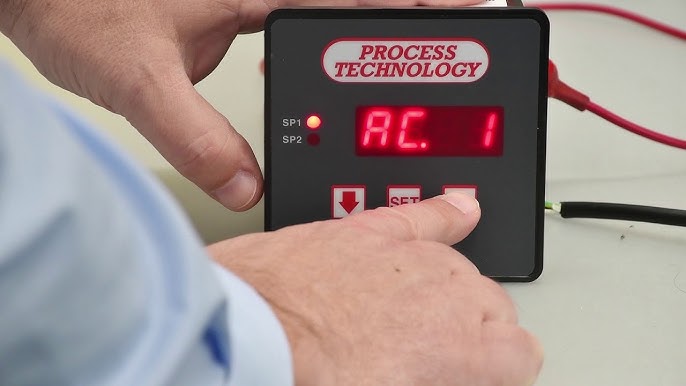
To maintain the integrity of your thermal systems, technicians should monitor specific “milestones” that indicate a need for professional Temp Controller Calibration:
-
Periodic Intervals (6–12 Months): Depending on the criticality of the process, a yearly or bi-yearly check-up is the industry standard for maintaining reliability.
-
Sensor Replacement: Whenever a new thermocouple or RTD is installed, the controller should be recalibrated to ensure the new sensor-controller pair is perfectly synchronized.
-
After Electrical Incidents: Power surges or sudden voltage drops can damage the sensitive input circuitry of a controller, leading to immediate offsets.
-
Inconsistent Product Quality: If your production yields show unexpected variations, the temperature controller is often the first place to look for hidden inaccuracies.
Conclusion: Investing in Reliability
Overall, Temp Controller Calibration is much more than a regular maintenance task. In fact, it is an important investment in product quality, system stability, and your company’s reputation. Today, many industries depend on accurate temperature control to keep production safe, stable, and efficient. Therefore, regular calibration is necessary for long-term success.
A well-calibrated temperature control system shows a strong commitment to quality, safety, and professional standards. In addition, it helps companies reduce errors, avoid product damage, and improve daily operations. Over time, temperature controllers may lose accuracy because of heavy use, changing environments, or aging parts. As a result, small temperature differences can lead to poor product quality, energy waste, or equipment problems.
For this reason, regular calibration by skilled metrology professionals is very important. Not only does calibration improve measurement accuracy, but it also helps extend equipment life and reduce unexpected downtime. In addition, it supports compliance with industry standards and quality requirements.
Most importantly, accurate calibration protects your equipment, your products, and your business performance. In the long run, companies that maintain reliable temperature control systems can improve customer trust, reduce operating costs, and increase production efficiency. In the end, Temp Controller Calibration is not just a technical process. Instead, it is a smart step toward better performance, stronger reliability, and sustainable business growth.Frequently asked questions
What is Temp Controller Calibration?
How often should a Temp Controller be calibrated?
What standards apply to Temp Controller Calibration?
What is included on the certificate?
Can you calibrate the Temp Controller on-site?
Need Temp Controller calibration?
ANAB-accredited, NIST-traceable, fast turnaround, in-lab or on-site across the USA.
Contact us for a quoteReferences & industry standards
- ISO/IEC 17025 testing & calibration laboratory requirements
- NIST calibration services and measurement traceability
- A2LA / ANAB accreditation for calibration laboratories
External standards bodies. Techmaster Electronics is an ISO/IEC 17025-accredited, NIST-traceable calibration laboratory.
Related reading: AMS2750H calibration requirements for furnace control, monitoring and recording instruments

Khanh Nguyen is the Marketing Manager at Techmaster Electronics, a B2B marketing leader covering the test, measurement, and ISO/IEC 17025 accredited calibration industry in the United States.