
Oscilloscope Calibration: ISO/IEC 17025 Step-by-Step Guide
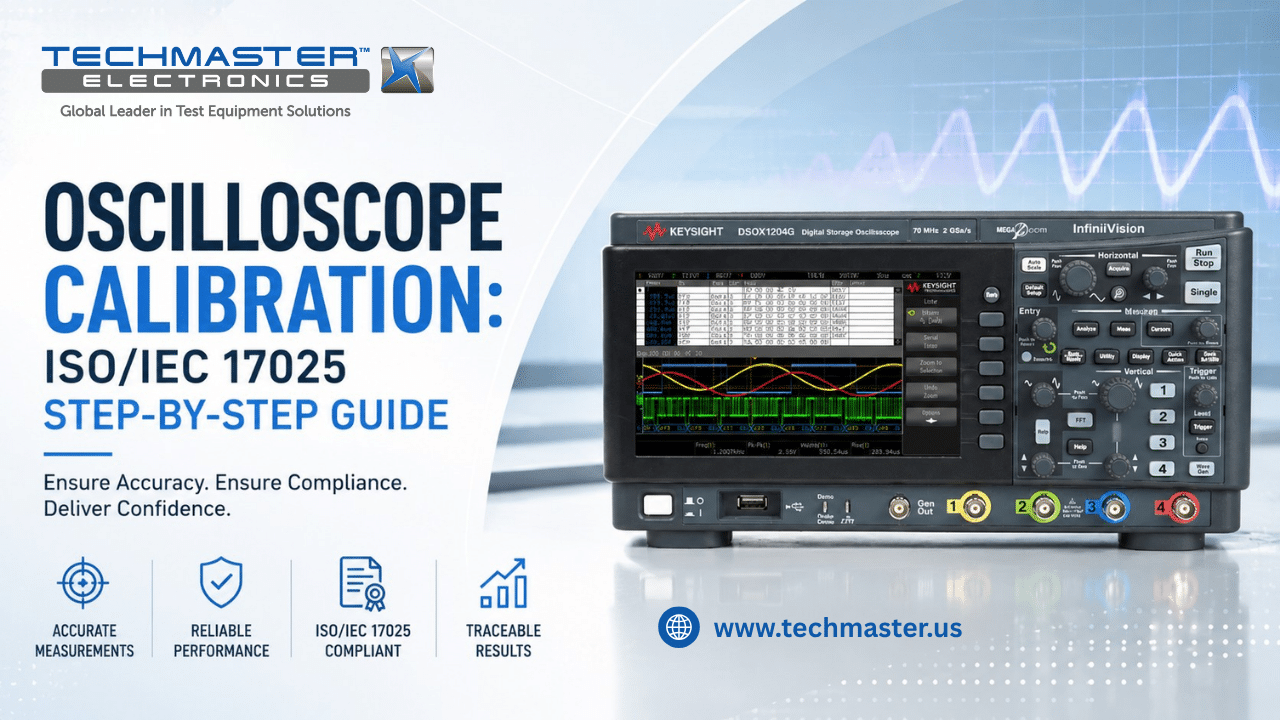
Oscilloscopes serve as the fundamental diagnostic tool for analyzing signal integrity, timing, and electronic performance across industrial and R&D environments. However, over time, internal components such as attenuators, amplifiers, and timebase crystals undergo subtle degradation, leading to amplitude errors and phase shifts that can compromise critical engineering decisions. Therefore, Oscilloscope Calibration is a mandatory metrological process that verifies these performance parameters against traceable standards, ensuring that voltage and timing measurements remain within manufacturer specifications and regulatory requirements.
Without regular calibration, oscilloscopes can experience measurement drift, where the device provides data that appears precise but is fundamentally inaccurate. As a result, organizations face significant risks, including the misdiagnosis of circuit failures, non-compliance with industry standards, and potentially costly design flaws in high-speed digital and RF systems. By implementing a rigorous calibration program, companies can minimize these risks and protect themselves from hidden performance gaps.
1. Technical Principles: Signal Integrity and Accuracy
1.1. How is oscilloscope performance verified?
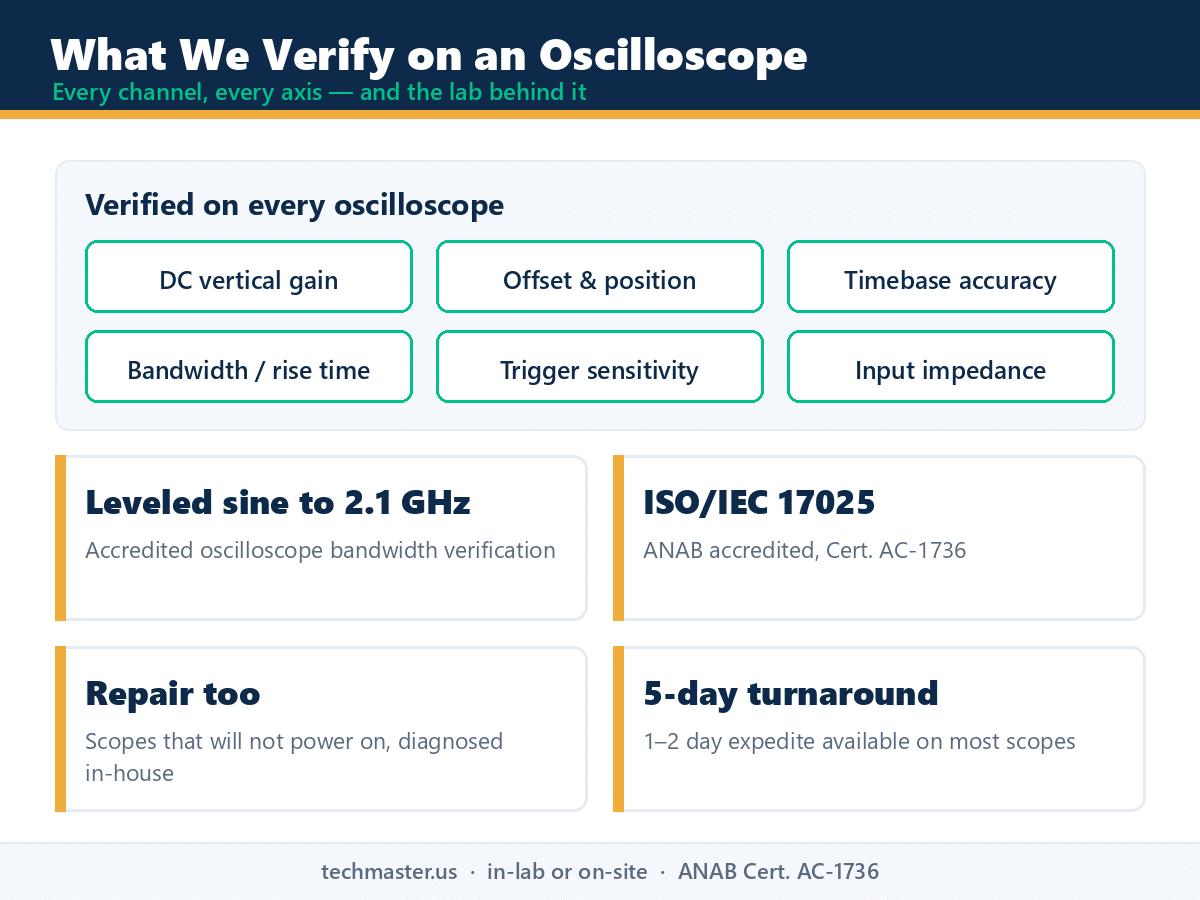
Oscilloscope Calibration involves stimulating the instrument with precise DC and AC voltages, fast-edge signals, and timing markers to verify vertical sensitivity, bandwidth flatness, timebase accuracy, and trigger sensitivity against NIST-traceable standards.
1.2. Addressing Measurement Drift
Oscilloscope measurement drift is primarily caused by thermal instability, environmental moisture, and the aging of high-frequency transistors. Calibration procedures perform an “As-Found” analysis, followed by internal adjustments and an “As-Left” verification to ensure the instrument returns to its baseline performance. This comprehensive mapping ensures that high-speed transients are captured with absolute fidelity, maintaining the instrument’s utility as a high-confidence diagnostic asset.
2. Industrial Applications: Why Precision Matters
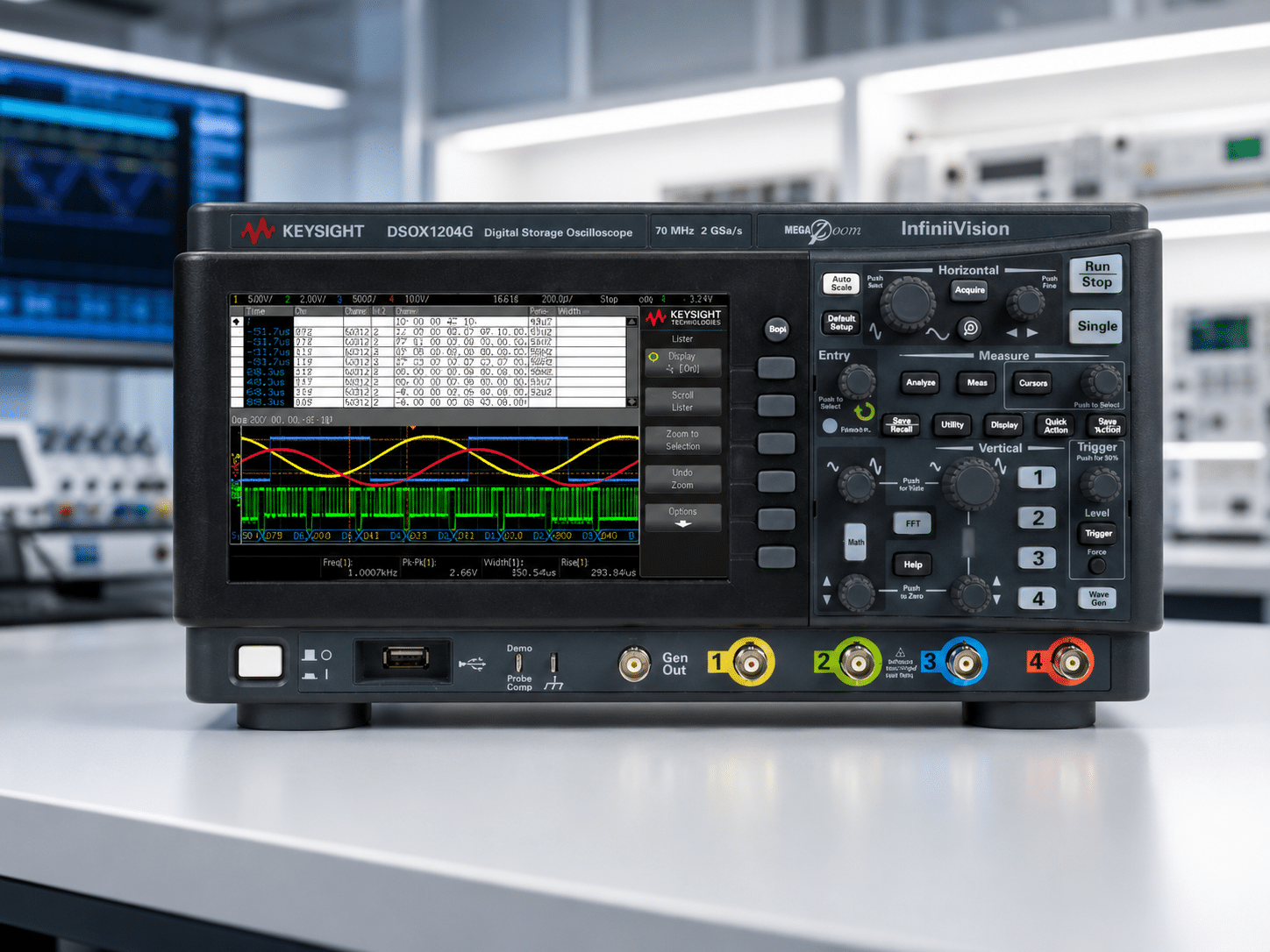
In which environments is oscilloscope accuracy paramount?
Precise oscilloscopes are foundational to industrial safety, quality control, and advanced electronic development, ensuring that signal interpretation is never compromised by hardware drift.
-
Electronic Manufacturing: Precise verification of pulse width and peak voltage is required to ensure that power supplies and consumer electronics meet safety and performance standards.
-
Medical Device Development: Calibration ensures that diagnostic devices capture patient signals accurately, which is critical for medical safety and regulatory compliance.
-
Automotive/EV Systems: Analyzing high-speed CAN-bus communications and battery management system (BMS) signals requires ultra-precise timebase accuracy to prevent communication errors.
-
Aerospace & Defense: Verification of radar signals and flight control systems demands rigorous calibration to maintain mission-critical signal integrity.
3. The Calibration Pillar: Traceability and Compliance
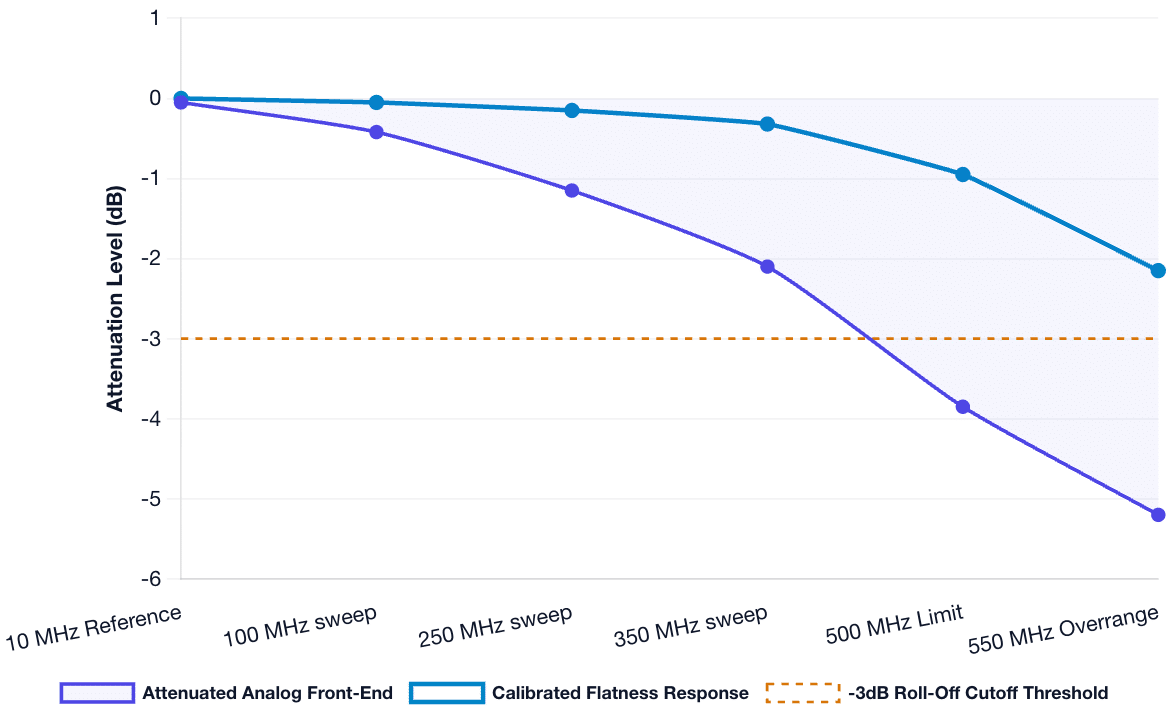
Analog Bandwidth Flatness Response
Tracks frequency attenuation over a sweep to the 500MHz bandwidth limit. Drifting analog front-ends dampen high-frequency signals, showing excessive decibel loss long before the -3dB hardware cutoff.
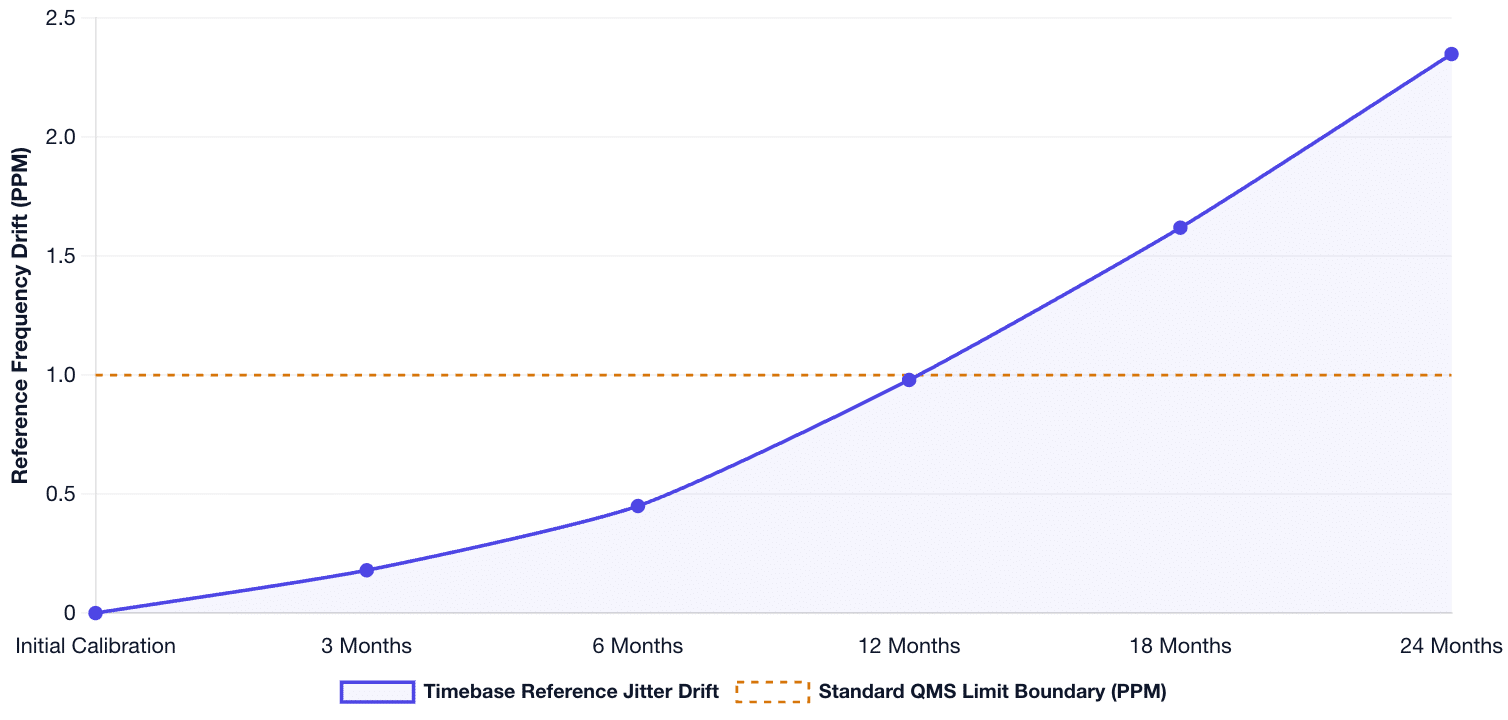
Timebase Crystal Frequency Drift
Internal quartz-crystal reference timebases suffer from temperature instability and physical aging. This chart tracks accumulated timing frequency deviations (measured in parts-per-million, PPM) over a 24-month operation cycle, outlining the critical audit-ready limit boundary.
Why is ISO/IEC 17025 Accreditation Mandatory?
ISO/IEC 17025 accreditation is widely recognized as the international benchmark for laboratory competence and measurement reliability. When oscilloscope calibration is performed under an ISO/IEC 17025-accredited framework, it establishes a documented and traceable link to national and international measurement standards. As a result, organizations can demonstrate technical competence and measurement integrity during customer audits, regulatory inspections, and quality management reviews.
Furthermore, accredited calibration provides confidence that test results are generated using validated procedures, qualified personnel, and properly maintained reference standards. This level of assurance is essential for industries where measurement accuracy directly impacts product quality, safety, and compliance.
Without regular accredited calibration, hidden liabilities can accumulate over time. Measurement errors may go undetected, leading to inaccurate test data, product recalls, compliance violations, or costly system failures that are difficult to investigate and resolve. Consequently, even small deviations in oscilloscope performance can create significant risks in engineering, manufacturing, and research environments.
For this reason, Techmaster US maintains that a calibration certificate is more than a document—it is objective evidence that your oscilloscope is compliant, reliable, and operating within specified tolerances. Ultimately, it provides the technical proof needed to support critical engineering decisions and ensure that measurement results remain consistent, defensible, and audit-ready.4. How to Prepare Your Oscilloscope for Calibration
Follow these steps to ensure your oscilloscope is ready for the calibration process at Techmaster US.
1. First, Perform a Self-Calibration Run the manufacturer’s self-calibration routine to minimize temporary thermal drift before external calibration.
2. Next, Verify Probe Condition Include all probes used with the unit, as proper probe compensation is essential for maintaining measurement accuracy.
3. Then, Clear Calibration Data Memory Ensure sufficient storage space is available if new calibration constants need to be installed during service.
4. Finally, Provide Usage History Share information about the operating environment and typical signal frequencies. This helps our metrologists identify potential issues related to aging or heavy usage.Techmaster US: Your Calibration Partner
Techmaster Electronics, LLC is an independent, ISO/IEC 17025 accredited calibration laboratory supporting the U.S. manufacturing sector since 1989. Our experts operate out of five laboratories (four ISO/IEC 17025 accredited) located in California, Florida, Texas, and North Carolina.
We perform Oscilloscope Calibration using ultra-high-precision signal sources, bridging the gap between complex industrial requirements and national standards. Customers receive instantly verifiable digitized calibration records, simplifying quality management workflows.
Why Choose Techmaster US?
-
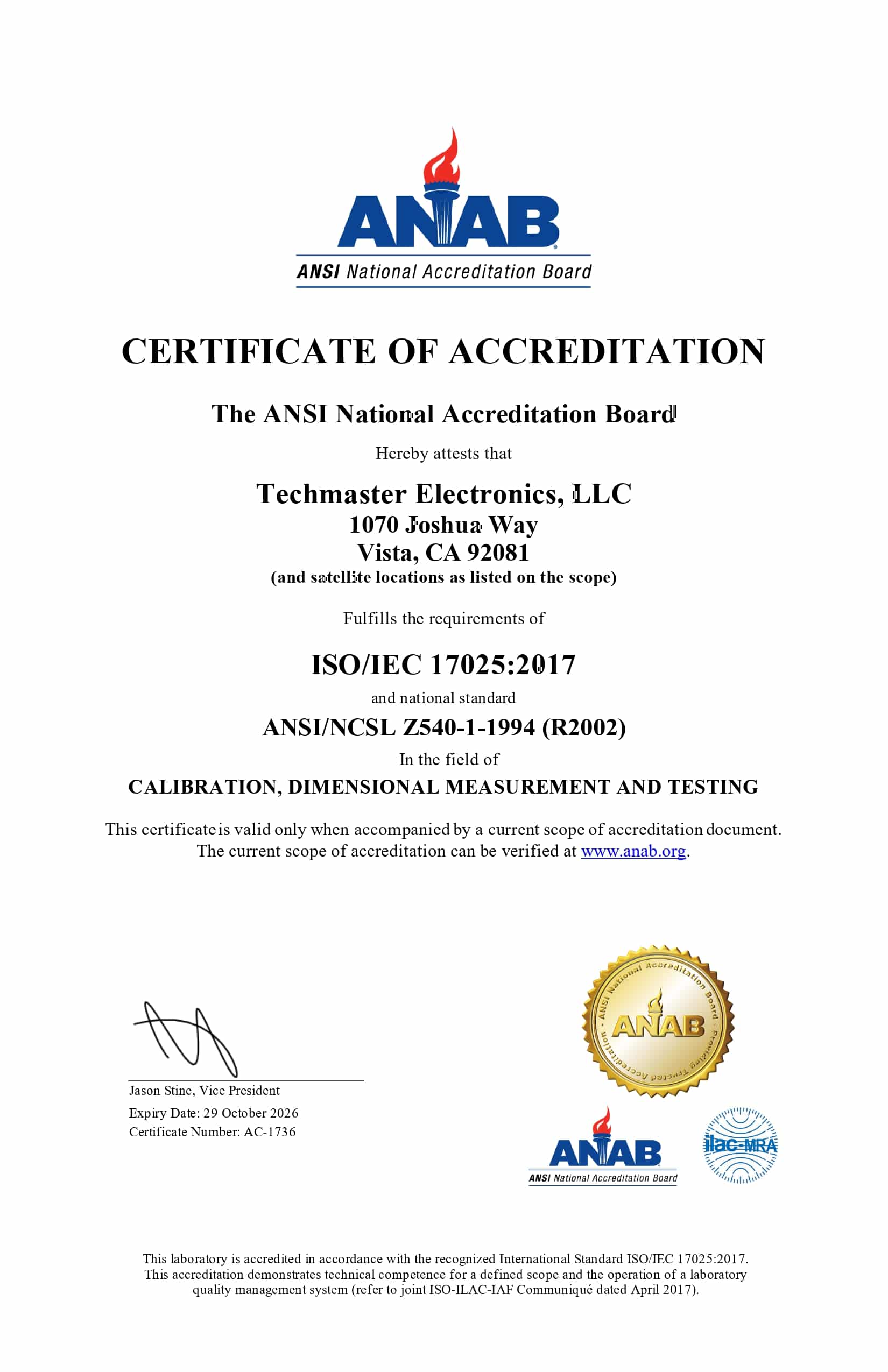
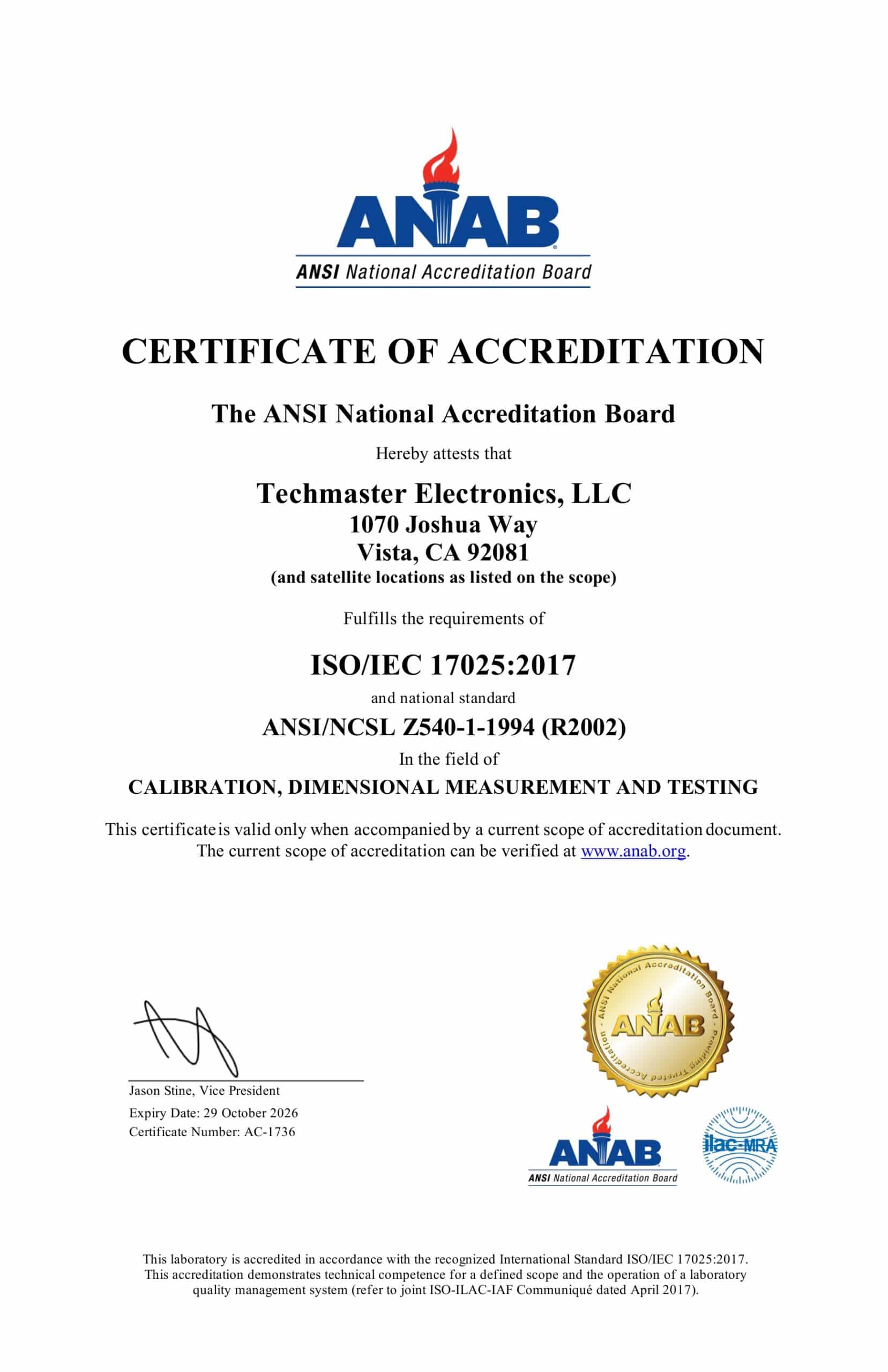
Full ISO/IEC 17025 Accreditation: Procedures strictly adhere to our ANAB cert AC-1736 quality framework.
-
Flexible Service Options: We offer both in-lab and on-site calibration services to minimize operational downtime.
-
Comprehensive Expertise: Our capabilities cover the full spectrum of disciplines, including electrical, RF, mechanical, and environmental measurement.
Frequently Asked Questions (FAQs)
1. How often should an oscilloscope be calibrated?
Annual calibration is the industry standard for most professional and regulatory environments. However, if the oscilloscope is used for high-precision validation or in extreme conditions, a 6-month cycle is recommended to detect sensitivity drift early.
2. Why does an oscilloscope lose accuracy over time?
Loss of accuracy is primarily due to the gradual aging of internal components like analog-to-digital converters and attenuation networks, as well as thermal fatigue and the environmental conditions of the laboratory.
3. Why is ISO/IEC 17025 accreditation required?
This international standard confirms technical competence, ensuring that your calibration results are internationally recognized, traceable, and fully compliant with quality management requirements.
4. Can I calibrate an oscilloscope using its built-in software?
No. While built-in software performs internal adjustments, it does not constitute an ISO/IEC 17025 calibration, as it lacks external, traceable reference standards to verify the device’s absolute accuracy.
Protect the Fidelity of Your Signal Audits
Ensure your high-frequency development and production lines operate with validated precision. Partner with Techmaster US for certified, ISO/IEC 17025 accredited calibrations.
CONTACT USRelated reading: How to respond when a calibration finds your instrument out of tolerance.
Related reading: how to read an ISO/IEC 17025 calibration certificate — required elements, uncertainty, and red flags
References & industry standards
- ISO/IEC 17025 testing & calibration laboratory requirements
- NIST calibration services and measurement traceability
- NIST Fundamental Electrical Measurements
- A2LA / ANAB accreditation for calibration laboratories
External standards bodies. Techmaster Electronics is an ISO/IEC 17025-accredited, NIST-traceable calibration laboratory.
What bandwidth can you calibrate to?
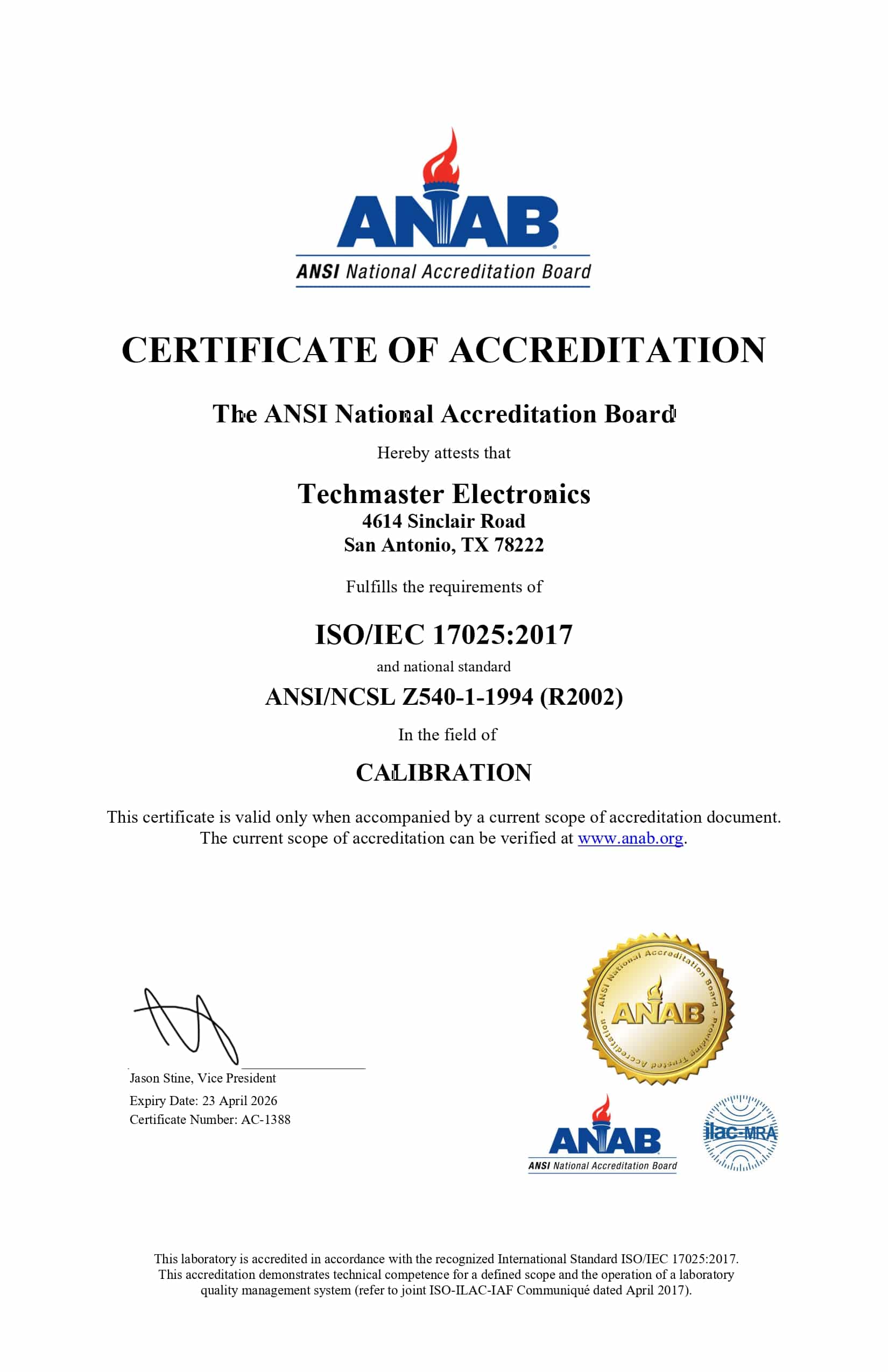
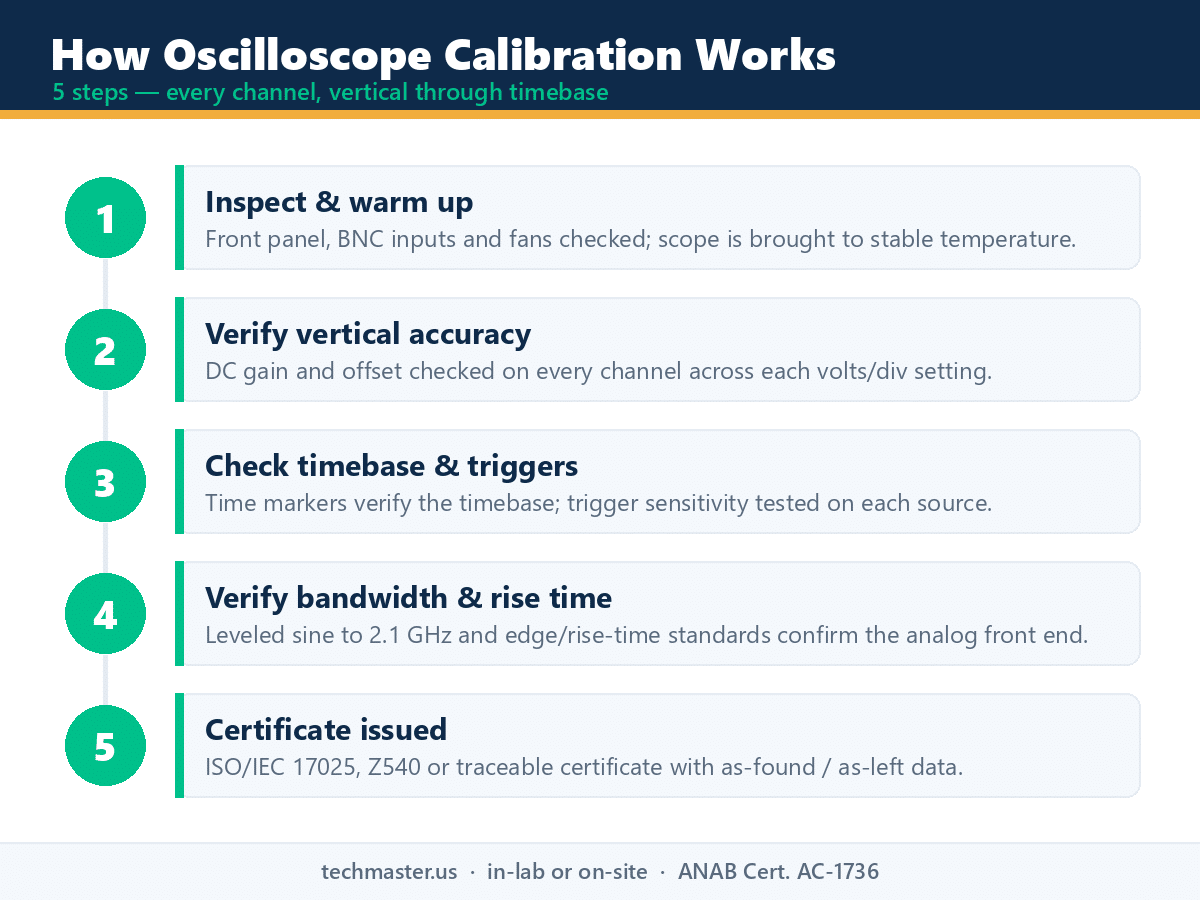
Accredited oscilloscope verification uses leveled sine to 2.1 GHz, alongside square wave, time markers, and programmable edge and rise-time standards, at our Vista, Santa Clara, and Orlando laboratories. Our San Antonio laboratory covers leveled sine to 600 MHz and adds a wave generator. Oscilloscopes sit on the ANAB ISO/IEC 17025 accredited scope (Cert. AC-1736). Note that a scope’s own self-calibration cannot substitute for this: self-cal corrects internal drift against the instrument’s own references and cannot detect that those references have themselves shifted.
Frequently asked questions
What is oscilloscope calibration?
Oscilloscope Calibration is the documented comparison of a oscilloscope against NIST-traceable reference standards under ISO/IEC 17025. It quantifies the oscilloscope’s error and measurement uncertainty and confirms it performs within tolerance, with as-found and as-left data on the certificate.
How often should a oscilloscope be calibrated?
Most quality systems calibrate a oscilloscope every 12 months, or sooner after repair, overload, or before critical measurements. Set your interval from the manufacturer spec and your ISO 9001 / 13485 / AS9100 program and drift history.
Is Techmaster’s oscilloscope calibration ISO 17025 accredited?
Yes. Techmaster Electronics is ISO/IEC 17025:2017 accredited by ANAB (Certificate AC-1736). Every oscilloscope calibration is NIST-traceable and issued with a full measurement-uncertainty budget.
What is the turnaround for oscilloscope calibration?
Standard turnaround is 5 business days, with 1–2 business-day expedite available. On-site calibration removes shipping time entirely for oscilloscopes that can’t leave the floor.
Do you calibrate oscilloscopes on-site or in-lab?
Both. Techmaster runs five US labs (Vista CA, Santa Clara CA, Orlando FL, San Antonio TX, Holly Springs NC) and offers nationwide on-site oscilloscope calibration to minimize downtime.

Khanh Nguyen is the Marketing Manager at Techmaster Electronics, a B2B marketing leader covering the test, measurement, and ISO/IEC 17025 accredited calibration industry across the US and Vietnam markets.