
How to Use an AC Power Source: Setup, Operation & Best Practices
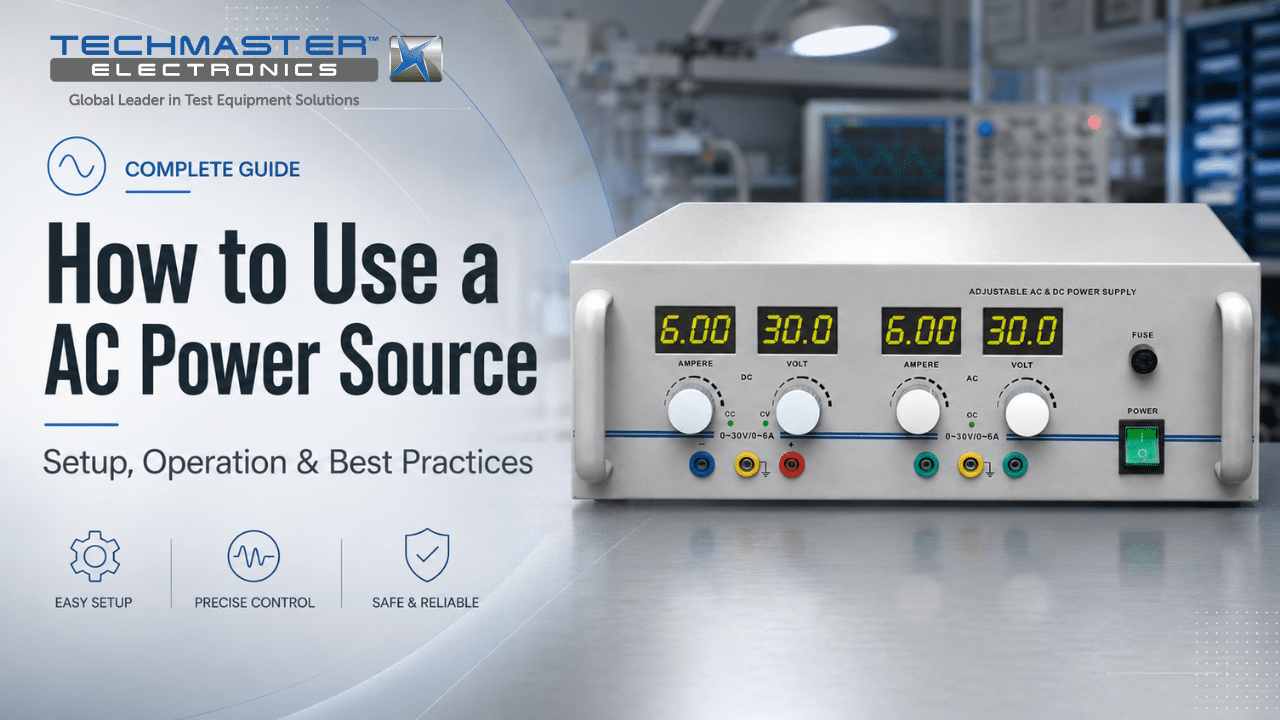
An AC power source is a fundamental tool in electrical metrology and product testing, providing controlled voltage and frequency to simulate various power conditions. When learning how to use an AC power source, operators must prioritize precise waveform control and stable output delivery, as these factors directly impact the accuracy of electronic characterization and compliance testing. Therefore, mastering the setup and operational nuances is critical for preventing measurement errors and ensuring safety during high-stakes testing.
1. Technical Principles: Understanding Power Source Operation
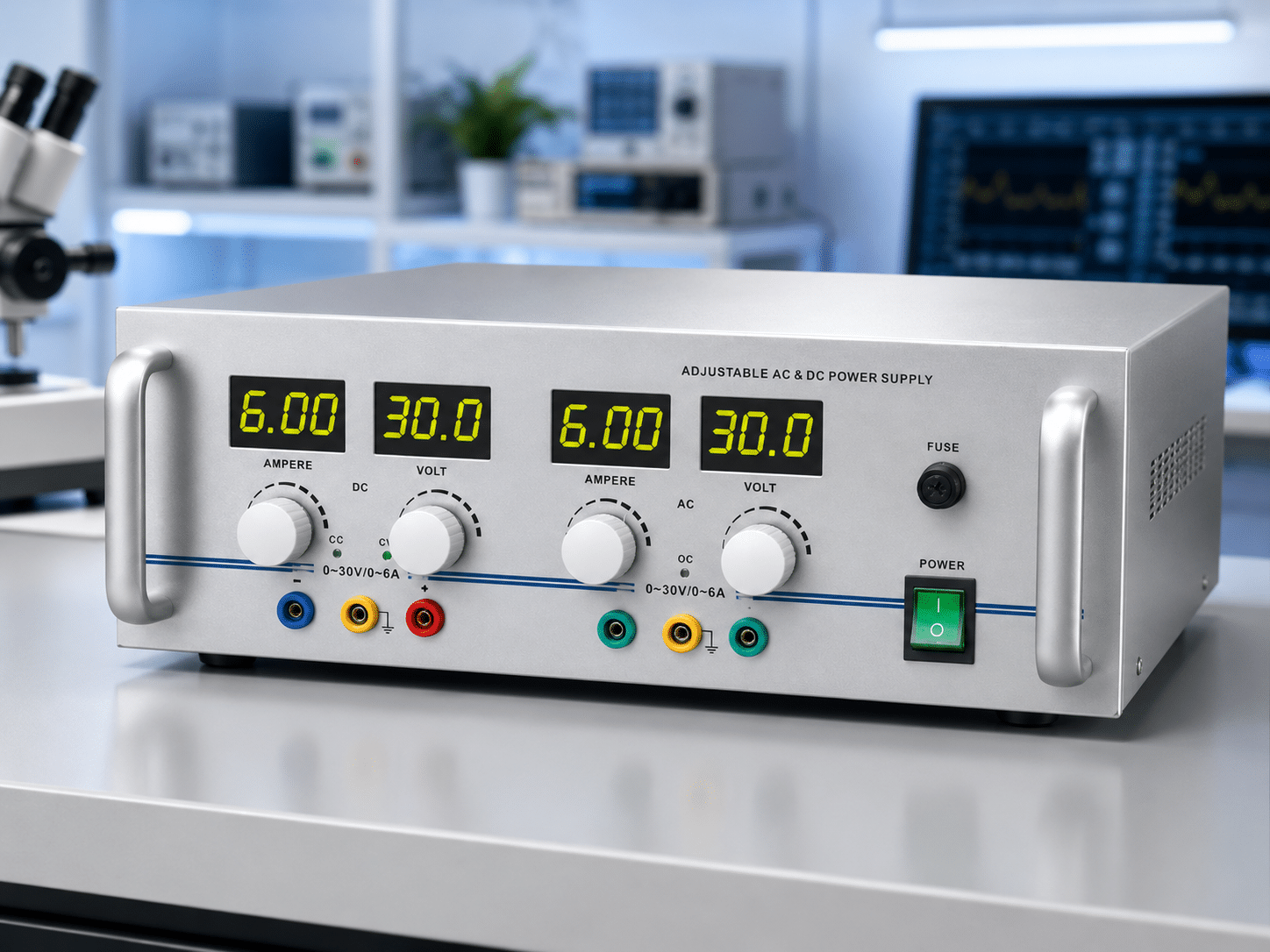
How does an AC power source regulate output?
At its core, an AC power source operates by converting an input voltage into a highly stable, programmable output using advanced pulse-width modulation (PWM) or linear amplification techniques. To achieve this, these systems utilize high-speed feedback loops to continuously monitor the output waveform, adjusting for load fluctuations to maintain consistent amplitude, frequency, and phase angle throughout the testing cycle.
For optimal performance, operators must understand the interaction between the source and the Device Under Test (DUT):
1.1. Voltage Regulation
The ability to maintain a precise RMS voltage regardless of variations in the load impedance.
1.2. Frequency Synthesis
Specifically, this refers to the digital generation of the fundamental sine wave frequency, ensuring stability within micro-hertz precision.
1.3. Harmonic Distortion Control
Additionally, unwanted harmonic components are filtered to produce a clean, low-distortion waveform, thereby enabling highly accurate and repeatable electronic measurements.
2. Industrial Applications: Where Precision Matters
In which industries is an AC power source essential?
Because precise power simulation is essential for product validation, AC power sources are widely used across engineering industries that demand strict power quality standards.
- Renewable Energy (PV Inverters): Engineers use these sources to simulate grid conditions, including voltage sags and frequency shifts, thereby validating inverter grid-tie performance.
- Electric Vehicle (EV) Testing: Similarly, high-power AC sources simulate charging infrastructure or onboard charger behavior under various AC input configurations.
- Medical Device Manufacturing: Furthermore, precision power sources ensure that surgical equipment and diagnostic instruments operate safely under fluctuating power-line conditions while meeting stringent regulatory standards.
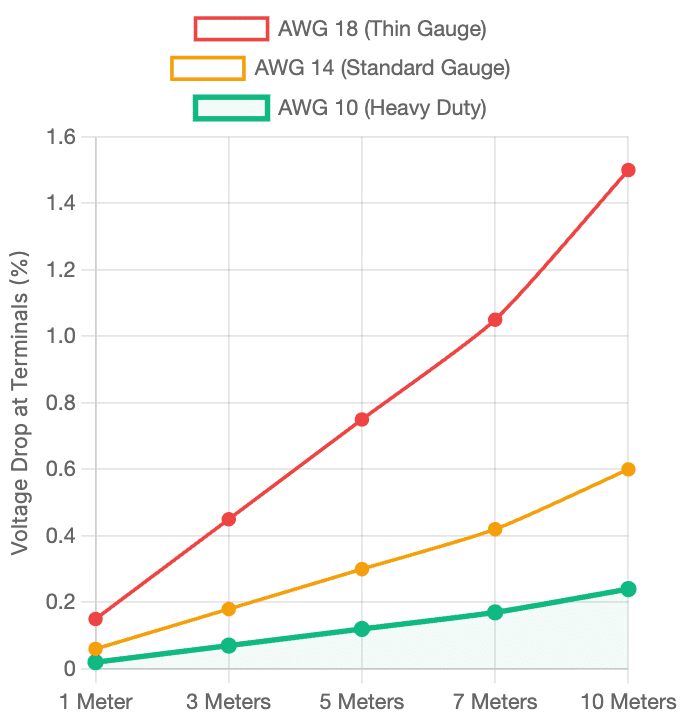
Terminal Voltage Drop vs. Cable Length & Gauge (AWG)
Visualizing how wiring gauge Selection and distance impact voltage sag at maximum continuous load 15A/ 230V.
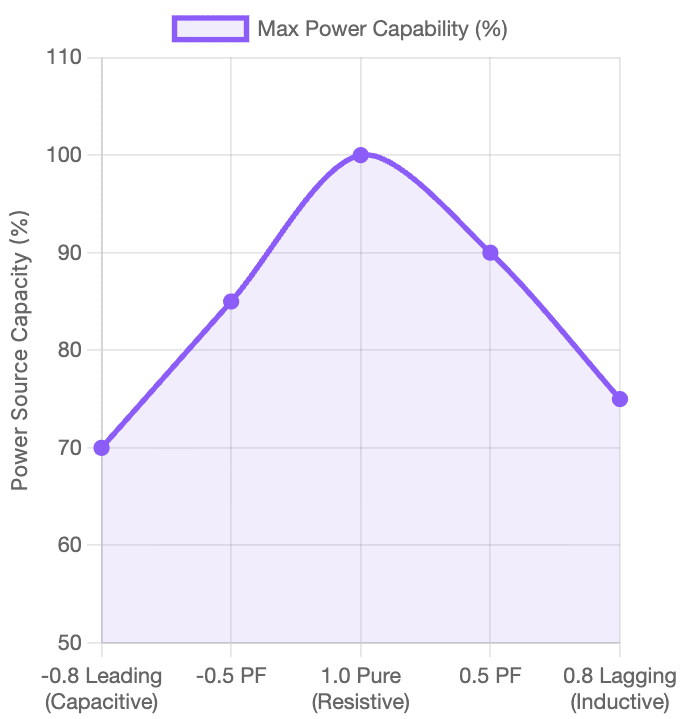
Load Impedance Operational Envelope (PF Boundary)
The programmable AC source’s absolute output power capability curve when running reactive capacitive (leading) or inductive (lagging) loads.
3. The Calibration Pillar: Ensuring Traceability
Why is ISO/IEC 17025 calibration vital for AC power sources?
Calibration is the process of verifying that the power source output aligns with national standards (NIST) through a documented measurement uncertainty budget. As a result, when you use a calibrated power source, your testing results become reproducible, reliable, and compliant with ISO/IEC 17025 quality management systems. Without periodic calibration, however, the equipment’s output set point may gradually drift, leading to invalid test data that could ultimately compromise product certification.
4. How-To: Setting Up Your AC Power Source
1. Initial Inspection
Before powering on the system, verify that the input power cables and output leads are properly rated for the maximum current and voltage required by your specific test.
2. Proper Grounding
Next, ensure the source chassis is correctly earth-grounded to reduce electrical noise interference and maintain operator safety.
3. Warm-up Period
Afterward, allow the AC power source to warm up for approximately 30–60 minutes so it can reach internal thermal equilibrium. Consequently, the output electronics become more stable and deliver higher measurement accuracy.
4. Load Connection
Once the system is stable, connect the DUT using appropriate cabling to minimize voltage drop and high-frequency noise pickup.
5. Program Output Parameters
Finally, input the desired voltage, frequency, and current limit through the control panel or remote interface before initiating the test sequence.
Techmaster US: Expert Metrology Services
Techmaster Electronics, LLC is an independent, ISO/IEC 17025 accredited calibration laboratory supporting the United States manufacturing sector since 1989. Today, our metrologists operate from five accredited laboratories in California, Florida, Texas, and North Carolina, providing comprehensive solutions for complex electrical and power measurement systems.
Moreover, we specialize in high-precision AC power source calibration, ensuring your equipment meets rigorous accuracy requirements through NIST-traceable standards. In addition, our services include both laboratory-based and on-site support to minimize operational downtime.
Why Trust Techmaster US?
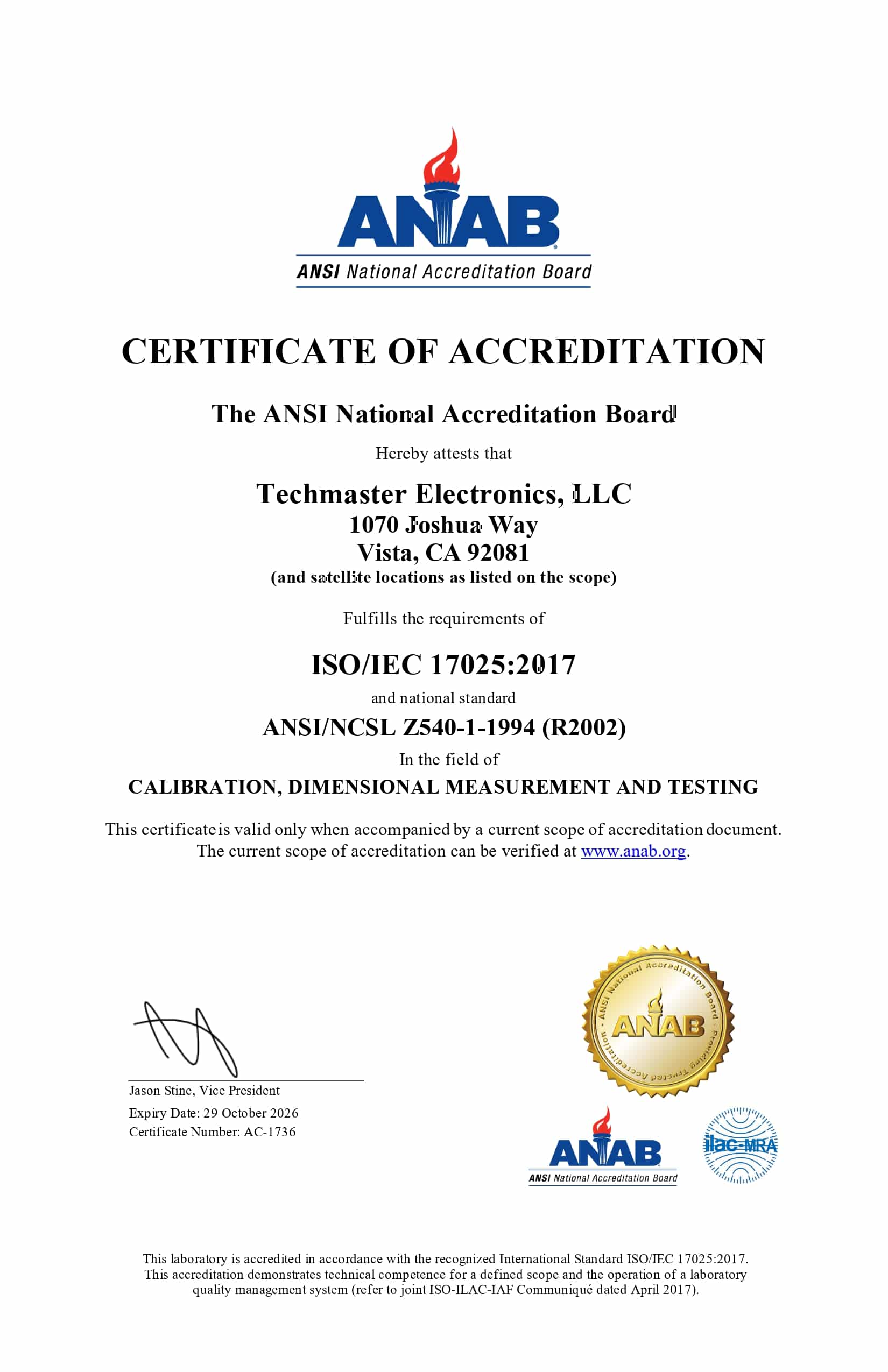
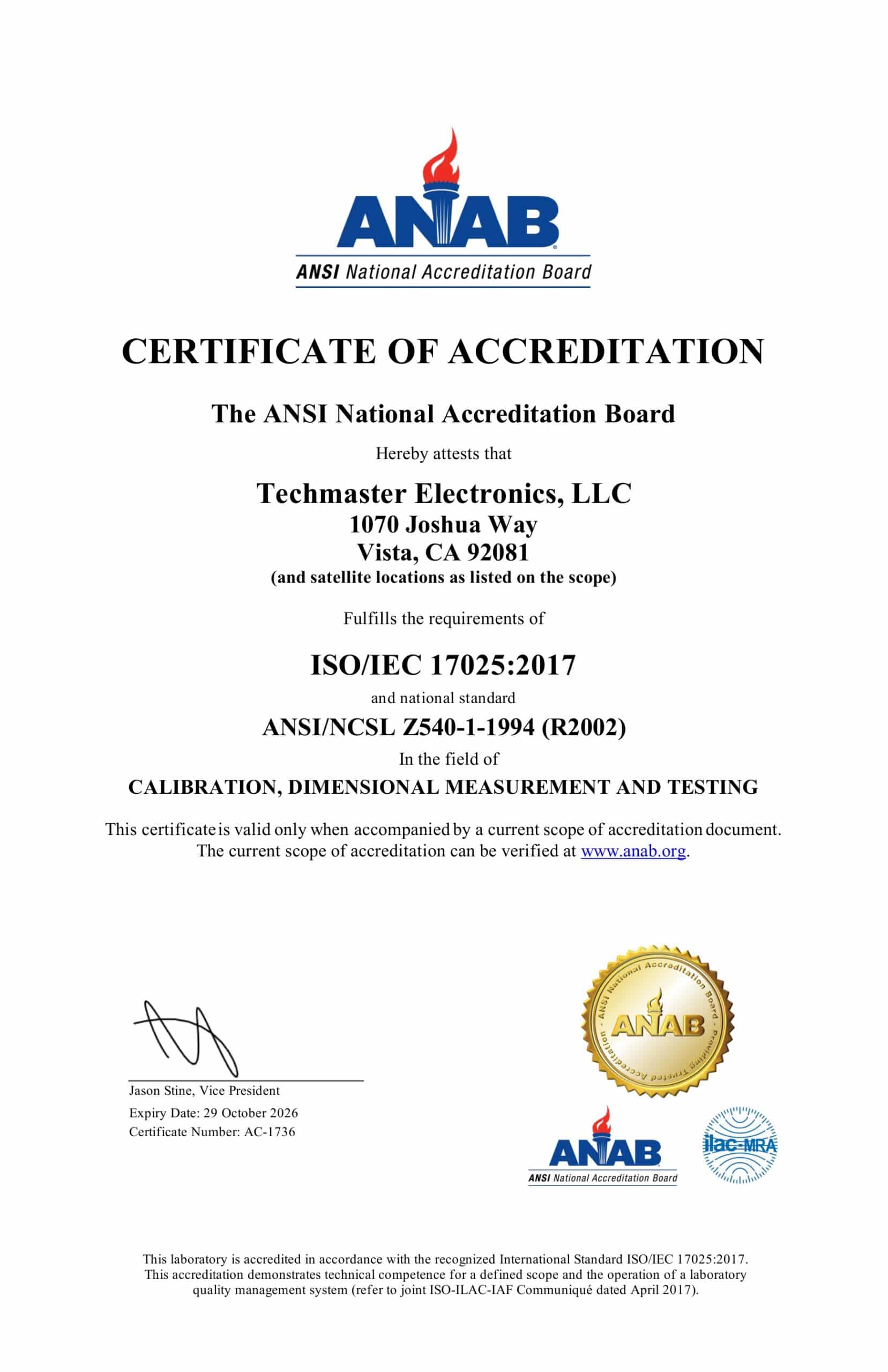
- Full ISO/IEC 17025 Accreditation: Our operations strictly adhere to the ANAB cert AC-1736 quality framework.
- On-site Capability: Additionally, we bring our expertise directly to your facility, allowing faster turnaround times and immediate equipment verification.
- Expertise Across Disciplines: Beyond electrical metrology, we also support dimensional, mass, and thermodynamic calibration requirements, making us a comprehensive single-source solution for your quality management system.
Whether you require routine calibration or specialized power system verification, contact Techmaster US today to discuss your specific calibration requirements and establish a maintenance schedule that guarantees long-term compliance and measurement accuracy.
Frequently Asked Questions (FAQs)
1. How often should I calibrate my AC power source?
In general, an annual calibration interval is the industry standard for most AC power sources to maintain NIST traceability and ensure measurement accuracy. However, if your equipment is subjected to heavy usage or critical safety testing, a six-month calibration cycle is recommended to detect output drift before it affects test quality.
2. Does proper AC power source use help prevent measurement drift?
Yes. By operating the source within its specified voltage and current limits and maintaining a clean, stable environment, you can significantly reduce measurement drift. Nevertheless, regular performance verification and ISO/IEC 17025 accredited calibration remain essential to confirm that the source continues to meet its published accuracy specifications.
3. Why is load impedance important when using an AC power source?
The AC power source must be capable of handling the impedance presented by the DUT to maintain stable output without activating current protection mechanisms. Therefore, operators should always compare the source’s output capability with the peak power requirements of the device under test before beginning any evaluation.
4. Can Techmaster US perform on-site calibration for my AC source?
Yes. Techmaster Electronics provides ISO/IEC 17025 accredited on-site calibration services for electrical test equipment. In addition to laboratory calibration, our technicians travel directly to your facility to perform comprehensive testing, thereby minimizing downtime while ensuring your equipment remains fully compliant with your quality management system.
AC Power Sources: Setup & Best Practices
Your unified portal for precision power measurements. Seamlessly toggle between metrological calibration standards and operational procedures to ensure absolute accuracy.
CONTACT USReferences & industry standards
- ISO/IEC 17025 testing & calibration laboratory requirements
- NIST calibration services and measurement traceability
- A2LA / ANAB accreditation for calibration laboratories
External standards bodies. Techmaster Electronics is an ISO/IEC 17025-accredited, NIST-traceable calibration laboratory.

Khanh Nguyen is the Marketing Manager at Techmaster Electronics, a B2B marketing leader covering the test, measurement, and ISO/IEC 17025 accredited calibration industry across the US and Vietnam markets.