
Holiday Detector Calibration
Why calibration intervals matter
How Holiday Detector calibration works
- Intake & visual inspection
- Environmental stabilization
- As-found measurement
- Comparison to NIST-traceable standards
- Adjustment if required
- As-left results & certificate
Your calibration, covered
In-lab vs on-site calibration
In-lab calibration
- Accredited bench with full reference standards
- Best achievable measurement uncertainties
- Pickup & return logistics handled
- Ideal for precision and reference work
On-site calibration
- We calibrate the Holiday Detector at your facility
- No shipping risk or transit downtime
- As-found data captured before any move
- Ideal for fixed, large or sensitive assets
In-depth guide
The Holiday Detector: Infrastructure’s Shield and The Absolute Necessity of Calibration

1. What is a Holiday Detector? The Core Operating Principle
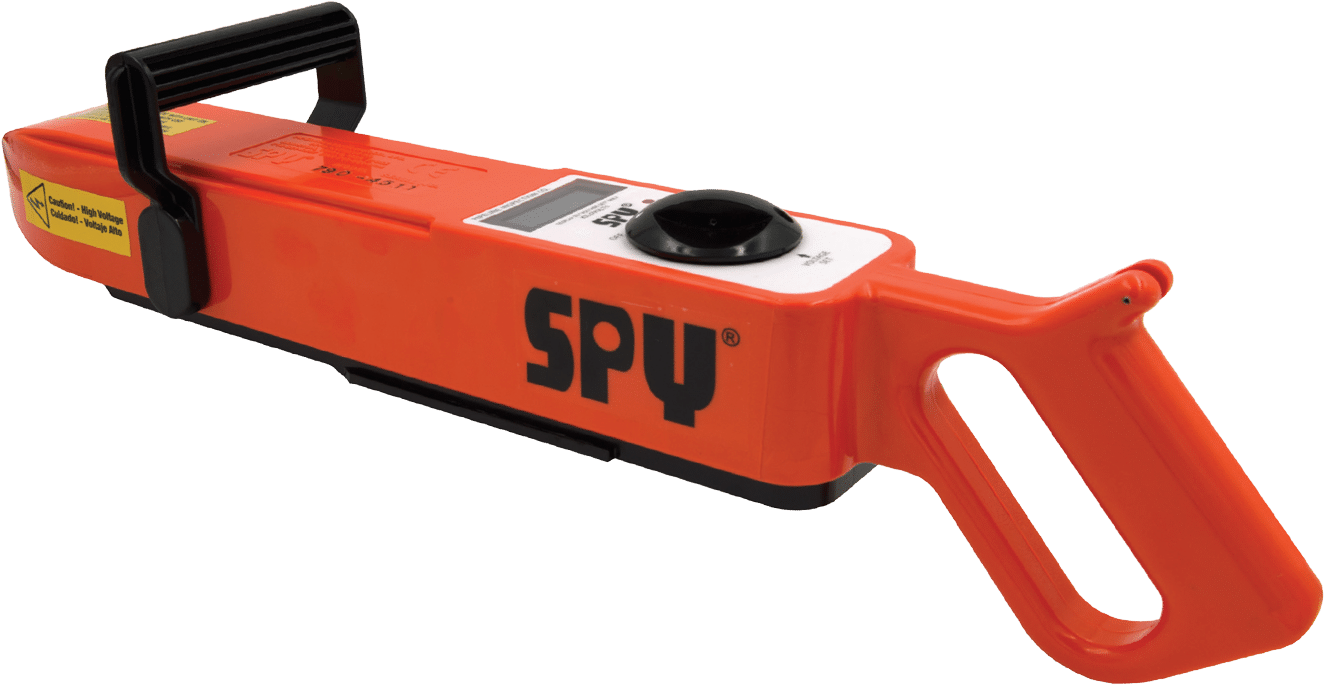
1.1. Objective and Technology
- Objective: To detect minute flaws such as pinholes, cracks, or areas where the coating is thin (ranging from 6 mil to over 250 mil).
- Operating Principle (High Voltage):
- The device applies a continuous high voltage (typically from 500V to 35,000V to a brush electrode or a wet sponge.
- When the brush passes over a perfect coating, nothing happens.
- When the brush passes over a flaw (a holiday) to the metallic substrate, the voltage discharges through the flaw.
- This discharge completes an electrical circuit, triggering an audible and visual alarm on the device.
1.2. Standard Voltage Formula
The voltage required for coating inspection is proportional to the coating thickness. Industry standards (such as NACE, ASTM) provide calculation formulas to establish the precise voltage:Core Principle
Holiday Detectors ensure protective coatings remain intact. Correct voltage is calculated using the universal NDT formula below.
Voltage Formula
- V: Test Voltage (Volts)
- T: Coating Thickness (mils)
- M: Constant (1250 or 1500)
Example: 25 mil → 1250 × √25 = 6250 V
Detection Process
High voltage passes → no current path → no alarm
Fault allows spark → discharge → alarm triggered
2. Vital Applications in Industrial Infrastructure
Ensuring coating integrity prevents corrosion-related structural failure across multiple sectors.
Oil & Gas Pipelines
Testing external and internal polymer coatings.Marine & Construction
Ships, offshore structures, steel bridges.Chemical & Water Treatment
Epoxy & rubber-lined chemical tanks.2.1. Oil & Gas and Pipelines
- Transmission Pipelines: The most critical application is inspecting external coatings on oil, gas, and water pipelines. Imperfect coatings on buried pipelines are the primary cause of galvanic corrosion.
- Storage Tanks and Pressure Vessels: Inspecting the internal linings of tanks holding chemicals, fuels, and clean water. A single flaw can lead to a hazardous chemical leak.
2.2. Construction and Marine Infrastructure
- Steel Structures: Inspecting the anticorrosion coating of bridges, steel beams, and offshore platforms.
- Ship Hulls and Ports: Checking the anti-fouling and anti-corrosion paint on ship hulls, dock piling, and structures exposed directly to seawater.
2.3. Water Treatment and Chemical Plants
- Chemical Storage Tanks: Inspecting specialized linings (like Epoxy or rubber) inside tanks holding highly corrosive chemicals (acids, bases), ensuring no flaw allows contact with the metal substrate.
3. The Absolute Role of Holiday Detector Calibration
Risks of Incorrect Voltage
Voltage Drift Consequences
Voltage deviation, even minor, violates standards and can lead to critical inspection failure.
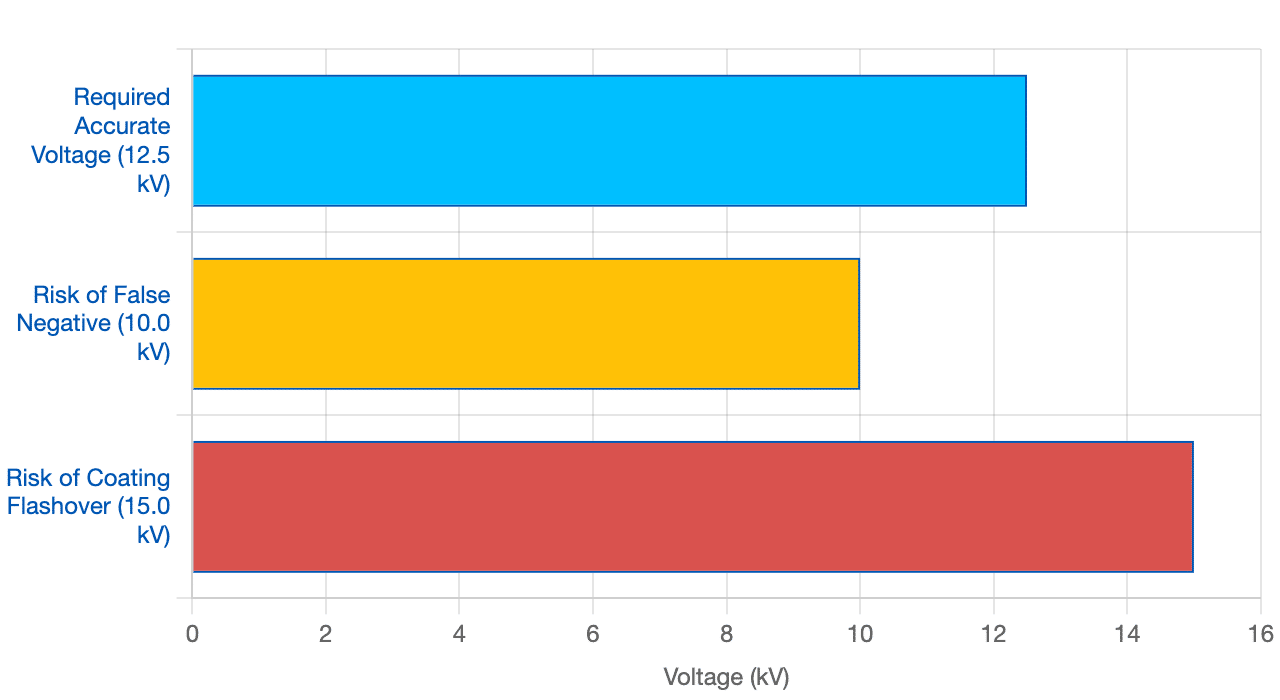
Required Voltage vs Thickness
The required voltage increases with the square root of the coating thickness.
3.1. Ensuring Voltage Accuracy and Standard Compliance
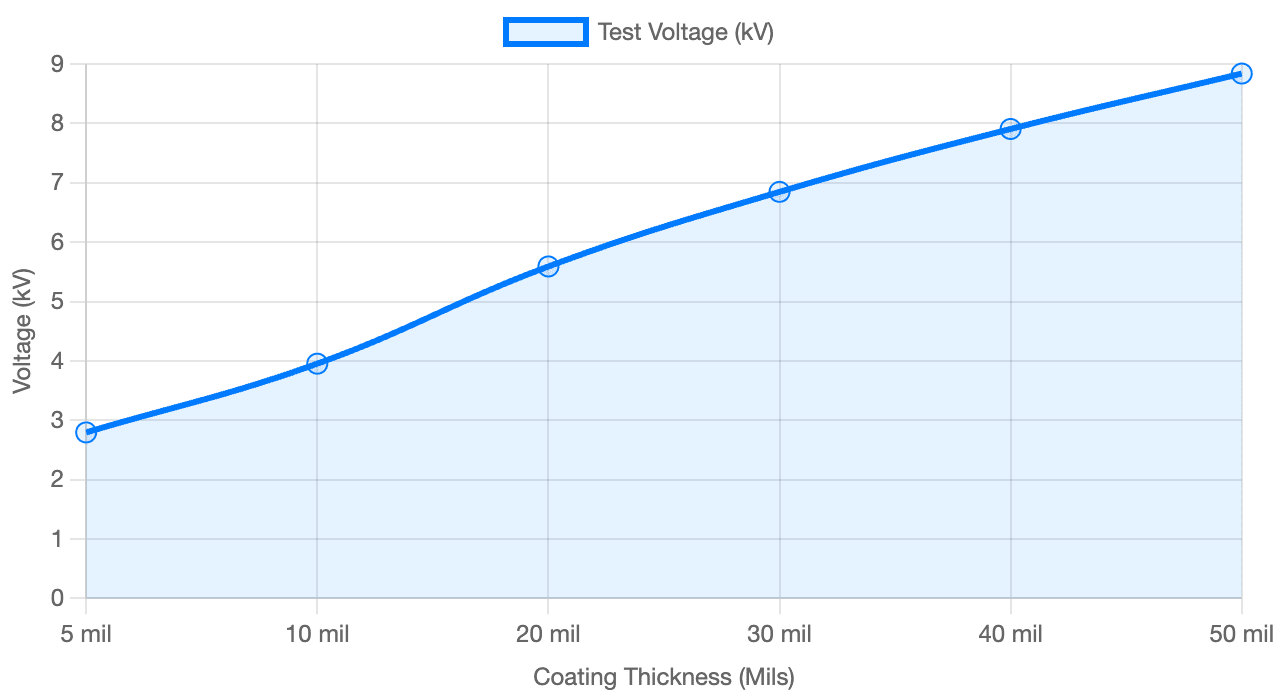
- The Risk of Undertesting: If the actual output voltage is lower than the displayed value, the device might not have enough energy to discharge through a small flaw. Consequently, a real defect is missed (False Negative), and an imperfect coating is approved.
- The Risk of Overtesting: If the actual output voltage is higher than the displayed value, the device might cause a flashover even in areas of perfect but thin coating. This damages the coating, creates new defects, and necessitates unnecessary repairs.
- Value Verification: Calibration verifies that the device is generating the precise voltage (Volts) corresponding to the coating thickness (Mils) as dictated by the standard formula (V = M × √T)
3.2. Legal Compliance and Safety Regulations
- NACE/ASTM Requirements: Industry standards such as NACE SP0188 and ASTM G62, D5162 mandate that holiday detectors must be calibrated by an ISO/IEC 17025 accredited laboratory on a periodic basis (typically annually).
- Traceable Evidence: The Calibration Certificate is the only documentation that proves the coating inspection procedure was valid, which is essential for warranty claims, insurance contracts, and quality audits.
4. How Calibration Works
The process of High-Voltage Holiday Detector Calibration requires specialized measuring instruments:- Reference Equipment: Using a highly accurate, traceable Calibrated High-Voltage Meter as the primary standard.
- Point Checks: A technician checks the holiday detector’s output voltage at multiple set points (e.g., 5 kV, 10 kV, 15 kV…)
- Adjustment: If the actual measured voltage exceeds the allowable error limits, the device is adjusted (trimmed) to ensure accuracy.
- Certification: A detailed certificate is issued confirming the accuracy of the voltage output and the next due date for calibration.
Calibration Process
Conclusion
The Holiday Detector is a critical tool safeguarding billions of dollars in industrial infrastructure. It forms the essential link between coating application and quality assurance, ensuring every protective layer performs as intended. Its reliability, however, depends entirely on one key factor: accurate test voltage. Even minor voltage drift can lead to missed defects or unnecessary coating damage.
Because of this, routine calibration is not optional. It is a mandatory, standards-driven process that ensures precise readings, prevents hidden coating failures, and maintains long-term asset integrity and operational safety across industries.
YOUR RELIABLE CALIBRATION PARTNER
Don’t let equipment inaccuracies jeopardize your research and production.
TECHMASTER ELECTRONICS
ISO/IEC 17025 accredited calibration service provider, ensuring traceability to national measurement standards.
Request Calibration Service NowFrequently asked questions
What is Holiday Detector Calibration?
How often should a Holiday Detector be calibrated?
What standards apply to Holiday Detector Calibration?
What is included on the certificate?
Can you calibrate the Holiday Detector on-site?
Need Holiday Detector calibration?
ANAB-accredited, NIST-traceable, fast turnaround, in-lab or on-site across the USA.
Contact us for a quoteReferences & industry standards
- ISO/IEC 17025 testing & calibration laboratory requirements
- NIST calibration services and measurement traceability
- A2LA / ANAB accreditation for calibration laboratories
External standards bodies. Techmaster Electronics is an ISO/IEC 17025-accredited, NIST-traceable calibration laboratory.

Khanh Nguyen is the Marketing Manager at Techmaster Electronics, a B2B marketing leader covering the test, measurement, and ISO/IEC 17025 accredited calibration industry across the US and Vietnam markets.