
Particle counter calibration
Why calibration intervals matter
How particle counter calibration works
- Intake & visual inspection
- Environmental stabilization
- As-found measurement
- Comparison to NIST-traceable standards
- Adjustment if required
- As-left results & certificate
Your calibration, covered
In-lab vs on-site calibration
In-lab calibration
- Accredited bench with full reference standards
- Best achievable measurement uncertainties
- Pickup & return logistics handled
- Ideal for precision and reference work
On-site calibration
- We calibrate the particle counter at your facility
- No shipping risk or transit downtime
- As-found data captured before any move
- Ideal for fixed, large or sensitive assets
In-depth guide
Calibration of Particle Counter: The Key to Enhancing Indoor Air Quality (IAQ) and Pathogen Control
In the 21st century, as cities grow and people spend most of their time indoors, the quality of air in these enclosed spaces (IAQ – Indoor Air Quality) has become a critical factor directly impacting health and productivity. In the wake of the COVID-19 pandemic, the public’s awareness of airborne pathogens and particulate matter has fundamentally changed. However, air pollution is an invisible threat. To transform this threat into measurable and manageable data, businesses and organizations must rely on one indispensable tool: the particle counter. A particle counter helps quantify the concentration of suspended particles in the air. But for these numbers to hold any meaning, the device’s accuracy must be absolute. This is where Calibration of Particle Counter becomes a pivotal step. The calibration process is more than a mere technical procedure; it’s a strategic investment that guarantees safety, regulatory compliance, and operational efficiency in the era of IAQ.IAQ: From a Concept to a Critical Need
In the past, IAQ was primarily a concern in specialized environments like cleanrooms or laboratories. Today, it has become a widespread issue in all living and working spaces. The indoor environment can be contaminated by various sources, including:💨 Particulate Matter (PM2.5, PM10)
Sources: Cooking, tobacco smoke, outdoor dust.
🧪 Volatile Organic Compounds (VOCs)
Sources: Paints, furniture, cleaning products.
Impacts: Eye/throat irritation, liver/kidney damage.
🔥 Carbon Monoxide (CO)
Sources: Gas stoves, heaters, portable generators.
Impacts: Headaches, dizziness, potentially fatal.
🍄 Mold & Spores
Sources: Damp environ
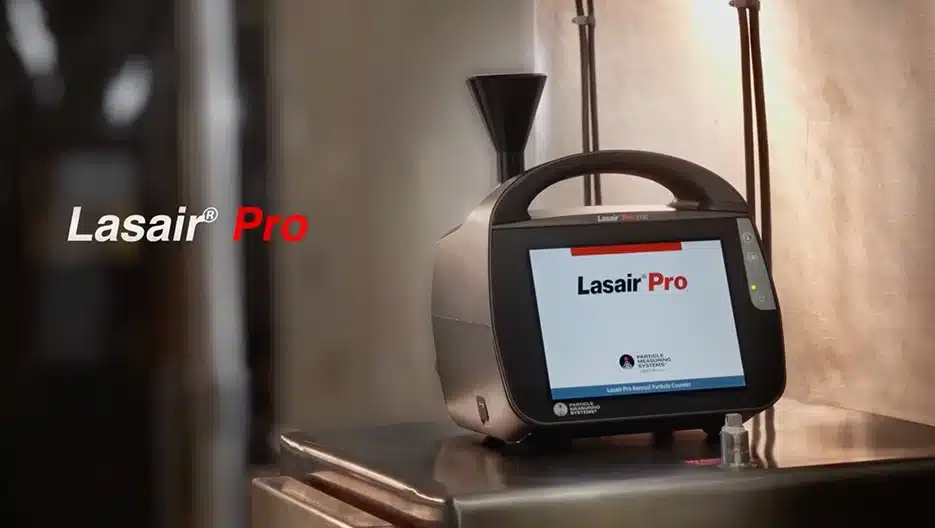
Particle Counters: The Indispensable Tool for Measurement and Assessment
Why Is Calibration a Decisive Factor?
Data from a particle counter is only valuable when it is accurate. And to ensure that accuracy, calibration is a mandatory requirement. Calibration is the process of comparing your measurement device to a certified standard to ensure it operates within an acceptable range of error. If a particle counter is not calibrated regularly, its readings can be skewed. An inaccurate measurement can lead to two dangerous scenarios:- Health Risks: If the particle counter under-reports, the actual number of particles in the air could be much higher than the displayed reading. This poses a serious health risk to people in that space.
- Financial Waste: Conversely, if the device over-reports, it could lead to unnecessary spending on expensive air filtration systems or sanitation measures that aren’t truly needed.
- Non-Compliance: Many industries, especially pharmaceuticals and healthcare, have strict IAQ regulations. Without a calibration certificate, your data is not legally recognized.
Hot-Trend Applications and the Future of IAQ
The calibration of particle counters is not just important for disease control. It has numerous prominent applications in industries that demand high levels of cleanliness:- Hospitals and Medical Facilities: Ensuring clean air in operating rooms and isolation wards to reduce the risk of cross-contamination.
- Pharmaceutical Manufacturing: Adhering to strict cGMP (Good Manufacturing Practice) standards in cleanrooms to guarantee the safety and efficacy of drugs.
- EV Battery Production Lines: The manufacturing of lithium-ion batteries requires a clean environment to prevent product defects.
- Schools, Offices, and Hotels: Creating a safer and healthier environment for students, employees, and guests, which enhances the overall experience.
Smart Future: AI & IoT Shaping IAQ
The IAQ industry is transitioning from a “reactive” to a “proactive” model, where intelligent systems automatically monitor, analyze, and optimize air quality in real-time.
Smart Sensors
Collect data on PM2.5, CO2, VOCs…
IoT Platforms
Transmit and manage data remotely.
AI Analytics
Learn habits & predict issues.
Automated Systems
Adjust HVAC, air purifiers automatically.
Conclusion: The Importance of Calibration in the IAQ Era
Indoor air quality is no longer a secondary factor. It is a public health issue and a requirement for operational excellence. The particle counter is the indispensable tool for managing this issue. However, the core of this tool’s value lies in its calibration. Calibrating a particle counter is not just a maintenance step. It’s a commitment to safety, accuracy, and compliance. By ensuring these devices operate with the highest reliability, businesses and organizations can make informed decisions to protect public health, optimize operations, and build a cleaner, safer future.Frequently asked questions
What is particle counter calibration?
How often should a particle counter be calibrated?
What standards apply to particle counter calibration?
What is included on the certificate?
Can you calibrate the particle counter on-site?
Need particle counter calibration?
ANAB-accredited, NIST-traceable, fast turnaround — in-lab or on-site across the USA.
Contact us for a quoteReferences & industry standards
- ISO/IEC 17025 testing & calibration laboratory requirements
- NIST calibration services and measurement traceability
- NIST Time and Frequency Division
- A2LA / ANAB accreditation for calibration laboratories
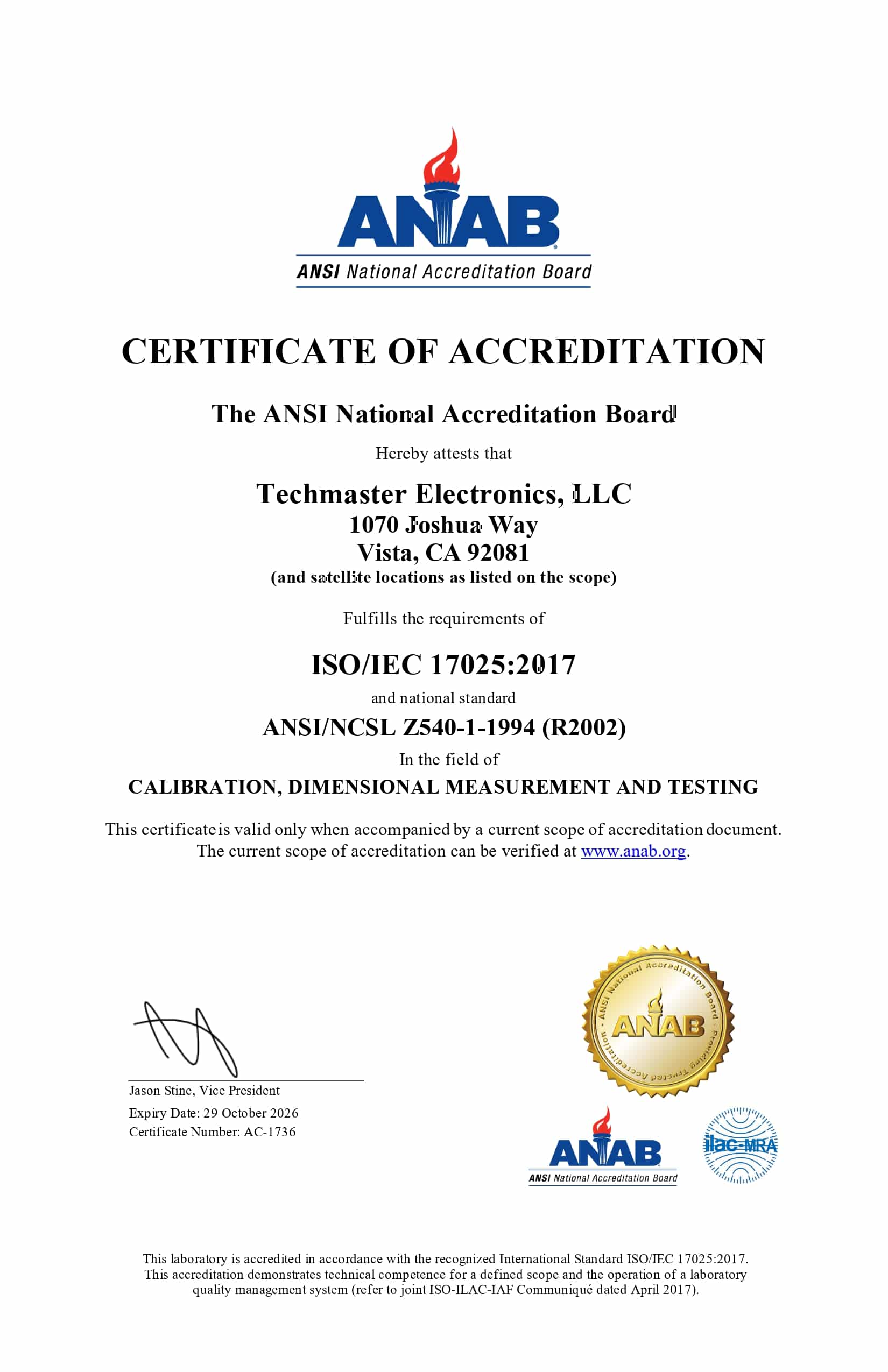
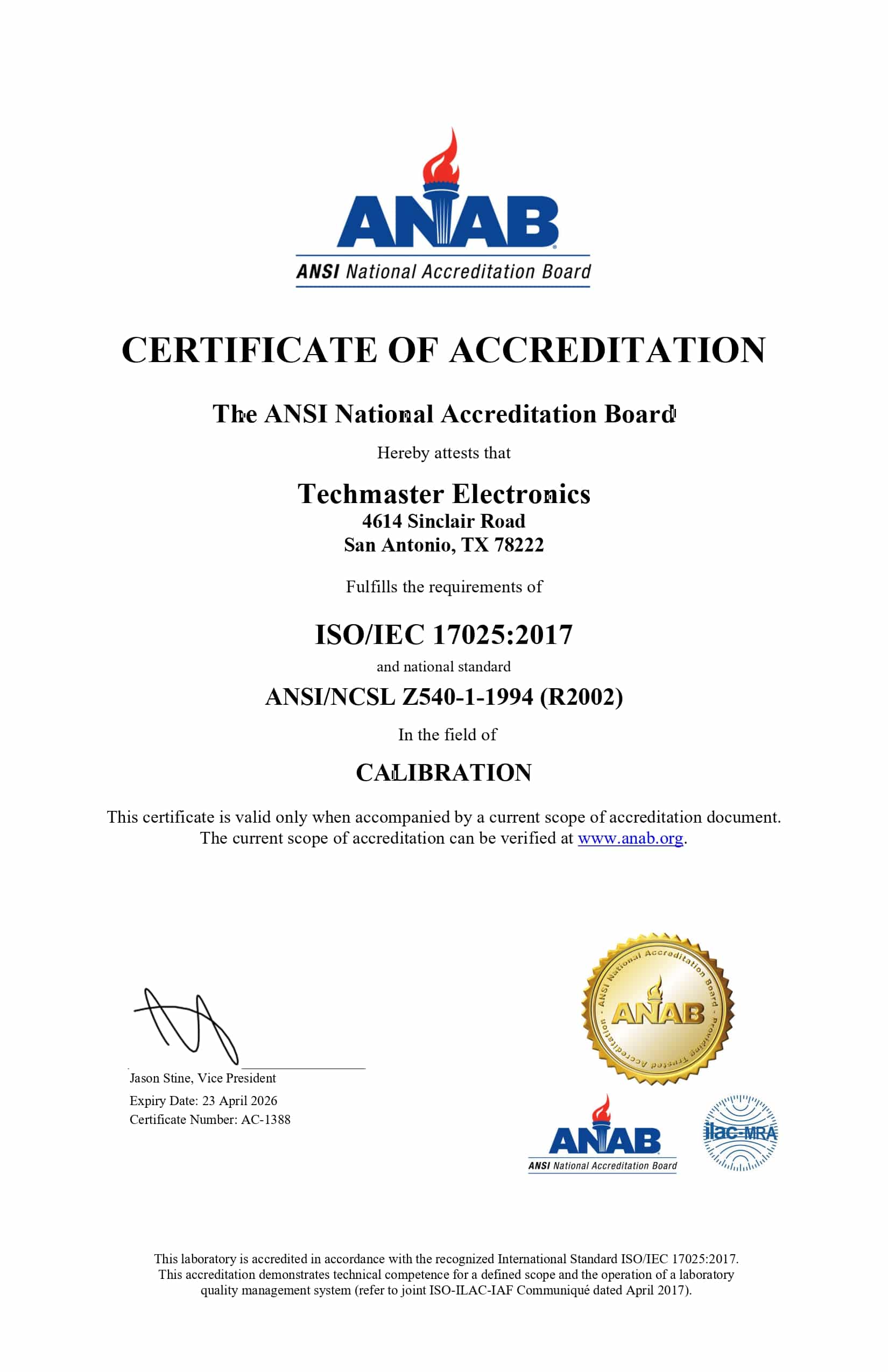
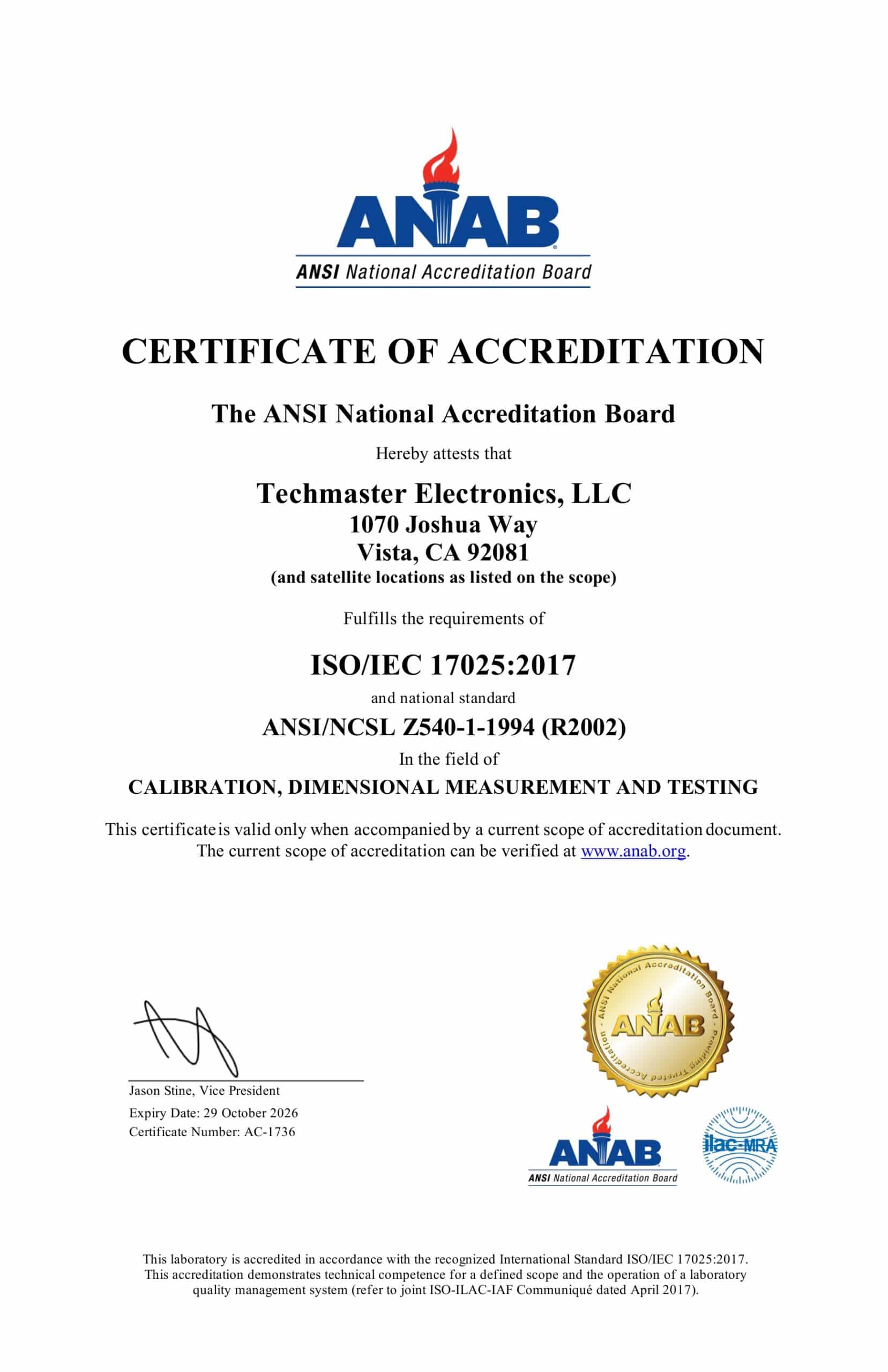
External standards bodies. Techmaster Electronics is an ISO/IEC 17025-accredited, NIST-traceable calibration laboratory.

Khanh Nguyen is the Marketing Manager at Techmaster Electronics, a B2B marketing leader covering the test, measurement, and ISO/IEC 17025 accredited calibration industry across the US and Vietnam markets.