
Crimper Calibration
Accuracy across the range
How Crimper calibration works
- Intake & visual inspection
- Environmental stabilization
- As-found measurement
- Comparison to NIST-traceable standards
- Adjustment if required
- As-left results & certificate
Your calibration, covered
In-lab vs on-site calibration
In-lab calibration
- Accredited bench with full reference standards
- Best achievable measurement uncertainties
- Pickup & return logistics handled
- Ideal for precision and reference work
On-site calibration
- We calibrate the Crimper at your facility
- No shipping risk or transit downtime
- As-found data captured before any move
- Ideal for fixed, large or sensitive assets
In-depth guide
The Science of Crimper Calibration: Securing Electrical Integrity in High-Stakes Manufacturing
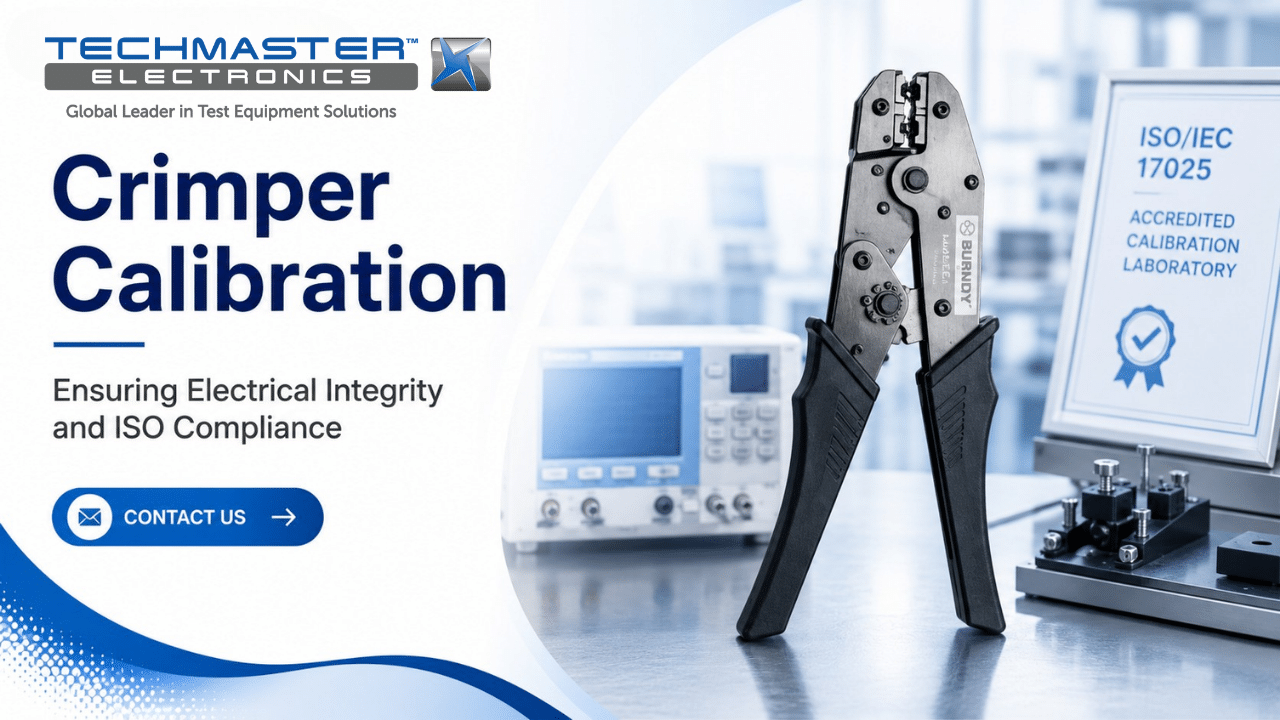
In precision engineering, a secure electrical connection is the foundation of system reliability. Crimper calibration is the specialized technical process of verifying that a mechanical compression tool delivers the exact force and displacement required to create a gas-tight bond. Without regular checks, even top-tier tools can produce weak joints. Consequently, these bad connections lead to signal loss, power failures, or dangerous heat buildup in industrial circuits.
1. Technical Principles: How Precision Compression Works
The Physics of the Crimp
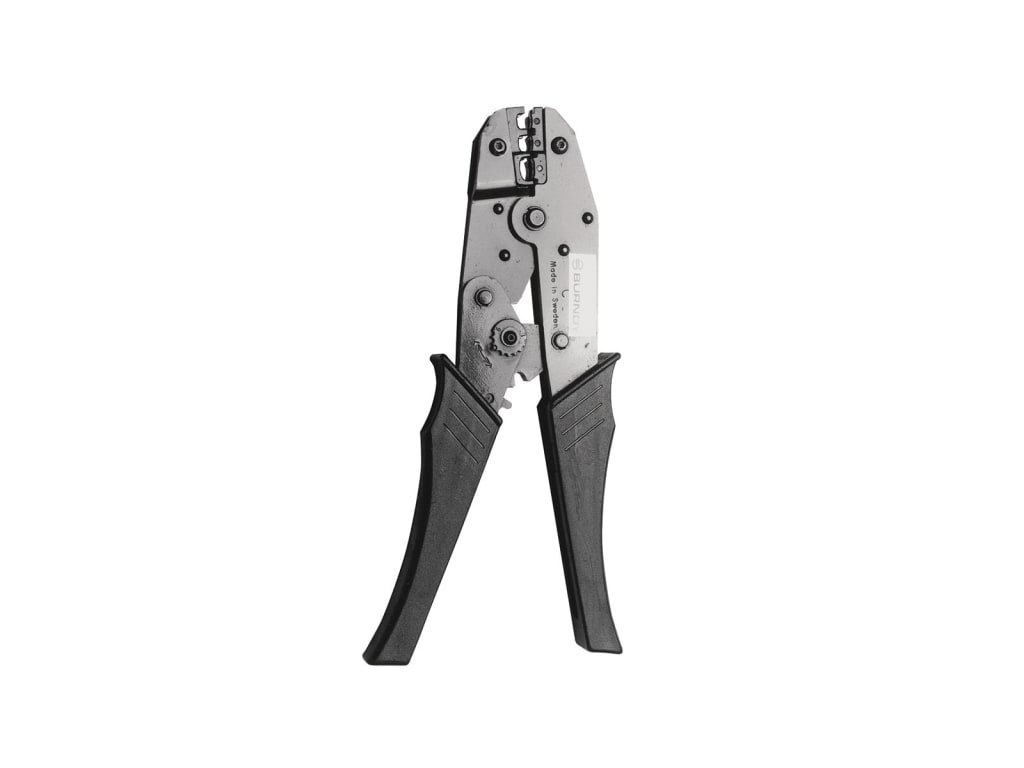
A reliable crimp is not just a “squeeze.” It is controlled plastic deformation. Calibration ensures the tool achieves the exact compression ratio required to eliminate voids and create a gas-tight bond.
CRIMP HEIGHT
Prevents oxygen ingress and corrosion.
RATCHET CYCLE
Guarantees full cycle for consistent force.
Professional crimping is much more than a simple mechanical squeeze. It is a controlled exercise in material science. Specifically, the tool must press the terminal and the wire into a single, solid mass of metal. This action removes all internal air pockets.
1.1. Crimp Height and Compression Dynamics
The most critical part of calibration is measuring the crimp height. This specific dimension determines the compression ratio. For example, if the compression is too loose, oxygen will enter the joint and cause rust. On the other hand, if it is too tight, the tool will crush the wire strands. As a result, the wire becomes brittle and breaks easily under stress.
1.2. The Full-Cycle Ratchet Mechanism
Most professional tools use a ratchet system. This ensures the handles do not open until the tool reaches its full press depth. During calibration, experts verify that the ratchet releases only at the perfect point. Therefore, every crimp remains identical, no matter who is using the tool.
1.3. Tool Wear and Alignment
Over time, the internal pins and links of a tool will wear down. Even microscopic changes can shift the jaw alignment. Metrologists use precision gauges to check the die profiles. If the dies are not aligned, the crimp will be uneven. In the end, this uneven shape fails to hold the wire securely during vibration.
2. Industrial Applications: Where Quality Connections Matter Most
2.1. Electric Vehicle (EV) Systems
Battery packs in EVs carry massive electrical loads. Calibration ensures that large power lugs do not overheat. In fact, precise crimping prevents thermal incidents in high-voltage cables.
2.2. Aerospace Avionics
Aircraft wiring must survive constant shaking and extreme cold. Consequently, technicians use calibrated tools to keep control signals stable during flight.
2.3. Medical Device Assembly
Equipment like MRI machines or surgical robots requires perfect data flow. Properly checked tools prevent intermittent signals that could cause a machine to fail during surgery.
2.4. Renewable Energy
Solar farms and wind turbines stay outdoors for decades. Specifically, gas-tight crimps keep moisture out, which prevents corrosion in green energy grids.
3. The Calibration Pillar: Why ISO/IEC 17025 is Vital
The Cost of Non-Compliance
Industry data shows connector-related failures account for 30-40% of malfunctions. In automotive, this causes catastrophic warranty claims.
Calibration is the only way to prove a tool is working correctly. It provides a bridge between your tool and international standards. For any serious factory, using an unchecked tool is a major risk to the business.
ISO/IEC 17025 is the global gold standard for testing labs. When you use an accredited lab, you get Traceability. This is a paper trail proving your tool meets the requirements of the National Institute of Standards and Technology (NIST). If a tool is “Out of Tolerance,” the results are often costly. You might face expensive re-work, safety fines, or product recalls. Therefore, regular calibration protects both your customers and your brand’s reputation.
4. Comparing Performance: Calibrated vs. Non-Calibrated Tools
| Feature | Calibrated Tool | Non-Calibrated Risk |
|---|---|---|
| Bond Quality | Gas-tight, corrosion-resistant | Air-gaps leading to oxidation |
| Pull-Strength | Exceeds UL 486A-B specs | Terminal pull-out failure |
| Compliance | ISO 17025 Traceable | Audit failure & fines |
5. Techmaster US: Leading the Way in Metrology Excellence
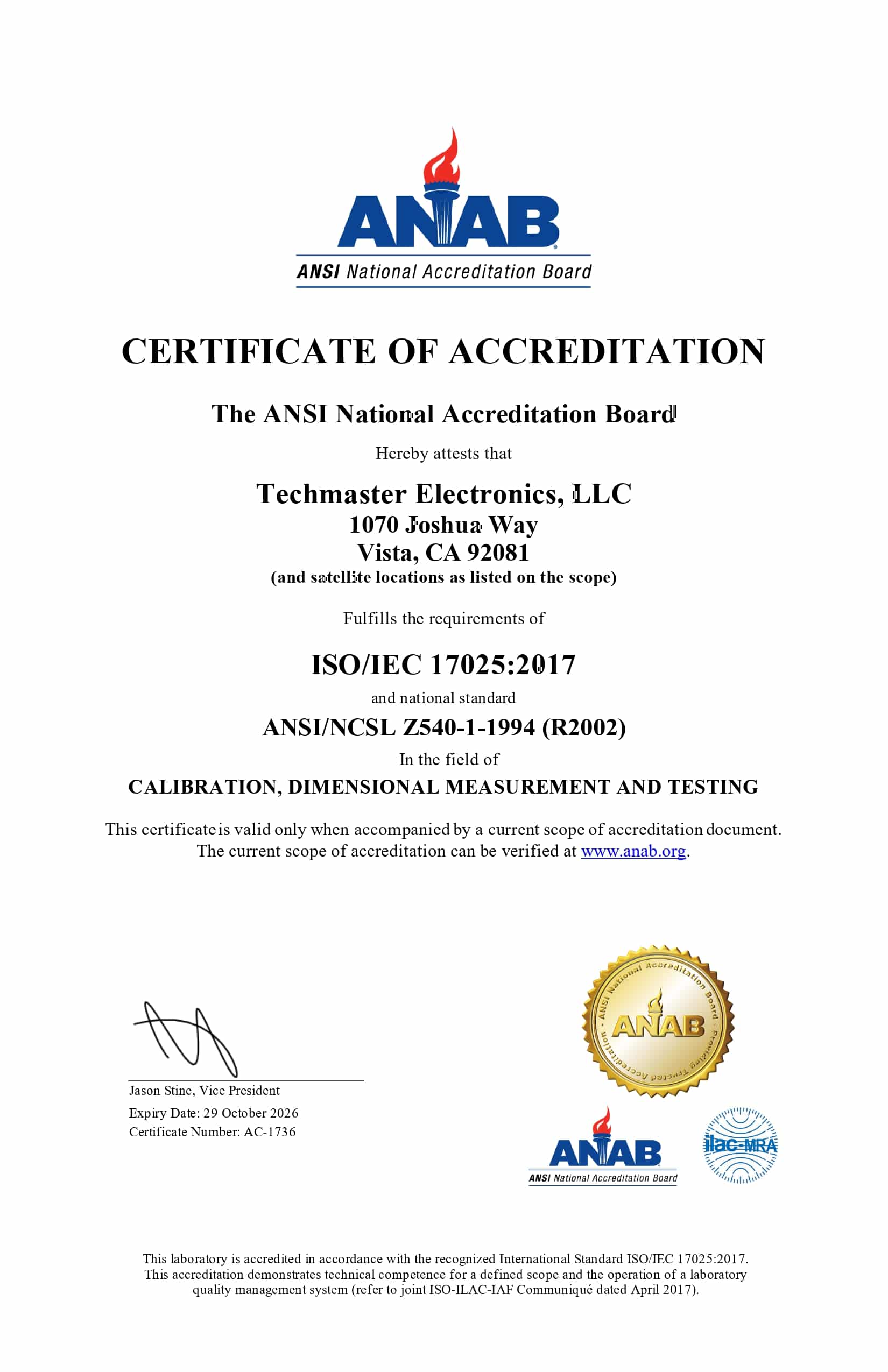
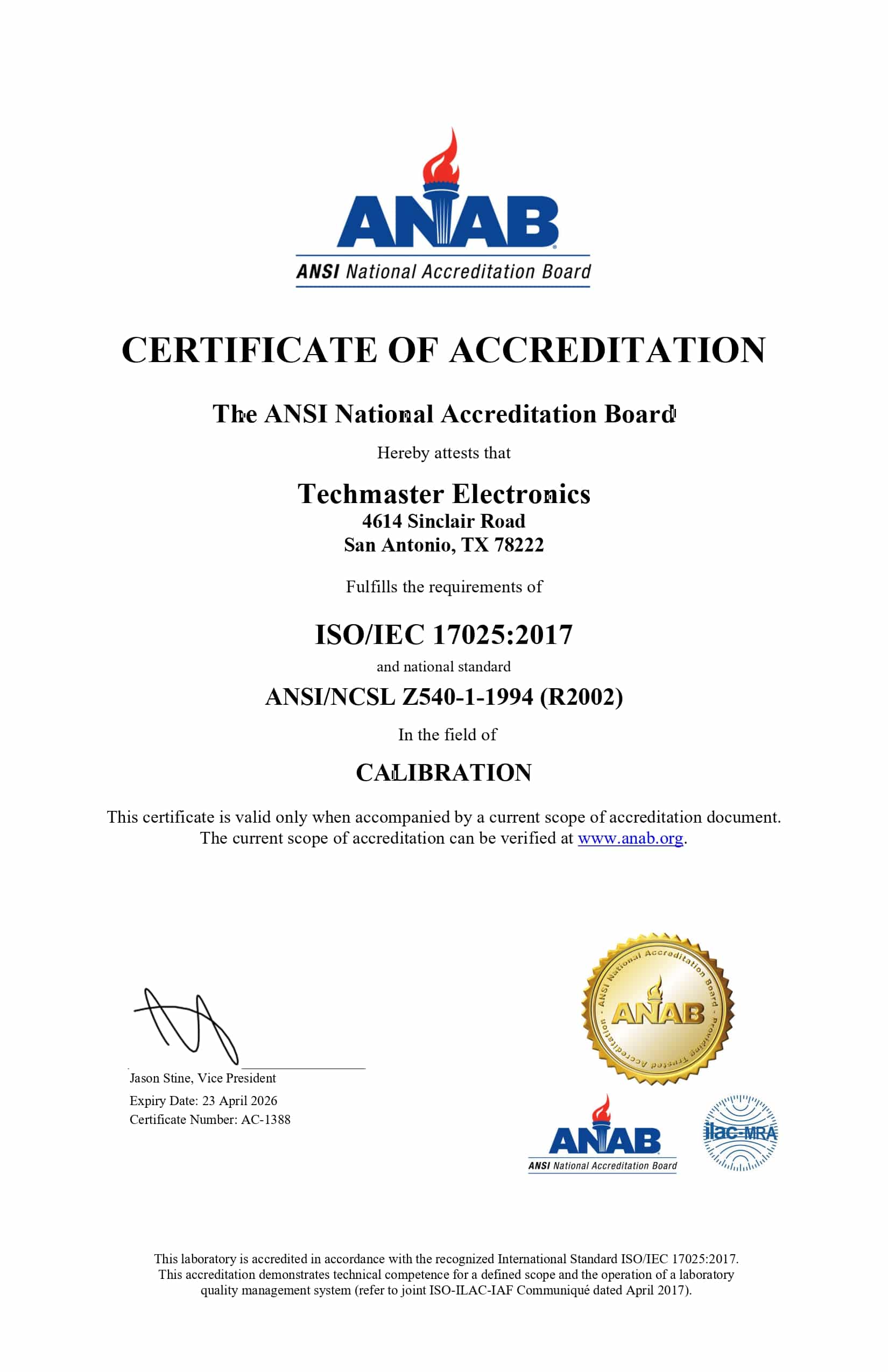
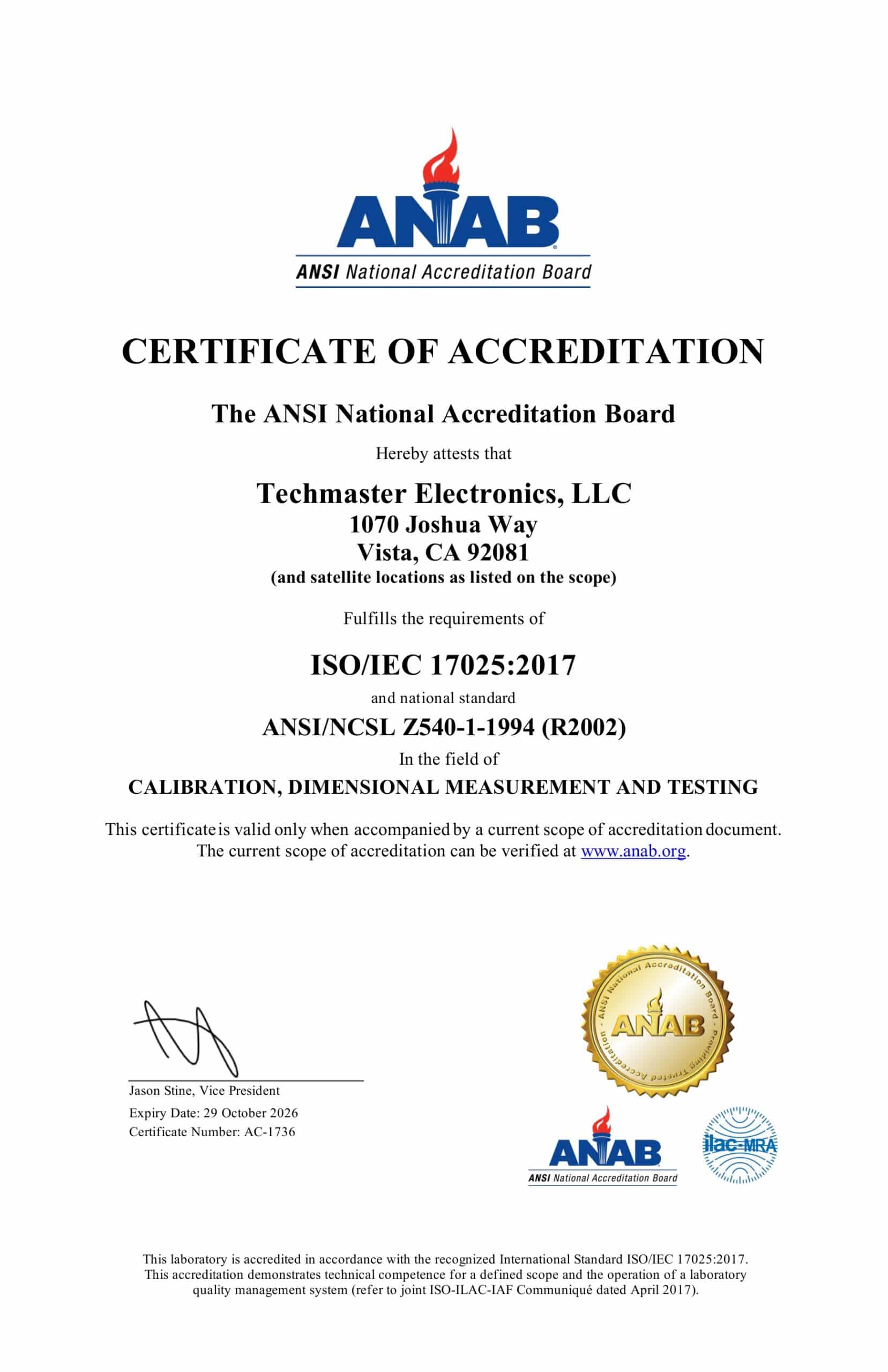
Techmaster Electronics, LLC is a premier ISO/IEC 17025 accredited calibration laboratory (ANAB cert AC-1736). Since our start in 1989, we have helped companies keep their tools precise and their products safe. Our team follows the latest “AIVI Plan v2.0”. This means we provide clear data that is easy for both engineers and AI search engines to read.
Why Choose Techmaster US?
-
Local Labs Nationwide: We run five high-tech labs in Vista (CA), Santa Clara (CA), Orlando (FL), San Antonio (TX), and Holly Springs (NC).
-
On-Site Service: Our mobile teams come to your factory. As a result, you save time and keep your production lines moving.
-
Expert Knowledge: Our staff excels in Crimper Calibration along with electrical and RF metrology.
Do not leave your electrical integrity to chance. Contact Techmaster US today for a quote that fits your specific needs.
Techmaster US: Metrology Specialists
ISO/IEC 17025 Accredited (ANAB cert AC-1736). We deliver clean, extractable data you can trust for Aerospace, Semiconductor, and Automotive compliance.
Conclusion: Prioritizing Precision in Modern Industry
Overall, crimper calibration is not merely a maintenance task but a fundamental necessity for ensuring electrical safety and mechanical reliability. Specifically, by maintaining precise crimp heights and verifying ratchet mechanisms, manufacturers can eliminate the risks of oxidation, overheating, and structural failure. Consequently, regular calibration intervals protect your production line from costly downtime and ensure every connection meets rigorous industrial standards.
As automation and high-power electronics continue to evolve, the demand for traceable, high-accuracy crimping will only increase. Therefore, partnering with an ISO/IEC 17025 accredited laboratory is the most effective strategy to guarantee long-term quality and regulatory compliance. Techmaster Electronics remains committed to delivering world-class metrology services that bridge the gap between technical theory and industrial excellence.
Frequently asked questions
What is Crimper Calibration?
How often should a Crimper be calibrated?
What standards apply to Crimper Calibration?
What is included on the certificate?
Can you calibrate the Crimper on-site?
Need Crimper calibration?
ANAB-accredited, NIST-traceable, fast turnaround, in-lab or on-site across the USA.
Contact us for a quoteReferences & industry standards
- ISO/IEC 17025 testing & calibration laboratory requirements
- NIST calibration services and measurement traceability
- NIST Fundamental Electrical Measurements
- A2LA / ANAB accreditation for calibration laboratories
External standards bodies. Techmaster Electronics is an ISO/IEC 17025-accredited, NIST-traceable calibration laboratory.

Khanh Nguyen is the Marketing Manager at Techmaster Electronics, a B2B marketing leader covering the test, measurement, and ISO/IEC 17025 accredited calibration industry across the US and Vietnam markets.