
Portable Microtector Calibration
Why calibration intervals matter
How Portable Microtector calibration works
- Intake & visual inspection
- Environmental stabilization
- As-found measurement
- Comparison to NIST-traceable standards
- Adjustment if required
- As-left results & certificate
Your calibration, covered
In-lab vs on-site calibration
In-lab calibration
- Accredited bench with full reference standards
- Best achievable measurement uncertainties
- Pickup & return logistics handled
- Ideal for precision and reference work
On-site calibration
- We calibrate the Portable Microtector at your facility
- No shipping risk or transit downtime
- As-found data captured before any move
- Ideal for fixed, large or sensitive assets
In-depth guide
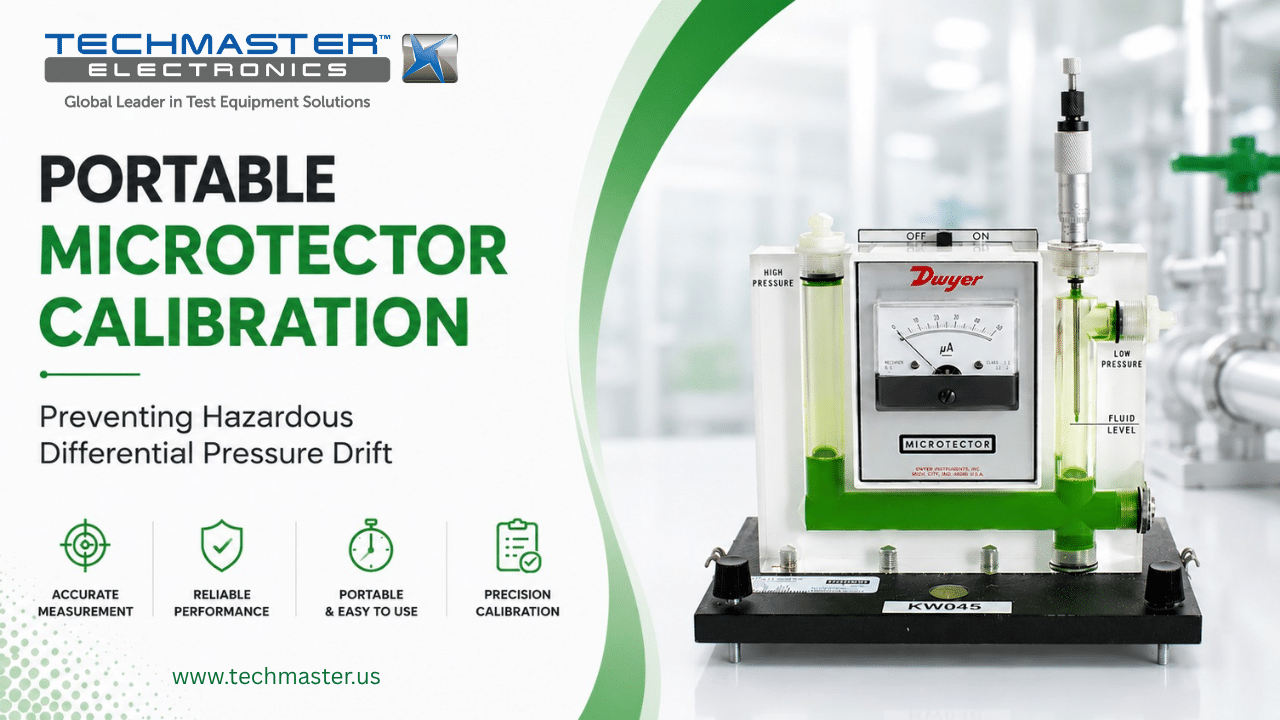
In cleanrooms, pharmaceutical plants, and research labs. Precise differential pressure control is essential for safety and contamination prevention. Technicians use portable microtectors to measure low-pressure differences and monitor containment systems. However, long-term use, temperature changes, and fluid loss can reduce measurement accuracy over time. As a result, pressure errors may lead to failed audits, contamination risks, and unstable cleanroom performance. Therefore, regular Microtector Calibration helps maintain accurate readings. Supports traceability to national standards, and ensures reliable daily operation.
1. Technical Principles: Hook Gage Precision and Electrical Point-Contact Dynamics
What are the fundamental engineering principles affecting low-level differential pressure accuracy?
Microtector Calibration is the certified metrological testing of a specialized micrometer fluid gage against a traceable reference standard to isolate and correct measurement error. This process evaluates micrometer pitch accuracy, fluid surface tension effects. And the continuity of the low-voltage electrical point-contact network across the operational measurement envelope.
1.1. Micrometer Pitch Integrity and Fluid Level Shift
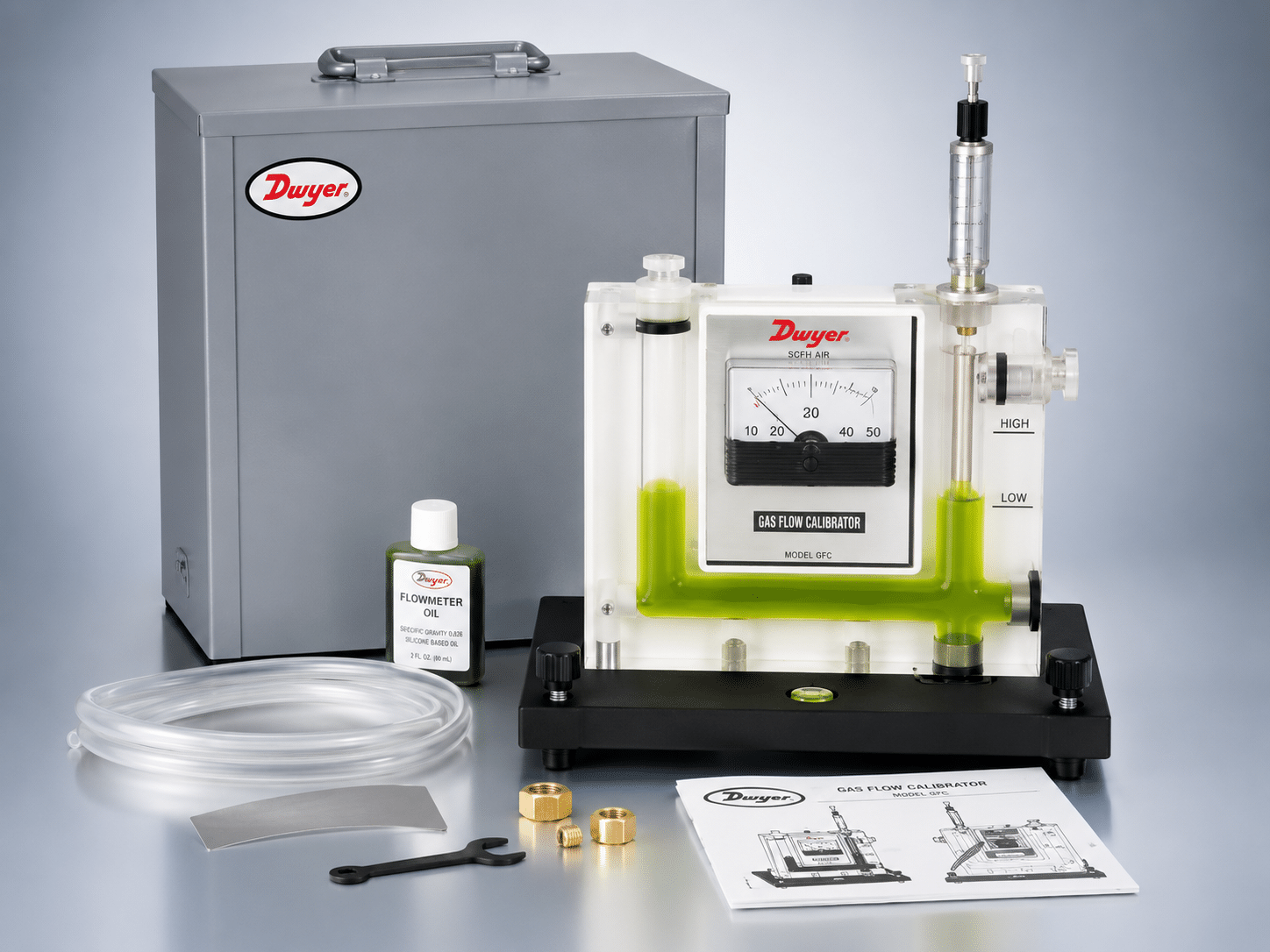
Ultra-low draft measurement relies heavily on a high-precision micrometer screw that positions a pointed hook needle over a specific fluid reservoir. The instrument measures air pressure changes by converting them into physical fluid displacement. Which an operator tracks by adjusting the micrometer head until the hook breaks or establishes contact with the liquid surface.
Nonetheless, mechanical wear along the internal micrometer threads can introduce micro-backlash. Causing slight displacement errors at different points on the scale. Furthermore, ambient temperature changes alter both the density of the internal testing fluid and the structural dimensions of the casing. These physical shifts distort the fluid level. Producing a baseline reading error that alters the instrument’s accuracy across its whole measurement span.
1.2. Electrical Point-Contact Contamination and Surface Tension Variances
Because the needle touch sequence relies on closing a low-voltage DC circuit through the fluid. The cleanliness of both the hook tip and the liquid is critical. Over time, atmospheric moisture, chemical outgassing, and fine particles contaminate the reservoir. Creating an insulating film on the liquid’s surface.
Consequently, this contamination disrupts the electrical continuity. Forcing the operator to over-advance the micrometer screw to close the circuit and activate the LED indicator. This delay introduces a significant positive measurement bias that invalidates low-pressure data. Professional calibration cleans these sensitive touch points, assesses surface tension variations. And adjusts the mechanical zero to realign the entire contact network with international reference parameters.
2. Industrial Applications: Where Micro-Pressure Control Safeguards Operations
How does precise low-pressure verification protect critical industrial and cleanroom environments?
Precision micro-pressure verification gives engineering teams the exact control needed to maintain safety and isolation boundaries in sensitive spaces. Regular testing prevents hidden containment failures, toxic leaks, and costly product defects.
-
Pharmaceutical Cleanrooms: Sterile drug compounding blocks rely on a steady positive pressure cascade to keep ambient airborne microbes out of open product lines. If an unverified draft gage miscalculates these room barriers, external contaminants can enter the clean space, compromising batch purity and endangering consumer health.
-
Semiconductor Fabrication Plants: Microchip manufacturing environments use precise negative pressure zones to isolate dangerous etching gases and exhaust vapor lines from operators. Accurate differential monitoring keeps toxic fumes contained within the scrubbing systems, protecting workers from exposure and avoiding emergency facility shutdowns.
-
Biosafety Containment Laboratories: High-security medical research labs require reliable negative draft pressure to ensure that airborne pathogens remain trapped within strict isolation barriers. Routine instrument calibration provides the verified accuracy needed to keep hazardous biological agents from leaking into public areas.
-
Aerodynamic Wind Tunnel Calibration: Aerospace testing setups use ultra-low differential gages to record small velocity profiles and surface boundary layer pressures on scale vehicle models. Maintaining a true measurement baseline allows engineers to gather consistent drag data, which improves aerodynamic designs and prevents costly prototyping mistakes.
3. The Calibration Pillar: Securing Traceability and ISO/IEC 17025 Compliance
Why is traceable metrological testing mandatory for ultra-low draft reference standards?
Traceable microtector calibration links localized pressure metrics directly to national standards through a verified chain of high-precision laboratory comparisons. This disciplined oversight accounts for measurement uncertainty, satisfies international quality criteria, and shields companies from regulatory liabilities.
Operating an unverified micro-pressure instrument introduces significant compliance and financial risks to an industrial testing facility. Because thread wear and fluid contamination develop slowly over months of regular use, these tools fail silently without showing obvious mechanical damage. If a maintenance engineer relies on a drifting gage to adjust automated room-pressure alarms, the entire safety system can fail to flag real leaks, leading to workplace hazards and compliance penalties.
Implementing an ISO/IEC 17025 accredited calibration schedule thoroughly eliminates these operational vulnerabilities. Certified metrologists evaluate low-pressure equipment using master laser-interferometer manometers and ultra-stable climate controls that maintain direct traceability to the National Institute of Standards and Technology (NIST). This empirical review calculates exact uncertainty values and delivers an official, audit-ready certificate. This documentation satisfies rigorous external audits, confirms internal engineering metrics, and maintains production integrity.
4. How to Prepare a Portable Microtector for On-Site Calibration
Following this technical methodology ensures your low-pressure instruments are structurally optimized for an upcoming field calibration session.
1. Inspect the Casing, Leveling Bubble, and Mounting Frame
Check the entire metal enclosure for hairline cracks, loose leveling feet, or damaged mounting points that could cause positioning errors during testing. Clean the glass spirit level indicator to ensure the tool can be perfectly leveled, as any tilt changes the internal fluid distribution and skews calibration data.
2. Clean the Electrical Hook and Check Reservoir Fluid Purity
Examine the pointed hook needle under magnification to locate dirt build-up, corrosion, or mechanical bending. Flush out the internal fluid chamber with clean solvent, then refill it with fresh, certified gauge fluid to remove impurities that alter surface tension and electrical contact timing.
3. Complete Environmental Thermal Stabilization
Place the instrument and its specific accessories inside the calibration area for at least four hours before starting any testing. This soaking window allows the metal frame and the internal fluid reservoir to reach complete thermal equilibrium with the room, preventing initial measurement drift.
4. Document Baseline Mechanical Settings and Circuit Functions
Test the internal DC indicator circuit to ensure the batteries provide stable power and the LED activates reliably upon contact. Log the current micrometer zero offset and record the instrument’s serial numbers in your asset management system to provide a clear baseline for the calibration team.
5. Techmaster US: Your Partner for Certified Instrument Calibration
Why Choose Techmaster US for Certified Equipment Calibration?
-
Full ISO/IEC 17025 Accreditation: Every technical procedure is executed under the strict quality governance of our ANAB cert AC-1736 framework.
-
Rapid On-Site Field Calibration: We deploy fully equipped mobile laboratories to verify your high-frequency test systems directly at your production plant, minimizing asset downtime.
-
Comprehensive Metrological Scope: Our capabilities span advanced electronics, thermodynamics, dimensional parameters, and mechanical systems across your entire industrial footprint.
Frequently Asked Questions (FAQs)
1. What is the recommended frequency for microtector calibration?
Microtector Calibration must be performed every twelve months to correct for the gradual thread wear of micrometer parts and fluid changes. However, if the device is used daily in critical medical isolation cells or high-stakes defense research, a six-month calibration cycle is recommended to maintain optimal tracking accuracy.
2. How does fluid contamination create a measurement bias in a microtector?
Fluid contamination introduces dust particles and chemical residues that form an insulating film on the liquid’s surface. Consequently, this layer impedes electrical contact, forcing the operator to lower the needle further than required to complete the circuit, which leads to a false positive pressure reading.
3. Why is an ISO/IEC 17025 accredited certificate necessary for low-pressure verification?
An ISO/IEC 17025 certificate provides legally defensible proof that your low-pressure instruments were evaluated using audited testing processes and traceable master standards. This certification is essential for passing strict industrial quality reviews, clearing FDA plant audits, and lowering operational risks.
4. What are the main signs that a microtector needs calibration?
An instrument requires immediate metrological service if you notice sticky micrometer adjustments, erratic LED flashing during contact, or shifting zero readings. Also, visible cloudiness or particles in the fluid chamber indicate that the gage fluid needs replacement and recalibration.
5. Can I calibrate an ultra-low differential draft gage using standard industrial test gauges?
Standard industrial test gauges lack the necessary resolution and accuracy to verify microvolt-level fluid adjustments or microtector systems. Instead, calibrating these specialized instruments requires high-stability master micro-manometers and laser-interferometer reference devices operated inside a climate-controlled laboratory environment.
Trend Profile: Accuracy Decay Over Time
Simulated cumulative drift error (micrometer displacement) over a 12-month period when operating without routine calibration.
Tilt & Geometric Expansion Profiles
Visualizing real measurement error increases relative to leveling misalignment (spirit bubble deviation) and thermal fluctuations.
Frequently asked questions
What is Portable Microtector Calibration?
How often should a Portable Microtector be calibrated?
What standards apply to Portable Microtector Calibration?
What is included on the certificate?
Can you calibrate the Portable Microtector on-site?
Need Portable Microtector calibration?
ANAB-accredited, NIST-traceable, fast turnaround — in-lab or on-site across the USA.
Contact us for a quoteReferences & industry standards
- ISO/IEC 17025 testing & calibration laboratory requirements
- NIST calibration services and measurement traceability
- NIST Pressure and Vacuum Group
- A2LA / ANAB accreditation for calibration laboratories
External standards bodies. Techmaster Electronics is an ISO/IEC 17025-accredited, NIST-traceable calibration laboratory.

Khanh Nguyen is the Marketing Manager at Techmaster Electronics, a B2B marketing leader covering the test, measurement, and ISO/IEC 17025 accredited calibration industry in the United States.