
Reference Voltage Standard FAQ: Calibration Intervals, Accuracy & Compliance
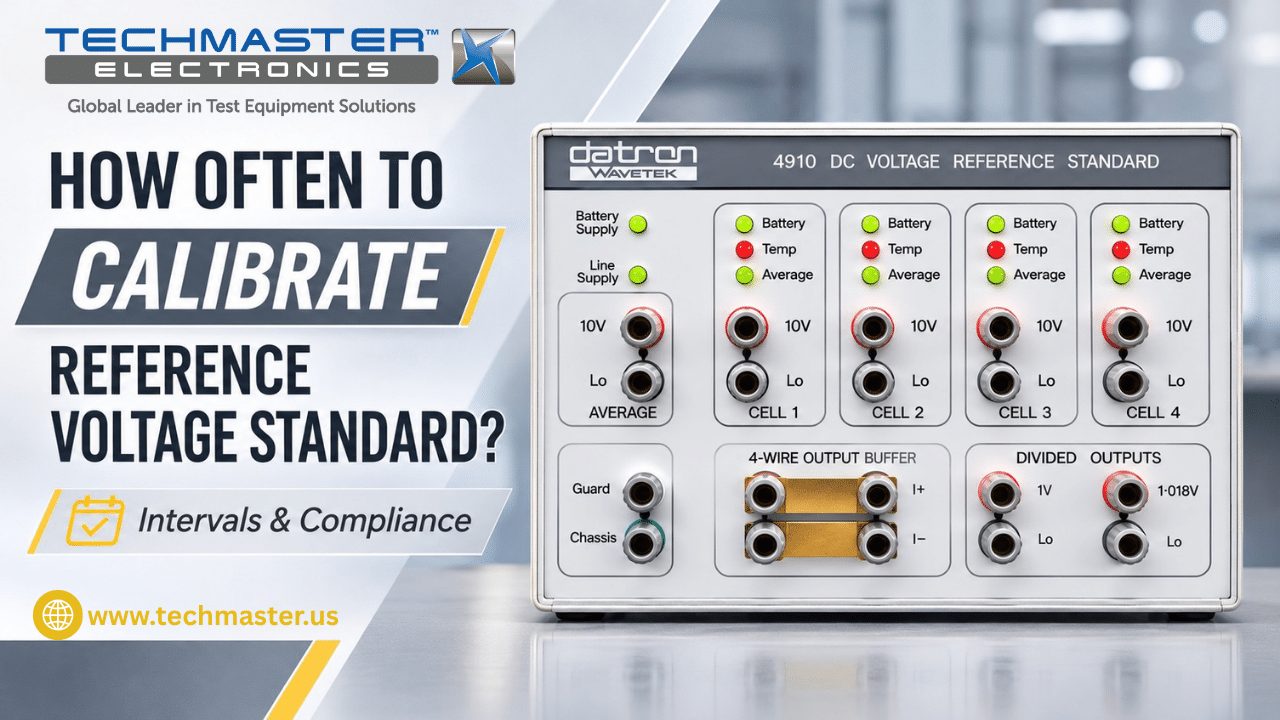
In electrical testing and calibration, a stable DC voltage reference helps teams maintain accurate measurements. However, even a small change in voltage can affect the results of other instruments. Therefore, users need to know how often to calibrate a reference voltage standard and how to check its performance over time. In addition, a suitable calibration schedule helps laboratories manage measurement risk and maintain reliable records.
1. How Often Should You Calibrate a Reference Voltage Standards
A reference voltage standard does not have one fixed calibration interval for every use. Instead, the laboratory should set the interval based on the manufacturer’s guidance, how often the instrument operates, its working conditions, and its past calibration results.
For example, a laboratory may start with a 12-month interval. However, this period should not become a permanent rule without reviewing the results. If the standard shows unusual drift or unstable readings, the team may need to shorten the interval. On the other hand, a stable instrument with a strong calibration history may support a longer interval when the quality system allows it.
ISO/IEC 17025 does not require every reference voltage standard to follow a 12-month or 6-month cycle. Rather, laboratories should use documented evidence and measurement risk to set suitable intervals. As a result, they can maintain measurement quality without applying the same schedule to every instrument.
2. What Factors Affect Calibration Frequency?
Several factors can help a laboratory decide when to calibrate a reference voltage standard. Therefore, quality teams should review these points before setting or changing an interval.
1. Historical Calibration Results
First, review past calibration certificates and compare the as-found results. These results show how the output has changed since the last calibration. If the voltage remains stable over several cycles, the laboratory may review whether the current interval still fits the level of risk.
However, if the readings show a growing drift, the team should investigate the cause. In that case, a shorter interval may help control the risk.
2. Usage and Power Conditions
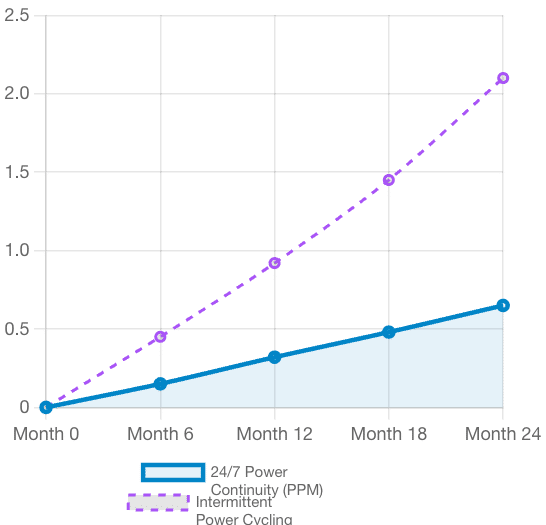
How often the team uses the reference standard can also affect its performance. For example, frequent use, poor storage, or unstable power conditions may affect some models.
In addition, certain standards need continuous power to maintain their specified operating condition. However, this depends on the design. Therefore, users should follow the manufacturer’s instructions instead of assuming that every model needs the same power routine.
3. Environmental Conditions
Temperature, humidity, dust, and electrical noise can affect measurement results. For this reason, laboratories should keep the instrument within the operating conditions stated in the manual.
For example, some high-accuracy measurements need a stable room temperature. However, the exact temperature range depends on the instrument and the calibration method. Therefore, always use the limits in the relevant technical documents.
4. Quality and Customer Requirements
A laboratory may also need to follow customer rules or internal quality procedures. For example, ISO 9001, IATF 16949, and AS9100 quality systems may include controls for measuring equipment.
However, these standards do not set one universal calibration interval for every voltage reference. Instead, the organization should document its method and show why the chosen interval suits the instrument and its use.
3. What Are the Risks of Delayed Calibration?
Using an overdue or unstable reference voltage standard can affect other measurements. Therefore, laboratories should review calibration status before using the instrument as a reference.
- Incorrect calibration results: If the reference voltage has changed, technicians may transfer an incorrect value to other instruments. As a result, digital multimeters, calibrators, and test systems may show inaccurate readings.
- Incorrect product decisions: In manufacturing, an inaccurate test result may lead a team to accept a product that does not meet its limits. Conversely, the team may reject a product that actually meets the required limits.
- Poor measurement records: Without current calibration data, quality teams may find it harder to explain measurement results during an audit. In addition, they may need to review earlier work if they discover a problem with the reference standard.
4. How Can You Check Reference Voltage Standard Stability?
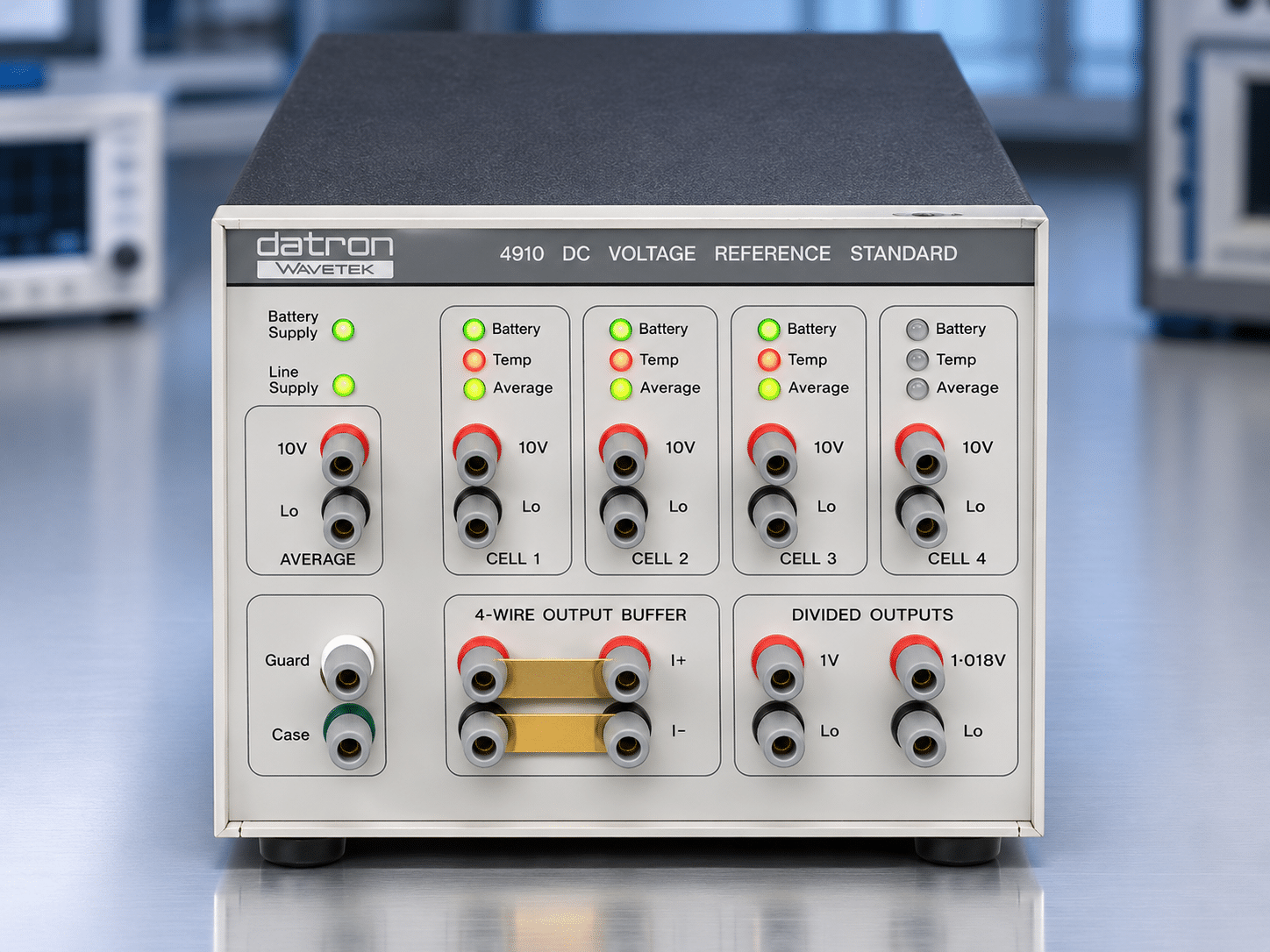
A regular performance check can help technicians spot changes between accredited calibration services. However, a routine check does not replace an accredited calibration.
Follow these general steps, while also using the instrument manual and your laboratory procedure.
Step 1: Prepare the Instrument and Work Area
First, place the reference standard in a suitable work area. Next, check the room conditions and allow the instrument to reach the operating state stated by the manufacturer.
Also, inspect the output terminals and cable connections. If the terminals need cleaning, use the cleaning method recommended by the manufacturer. Avoid using a cleaning product that may damage the connectors or insulation.
Step 2: Select Suitable Measurement Equipment
Next, choose a digital multimeter with enough accuracy and resolution for the test. For high-accuracy work, the laboratory may use a suitable precision meter or a higher-level voltage reference.
However, not every test needs a Josephson Voltage Standard. The right equipment depends on the required uncertainty, voltage range, and calibration method.
Step 3: Connect the Cables Correctly
Then, connect the reference standard to the measuring instrument. Use suitable low-thermal cables when the test requires them, and keep the connections secure.
In addition, follow the correct terminal and guard connection instructions. A guard connection can help reduce unwanted leakage effects in suitable measurement setups. However, incorrect wiring may introduce new errors, so always check the connection diagram.
Step 4: Take and Compare Voltage Readings
After the setup has settled, select the required output voltage and record the reading. For example, the instrument may provide 10 V or 1 V outputs, depending on its design.
Then, compare the measured value with the reference value or the previous measurement record. If your procedure uses lead reversal, follow the approved method to help identify or reduce thermal EMF effects.
For a suitable lead-reversal method, the calculation may use:
Vtrue = (Vforward + |Vreverse|) / 2
Here, Vforward is the reading in the first connection direction, while Vreverse is the reading after reversing the leads. However, this calculation applies only when the measurement setup and reversal method meet the required conditions.
Step 5: Review Drift and Keep Records
Finally, record the results and compare them with earlier data. If the readings show an unexpected change, investigate the setup, cables, environment, and instrument condition before making a decision.
In addition, keep the measurement date, output range, room conditions, equipment details, and results. These records help the laboratory review performance and choose a suitable calibration interval.
Frequently Asked Questions
1. What is Reference Voltage Standard Calibration and why is it necessary?
Reference voltage standard calibration is the metrological process of measuring and verifying a solid-state or zener voltage reference’s exact DC output against NIST-traceable standards to ensure absolute voltage accuracy. It is necessary because all solid-state components exhibit gradual aging drift over time.
2. How often should a DC voltage reference standard be calibrated?
A DC voltage reference standard should be calibrated every 12 months under standard laboratory operating conditions. Newly acquired standards or units showing accelerated aging drift should be calibrated on a 6-month cycle until their long-term drift rate is fully established.
3. What causes long-term voltage drift in solid-state reference standards?
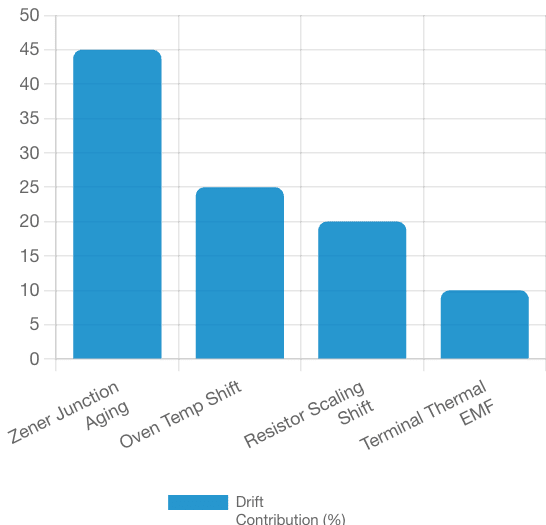
Long-term voltage drift is primarily caused by mechanical and thermal aging of internal buried zener diodes, micro-stress changes in precision resistor divider networks, and aging of internal reference component silicon structures.
4. Why is constant thermal regulation critical for voltage reference standards?
Constant thermal regulation via internal ovens is critical because zener diodes and resistor networks possess temperature coefficients. Maintaining a stable internal temperature prevents ambient room fluctuations from inducing voltage output errors.
5. Can internal self-tests replace accredited ISO/IEC 17025 calibration?
No, internal self-tests only verify basic circuit continuity and oven lock status. They cannot determine absolute voltage value or evaluate long-term drift against external national metrology standards.
6. Does Techmaster US offer accredited calibration for voltage reference standards?
Yes, Techmaster Electronics provides ISO/IEC 17025 accredited calibration services for voltage reference standards, precision calibrators, and 8.5-digit multimeters across the United States.
Reference Voltage Standard Guide: Setup, Operation & Calibration
Master standard operating setups, thermal EMF polarity reversal equations, risk-adapted ISO/IEC 17025 recalibration intervals, stability verification protocols, and NIST measurement traceability.

Calibration engineer at Techmaster Electronics, ISO/IEC 17025 accredited laboratory with 35+ years of metrology expertise.