
How to Calibrate a Insulation Resistance Tester: ISO/IEC 17025 Guide
Electrical safety relies heavily on accurate measurement tools. Insulation resistance testers protect technicians and equipment by measuring the integrity of electrical insulation. Over time, these instruments experience wear, electronic drift, and environmental degradation. Therefore, understanding how to calibrate a insulation resistance tester remains critical for any quality-driven organization. Accurate calibration ensures your equipment meets regulatory requirements and provides trustworthy data.
Additionally, we understand that equipment downtime can disrupt your daily operations. To support your workflow, Techmaster Electronics offers comprehensive test equipment rental services. You can easily rent premium instruments while your primary tools undergo routine maintenance. This flexible renting service ensures zero interruptions to your critical testing schedules. In this guide, we will explore the proper techniques, industry standards, and best practices for testing these essential devices.
1. What Is an Insulation Resistance Tester?
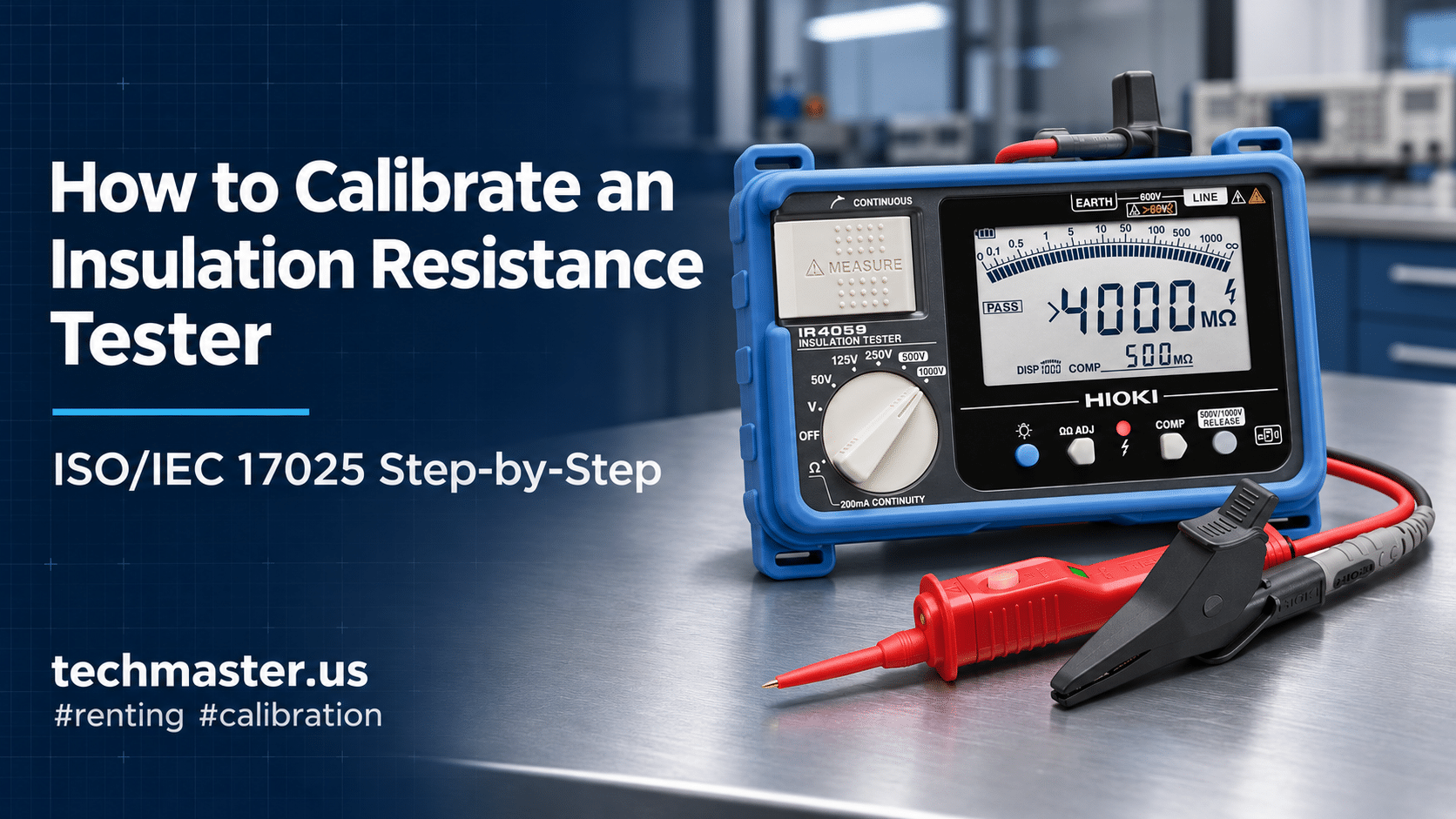
An insulation resistance tester, commonly known as a megohmmeter, measures the electrical resistance of insulators. Technicians use this device to verify the safety and integrity of wire insulation, motor windings, and transformers. The tester applies a high DC voltage across the insulation and measures the resulting tiny leakage current. It then calculates the resistance using Ohm’s Law.
Healthy insulation demonstrates extremely high resistance, often in the gigohm or teraohm range. Conversely, damaged or deteriorating insulation allows higher leakage current, resulting in lower resistance readings. Because these instruments deal with high voltages and highly sensitive current measurements, their internal components must function flawlessly. Even a minor electronic drift can cause significant measurement errors, potentially leading to false safety approvals.
2. Why Knowing How to Calibrate a Insulation Resistance Tester Matters
Maintaining measurement accuracy is the primary reason insulation resistance tester calibration is so crucial. If your megohmmeter reads incorrectly, you risk approving faulty equipment or rejecting perfectly good machinery. False passes can lead to catastrophic electrical failures, fires, or fatal shocks. False failures cause unnecessary downtime and expensive part replacements.
Ensuring Compliance and Traceability
Strict industry regulations mandate regular calibration. Facilities must prove their test equipment produces accurate, traceable results. Following a recognized megohmmeter calibration procedure guarantees your laboratory meets essential quality benchmarks. Traceability chains connect your instrument’s readings directly to national standards, ensuring universal acceptance of your test data.
Reducing Operational Risks
Routine calibration significantly reduces operational risks. By verifying the high-voltage output and current measurement circuits, laboratories prevent sudden instrument failures. In addition, documented calibration histories defend your organization against liability claims. If an electrical accident occurs, your calibration certificates prove you maintained your testing tools properly.
3. The ISO/IEC 17025 Calibration Process
4. Common Applications
Insulation resistance testers serve a wide variety of industries. Every sector that relies on electrical power needs these devices to maintain safety and efficiency.
Industrial Manufacturing
In manufacturing plants, heavy machinery runs continuously. Maintenance engineers use megohmmeters to check motor windings and power cables. Regular testing detects insulation breakdown before a motor shorts out, preventing costly production halts.
Aerospace and Aviation
Aircraft contain miles of intricate wiring. Aerospace technicians rely on highly accurate insulation testers to verify wire harness integrity. The harsh environmental conditions of flight demand absolute perfection in electrical insulation.
Pharmaceutical and Medical Facilities
Medical device manufacturers and pharmaceutical plants operate in strictly regulated environments. They utilize these testers to validate the safety of production equipment. A reliable Calibration service ensures their testing instruments comply with FDA guidelines and internal quality protocols.
5. Calibration Standards and Traceability
6. Common Issues Found During Calibration
During routine calibration, technicians frequently uncover hidden problems within insulation testers. Catching these issues early prevents measurement errors in the field.
Voltage Output Drift
Over time, the internal power supplies of megohmmeters can drift. A tester set to deliver 1000V might only output 900V. This lower voltage fails to stress the insulation adequately, masking potential defects in the tested cables. Calibration corrects this output drift.
Test Lead Degradation
Test leads endure significant mechanical stress. Micro-cracks in the lead insulation allow leakage current to escape during high-voltage tests. This leakage artificially lowers the resistance reading. Technicians often identify faulty leads during the initial inspection phase of calibration.
Range Instability
Insulation testers measure across vast ranges, from thousands to trillions of ohms. Internal resistors can degrade, causing instability in the highest measurement ranges. If the instrument cannot accurately read gigohms or teraohms, it becomes useless for testing modern, high-quality insulators.
7. How Often Should This Equipment Be Calibrated?
Determining the correct calibration interval requires careful consideration of several factors. Most manufacturers recommend an annual calibration cycle for insulation resistance testers. A 12-month interval generally provides an excellent balance between cost and risk management for standard industrial use.
However, high-usage environments may require more frequent servicing. If technicians use the tester daily in harsh, dirty, or humid conditions, a six-month interval might be necessary. Conversely, an instrument kept in a climate-controlled lab and used rarely might maintain its accuracy longer. In the end, your internal quality procedures, audit requirements, and historical drift data should dictate the final calibration schedule.
8. What to Look for in a Calibration Provider
9. Why Choose Techmaster Electronics?
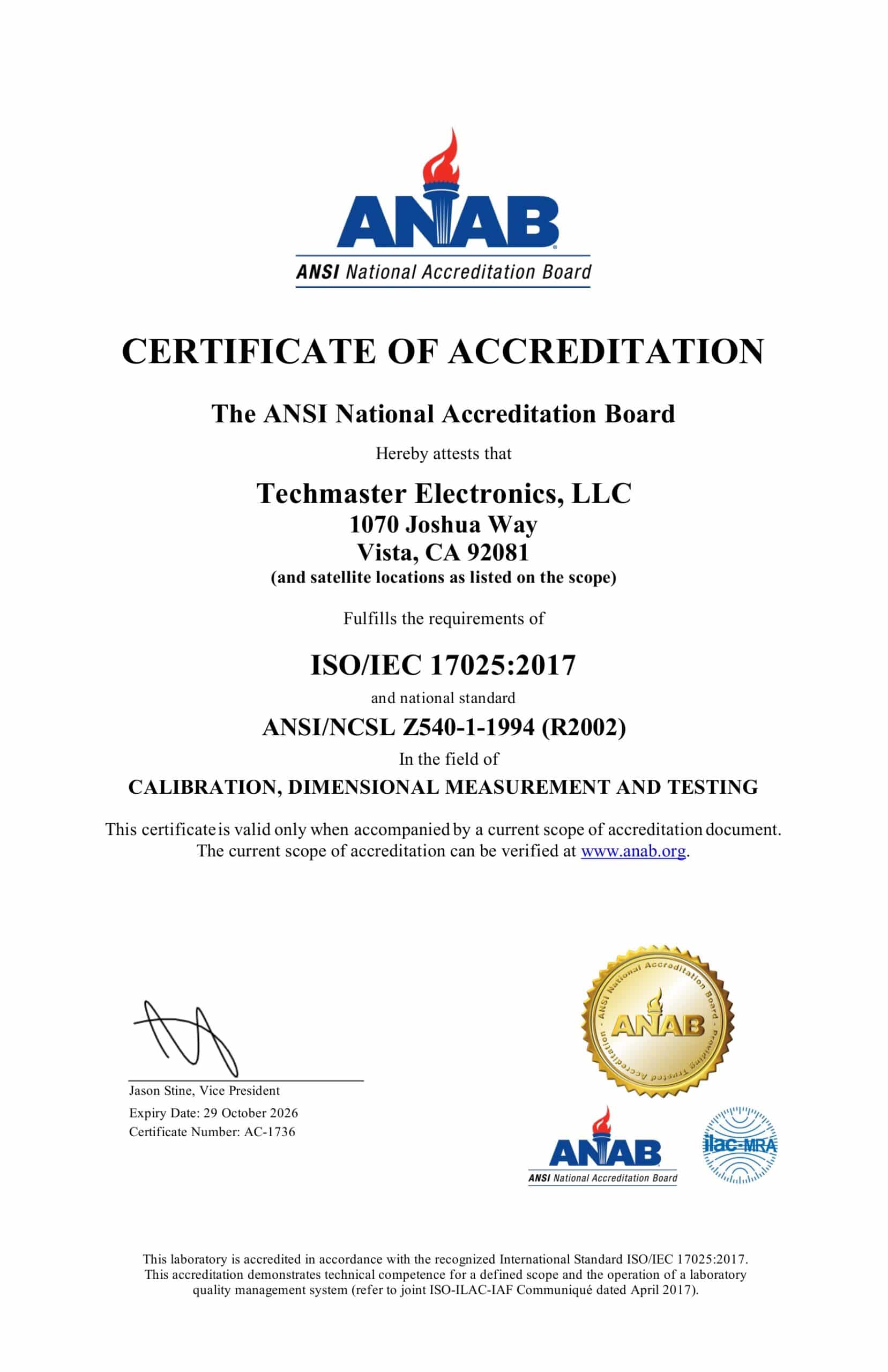
Techmaster Electronics stands as a premier partner for organizations requiring exact, reliable metrology solutions. We specialize in the calibration of advanced electrical test and measurement equipment. Our state-of-the-art laboratories strictly adhere to ISO/IEC 17025 standards, ensuring every measurement we take is highly accurate and fully NIST-traceable.
Our experienced metrologists understand the complexities of high-voltage and high-resistance instrumentation. We carefully test every parameter of your insulation resistance tester to guarantee optimal performance. In addition, our dedication to customer service means we offer fast turnaround times, competitive pricing, and flexible equipment rental options. When you partner with Techmaster Electronics, you gain a trusted ally committed to your operational safety and quality assurance.
10. Conclusion
Insulation resistance testers perform a vital role in maintaining electrical safety and equipment reliability. Without accurate measurements, facilities risk catastrophic failures and severe safety hazards. Regular, documented calibration safeguards your technicians, your equipment, and your bottom line. By partnering with an accredited, experienced laboratory, you ensure your instruments remain strictly compliant and perfectly accurate. Contact Techmaster Electronics today to discuss your calibration requirements and keep your measurement equipment accurate, reliable, and compliant.
11. FAQ Section

Calibration engineer at Techmaster Electronics, ISO/IEC 17025 accredited laboratory with 35+ years of metrology expertise.