
Magnehelic Gauge Calibration
Why calibration intervals matter
How Magnehelic Gauge calibration works
- Intake & visual inspection
- Environmental stabilization
- As-found measurement
- Comparison to NIST-traceable standards
- Adjustment if required
- As-left results & certificate
Your calibration, covered
In-lab vs on-site calibration
In-lab calibration
- Accredited bench with full reference standards
- Best achievable measurement uncertainties
- Pickup & return logistics handled
- Ideal for precision and reference work
On-site calibration
- We calibrate the Magnehelic Gauge at your facility
- No shipping risk or transit downtime
- As-found data captured before any move
- Ideal for fixed, large or sensitive assets
In-depth guide
Magnehelic Gauge Calibration: Ensuring Precision in Industrial Pressure Control

In modern industrial systems, monitoring differential pressure is a critical factor for operational safety and product quality. The Magnehelic Gauge has long been the industry standard due to its high durability and intuitive display. However, to ensure the reliability of these readings, Magnehelic Gauge Calibration is an indispensable process. This article explores the applications, operating principles, and the vital role calibration plays in maintaining these essential instruments.
1. Operating Principle: The Frictionless Drive Mechanism
The success of this gauge lies in its ingenious mechanical design, which eliminates gears and physical linkages that are prone to wear and tear.
1.1. Diaphragm Responsiveness
At the core of the gauge lies a highly sensitive silicone rubber diaphragm positioned between two pressure chambers (High and Low). When a pressure differential occurs, the diaphragm responds with a precise linear movement. This motion is carefully controlled by a flat leaf spring, which is factory-calibrated to balance the applied pressure force. As a result, even small pressure changes can be detected with high accuracy and repeatability, forming the foundation of the gauge’s reliable performance.
1.2. Revolutionary Magnetic Interaction
Instead of relying on traditional gear trains that are prone to friction and wear, the Magnehelic Gauge utilizes a high-energy magnet attached to the diaphragm linkage. This magnet interacts with a helix made of high-permeability material, creating a magnetic coupling system. As the diaphragm moves, the changing magnetic field induces a smooth rotational motion in the helix. This innovative design not only enhances sensitivity but also significantly improves long-term durability.
1.3. Intuitive Data Display
The pointer is directly connected to the tip of the helix, translating its rotation into clear, immediate readings on the dial. Because the entire mechanism operates without direct mechanical contact between moving parts, it minimizes wear and eliminates backlash commonly found in conventional gauges. Consequently, the instrument is capable of maintaining consistent accuracy over millions of operating cycles, ensuring dependable performance in demanding industrial environments.2. Versatile Applications of Magnehelic Gauges in Industry
HVAC Systems
Monitor static duct pressure, optimize blower capacity, and detect early leaks to save significant energy costs.
Cleanroom Control
Maintain strict positive pressure to prevent bacteria and contamination in pharmaceutical and electronic manufacturing.
Air Filtration
Accurately measure pressure drop across filters to help maintenance teams determine the optimal replacement time.
Thanks to their flexible design and wide range of measurement scales, Magnehelic Gauges are utilized in almost every environment requiring precise air pressure monitoring.
2.1. HVAC Systems and Building Management
First and foremost, HVAC engineers rely on these gauges to monitor static pressure within air ducts. This practice ensures that blowers and fans operate at their designed capacity, optimizing airflow in high-rise buildings or data centers. Additionally, Magnehelic Gauges help in early detection of leaks or blockages in the ductwork system.
2.2. Cleanroom Environmental Control
In specialized sectors such as pharmaceuticals, healthcare, and semiconductor manufacturing, cleanrooms require positive or negative pressure to prevent contamination. Specifically, Magnehelic Gauges provide continuous monitoring to maintain a sterile environment. Therefore, even a minor deviation can lead to the failure of an entire production batch, resulting in significant financial loss.
2.3. Filter and Dust Collection Monitoring
Moreover, the most common application is measuring pressure drop across filters. As dust accumulates, the differential pressure increases beyond allowable limits. Based on the gauge’s readings, maintenance teams can determine the exact time for filter replacement, preventing material waste or motor overload.
3. The Importance of Magnehelic Gauge Calibration for Enterprises
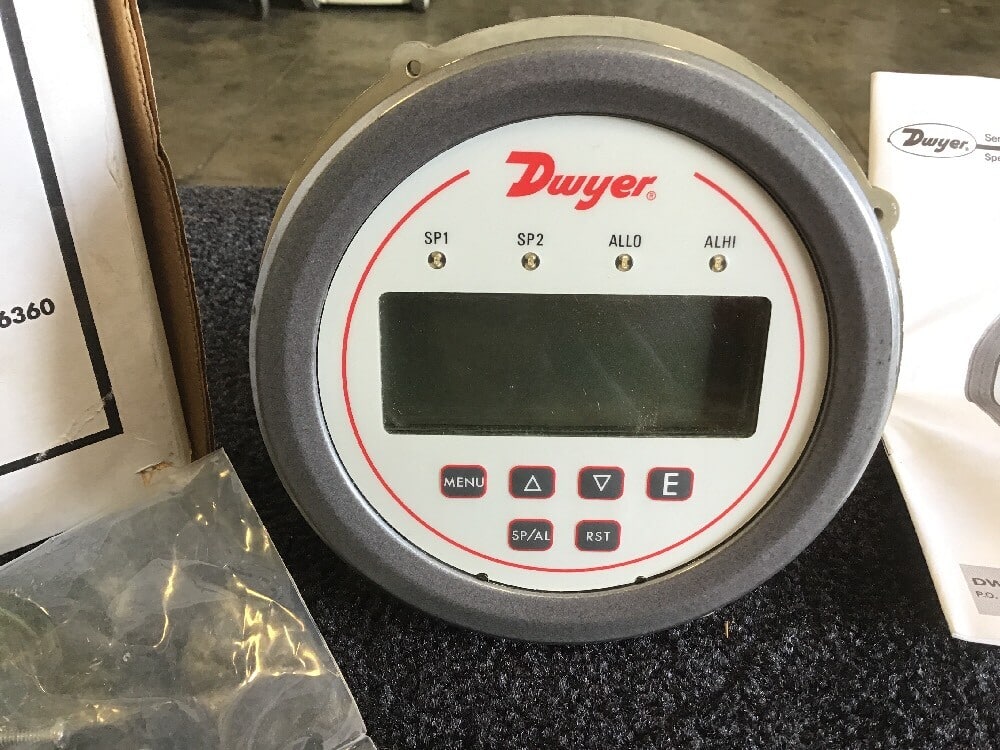
Despite the frictionless design, internal components are still subject to environmental factors and material aging. Accordingly, Magnehelic Gauge Calibration is a mandatory procedure to maintain measurement integrity.
-
Ensuring Periodic Accuracy: Over time, the elasticity of the leaf spring and silicone diaphragm may shift slightly. Therefore, calibration helps realign these deviations within the manufacturer’s specified tolerance.
-
Compliance with Quality Standards: Facilities certified under ISO 9001, ISO 14001, or GMP must provide calibration certificates for all measurement tools. In fact, regular calibration allows businesses to pass technical audits with ease.
-
Energy and Cost Efficiency: An inaccurate gauge may cause fans to run at excessive power. Conversely, when accurately calibrated, the system operates at its optimal point, saving significant electricity costs.
4. Professional Calibration Process at Techmaster
1. Inspection
Visual check for lens clarity, pointer integrity, and port blockage.
2. Zeroing
Adjusting the pointer to the exact zero mark at ambient pressure.
3. Comparison
Using a high-precision master gauge with a 4:1 accuracy ratio.
4. Multipoint
Testing at 5 points across the scale to verify linearity.
5. Certification
Issuing a traceable certificate and applying the calibration sticker.
Techmaster delivers a streamlined Magnehelic Gauge Calibration service through four key technical phases:
-
Inspection & Zeroing: We perform a visual check of the lens, pointer, and ports, followed by a precise Zero Adjustment to establish an accurate baseline.
-
Precision Comparison: Our technicians use master calibrators with a 4:1 accuracy ratio to compare and verify deviations against the Unit Under Test (UUT).
-
Multi-point Verification: We conduct measurements at a minimum of 5 points to evaluate the gauge’s linearity and hysteresis across its full scale.
-
Certification: Finally, we issue a traceable calibration certificate and apply a professional sticker, ensuring full compliance for any quality audit.
Conclusion
The Magnehelic Gauge is a silent guardian of industrial pressure stability. However, it only reaches its full potential when supported by professional Magnehelic Gauge Calibration. Without regular calibration, measurement drift can occur over time, affecting accuracy and potentially leading to operational risks.
With extensive experience and modern laboratories, Techmaster is committed to delivering precise and reliable calibration services. By ensuring accurate measurements, businesses can maintain system stability, reduce downtime, and operate with greater confidence.Frequently asked questions
What is Magnehelic Gauge Calibration?
How often should a Magnehelic Gauge be calibrated?
What standards apply to Magnehelic Gauge Calibration?
What is included on the certificate?
Can you calibrate the Magnehelic Gauge on-site?
Need Magnehelic Gauge calibration?
ANAB-accredited, NIST-traceable, fast turnaround — in-lab or on-site across the USA.
Contact us for a quoteReferences & industry standards
- ISO/IEC 17025 testing & calibration laboratory requirements
- NIST calibration services and measurement traceability
- NIST Pressure and Vacuum Group
- A2LA / ANAB accreditation for calibration laboratories
External standards bodies. Techmaster Electronics is an ISO/IEC 17025-accredited, NIST-traceable calibration laboratory.

Khanh Nguyen is the Marketing Manager at Techmaster Electronics, a B2B marketing leader covering the test, measurement, and ISO/IEC 17025 accredited calibration industry across the US and Vietnam markets.