Chroma vs Keysight DC Electronic Load: Which Brand Is Better?
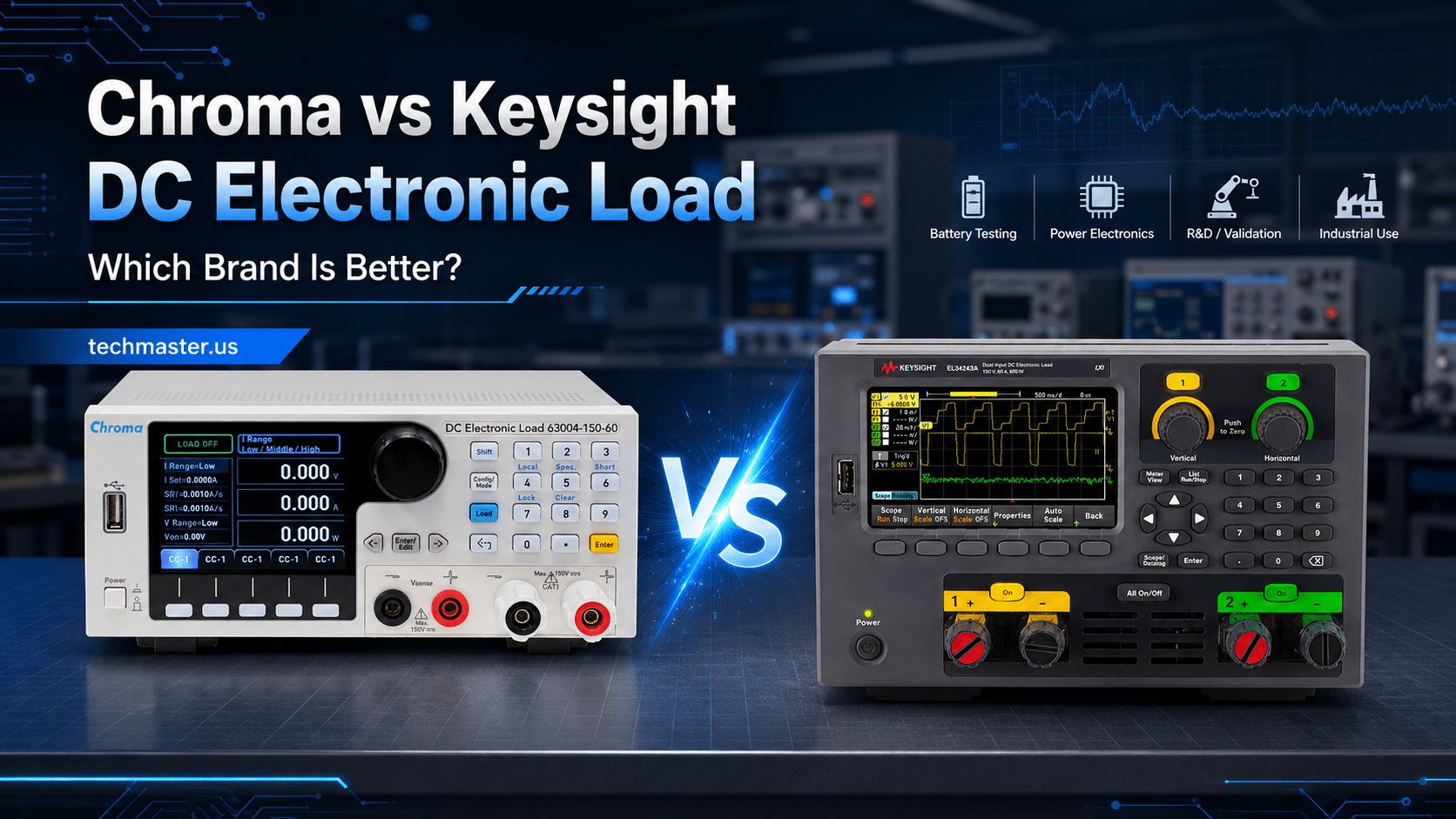
Testing power systems requires highly accurate tools. For example, when you test a new battery or a power supply, you need exact results to ensure product safety. Because of this, engineers often debate the merits of a chroma vs keysight dc electronic load. Both brands make great test equipment, but they serve different needs. In this article, we will compare these two top brands. In addition, we will introduce a helpful equipment renting service and explain why calibrating your tools is vital for your quality control process.
1. What Is a DC Electronic Load?
A DC electronic load is a special device that pulls power from a power source. In contrast to a plain wire resistor that just creates heat, an electronic load actively controls the power draw. Therefore, it allows engineers to test how a power supply handles different stress levels.
Specifically, these loads use several main testing modes:
-
Constant Current (CC): The load pulls a steady current, even if the voltage changes. This is mainly used for testing batteries.
-
Constant Voltage (CV): The load keeps the voltage steady by changing the current.
-
Constant Resistance (CR): The load acts like a fixed resistor. Thus, the current changes as the voltage changes.
-
Constant Power (CP): The load draws a steady amount of total power. As a result, it is perfect for testing DC-DC converters.
In the end, by using these modes, you can mimic real-world conditions on your test bench.
2. Why Measurement Accuracy Matters
Measurement accuracy changes everything. If your electronic load gives bad data, you might pass a bad product. Consequently, that product could fail in the real world, causing safety risks and lost money. On the other hand, a false failure means you throw away good parts.
Therefore, picking the right brand for your specific job is the first step to success. In addition, you must maintain that tool perfectly. Proper equipment control limits risks, protects your brand, and keeps your production line moving smoothly.
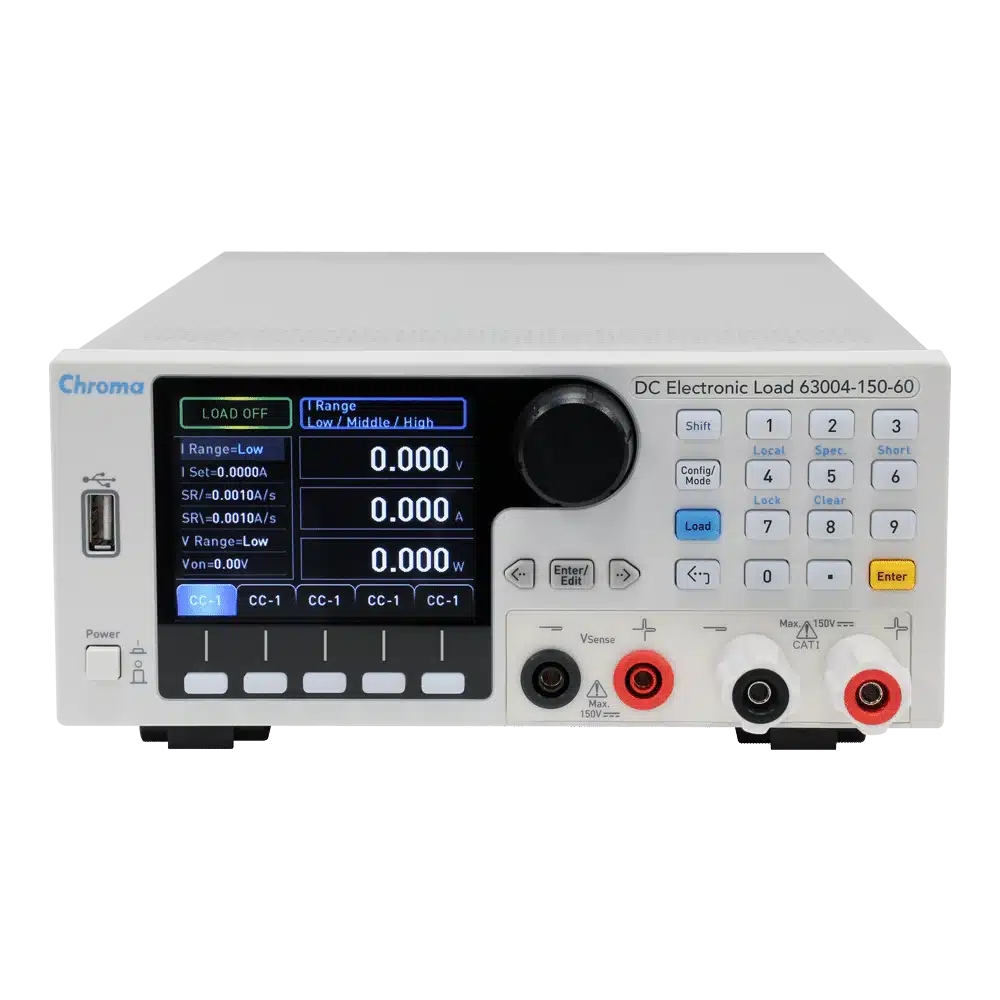
3. Chroma DC Electronic Load: Key Strengths and Common Applications
4. Keysight DC Electronic Load: Key Strengths and Common Applications
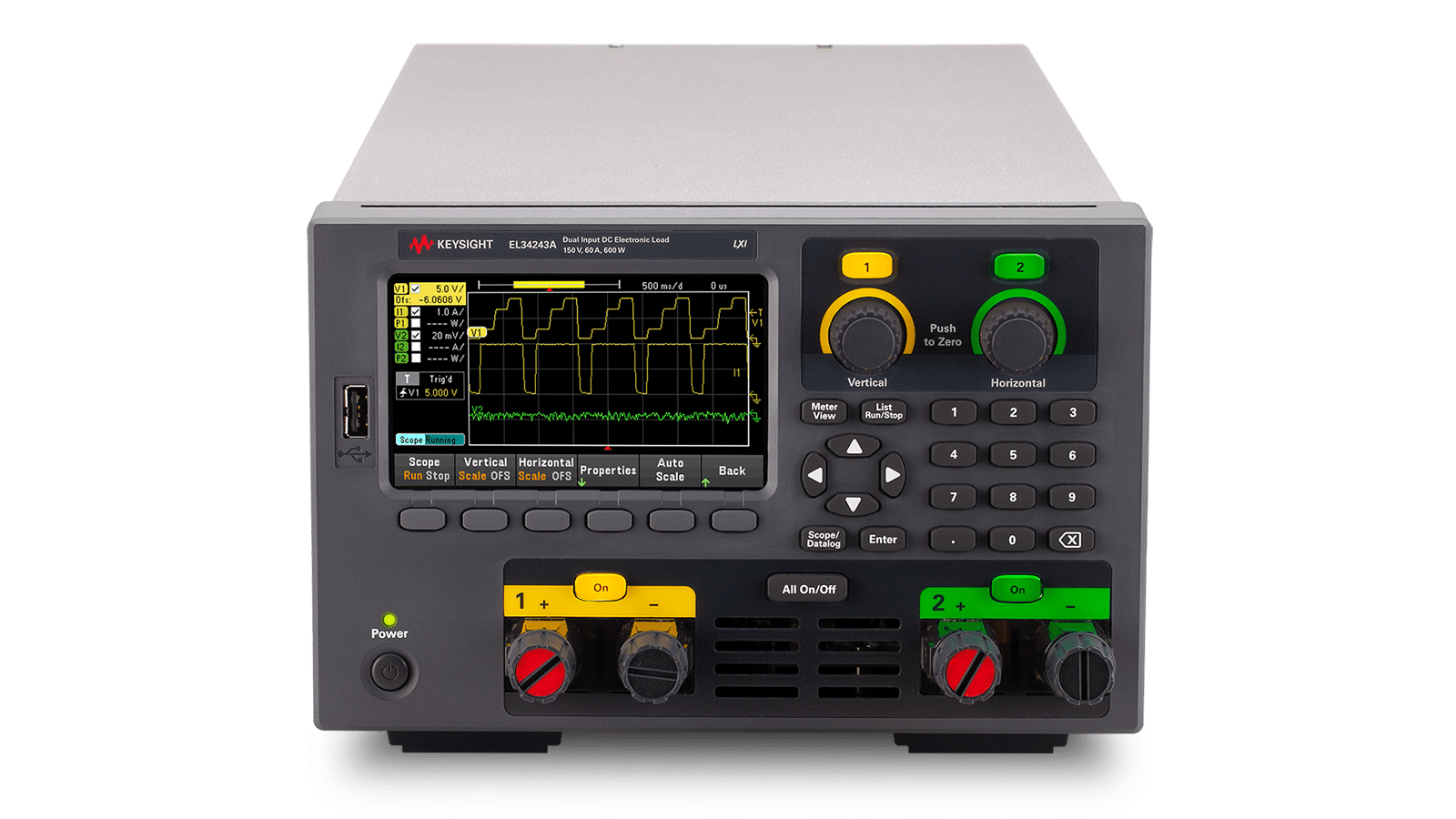
5. Chroma vs Keysight: Which Brand Is Better?
6. Equipment Rental Service: Try Before You Buy
Capital expenditures for high-end test equipment can be significant, often requiring rigorous budget approvals and long procurement cycles. If you are still evaluating the technical differences between these two brands, or if you only need the equipment for a short-term design validation run, purchasing might not be the most cost-effective route.
Techmaster Electronics offers a comprehensive equipment rental service, providing immediate access to premium DC electronic loads. Renting test equipment provides several strategic advantages:
-
Proof of Concept: It allows your engineering team to evaluate an instrument’s performance and software integration in your specific test environment before committing to a purchase.
-
Flexibility for Short-Term Projects: Easily fulfill the requirements of sudden contract manufacturing orders or short R&D testing phases without carrying underutilized assets on your balance sheet.
-
Zero Calibration Overhead: All rented units arrive fully calibrated and certified. When the rental period is over, simply return the unit, eliminating long-term maintenance costs.
7. Calibration Standards and Traceability
Regardless of which brand you choose, the accuracy of your test data is only as good as your last calibration. DC electronic loads must be periodically verified against NIST-traceable standards to ensure their voltage, current, and resistance readbacks remain within manufacturer specifications.
An iso 17025 accredited calibration provides the highest level of confidence. This accredited method includes a documented, multi-point check, full measurement uncertainty budgets on every test point, and comprehensive “as-found” and “as-left” data. For industries adhering to AS9100, IATF 16949, or FDA QSR regulations, these rigorous standards are not just recommendations, they are strict audit requirements.
8. Common Issues Found During Calibration
During an electronic load calibration service, technicians often find hidden problems. If you ignore these issues, your test data will be wrong.
-
Part Drift: Over time, the parts inside the load slowly change. Consequently, the power readings drift away from the true values.
-
Heat Damage: Electronic loads get very hot. Over many months, this heat slowly damages the internal parts.
-
Broken Connections: The front input plugs wear out from constant use. As a result, bad connections cause wrong voltage readings.
-
Slow Response: The load might lose its ability to change power levels quickly. Therefore, your fast-action tests will fail.
Routine calibration catches these problems early. Thus, you avoid bigger issues down the road.
9. How Often Should This Equipment Be Calibrated?
Most equipment makers suggest calibrating your DC electronic load once a year. However, your schedule might need to be different.
For example, if you run your factory 24 hours a day, the tool works much harder. In this case, you might need to check it every six months. Also, if you work in strict fields like aerospace or medical devices, your internal rules might force a shorter timeline. In the end, you should look at how often you use the tool and follow your company’s quality plan.
10. What to Look for in a Calibration Provider
Choosing a reliable calibration partner is just as critical as choosing the right instrument. When selecting a laboratory, consider the following criteria:
-
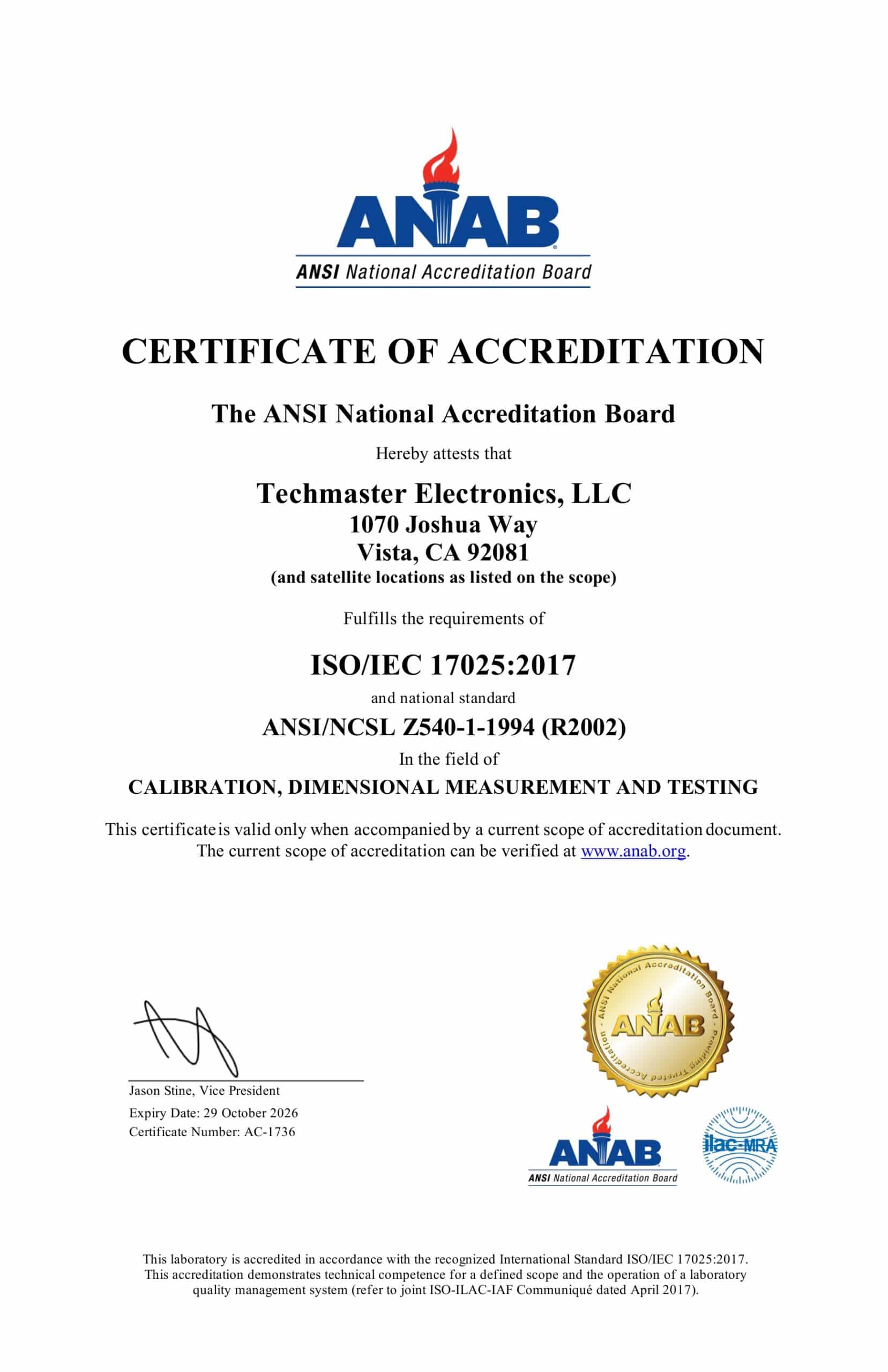
Accreditation: Ensure the lab holds a valid ISO/IEC 17025 accreditation from a recognized body like ANAB.
-
Technical Capability: The lab must have the appropriate high-current shunts, precision digital multimeters, and high-power reference standards required to accurately verify the load’s full capacity.
-
Turnaround Time: Look for providers that offer fast, predictable turnaround times (e.g., 5 business days) or expedited services to minimize production downtime.
-
On-Site Capabilities: For massive, high-power loads built into fixed ATE racks, shipping the unit is impractical. A lab that offers nationwide on-site calibration can dispatch metrologists directly to your facility.
11. Why Choose Techmaster Electronics?
Techmaster Electronics is a trusted partner for manufacturing and technology companies that demand accurate and traceable measurement solutions. With multiple ANAB-accredited ISO/IEC 17025 laboratories across the United States, we specialize in high-precision electrical test equipment.
Whether you rely on an Agilent, Keysight, or Chroma test system, our experienced metrologists provide rigorous testing, comprehensive uncertainty budgets, and out-of-tolerance recovery solutions. We offer both bench service with convenient local pickup and delivery, as well as on-site calibration for large, rack-mounted power test systems. Our goal is to ensure your instruments perform exactly to specification so you can focus on innovation and quality.
12. Conclusion
Selecting the right DC electronic load requires a clear understanding of your specific testing environment. Chroma leads the way in high-power, regenerative, and ATE-focused applications, while Keysight excels in precision, multi-channel modularity, and R&D benchtop analytics. No matter which brand you integrate into your workflow, regular, accredited calibration is the only way to ensure your measurements remain trustworthy and compliant.
Contact Techmaster Electronics today to discuss your Calibration service requirements and keep your measurement equipment accurate, reliable, and ready for the next test.
13. Frequently Asked Questions (FAQ)
Frequently Asked Questions
Expert answers on operating, maintaining, renting, and calibrating DC electronic loads to ensure total precision in your power testing environment.
Ready to schedule your service?
Secure your power testing precision with our accredited labs.
References & industry standards
- ISO/IEC 17025 testing & calibration laboratory requirements
- NIST calibration services and measurement traceability
- A2LA / ANAB accreditation for calibration laboratories
External standards bodies. Techmaster Electronics is an ISO/IEC 17025-accredited, NIST-traceable calibration laboratory.
Frequently asked questions
What is dc electronic load calibration?
DC Electronic Load Calibration is the documented comparison of a DC electronic load against NIST-traceable reference standards under ISO/IEC 17025. It quantifies the DC electronic load’s error and measurement uncertainty and confirms it performs within tolerance, with as-found and as-left data on the certificate.
How often should a DC electronic load be calibrated?
Most quality systems calibrate a DC electronic load every 12 months, or sooner after repair, overload, or before critical measurements. Set your interval from the manufacturer spec and your ISO 9001 / 13485 / AS9100 program and drift history.
Is Techmaster’s DC electronic load calibration ISO 17025 accredited?
Yes. Techmaster Electronics is ISO/IEC 17025:2017 accredited by ANAB (Certificate AC-1736). Every DC electronic load calibration is NIST-traceable and issued with a full measurement-uncertainty budget.
What is the turnaround for DC electronic load calibration?
Standard turnaround is 5 business days, with 1–2 business-day expedite available. On-site calibration removes shipping time entirely for DC electronic loads that can’t leave the floor.
Do you calibrate DC electronic loads on-site or in-lab?
Both. Techmaster runs five US labs (Vista CA, Santa Clara CA, Orlando FL, San Antonio TX, Holly Springs NC) and offers nationwide on-site DC electronic load calibration to minimize downtime.

Khanh Nguyen is the Marketing Manager at Techmaster Electronics, a B2B marketing leader covering the test, measurement, and ISO/IEC 17025 accredited calibration industry across the US and Vietnam markets.