
TL;DR: Electronic load calibration verifies CC, CV, CR and CP mode accuracy, voltage and current readback, and transient/slew performance. Different modes use different control loops, so a load can pass in one and fail in another, calibrate the modes you use. Readback is a meter and drifts like one. Typical interval: 12 months.
An electronic load sits on the wrong side of every power measurement: it is the thing applying the condition and, usually, the thing reporting what happened. A load drawing 9.8 A while reporting 10.0 A will quietly fail power supplies that were fine.
What does electronic load calibration verify?
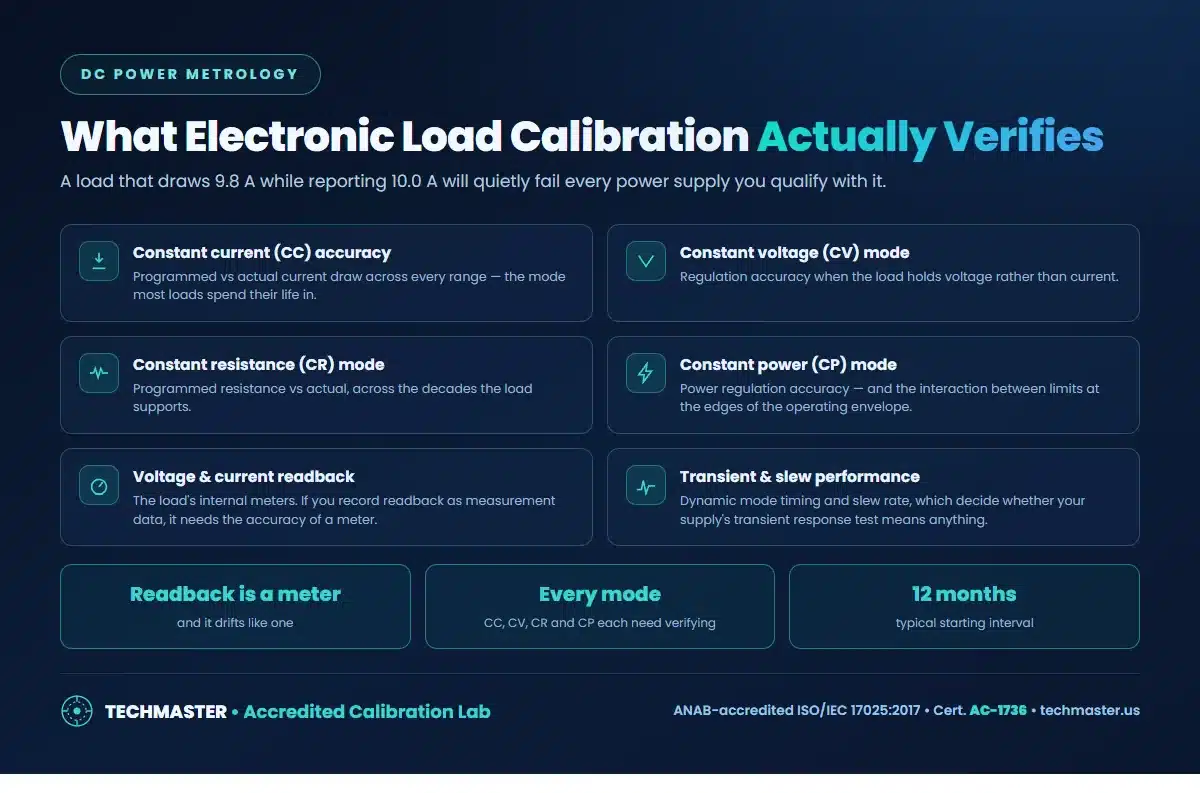
Constant current is where most loads live, and where accuracy matters most. Constant voltage, constant resistance and constant power each use different regulation behaviour, which is why mode-by-mode verification is not padding, a load can be comfortably in specification in CC and outside it in CP near the envelope edges. Readback deserves particular attention: if your test system logs the load’s own voltage and current readings as data, those readings are measurements and need the treatment described for supplies in the power supply guide. Transient and slew performance decides whether a supply’s transient-response test means anything at all.
Where loads bite: qualification testing
Loads are most consequential when qualifying something else, a power supply, a converter, a battery pack, against published specifications. The load’s error becomes a bias in the product’s verdict, in whichever direction happens to hurt: passing designs that shouldn’t, or failing ones that should pass and triggering expensive investigation. That makes the load a strong candidate for accredited calibration with data, and a poor candidate for interval extension if it is in daily production use.
What to ask for
State the modes and ranges you actually use when requesting a quote, ask for as-found data, and have the load calibrated together with the supplies and analyzers it works alongside, one visit, one recall date, described in the budget guide’s consolidation lever. Confirm scope coverage with how to read a scope document.
Frequently asked questions
What does electronic load calibration verify?
Programmed versus actual performance in every operating mode the load supports, constant current, constant voltage, constant resistance and constant power, plus the accuracy of its internal voltage and current readback, and dynamic mode timing and slew rate where the load offers transient testing.
Does the load’s readback need calibration if I have a separate meter?
If you never record readback as data, the readback accuracy matters less. But most test systems log the load’s own readings, and at that point the readback is a measurement instrument, it needs the same treatment as any other meter, including as-found data.
Why calibrate every mode rather than just constant current?
Because the modes use different control loops. A load can be well within specification in CC and out of specification in CR or CP, and you will not discover that from a CC-only certificate. Calibrate the modes you actually use, and say which ones when you request the quote.
How often should electronic loads be calibrated?
Twelve months is the standard starting interval. Loads used to qualify power supplies, batteries or converters against published specifications generally stay annual, because their error directly biases the pass/fail decision on the product being tested.
The bottom line
Calibrate every mode you use, treat readback as a meter, and keep loads annual while they qualify product. Techmaster calibrates electronic loads, power supplies and DC power analyzers under ANAB accreditation (Cert. AC-1736).
Get an accredited calibration quote
ANAB-accredited ISO/IEC 17025:2017 (Cert. AC-1736) • 5 US labs • 5-day standard, 1–2 day expedite • in-lab or on-site.
Request a quote
Khanh Nguyen is the Marketing Manager at Techmaster Electronics, a B2B marketing leader covering the test, measurement, and ISO/IEC 17025 accredited calibration industry across the US and Vietnam markets.