
A torque multiplier turns a modest input from a torque wrench into a large output for wheel nuts, flanges and structural bolts. Its nameplate ratio, say 4:1 or 25:1, is a nominal figure. Gear friction means the real output is always somewhat lower, and it changes with load and wear.
Torque multiplier calibration measures the actual ratio so the input torque can be set to deliver the output the joint needs.
Ratio versus efficiency
The nominal ratio comes from the gear train. The real output equals input torque times ratio times efficiency, and efficiency below 100% is unavoidable. A multiplier rated 5:1 might actually deliver 4.6 or 4.7 times its input. Many manufacturers publish a calibrated ratio or a setting chart for exactly this reason.
How the calibration is done
The multiplier’s output is mounted on a reaction fixture with a torque transducer, and a second transducer or a calibrated wrench measures the input. Readings are taken at several points across the working range, often 20%, 60% and 100% of capacity. The certificate gives the effective ratio at each point and, where the ratio varies with load, a setting table for the input wrench.
Calibrate the input wrench too
The output is only as accurate as the input. If a click wrench drives the multiplier, its own calibration is part of the result. See our guide to torque wrench calibration. Reaction arms must be positioned as the maker specifies, because side loads change the output and can damage the gearbox.
When to recalibrate
Annual calibration is common, with recalibration after any overload, a dropped tool or gearbox service. Multipliers in heavy daily use, such as tire shops and wind turbine maintenance, are often checked more often. For the transducers and testers used in the measurement, see torque tester calibration.
Accreditation and certificates
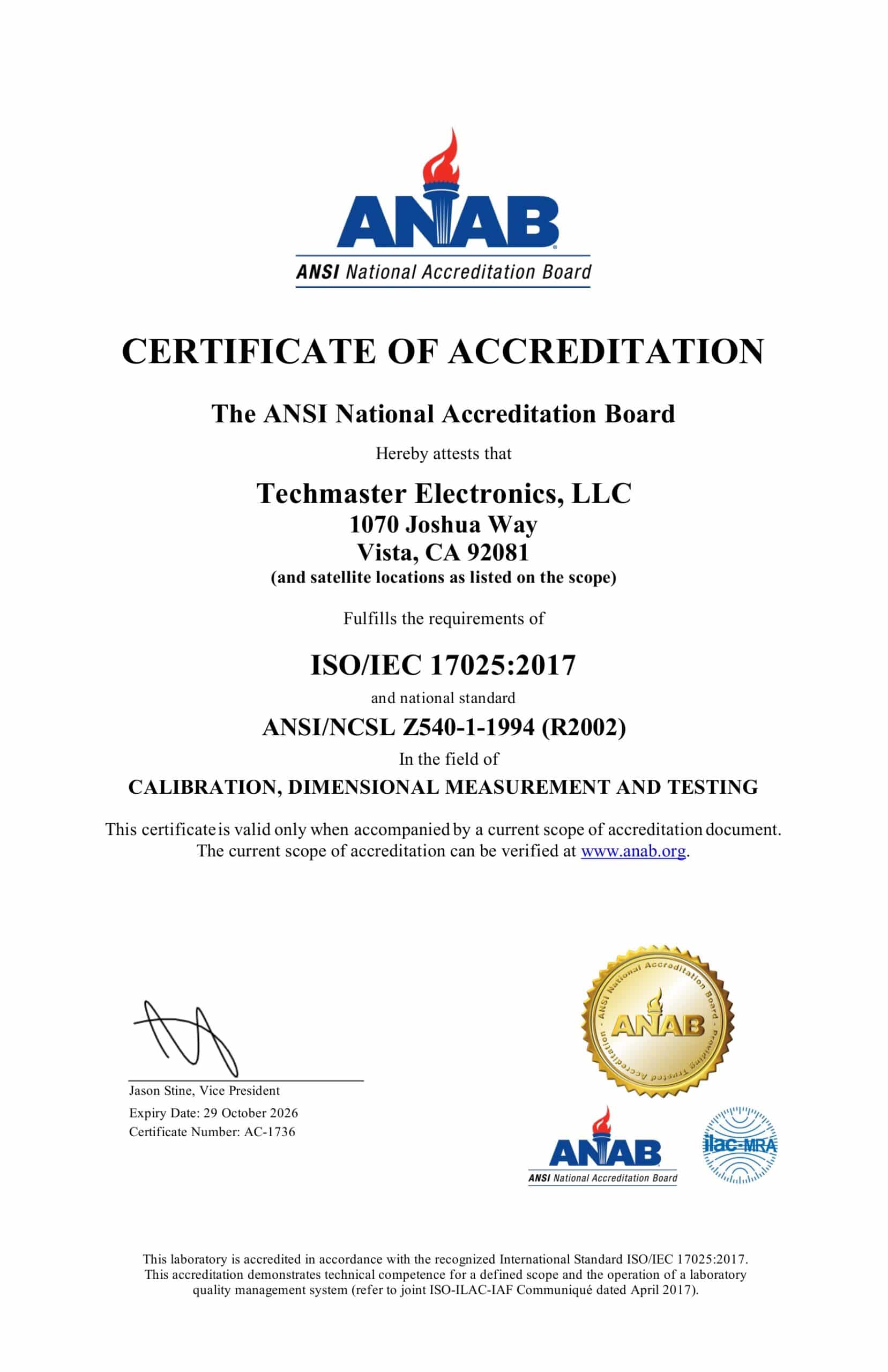
Torque measurement is on Techmaster’s ANAB ISO/IEC 17025 scope (certificate AC-1736) within the listed ranges. Outputs above the accredited range are verified with NIST-traceable equipment, so ask us to confirm coverage for your multiplier’s capacity.
Frequently asked questions
Why does a torque multiplier need calibration if its ratio is fixed?
How is a torque multiplier calibrated?
Does the input torque wrench need calibration too?
Is torque multiplier calibration accredited?
Related calibration guides

Khanh Nguyen is the Marketing Manager at Techmaster Electronics, a B2B marketing leader covering the test, measurement, and ISO/IEC 17025 accredited calibration industry in the United States.