
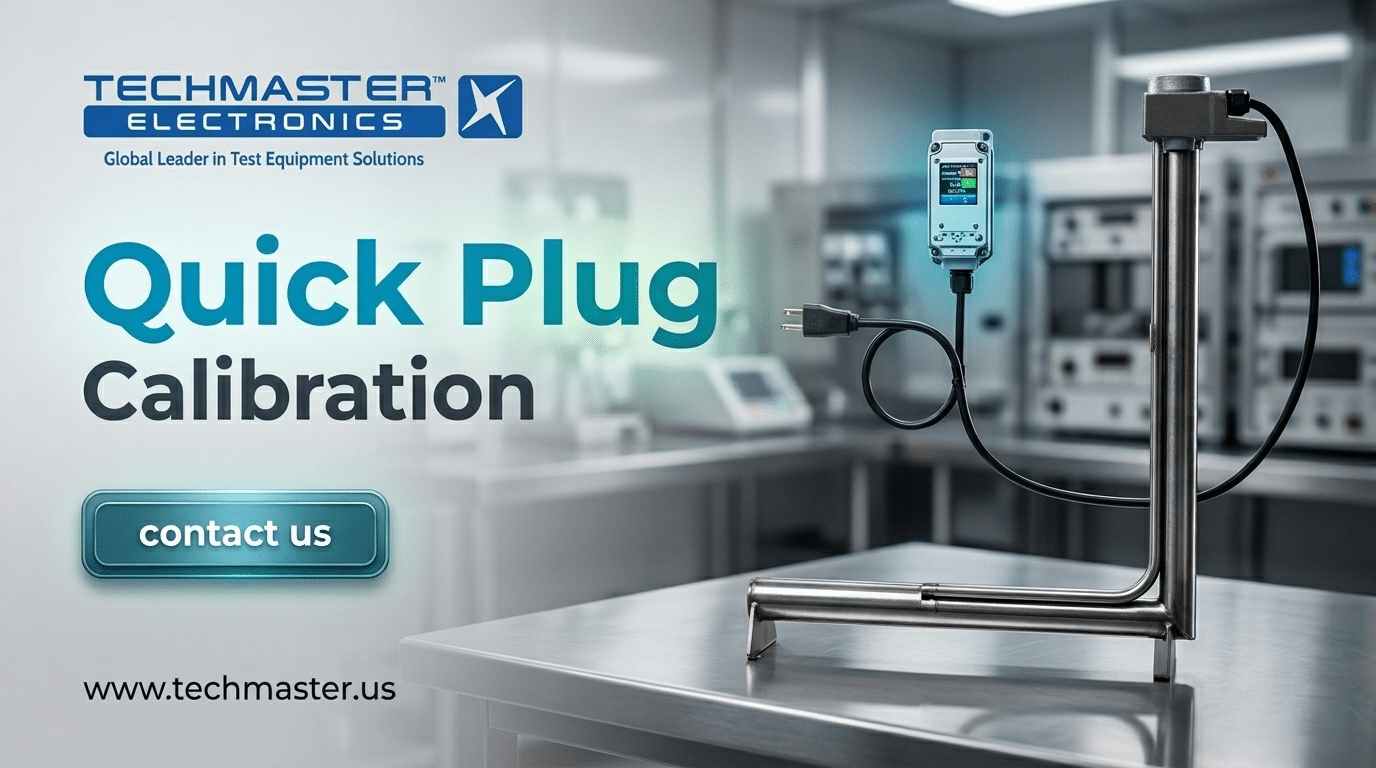
Quick Plug Calibration
Why calibration intervals matter
How Quick Plug calibration works
- Intake & visual inspection
- Environmental stabilization
- As-found measurement
- Comparison to NIST-traceable standards
- Adjustment if required
- As-left results & certificate
Your calibration, covered
In-lab vs on-site calibration
In-lab calibration
- Accredited bench with full reference standards
- Best achievable measurement uncertainties
- Pickup & return logistics handled
- Ideal for precision and reference work
On-site calibration
- We calibrate the Quick Plug at your facility
- No shipping risk or transit downtime
- As-found data captured before any move
- Ideal for fixed, large or sensitive assets
In-depth guide
Industrial chemical processing lines operate within tight thermal margins. Minor measurement drift can trigger catastrophic compliance failures. Inaccurate temperature control systems produce weak coatings, leading to expensive material waste and line shutdowns. Specifically, implementing standard Quick Plug calibration routines solves this challenge. Performing an Accredited temperature controller calibration ensures consistent plating bath temperature calibration.
Why Temperature Calibration Dictates Plating Quality
Calibration: The set of operations that establish, under specified conditions, the relationship between values of quantities indicated by a measuring instrument and the corresponding values realized by standards.Temperature deviations directly impact the chemical dynamics of electrodeposition. A minor drift of only plus or minus one point five degrees Celsius alters electrochemical reaction rates significantly. Consequently, this variance changes coating thickness and compromises structural integrity. To illustrate, consider the direct consequences of failing to perform plating bath temperature calibration. Uncontrolled heating leads to accelerated chemical breakdown and uneven plating. This issue results in severe batch rejection and expensive rework. Furthermore, high temperatures degrade tank liners and accelerate structural corrosion. Therefore, precise thermal management acts as your primary defense against quality loss.
Step-by-Step: How to Execute a Successful Quick Plug Calibration
Performing an accurate Quick Plug calibration involves a systematic process of comparing your controller’s readings against a certified thermal reference standard inside a controlled environment. This procedure identifies deviations in the temperature controller circuitry, allowing technicians to input calculated offsets and restore system accuracy.Required Metrological Tools for High-Accuracy Testing
Executing this technical verification requires a high-stability dry-block calibrator, a calibrated secondary reference probe, and clean testing interfaces. These precision tools ensure that the temperature source remains extremely stable, enabling accurate comparison between the controller display and the actual physical temperature. To perform a professional verification, gather the following equipment:- A high-precision dry-block temperature calibrator.
- A certified reference platinum resistance thermometer.
- A high-resolution digital multimeter.
- Clean connection adapters suitable for the Quick Plug interface.
The Verification Setup and Safety Standards
Setting up the calibration system requires securing the heater controller in an ESD-protected workspace with controlled ambient temperature and humidity. Ensuring correct wiring alignments and verifying that the Quick Plug connection is clean prevents signal attenuation that could compromise calibration data. First, power down the entire heating system completely. Subsequently, disconnect the Quick Plug assembly from the power source carefully. This step eliminates electrical hazards before performing a Quick Plug calibration. Second, clean the connector contacts using an approved electrical contact cleaner. Dirt or residue on the connector pins introduces contact resistance. Consequently, this resistance alters the sensor signals and distorts your readings. Third, place the primary system sensor into the dry-block calibrator. Position the certified reference probe directly adjacent to the system sensor. This alignment guarantees that both sensors experience identical thermal conditions.Accessing the Calibration Menu & Adjusting Offsets
To adjust offsets on the Intelligent Heater Digital 20 Series, access the programming menu by holding down designated keys to reveal secondary system parameters. Inputting the calculated correction values compensates for resistance changes in long sensor cables, successfully standardizing the system’s thermal performance. Please execute the physical adjustment using the following sequence:- Power up the controller and wait ten minutes for internal electronic stabilization.
- Set the dry-block calibrator to your first low-range test temperature.
- Record the stable temperature value from both the controller display and the reference standard.
- Increase the calibrator temperature to your mid-range and high-range set points.
- Calculate the measurement difference between the controller and the reference standard at each point.
- Press and hold the menu selection keys for five seconds to open system configuration.
- Navigate to the temperature offset parameter, which is often labeled as correction value.
- Enter the calculated offset value to align the controller display with the reference standard.
- Save the parameters and cycle the power to verify the new settings.
ISO/IEC 17025 vs. In-House Calibration: The Compliance Gap
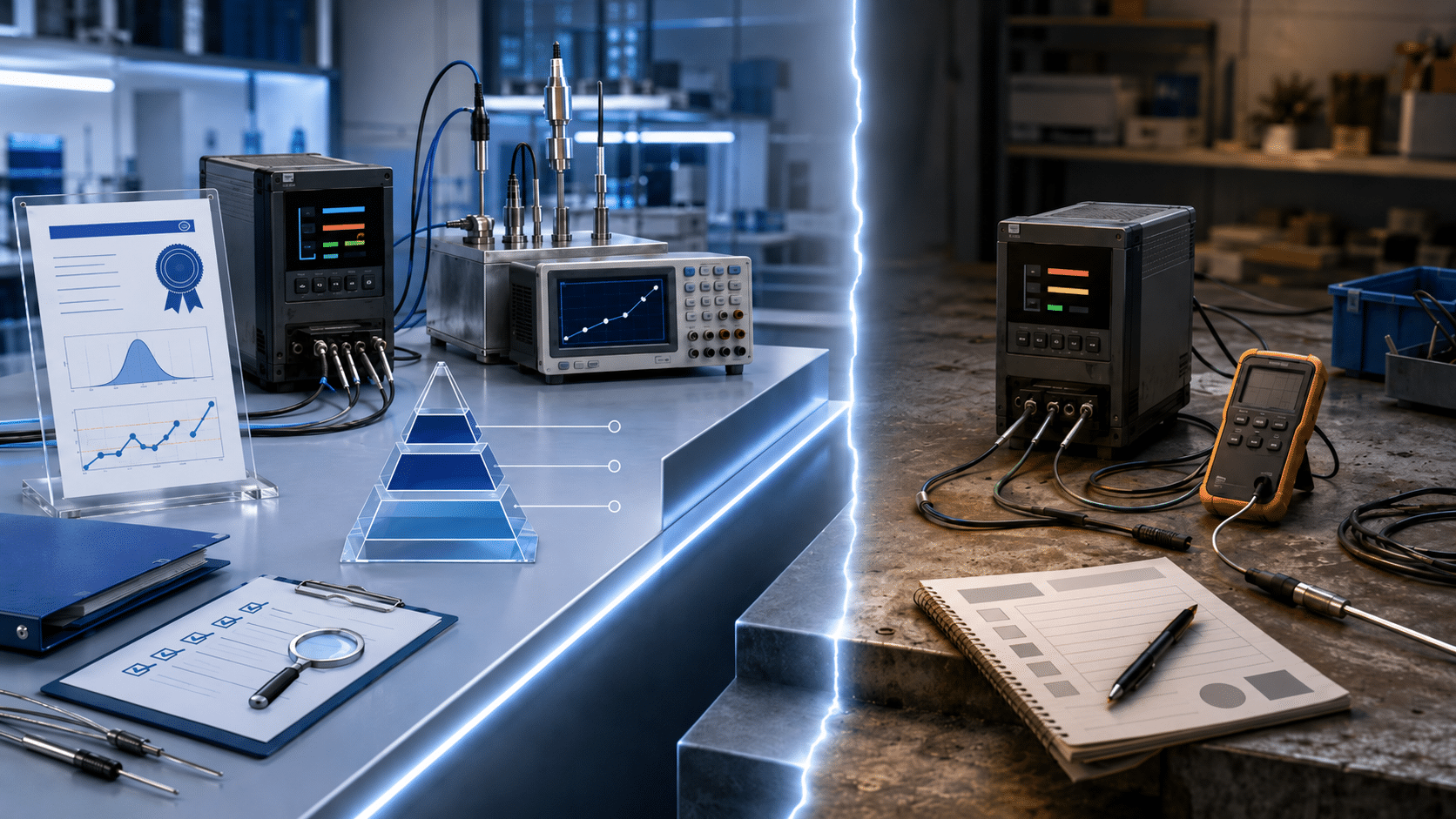
Measurement Uncertainty: A non-negative parameter characterizing the dispersion of the quantity values being attributed to a measurand, based on the information used.Accredited temperature controller calibration ensures that your measurements are internationally traceable. Simple in-house checks often lack the rigorous uncertainty calculations required by modern auditors. Therefore, relying solely on uncalibrated tools introduces significant compliance risks. Furthermore, international standards like NADCAP and CQI-9 demand strict adherence to traceability requirements. Operations that require precise plating bath temperature calibration must prove their testing validity. Accredited laboratories calculate expanded measurement uncertainty with a coverage factor of k equals two. This calculation provides ninety-five percent confidence in the test results. Ultimately, performing undocumented adjustments in-house does not satisfy rigorous audit frameworks. Unaccredited certificates often lack details regarding environmental conditions or standard uncertainties. Consequently, your facility risks failing critical third-party evaluations. Choosing formal accredited calibration provides documented proof of quality to your customers.
Troubleshooting Common Digital 20 Series Thermal Errors
A “Sensor Short” or “Err” display typically indicates a physical failure in the temperature sensor circuit, such as a severed wire or acid penetration into the Teflon sheath. Immediate replacement or professional diagnostics are required to prevent dangerous thermal runaway conditions. When erratic temperature readings occur, inspect the sensor sheath immediately. Harsh chemical baths deteriorate protective coatings over time. As a result, acid penetration causes resistive short circuits in the wiring. This damage leads to massive display fluctuations or sudden sensor failure codes. Additionally, verify the integrity of the Quick Plug connection block. Loose pins or terminal corrosion can mimic sensor failures. Cleaning the connector terminals often resolves intermittent communication errors. If the errors persist, perform a resistance check on the sensor lines using a digital multimeter.Prominent Models Calibration Reference Table
The following reference table maps the most common controller models to their primary industrial uses and governing calibration standards.| Model Series | Manufacturer | Primary Industrial Application | Applicable Calibration Standard |
|---|---|---|---|
| Digital 20-1 | Intelligent Heater | Chemical Bath Temperature Regulation | ISO/IEC 17025, ASTM E220 |
| Digital 20-2 | Intelligent Heater | Electroplating Process Control | ISO/IEC 17025, ASTM E220 |
| D20 Clepco | Clepco | Anodizing Tank Thermal Management | ISO/IEC 17025, EURAMET cg-11 |
| DQ Series | Process Technology | Acid Etching Temperature Monitoring | ISO/IEC 17025, ASTM E220 |
FAQs
What is the standard calibration interval for an Intelligent Heater Digital 20 Series?
The standard calibration interval for the Intelligent Heater Digital 20 Series is typically six to twelve months. However, highly corrosive environments or stringent aerospace quality standards may dictate a shorter interval of three months to prevent critical measurement drift.Can we adjust the temperature offset on a Quick Plug controller ourselves?
Yes, operators can manually adjust the temperature offset parameter directly through the digital controller programming menu. However, doing so without a traceable reference standard and a controlled heat source can introduce larger measurement errors and invalidate audit compliance.How does ISO 17025 accreditation affect our plating line audit compliance?
Utilizing an Accredited temperature controller calibration from an ISO/IEC 17025 accredited laboratory guarantees that your calibration certificates are internationally recognized and fully traceable. This formal compliance immediately satisfies the strict audit criteria of regulatory frameworks like NADCAP, CQI-9, and ISO 9001.
What does a “Sensor Short” or “Err” display mean on my Clepco digital controller?
A “Sensor Short” or “Err” display typically indicates a physical failure in the temperature sensor circuit, such as a severed wire or acid penetration into the Teflon sheath. Immediate replacement or professional diagnostics are required to prevent dangerous thermal runaway conditions.Why is Plating bath temperature calibration considered a high-risk procedure?
Plating bath temperature calibration is critical because chemical solutions are extremely sensitive to thermal variations. A minor temperature deviation alters electrochemical reaction rates, directly resulting in poor coating adhesion, uneven thickness, and high product reject rates.Minimize Your Downtime: On-Site Industrial Calibration Services
Maintaining peak operational efficiency requires rapid technical support and minimal equipment downtime. Our premier accredited laboratory specializes in on-site industrial calibration services tailored to your production schedule. Specifically, our mobile metrology teams deliver highly precise, accredited temperature controller calibration directly to your plating line. This on-site capability eliminates the need to uninstall equipment or halt your operations for extended periods. We thoroughly inspect your systems, execute precise Quick Plug calibration, and issue fully compliant certificates. Protect your facility from audit failures and unexpected product defects. Contact our technical service department today to schedule a comprehensive calibration audit for your industrial controllers.Frequently asked questions
What is Quick Plug Calibration?
How often should a Quick Plug be calibrated?
What standards apply to Quick Plug Calibration?
What is included on the certificate?
Can you calibrate the Quick Plug on-site?
Need Quick Plug calibration?
ANAB-accredited, NIST-traceable, fast turnaround — in-lab or on-site across the USA.
Contact us for a quoteReferences & industry standards
- ISO/IEC 17025 testing & calibration laboratory requirements
- NIST calibration services and measurement traceability
- NIST Thermodynamic Metrology Group
- A2LA / ANAB accreditation for calibration laboratories
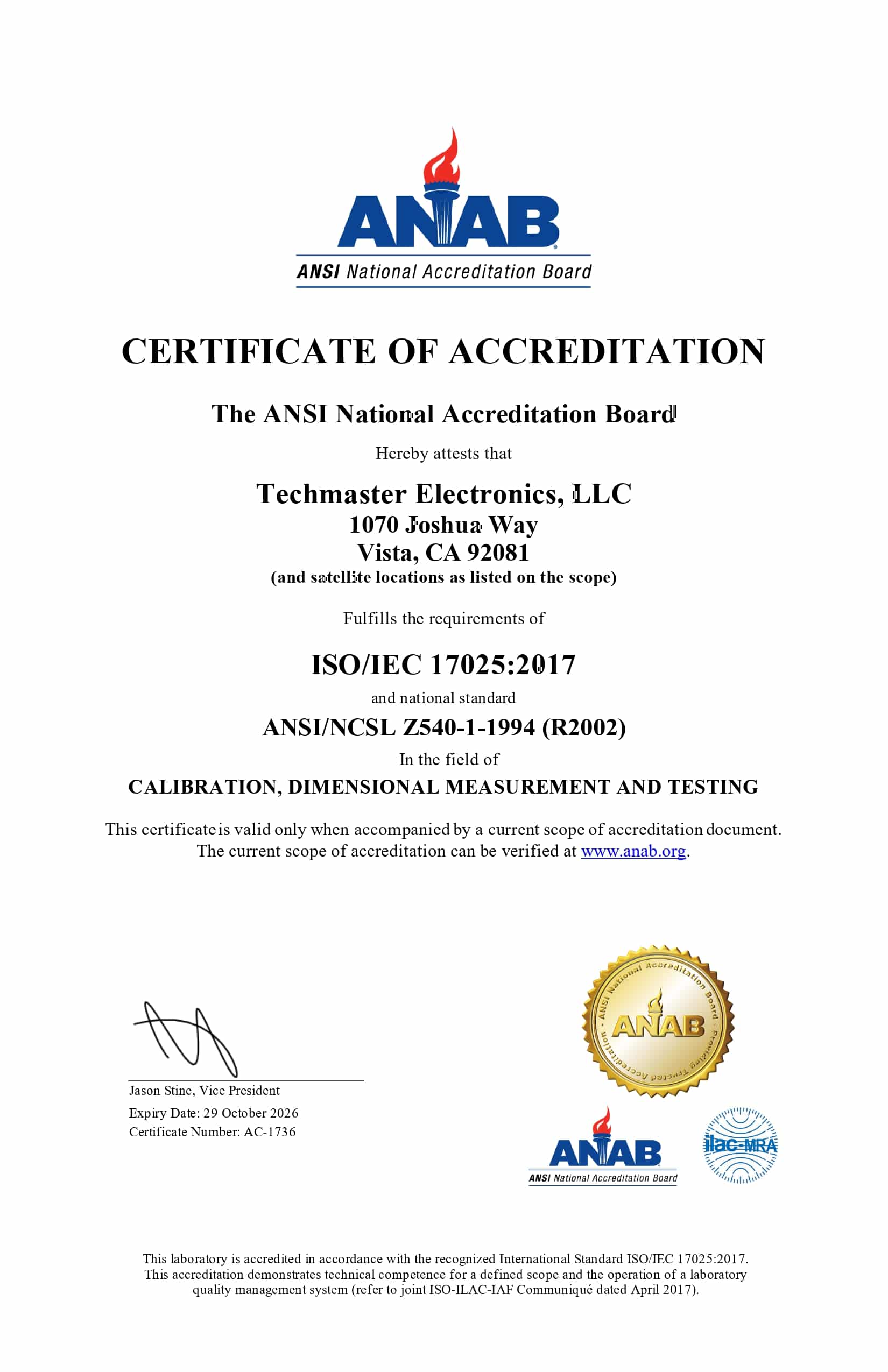
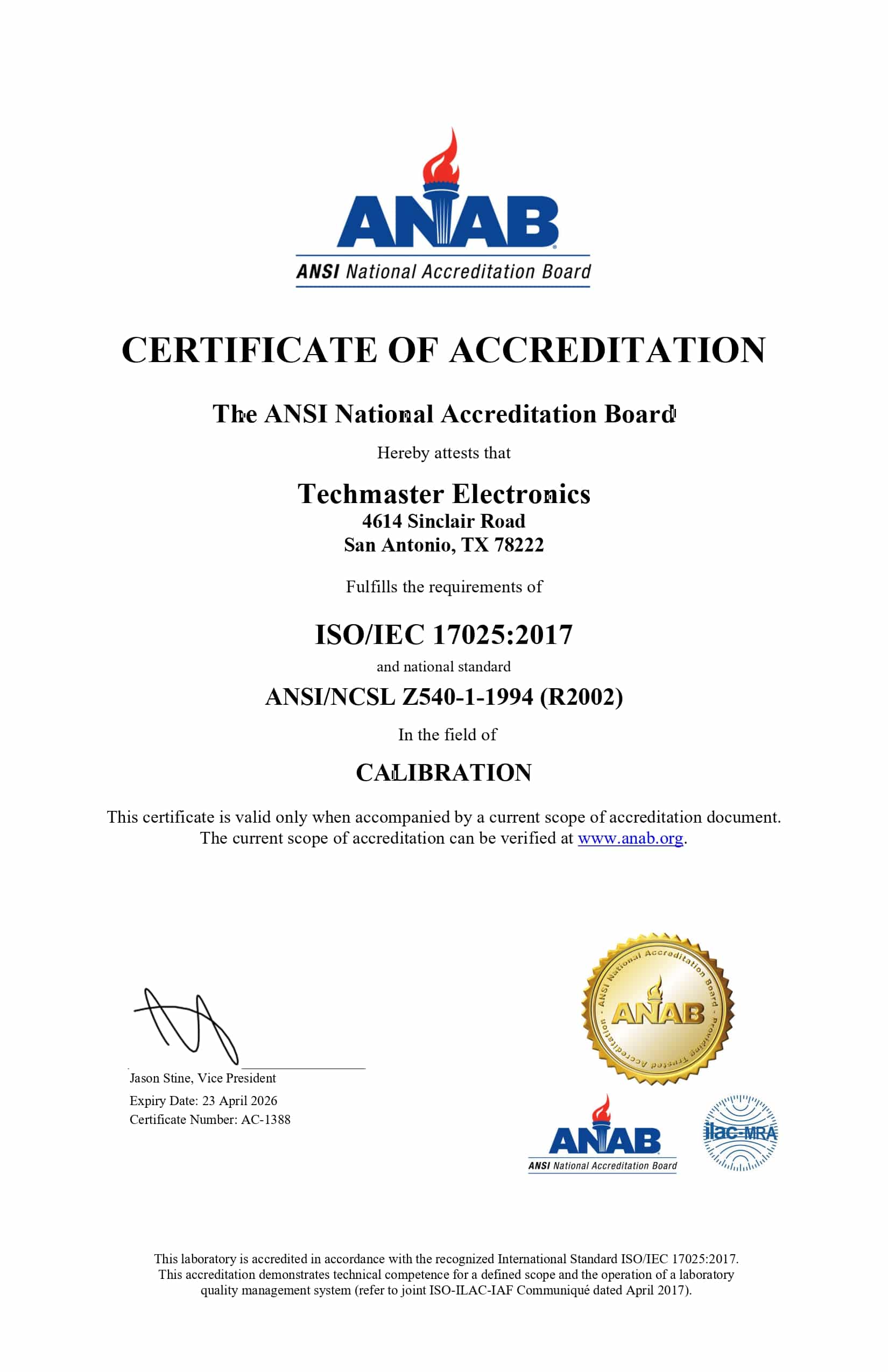
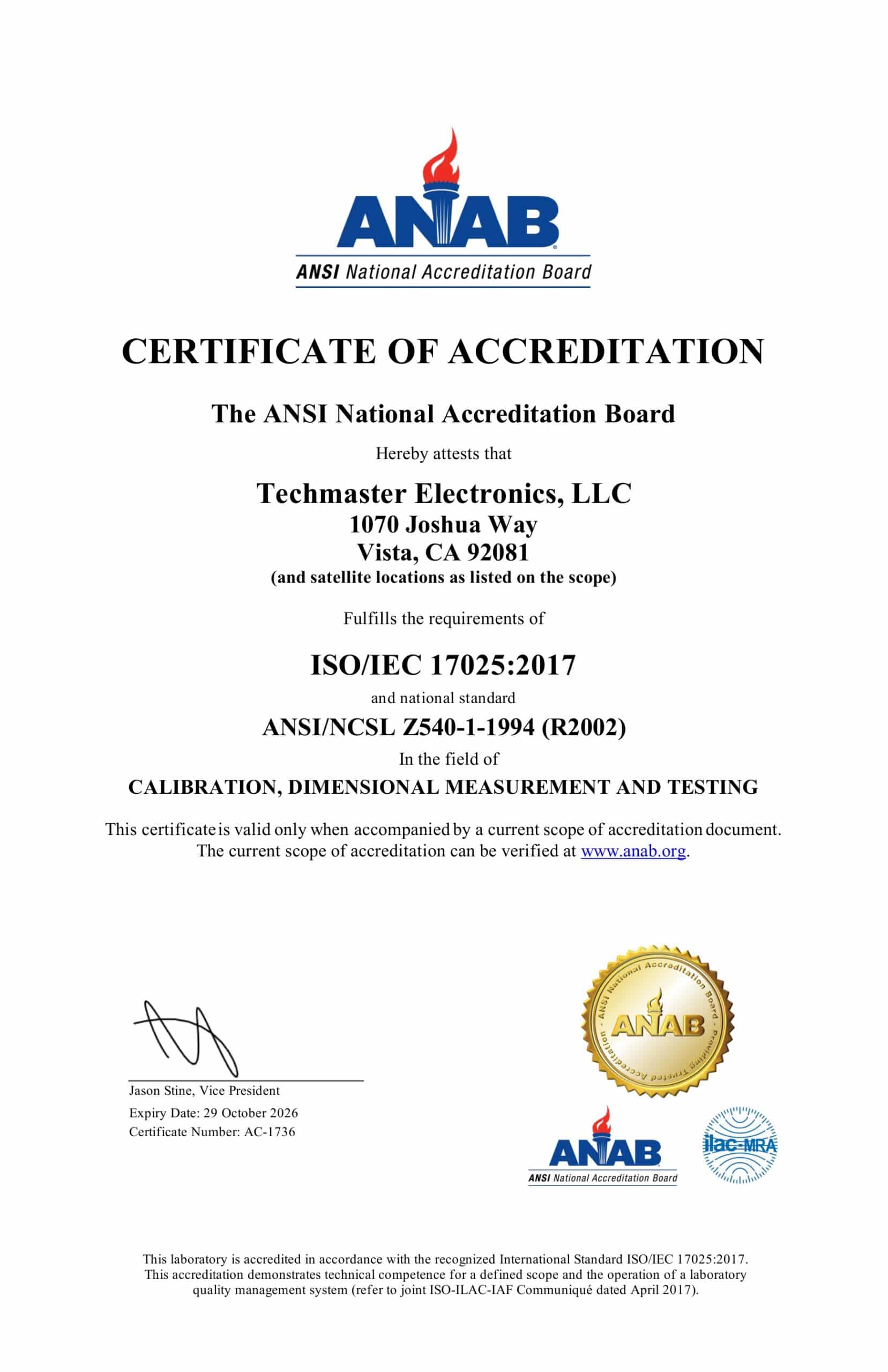
External standards bodies. Techmaster Electronics is an ISO/IEC 17025-accredited, NIST-traceable calibration laboratory.

Khanh Nguyen is the Marketing Manager at Techmaster Electronics, a B2B marketing leader covering the test, measurement, and ISO/IEC 17025 accredited calibration industry across the US and Vietnam markets.