
Lighthouse vs Particle Measuring Systems Handheld Particle Counter: Which Brand Is Better?
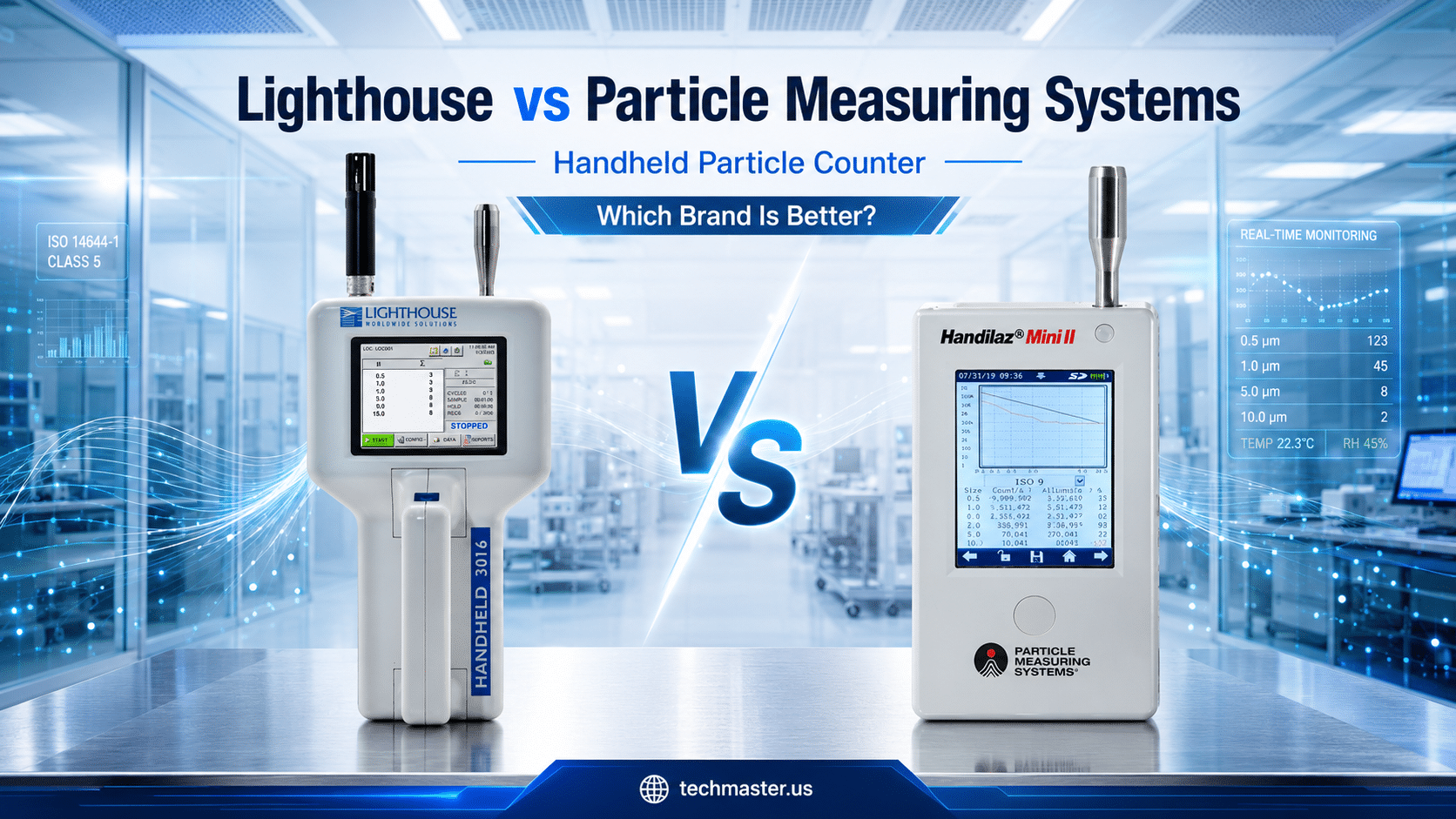
In critical manufacturing and research environments, invisible airborne contaminants are the enemy of product quality and safety. For facilities operating in the pharmaceutical, semiconductor, and aerospace sectors, maintaining strict air quality standards is not just a best practice, it is a regulatory mandate. When quality managers and engineers look to upgrade their environmental monitoring fleet, their decision often comes down to a lighthouse vs particle measuring systems handheld particle counter.
Both Lighthouse Worldwide Solutions and Particle Measuring Systems (PMS) are titans in the field of metrology and contamination control. They both engineer highly accurate, reliable, and technologically advanced instruments. However, deciding which brand is “better” depends heavily on your facility’s specific operational workflows, data compliance requirements, and ergonomic preferences. In this complete guide, we will break down the features of both brands. Also, this will help you make an informed purchasing decision. In addition, we will briefly touch on the maintenance required to keep these critical instruments performing at their best.
1. What Is a Handheld Particle Counter?
A handheld particle counter serves as a compact, portable tool that detects, sizes, and counts airborne particulate matter in real-time. Specifically, these devices use an internal vacuum pump to draw a precise volume of ambient air through a specialized sample chamber. Inside this chamber, a laser diode illuminates the particles. Subsequently, a photodetector measures the scattered light to determine both the particle’s size and the overall air concentration.
Unlike bulky stationary monitoring systems, manufacturers design handheld units specifically for mobility. Therefore, facility managers and industrial hygienists rely on them heavily. They use these devices to conduct rapid spot-checks, locate localized contamination sources, and verify HVAC HEPA filter integrity. Overall, these portable instruments remain essential for routine cleanroom particle monitoring across various facility zones.
2. Why the Lighthouse vs Particle Measuring Systems Handheld Particle Counter Debate Matters
Choosing between these two industry leaders requires you to align the instrument’s core design with your standard operating procedures (SOPs). Both companies provide excellent tools that help you achieve strict ISO 14644-1 compliance. Nevertheless, their approaches to user interface, data management, and physical design differ significantly. Therefore, let us explore a detailed portable particle counter comparison between the two brands.
2.1 Lighthouse Worldwide Solutions: The Champion of Ergonomics and Connectivity
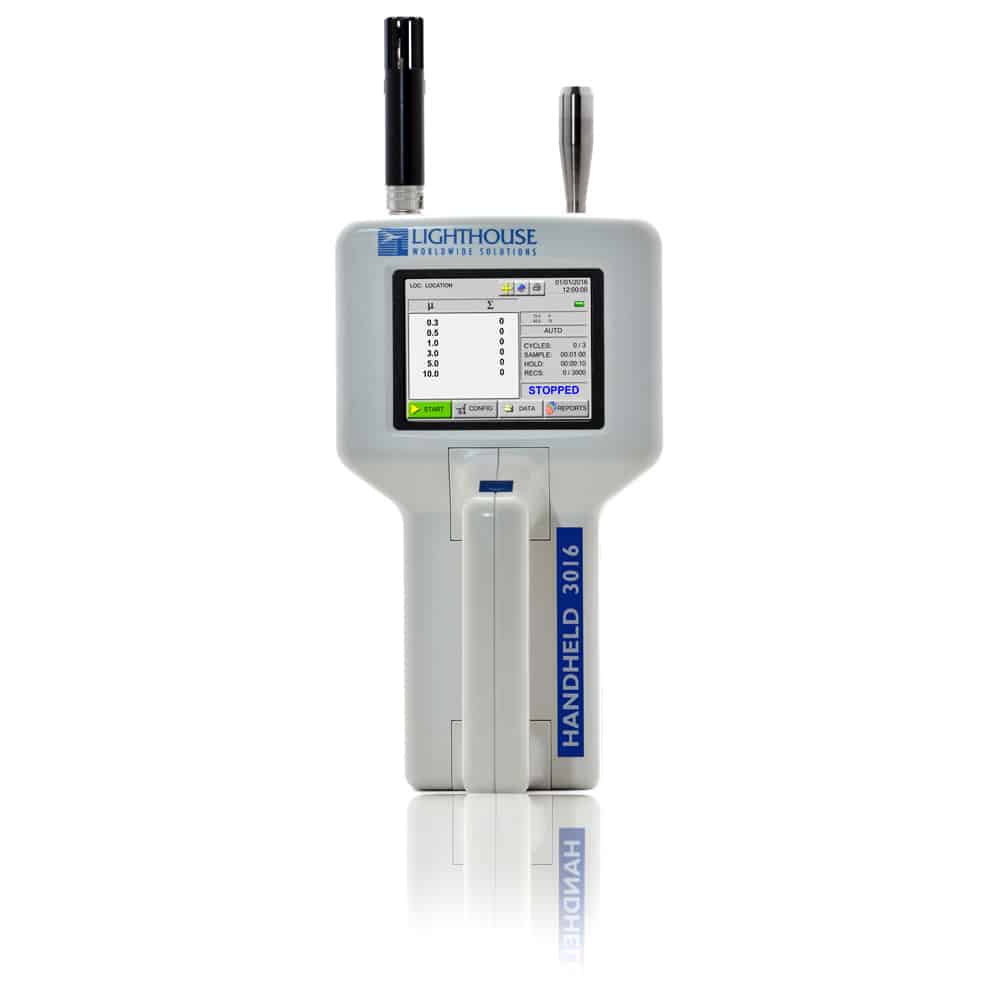
Lighthouse focuses heavily on optimizing the user experience. For example, operators frequently praise models like the ApexZ series and the Handheld 3016. If your technicians spend hours walking between cleanroom zones, Lighthouse devices often stand out for several key reasons:
-
Superior Ergonomics: Lighthouse designs its handhelds with balanced weight distribution. Consequently, this lightweight approach drastically reduces operator fatigue during long shifts.
-
Intuitive User Interfaces: Lighthouse incorporates bright, highly responsive color touchscreens into its equipment. Thus, working through the menu feels very similar to using a modern smartphone. This feature significantly reduces the training time for new operators.
-
Advanced Connectivity: Lighthouse leads the industry in smooth data integration. Specifically, their devices often include built-in Wi-Fi and Bluetooth. Therefore, technicians can transfer data wirelessly to a facility’s Laboratory Information Management System (LIMS).
-
Cleanroom Compatibility: Lighthouse builds many models with sealed enclosures that withstand aggressive cleaning agents. For instance, these units tolerate Vaporized Hydrogen Peroxide (VHP) wipe-downs perfectly.
-
Hot-Swappable Batteries: Lighthouse maximizes uptime by offering hot-swappable batteries. Consequently, users can replace power sources without losing sample data or pausing operations.
2.2 Particle Measuring Systems (PMS): The Standard for Data Integrity and Compliance
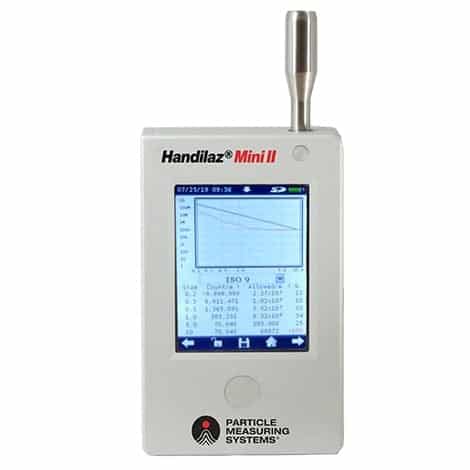
On the other hand, Particle Measuring Systems anchors itself deeply in the highly regulated pharmaceutical and life science industries. Because these sectors face rigorous regulatory audits, PMS prioritizes unshakeable data security. Instruments like the HandiLaz® Mini II and the Lasair® portable lines emphasize strict compliance features.
-
Uncompromising Data Integrity: PMS engineers its devices specifically for FDA 21 CFR Part 11 compliance. Their units generate highly secure, encrypted audit trails that log every interaction, alarm, and data point.
-
Robust Access Control: PMS devices frequently include advanced user management tools. For example, they utilize NFC (Near Field Communication) card readers or strict tiered login systems. Thus, only authorized personnel can initiate samples.
-
Durability and Reliability: PMS builds its handhelds specifically for harsh industrial environments. They utilize rugged polycarbonate enclosures and heavy-duty internal pumps. Consequently, these instruments withstand physical impacts and years of high-traffic use.
-
Specialized Software: PMS pairs its hardware with robust software solutions, such as DataAnalyst. As a result, quality assurance teams save hours of manual work when generating cleanroom certification reports.
2.3 Head-to-Head: Which Should You Choose?
3. Common Applications
Professionals deploy both Lighthouse and PMS handheld particle counters across a wide range of quality-driven sectors:
-
Pharmaceuticals and Life Sciences: Lab managers monitor sterile compounding areas and R&D laboratories to prevent biological contamination.
-
Semiconductor Manufacturing: Quality engineers spot-check cleanrooms because even a microscopic dust particle can destroy a microchip.
-
Aerospace and Defense: Technicians verify particulate levels during the assembly of sensitive optical equipment and precision navigation systems.
-
Healthcare Facilities: Hospital staff ensure optimal air quality in operating rooms and isolation wards.
-
HVAC and Filter Testing: Industrial hygienists verify the efficiency of HEPA filters and assess general indoor air quality.
4. Calibration Standards and Traceability
Whether you choose the ergonomic design of Lighthouse or the robust data security of PMS, inaccurate data renders the instrument useless. Therefore, to maintain particle counter accuracy, you must subject your equipment to rigorous, accredited calibration.
Metrology laboratories must calibrate handheld particle counters according to the ISO 21501-4 standard. This standard dictates strict testing methodologies for counting efficiency, sizing resolution, and flow rates. In addition, you must secure NIST-traceable calibration. This guarantees that metrologists trace the reference materials, such as precision Polystyrene Latex (PSL) spheres, directly back to the National Institute of Standards and Technology.
5. Common Issues Found During Calibration
Because facility managers move handheld instruments constantly, these devices experience significant physical shock and environmental stress. Consequently, routine calibration often uncovers common issues that threaten your cleanroom data:
-
Laser Degradation: The laser diode gradually loses intensity over time. As a result, the instrument under-sizes particles or misses smaller particles entirely.
-
Flow Rate Drift: Internal vacuum pumps degrade after heavy use. Subsequently, the instrument pulls an incorrect volume of air, which produces wildly inaccurate concentration readings.
-
Contaminated Optics: Operating the device in dirty environments leaves a film on the internal mirrors. Therefore, the device distorts the light scattering process and records false counts.
-
Mechanical Wear: Dropping the instrument loosens internal optical alignments and damages the sensitive photodetector.
6. How Often Should This Equipment Be Calibrated?
To maintain regulatory compliance and ensure trustworthy data, you should calibrate handheld particle counters annually.
However, specific factors often compel facilities to shorten this 12-month interval:
-
Usage Frequency: An instrument operating eight hours a day degrades much faster than one used for weekly spot-checks.
-
Harsh Environments: Sampling in areas with high chemical vapors necessitates semi-annual calibrations.
-
Internal QMS Rules: Many aerospace and pharmaceutical Quality Management Systems (QMS) enforce strict 6-month intervals. Consequently, they mitigate the risk of an out-of-tolerance failure, which could trigger a massive product recall.
7. What to Look for in a Calibration Provider
8. Why Choose Techmaster Electronics?
9. Conclusion
The debate over the lighthouse vs particle measuring systems handheld particle counter comes down to matching the instrument’s strengths with your facility’s specific needs. Lighthouse offers unparalleled mobility, user-friendly touchscreens, and smooth wireless connectivity, making it a favorite for fast-paced, multi-zone monitoring. Particle Measuring Systems, conversely, is the undisputed champion of data integrity, offering robust 21 CFR Part 11 compliance features tailored for strict pharmaceutical environments.
However, regardless of the brand you select, routine maintenance is non-negotiable. Only through accredited, ISO 21501-4 compliant calibration can you ensure your chosen instrument continues to deliver the precise, reliable data necessary to protect your products and pass regulatory audits.
10. FAQ Section
Frequently Asked Questions
Expert answers to common questions about particle counter comparisons, device functionality, and critical calibration requirements.

Khanh Nguyen is the Marketing Manager at Techmaster Electronics, a B2B marketing leader covering the test, measurement, and ISO/IEC 17025 accredited calibration industry across the US and Vietnam markets.