
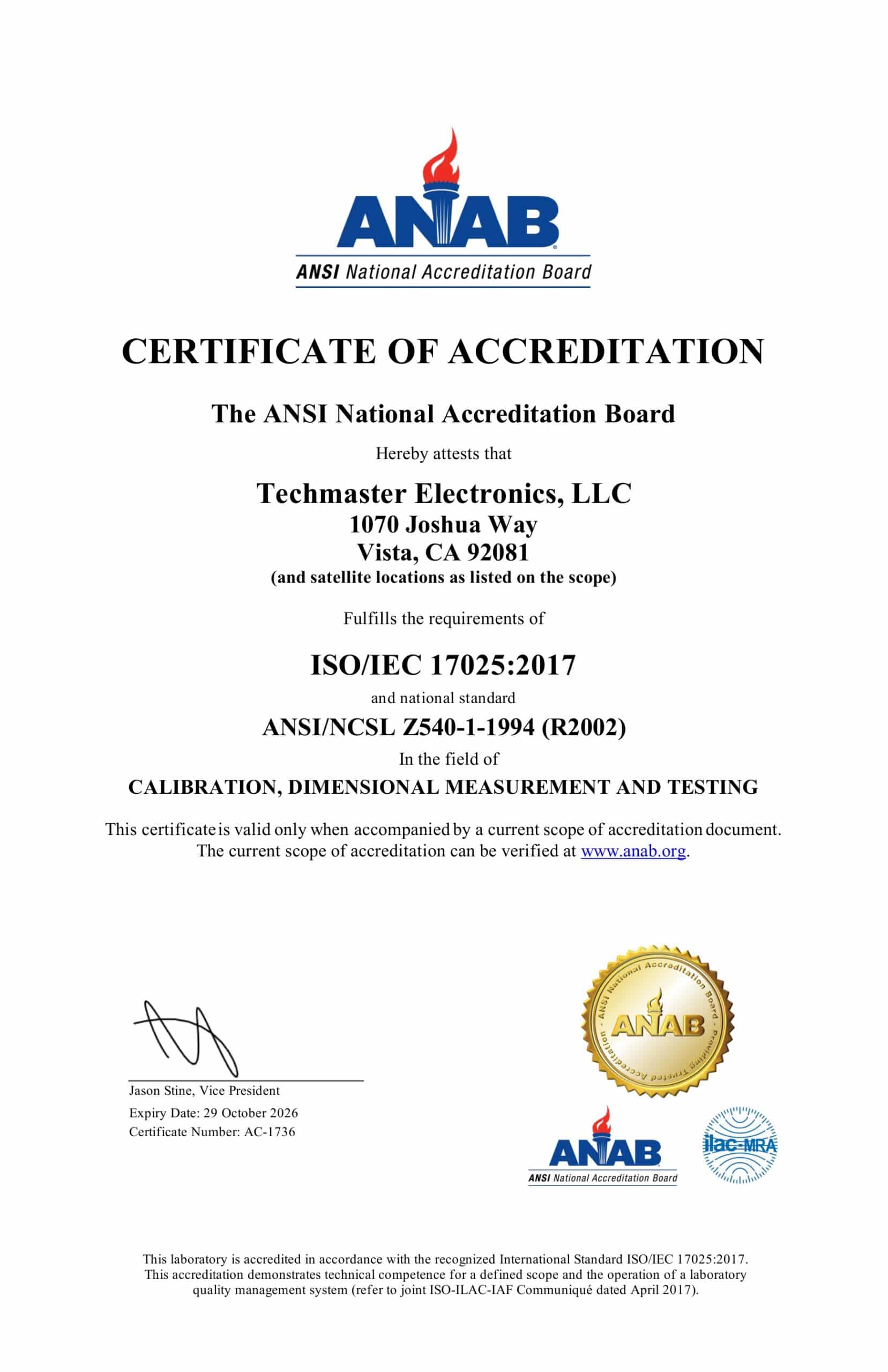
Unnoticed drift during testing often leads to compliance failures and false-positive quality passes on highly sensitive hardware production lines. This continuous measurement instability agitates manufacturing workflows, ruining product credibility and risking expensive recall operations. Utilizing a comprehensive audio analyzer calibration performed by an ISO 17025 accredited calibration lab provides the definitive solution to maintain traceability and operational excellence.
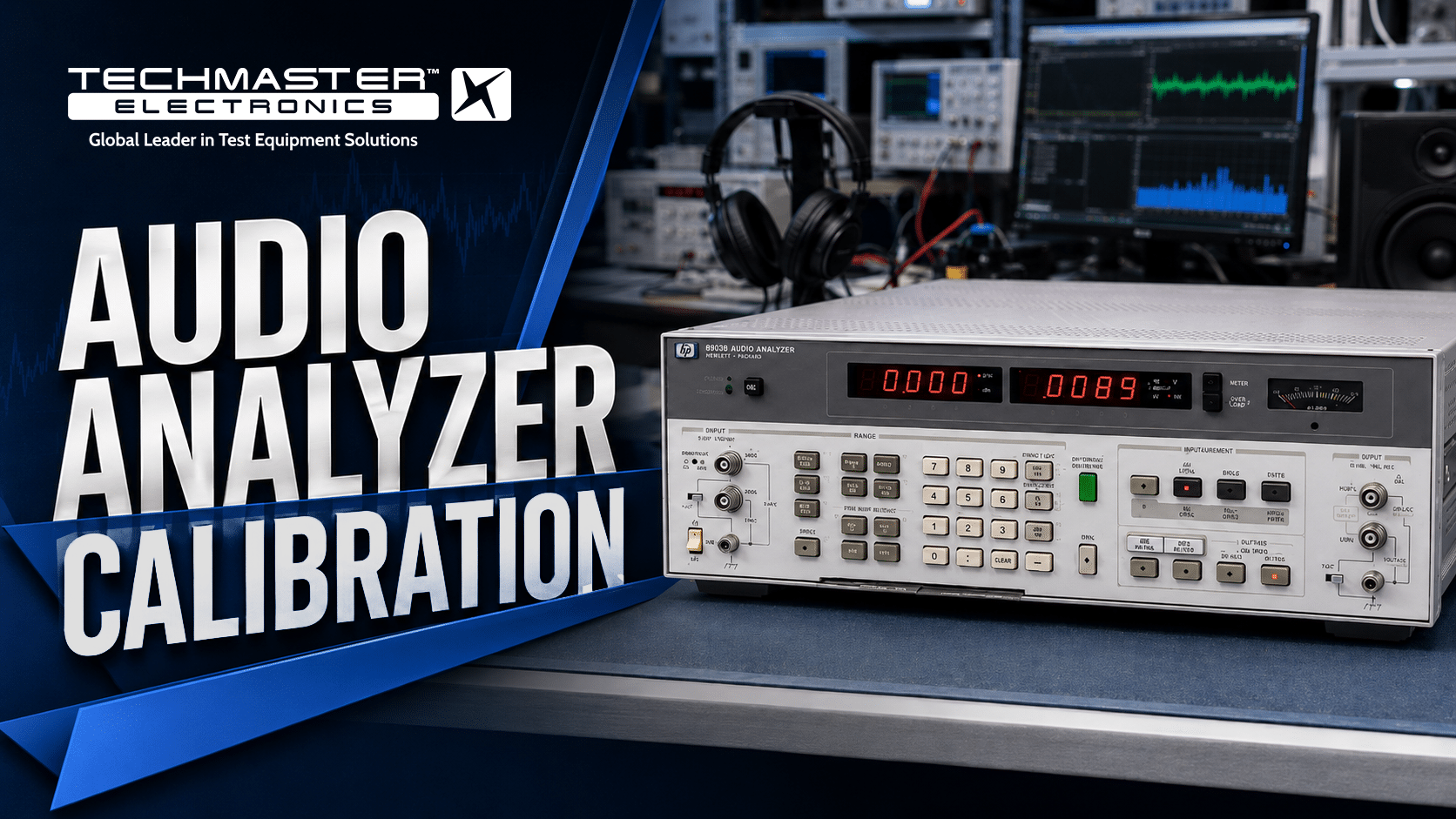
Why Generic Metrology Labs Fail at Audio Analyzer Calibration
Generic metrology labs fail at audio analyzer calibration because standard electrical calibration protocols lack the ultra-low distortion reference standards required to verify extreme performance limits. Standard labs cannot isolate noise floors below -110 decibels, introducing massive measurement errors into high-performance audio verification. To perform calibrating audio analyzers correctly, a facility must possess reference generators with harmonic distortion levels below -120 decibels. Standard digital-to-analog converters introduce significant noise that masks the true distortion profile of modern analyzers. Without specialized isolation tools, external electromagnetic interference degrades the integrity of the reference signal. Therefore, verifying extreme parameters like Total Harmonic Distortion plus Noise (THD+N) requires specialized acoustic and low-frequency expertise. Standard labs often rely on generic multi-product calibrators that lack the necessary spectral purity. Working with a specialized ISO 17025 accredited calibration lab ensures your high-performance equipment is evaluated against the correct physical standards.Definition – Total Harmonic Distortion plus Noise (THD+N): The ratio of the sum of the powers of all harmonic components and unwanted noise to the power of the fundamental frequency signal, typically expressed in decibels (dB) or percentage.
Critical Parameters Verified During Audio Analyzer Calibration
Proper verification requires checking amplitude flatness, harmonic distortion, phase alignment, and crosstalk across the entire frequency spectrum. Ensuring these four critical parameters are accurate prevents measurement drift and guarantees that your audio analyzer performs consistently during complex high-fidelity hardware evaluations. [Insert Image Guide: Audio Analyzer Signal Path and Verification Points]Amplitude Flatness and Accuracy
Amplitude flatness verification guarantees that the analyzer maintains a uniform response across the entire operational frequency range. This prevents frequency-dependent gain errors from skewing audio performance data during swept sine dynamic testing, ensuring that measurement readings remain highly accurate at both low and high spectral limits. Technicians must verify the analog input and output paths from 10 Hertz to over 80 kilohertz. The response must remain flat within small fractions of a decibel. Slight deviations in amplitude flatness directly degrade the validity of frequency response curves.Total Harmonic Distortion plus Noise (THD+N)
THD+N verification validates the internal noise floor and residual distortion of the analyzer itself. If the residual distortion of your analyzer is too high, it cannot accurately measure ultra-low harmonic distortion in high-end consumer amplifiers, causing false test failures. When calibrating audio analyzers, the master reference signal must be cleaner than the manufacturer’s specified residual distortion limit. This test ensures the analyzer does not add its own harmonic components to the measured signal. Precise measurement of these signals requires advanced shielding to eliminate power line hum.Phase and Crosstalk
Phase and crosstalk calibrations ensure channel-to-channel isolation and timing synchronization across multi-channel systems. This is critical for evaluating stereo imaging, spatial audio, and modern multi-microphone consumer electronics without signal leakage, ensuring accurate acoustic representation. Phase matching between channels must remain tight across the entire operating bandwidth to prevent phase errors. Crosstalk measurements verify that high-amplitude signals on one channel do not bleed into adjacent signal paths. Maintaining absolute channel isolation is fundamental to high-fidelity measurement standards.Digital I/O and Jitter Analysis
Digital input-output testing verifies the accuracy of digital domain audio signals and clock synchronization interfaces. This process confirms that clock jitter on standard digital interfaces does not compromise the conversion accuracy of high-speed converter components, maintaining absolute digital audio integrity. High-speed digital audio signals require precise timing verification to prevent transmission errors. Clock jitter must be kept within picosecond limits to maintain the signal-to-noise ratio. Accredited labs use specialized jitter generators to verify the clock recovery circuits of the analyzer.Understanding the ISO 17025 Calibration Requirements for Audio Equipment
ISO 17025 certification guarantees that your calibration provider follows internationally recognized standards for technical competence and traceability. It ensures that every measurement is backed by a documented unbroken chain to national standards, minimizing operational risks and eliminating testing liabilities for global electronics markets.Definition – Measurement Traceability: The property of a measurement result whereby the result can be related to a reference through a documented unbroken chain of calibrations, each contributing to the measurement uncertainty.
The Importance of Traceability
Measurement traceability links your local test results directly to international standards through an unbroken chain of comparisons. This ensures that a measurement taken in your facility is equivalent to a measurement taken anywhere else globally, establishing worldwide confidence in your manufactured products. Without traceable standards, audio test data lacks legal and technical validity in international markets. Traceability is established using master reference standards calibrated by national institutes. When calibrating audio analyzers, maintaining this chain is vital for regulatory compliance.Demystifying Audio Measurement Uncertainty
Every valid calibration certificate must report the expanded audio measurement uncertainty for each measured parameter. This parameter defines the statistical margin of doubt, showing how close the measured value is to the true physical standard under real laboratory testing conditions. Calculating audio measurement uncertainty involves combining multiple error sources, including environmental fluctuations, equipment resolution, and reference drift. A reliable ISO 17025 accredited calibration lab will always state this uncertainty margin on your certificate. High uncertainty indicates that the calibration process lacks the precision needed to verify high-end audio instruments. Evaluating audio measurement uncertainty also requires analyzing the test uncertainty ratio (TUR). A minimum four-to-one TUR is standard for verifying performance boundaries. This ensures that the calibration standards are at least four times more accurate than the instrument under test.As-Found vs. As-Left Data
As-Found data records the performance of the analyzer before any adjustments are made, while As-Left data records performance afterward. Comparing these datasets reveals the exact amount of measurement drift your instrument experienced during the previous service cycle, letting you trace historical degradation of components. If the As-Found data shows out-of-tolerance conditions, you must evaluate all products tested since the last calibration. As-Left data guarantees that the instrument is returned to you operating fully within manufacturer specifications. Keeping historical records of both datasets helps predict future component degradation.Choosing the Right Calibration Interval: How Often Should You Calibrate?
Most industrial facilities implement a standard 12-month calibration interval to balance compliance risks with maintenance costs. However, high-volume production lines or harsh environmental conditions may require shorter intervals of six months to prevent unexpected drift and costly batch testing errors. Highly stable instruments can maintain accuracy for a year under controlled laboratory environments. If the instrument is frequently transported or subjected to temperature swings, more frequent verification is highly recommended. Regular checks using intermediate check standards can help detect premature drift. Ultimately, your quality management system dictates the required frequency based on historical stability data. If your historical records show minimal drift over consecutive cycles, you may justify extending the interval safely. Consistent audio analyzer calibration remains the foundation of long-term testing reliability.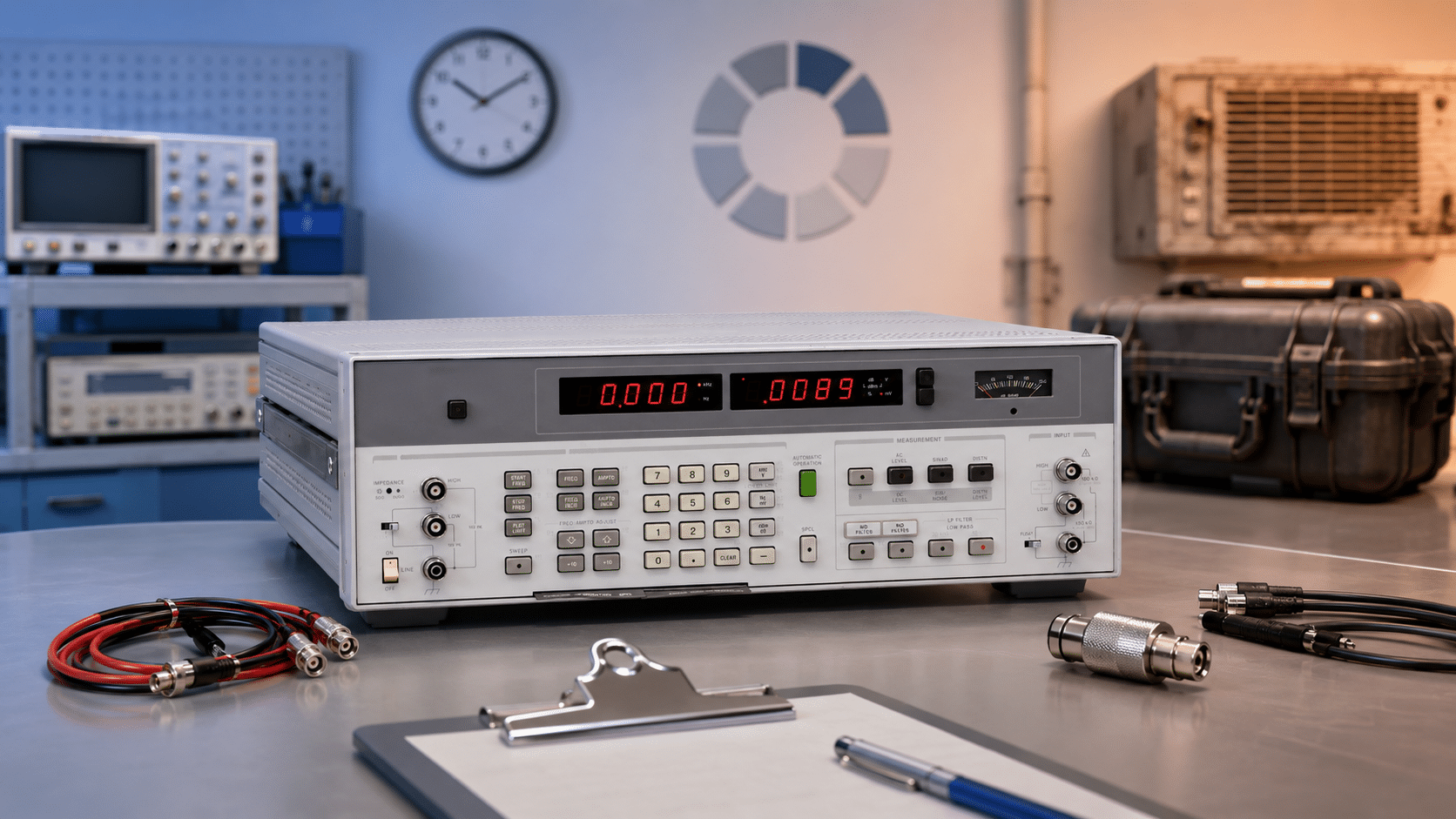
Step-by-Step: How to Ensure Your Audio Analyzer Meets Global Standards
This step-by-step guide outlines the standard operational sequence required to calibrate professional audio analyzers. Following these structured procedures ensures compliance with global standards and minimizes overall measurement uncertainty during testing, protecting your manufacturing yield from false-positive results.Step 1: Environmental Control Verification
Ensure the laboratory room temperature is stabilized at 23 °C plus or minus 2 °C, with relative humidity below 60%.Step 2: Instrument Warm-Up
Power on the audio analyzer and all master reference standards, allowing them to warm up for a minimum of 45 minutes to reach thermal stability.Step 3: Visual Inspection and Connector Cleaning
Inspect all physical ports for signs of wear, and clean the BNC or XLR connectors using compressed air and high-purity isopropyl alcohol.Step 4: Execute Self-Diagnostics
Run the manufacturer-specific internal diagnostics suite to confirm basic operational integrity and firmware status.Step 5: Reference Standard Integration
Connect a traceable, ultra-low distortion sine-wave generator to the analog inputs of the audio analyzer to verify amplitude accuracy and harmonic response.Step 6: Frequency Response Sweep
Generate test signals across the frequency range of 10 Hertz to 80 kilohertz, and record the deviations to determine amplitude flatness.Step 7: Analyze Harmonic Distortion
Apply a high-purity reference signal to measure the residual distortion, calculating the audio measurement uncertainty for THD+N parameters.Step 8: Document As-Found and As-Left Data
Record all final measurement readings onto the calibration data sheet, highlighting any out-of-tolerance values before making adjustments.Prominent Models Calibration Reference Table
This prominent models calibration reference table maps industry-standard audio analyzers to their manufacturers, common applications, and applicable global standards. Consulting this matrix ensures your equipment is serviced using the correct compliance guidelines for your specific testing environments.| Model | Manufacturer | Industrial Application | Calibration Standard/Guideline |
|---|---|---|---|
| APx555 B Series | Audio Precision | Ultra-low distortion research, consumer audio IC design | ISO/IEC 17025, EURAMET cg-19 |
| APx525 | Audio Precision | Production line quality control, automotive audio testing | ISO/IEC 17025, ANSI S1.40 |
| UPV | Rohde & Schwarz | Mobile communications, hearing aid manufacturing | ISO/IEC 17025, IEC 60268 |
| dScope Series III | Prism Sound | Professional audio gear design, broadcast equipment testing | ISO/IEC 17025, AES17 |
Expert Advisory for Maintenance and Reliability
Maintaining analyzer accuracy requires strict environmental control, regular dust management, and careful pre-calibration procedures. Following these professional protocols extends the lifespan of your audio measurement hardware and prevents premature drift during critical testing phases, lowering operational costs and downtime.Standard Maintenance Protocols
Regular physical maintenance prevents dust buildup and thermal stress, which are major contributors to component degradation and drift. Keeping the cooling paths clear ensures the internal analog components operate at stable internal temperatures, preserving the high accuracy of the instrument. Clean the fan filters and air vents every three months to maintain optimal airflow inside the chassis. Ensure all input and output connectors are cleaned with high-purity isopropyl alcohol to prevent contact resistance. When calibrating audio analyzers, dirty connectors can introduce micro-Ohm resistive changes that skew measurements.Recommended Pre-Calibration Checks
Pre-calibration checks verify basic functionality and ensure the instrument is thermally stable before official measurements begin. Performing these basic diagnostic steps prevents wasting time on a faulty or unstable analyzer, ensuring consistent measurement readings during formal testing. Run the internal diagnostic software provided by the manufacturer to verify basic digital and analog loopback performance. Check all cable assemblies for phase stability and attenuation defects before connecting them to reference standards. Always allow the instrument to warm up for at least thirty minutes to achieve thermal equilibrium.Optimal Environmental Conditions
Maintaining strict temperature and humidity controls prevents thermal expansion and moisture absorption from altering sensitive analog components. Standard metrology norms dictate a controlled room to ensure calibration repeatability, keeping measurement errors well within defined tolerance boundaries. The calibration environment must be held within 20 °C to 24 °C with a maximum temperature fluctuation of plus or minus 1 °C per hour. Relative humidity must be maintained between 30% and 55% to prevent electrostatic discharge or moisture condensation. Utilizing an ISO 17025 accredited calibration lab guarantees these environmental conditions are constantly monitored.Audio Analyzer Calibration FAQs
Finding clear answers regarding audio metrology compliance and standard laboratory practices helps streamline your quality control workflows. This FAQ section addresses the most common questions about industry-standard audio analyzers and international calibration guidelines, helping you maintain perfect regulatory compliance.Can we perform in-house calibration for Audio Precision analyzers?
While basic functional verifications can be performed in-house, complete accredited calibration is not feasible without specialized reference standards. Verifying the ultra-low distortion specifications of units like the APx555 requires custom notch filters and ultra-clean generators that only an ISO 17025 accredited calibration lab typically possesses.What does “Out of Tolerance” (OOT) mean for my production line?
An Out of Tolerance finding means the analyzer was measuring outside of its specified accuracy limits during testing. This requires a formal quality investigation of all products tested since the last successful calibration, introducing significant recall risks if not caught early.Why is ILAC-MRA traceability crucial for international trade?
ILAC-MRA traceability ensures that calibration certificates issued in one country are legally and technically recognized worldwide. This mutual recognition eliminates the need for re-testing products when exporting to international markets, saving time and money.What is the recommended calibration interval for an audio analyzer?
A standard 12-month interval is highly recommended for most industrial and laboratory environments. However, if your equipment is deployed on a dusty manufacturing floor or experiences heavy physical wear, reducing the interval to 6 months helps manage risks.How does environmental noise affect the calibration process?
Environmental acoustic noise and electromagnetic interference can bleed into sensitive analog signal paths, falsely inflating the measured distortion. Calibration must take place in an electromagnetically shielded room with a low acoustic noise floor to prevent error.Partner with an Accredited Audio Calibration Expert
Partnering with an expert calibration provider guarantees that your instruments receive the highest level of care under strict international standards. This ensures your testing results remain highly accurate, protecting your product quality and regulatory standing in the global marketplace, minimizing technical liabilities. To guarantee that your measurements are free from significant audio measurement uncertainty, you must work with a trusted partner. Our facility provides certified calibration services tailored specifically for high-end audio hardware and analyzer systems. We ensure complete compliance with ISO/IEC 17025 guidelines while providing comprehensive data documentation. Protect your production yield and ensure absolute testing precision by contacting our team today. Reach out to our metrology experts and Request an Accredited Audio Analyzer Calibration Quote to secure your service appointment.References & industry standards
- ISO/IEC 17025 testing & calibration laboratory requirements
- NIST calibration services and measurement traceability
- A2LA / ANAB accreditation for calibration laboratories
External standards bodies. Techmaster Electronics is an ISO/IEC 17025-accredited, NIST-traceable calibration laboratory.
Frequently asked questions
What is audio analyzer calibration?
Audio Analyzer Calibration is the documented comparison of a audio analyzer against NIST-traceable reference standards under ISO/IEC 17025. It quantifies the audio analyzer’s error and measurement uncertainty and confirms it performs within tolerance, with as-found and as-left data on the certificate.
How often should a audio analyzer be calibrated?
Most quality systems calibrate a audio analyzer every 12 months, or sooner after repair, overload, or before critical measurements. Set your interval from the manufacturer spec and your ISO 9001 / 13485 / AS9100 program and drift history.
Is Techmaster’s audio analyzer calibration ISO 17025 accredited?
Yes. Techmaster Electronics is ISO/IEC 17025:2017 accredited by ANAB (Certificate AC-1736). Every audio analyzer calibration is NIST-traceable and issued with a full measurement-uncertainty budget.
What is the turnaround for audio analyzer calibration?
Standard turnaround is 5 business days, with 1–2 business-day expedite available. On-site calibration removes shipping time entirely for audio analyzers that can’t leave the floor.
Do you calibrate audio analyzers on-site or in-lab?
Both. Techmaster runs five US labs (Vista CA, Santa Clara CA, Orlando FL, San Antonio TX, Holly Springs NC) and offers nationwide on-site audio analyzer calibration to minimize downtime.

Khanh Nguyen is the Marketing Manager at Techmaster Electronics, a B2B marketing leader covering the test, measurement, and ISO/IEC 17025 accredited calibration industry in the United States.