
Current Transducer Calibration: Precision and Traceability in Power Monitoring
In high-precision electrical systems, the accuracy of data acquisition relies entirely on the fidelity of the sensors involved. A current transducer acts as the bridge between high-current primary circuits and sensitive control or monitoring electronics. Over time, these devices are susceptible to electronic drift, magnetic saturation effects, and thermal degradation. Which can compromise the validity of the entire measurement chain. Current Transducer Calibration is the essential process of verifying that these sensors maintain their rated linearity, offset, and scale factor accuracy against traceable national standards. Ensuring that power monitoring and control systems operate within their specified design margins.
Neglecting periodic calibration results in subtle but dangerous measurement errors that can lead to inefficient power usage, protection system failure, or inaccurate fiscal metering. By implementing a rigorous calibration cycle, engineers can mitigate the risks associated with sensor degradation. Ensuring that the control logic governing industrial processes remains reliable and compliant with global safety standards.
1. Technical Principles: Sensing Mechanisms and Traceability
1.1. How do current transducers maintain measurement integrity?
Current Transducer Calibration is the metrological process of confirming the accuracy of a sensor’s output by comparing it against a high-precision reference current source and a traceable measuring instrument within an accredited laboratory environment.
1.2. Addressing Measurement Drift
Transducers, particularly those utilizing Hall-effect or fluxgate technologies, are prone to offset drift and sensitivity changes due to aging components and environmental stress. Calibration identifies these deviations by injecting a range of known primary currents and measuring the corresponding secondary output. Because electrical systems demand absolute reliability, calibration must be performed using equipment with a lower uncertainty budget than the transducer itself, creating a clear line of traceability back to NIST or equivalent national standards.
2. Industrial Applications: Where Transducer Accuracy is Critical
Why is precise current sensing vital to your facility?
Validating the accuracy of current transducers is necessary to prevent operational instability and ensure the safety of critical power systems.
-
Electric Vehicle (EV) Infrastructure: Accurate current monitoring is required for efficient battery lifecycle calibration and fast-charging safety protocols.
-
Smart Agriculture & Aquaculture: High-reliability sensors are essential for monitoring data collection in field environments where power stability directly impacts production yields.
-
Industrial Automation: Precise transducers ensure that ESD simulators and other safety-critical electronic devices operate within immunity limits during compliance testing.
-
Energy Management: Accurate current sensing is the foundation of energy consumption monitoring in commercial and industrial settings, where even small errors lead to significant billing discrepancies.
3. The Calibration Pillar: Traceability and Compliance
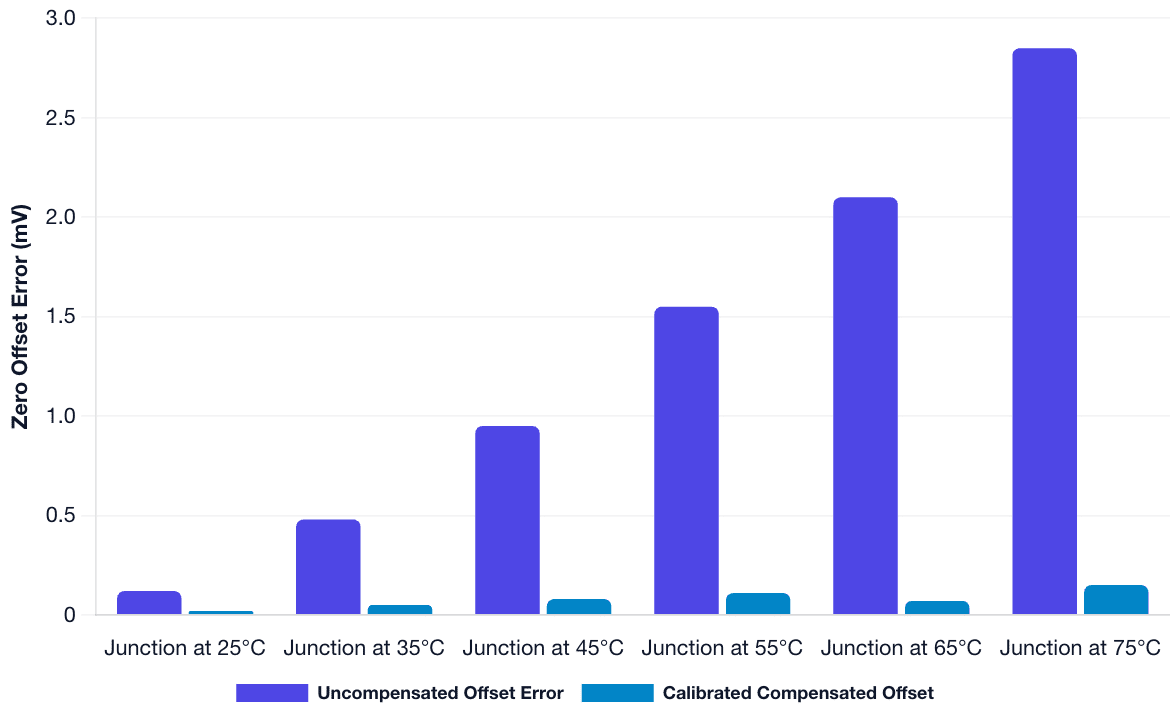
Thermal Offset Drift Stability
Internal resistors and Hall-effect sensors drift as junction temperatures increase. This chart maps the accumulation of idle-state offset error (offset mV) when running under thermal strain (25°C to 75°C).
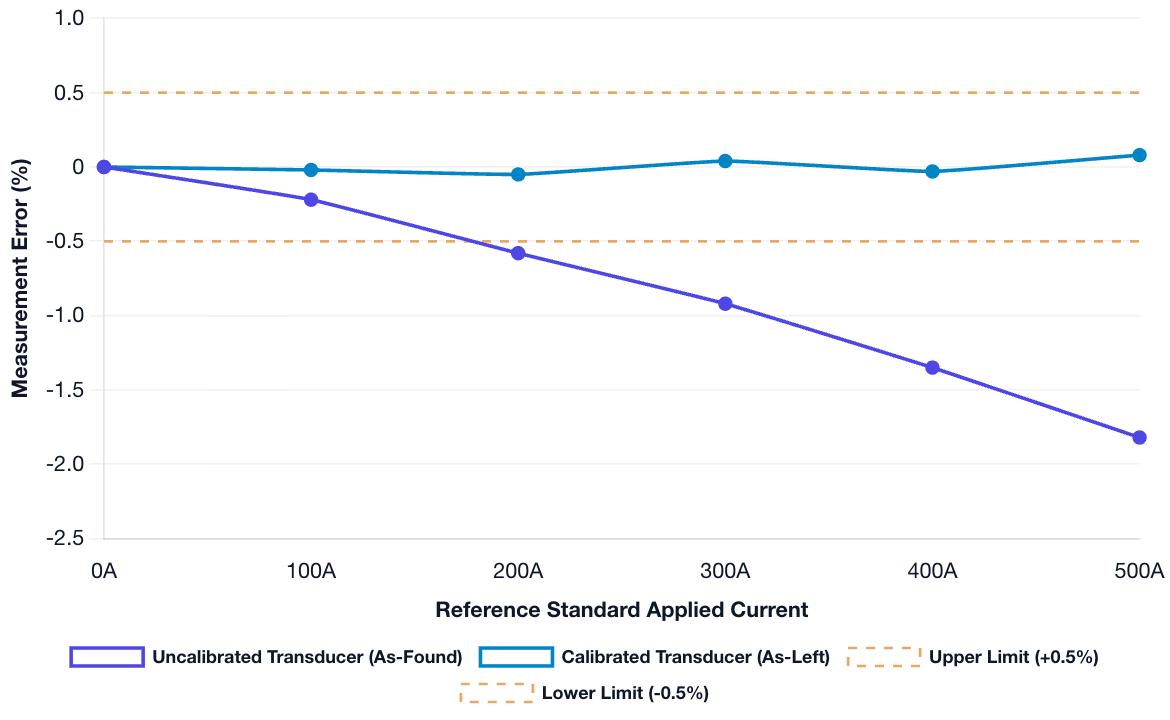
Transducer Linearity Error Curve (0 – 500A)
Tracks deviation across key primary current milestones. Notice how uncalibrated sensors (As-Found) stray past the standard pm 0.5% industry tolerance under high magnetic saturation compared to the post-calibration curve (As-Left).
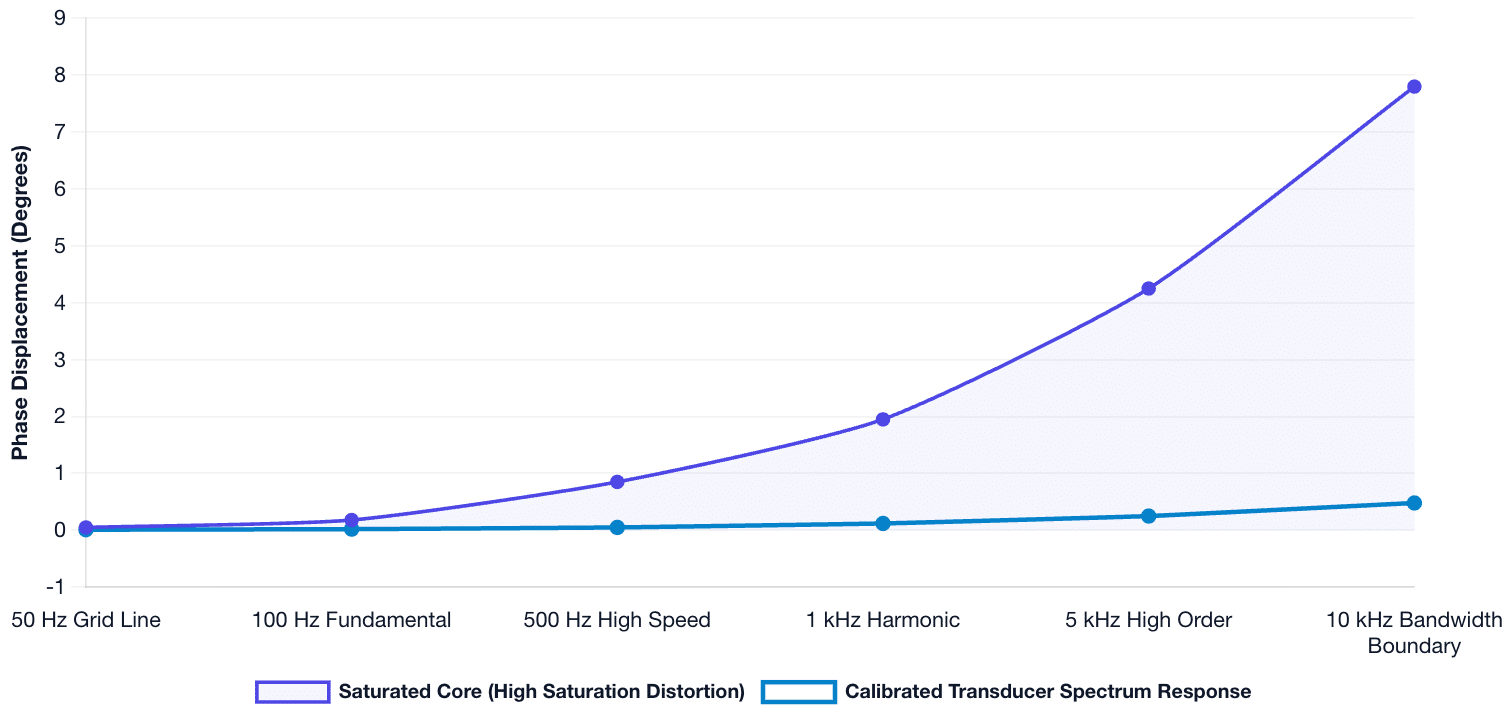
Phase Angle Shift & Magnetic Distortion Curve
High frequencies and harmonics distort the magnetic flux inside the core. Standard non-calibrated transducers introduce severe phase delays (measured in degrees) as bandwidth increases towards 10kHz, undermining active power calculation accuracy.
Why is traceable testing mandatory for your sensing assets?
Accredited Current Transducer Calibration establishes a verifiable connection to international measurement standards, providing the technical evidence required for ISO/IEC 17025 quality systems and regulatory audits.
Using a transducer that has not been calibrated can introduce “hidden” errors into your control loop. If a transducer reports lower-than-actual current, protective relays may fail to trigger during a fault, leading to catastrophic equipment damage. Techmaster US emphasizes that a calibration certificate is not merely a document, but a confirmation that your measurements remain legally and technically defensible in any regulatory context.
4. How to Prepare Your Transducer for Calibration
Follow these steps to ensure your sensing assets are ready for a precise and efficient calibration process at Techmaster US.
1. Document System Requirements
Identify the specific current ranges and operating conditions under which your transducer is used to ensure the laboratory can replicate these parameters.
2. Inspect Connectivity
Ensure all signal cables, terminals, and shielding are intact, as damaged connections can introduce significant noise and resistance errors during measurement.
3. Clear Contamination
Clean the transducer housing and sensing aperture to prevent dust or debris from affecting sensor stability during the calibration sequence.
4. Provide Previous Data
Include any previous calibration reports to help our metrologists identify trends in drift and provide a more comprehensive analysis of the device’s reliability.
Techmaster US: Your Calibration Partner
Techmaster Electronics, LLC is an independent, ISO/IEC 17025 accredited calibration laboratory supporting the United States manufacturing sector since 1989. Our technical experts operate out of five laboratories (four ISO/IEC 17025 accredited) located in California, Florida, Texas, and North Carolina.
Our metrologists utilize high-precision reference standards to perform meticulous Current Transducer Calibration. We bridge the gap between complex industrial requirements and national standards, providing quality managers with instantly verifiable, digitized calibration records that simplify compliance and documentation.
Why Choose Techmaster US?
-
Full ISO/IEC 17025 Accreditation: All calibration procedures strictly adhere to our ANAB cert AC-1736 quality framework.
-
Flexible Service Options: We offer both in-lab and on-site calibration services to minimize your operational downtime.
-
Comprehensive Expertise: Our capabilities cover the full spectrum of industrial disciplines, including electrical, thermodynamic, mass, mechanical, and environmental measurement.
Frequently Asked Questions (FAQs)
1. How often should current transducers be calibrated?
Annual Current Transducer Calibration is the standard for most industrial applications. However, if the transducer is used in mission-critical applications, high-vibration areas, or harsh electrical environments, semi-annual verification is recommended to monitor for accelerated drift.
2. Why do current transducers drift over time?
Transducer drift is primarily caused by the aging of electronic components, degradation of magnetic materials in the sensor core, and environmental stressors such as temperature cycling and mechanical vibration that affect internal signal paths.
3. Why is ISO/IEC 17025 accreditation required?
ISO/IEC 17025 is the international benchmark for technical competence, ensuring that your calibration results are traceable, valid, and accepted during rigorous quality and regulatory safety audits.
4. Can I perform current transducer calibration in-house?
No. Accurate calibration requires high-current source standards and precise reference instruments that are traceable to national measurement standards, which are not practical to maintain in a standard maintenance facility.
Secure the Safety of Your Current Telemetry
Ensure your control loops and protective relays operate within strict design limits. Partner with Techmaster US for certified, ISO/IEC 17025 accredited transducer calibrations.
CONTACT USReferences & industry standards
- ISO/IEC 17025 testing & calibration laboratory requirements
- NIST calibration services and measurement traceability
- NIST Pressure and Vacuum Group
- A2LA / ANAB accreditation for calibration laboratories
External standards bodies. Techmaster Electronics is an ISO/IEC 17025-accredited, NIST-traceable calibration laboratory.
Related reading: Rogowski coil calibration: why flexible AC current probes drift
Frequently asked questions
What is current transducer calibration?
Current Transducer Calibration is the documented comparison of a current transducer against NIST-traceable reference standards under ISO/IEC 17025. It quantifies the current transducer’s error and measurement uncertainty and confirms it performs within tolerance, with as-found and as-left data on the certificate.
How often should a current transducer be calibrated?
Most quality systems calibrate a current transducer every 12 months, or sooner after repair, overload, or before critical measurements. Set your interval from the manufacturer spec and your ISO 9001 / 13485 / AS9100 program and drift history.
Is Techmaster’s current transducer calibration ISO 17025 accredited?
Yes. Techmaster Electronics is ISO/IEC 17025:2017 accredited by ANAB (Certificate AC-1736). Every current transducer calibration is NIST-traceable and issued with a full measurement-uncertainty budget.
What is the turnaround for current transducer calibration?
Standard turnaround is 5 business days, with 1–2 business-day expedite available. On-site calibration removes shipping time entirely for current transducers that can’t leave the floor.
Do you calibrate current transducers on-site or in-lab?
Both. Techmaster runs five US labs (Vista CA, Santa Clara CA, Orlando FL, San Antonio TX, Holly Springs NC) and offers nationwide on-site current transducer calibration to minimize downtime.

Khanh Nguyen is the Marketing Manager at Techmaster Electronics, a B2B marketing leader covering the test, measurement, and ISO/IEC 17025 accredited calibration industry across the US and Vietnam markets.