
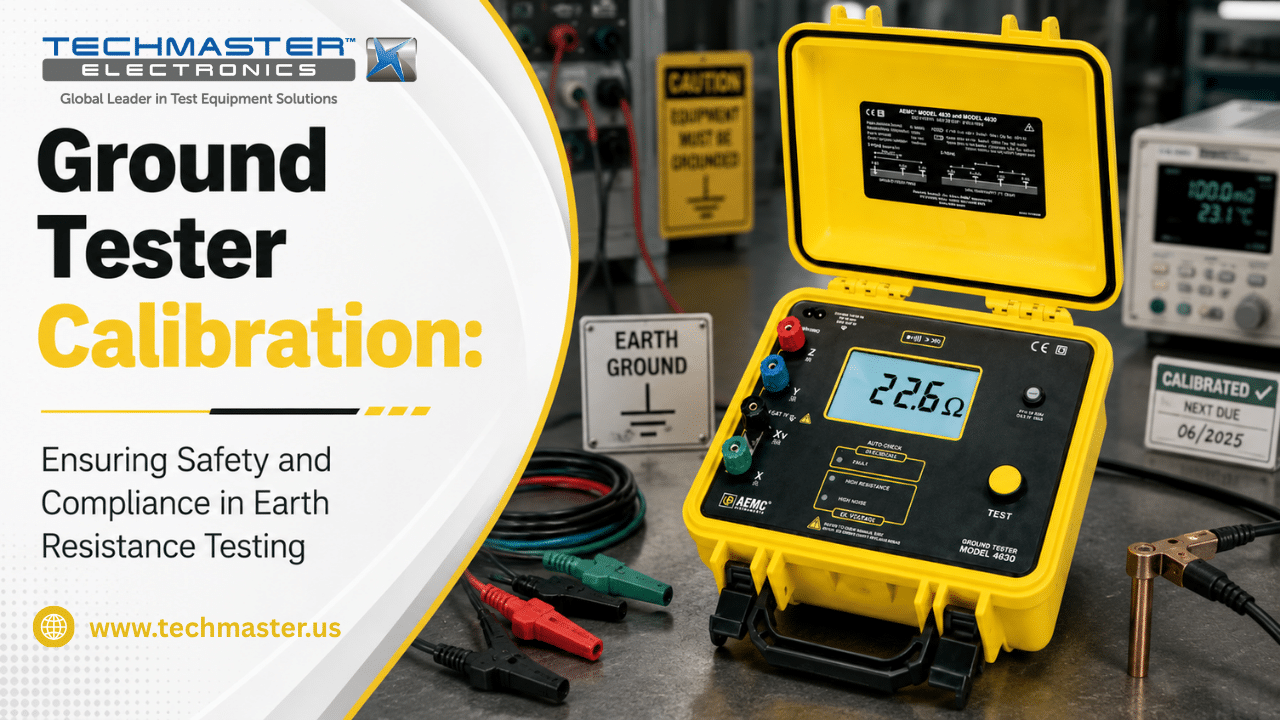
Ground Tester Calibration: Ensuring Safety and Compliance in Earth Resistance Testing
In electrical engineering, safety is defined by the reliability of grounding systems. A ground tester is a critical instrument used to measure the resistance of earth electrodes. Ensuring that fault currents have a safe path to dissipate into the ground. Because these instruments are used in harsh, outdoor, and rugged industrial environments. They are subject to “measurement drift” caused by environmental exposure, probe degradation, and electronic aging. Professional Ground Tester Calibration is the necessary technical process to validate that these instruments provide accurate data. Thereby preventing the catastrophic failure of protective grounding systems.
Without scheduled verification, a ground tester may report false-positive results. Leading technicians to believe a grounding system is safe when it is actually compromised. Calibration serves as a rigorous scientific audit. Aligning the device’s performance with traceable national standards to eliminate measurement uncertainty. For maintenance engineers and safety officers, this process is essential to protecting personnel. Ensuring equipment longevity, and maintaining compliance with rigorous industrial safety protocols.
1. Technical Principles: Sensing Mechanisms and Traceability
1.1. How do ground testers measure earth resistance accurately?
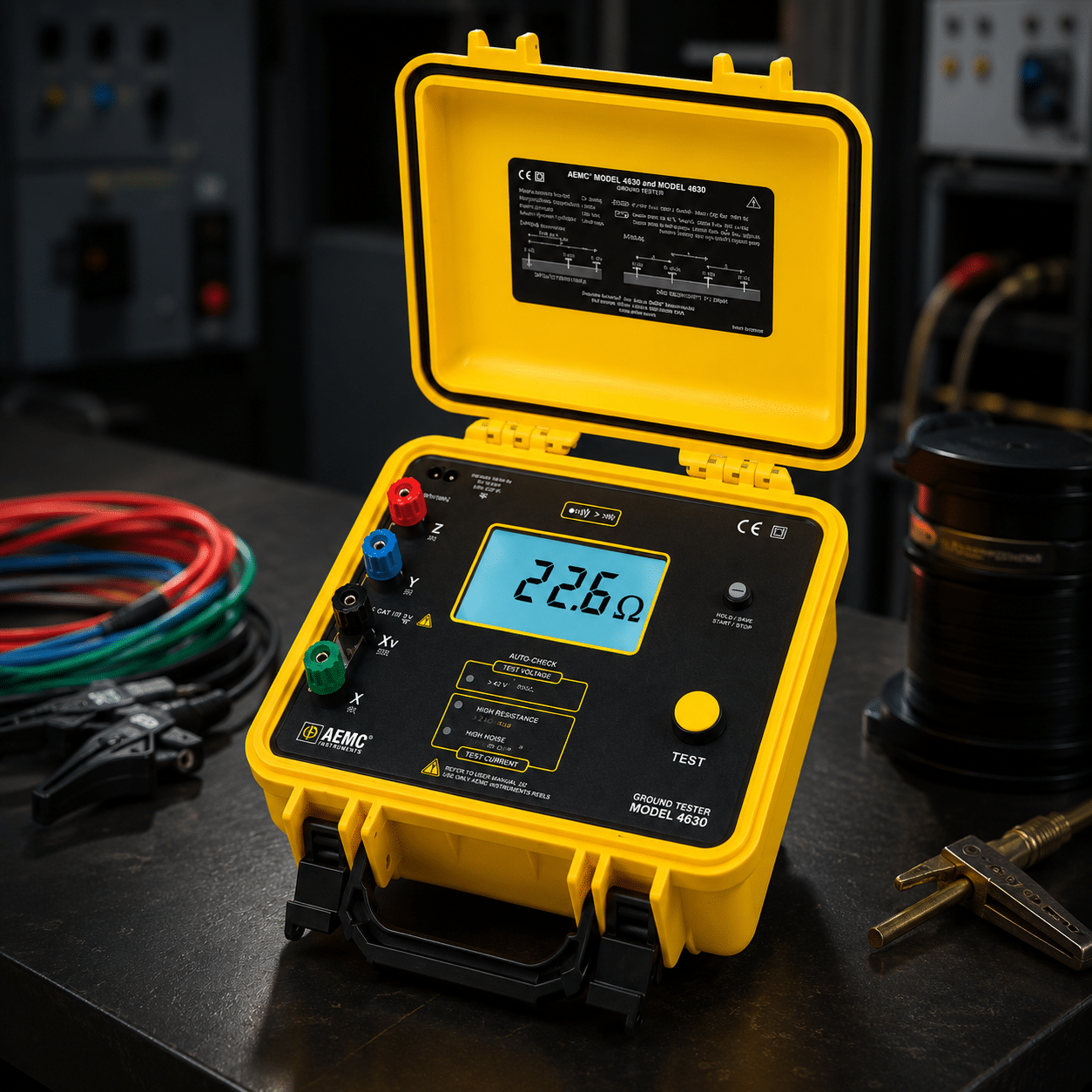
Ground Tester Calibration is the metrological validation of an instrument’s resistance measurement capability by comparing its output against high-precision reference resistors and current standards within an accredited laboratory environment.
1.2. The Mechanism of Measurement Drift
Ground testers measure earth resistance by injecting a known current and measuring the resulting voltage drop, typically using a three- or four-pole method. However, over time, internal reference circuits and signal-processing components can drift from their original specifications. In addition, field test leads can develop changes in contact resistance, which may affect measurement accuracy. To evaluate these effects, calibration laboratories use precision resistance standards that simulate different grounding conditions. Next, technicians compare the tester’s readings with known reference values to identify any measurement errors. Based on the results, they adjust the instrument or apply correction factors as needed. As a result, the tester can maintain its specified accuracy across the full measurement range.2. Industrial Applications: Where Grounding Precision Matters
Why is ground resistance monitoring critical to your operations?
Validating the accuracy of earth resistance measuring equipment provides essential data for mitigating electrical hazards and ensuring the integrity of critical infrastructure.
-
Power Distribution and Utilities: Maintaining low resistance to earth is essential for the effective operation of lightning protection and surge suppression systems.
-
Industrial Manufacturing: Proper grounding prevents the buildup of static electricity, which is critical for safety in facilities handling flammable materials or sensitive electronics.
-
Telecommunications Infrastructure: Reliable ground connections are necessary to protect sensitive communication equipment from interference and high-voltage surges.
3. The Calibration Pillar: Traceability and Compliance
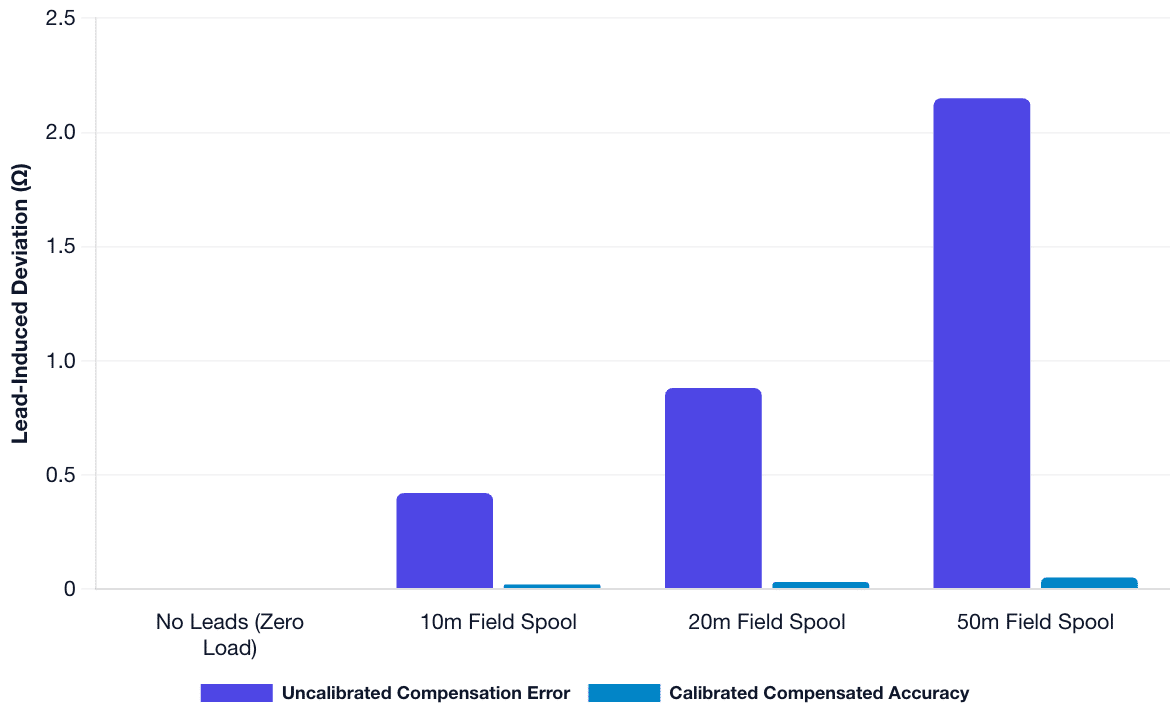
Lead Compensation Drift Impact
Long field testing leads introduce parasitic resistance. Proper calibration ensures the device continues to accurately nullify lead offsets across standard spool lengths (10m to 50m).
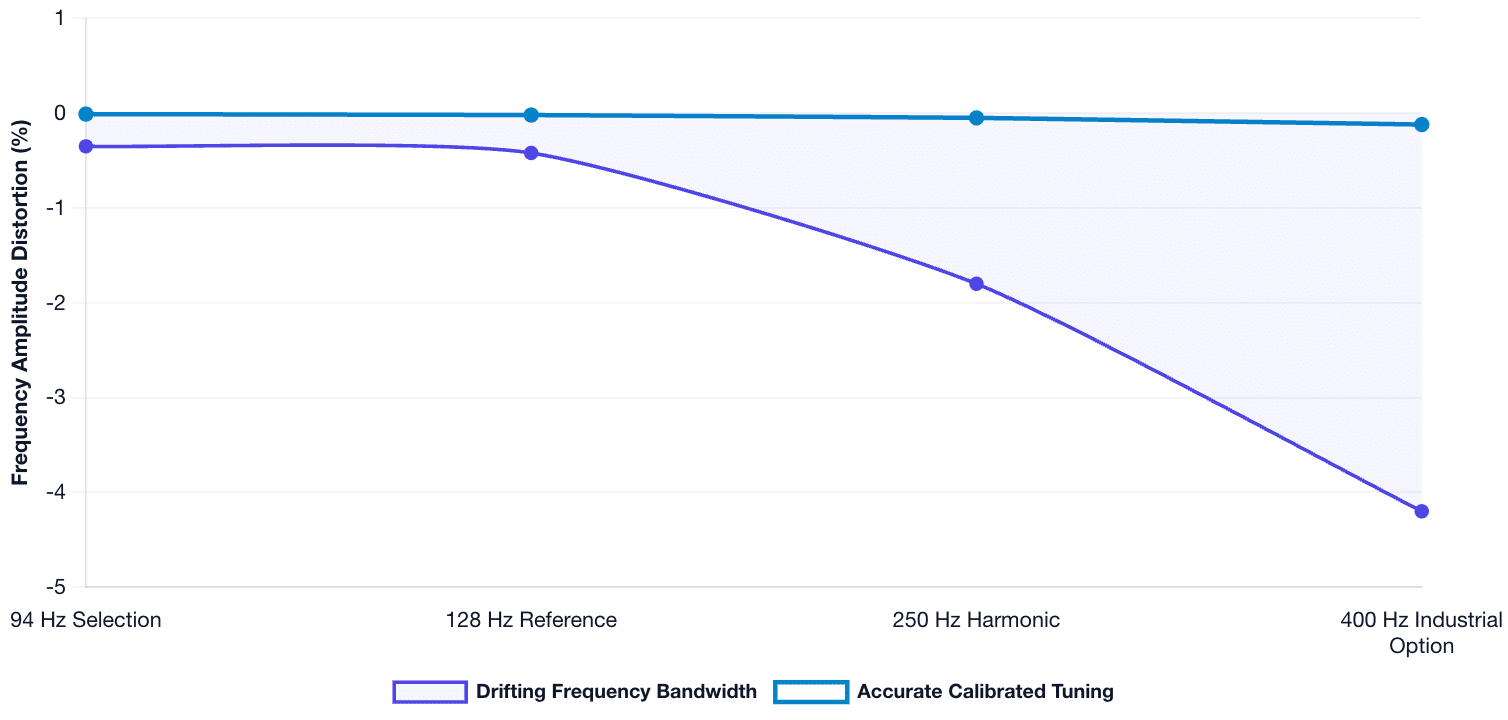
Impedance Frequency Response & Interference Rejection
Ground systems are prone to environmental background noise. Standard ground testers run at unique frequencies (e.g., 128Hz) to filter out standard 50Hz/60Hz grid interference. Calibration ensures correct filter alignment across key analytical frequencies.
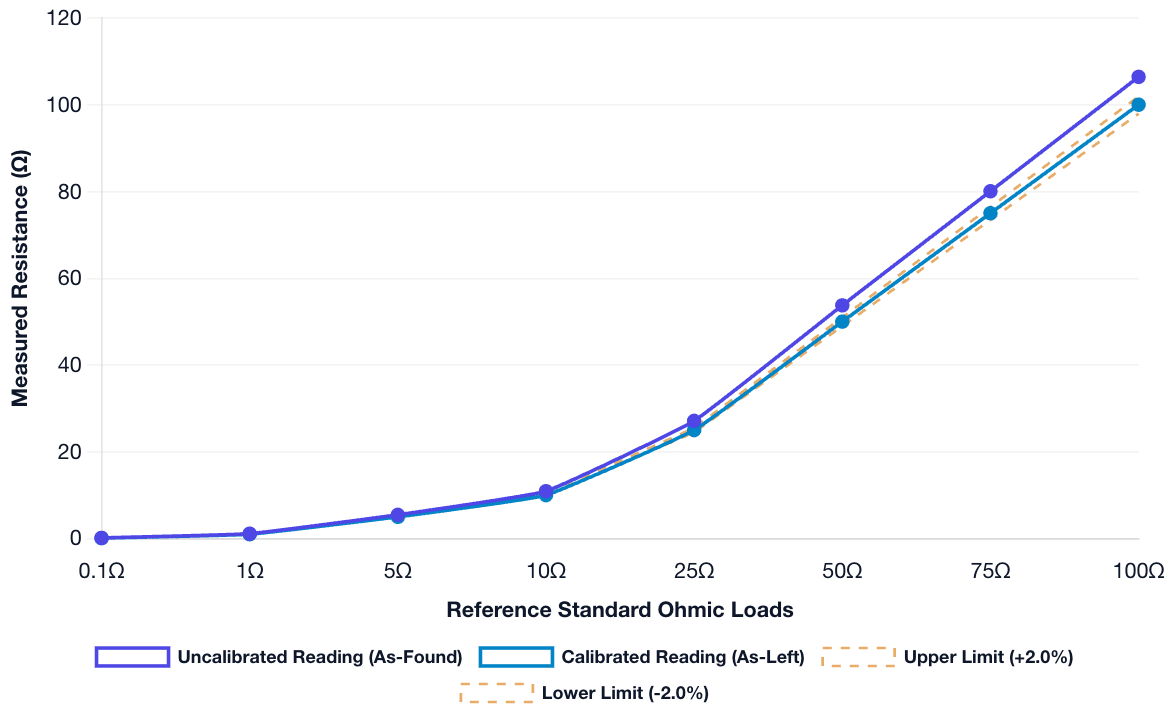
Resistance Accuracy & Linearity (0.1Ω – 100Ω)
Compares earth resistance deviations across critical safety targets. Drift (As-Found) in low-ohm ranges can misrepresent dangerous high-resistance grounding pathways as safe.
Why is traceable testing mandatory for grounding assets?
Accredited Ground Tester Calibration creates an unbroken chain of traceability between your field instrument and national measurement standards, quantifying uncertainty to ensure your safety data is technically and legally defensible.
Relying on an uncalibrated ground tester introduces significant operational risk. If the instrument fails to detect a high-resistance fault, the resulting safety gap could lead to electrical shocks or equipment damage. By adhering to an ISO/IEC 17025 accredited calibration cycle, your organization ensures that its electrical safety protocols are robust, protecting both your personnel and your firm’s reputation during regulatory safety audits.
4. How to Prepare Your Instrument for Calibration
How to Prepare Your Instrument for Calibration
Follow these steps to ensure your ground testing assets are ready for a precise and efficient calibration process at Techmaster US. 1. First, Inspect Lead Integrity Ensure that all test leads, clips, and probes are free from insulation damage, corrosion, or breaks. This helps maintainreliable electrical connectivity and reduces the risk of measurement errors. 2. Next, Verify Operational Modes Confirm the specific testing modes your instrument requires verification for, such as two-pole, three-pole, or clamp-on methods. By doing so, technicians can ensure complete calibration coverage for your intended applications. 3. Then, Clear Contamination Clean the device housing and probe connection ports before calibration. As a result, the instrument can operate in a stable condition throughout the metrology process. 4. Finally, Provide Documentation Include any previous calibration records or specific accuracy requirements maintained by your facility. This information allows our technicians to better understand your requirements and prioritize the most critical aspects of the calibration process.Techmaster US: Your Calibration Partner
Techmaster Electronics, LLC is an independent, ISO/IEC 17025 accredited calibration laboratory supporting the United States manufacturing sector since 1989. Our technical experts operate out of five laboratories (four ISO/IEC 17025 accredited) located in California, Florida, Texas, and North Carolina.
Our metrologists utilize high-precision reference standards to perform meticulous Ground Tester Calibration. We bridge the gap between complex industrial requirements and national standards, providing quality managers with instantly verifiable, digitized calibration records that simplify compliance and documentation.
Why Choose Techmaster US?
-
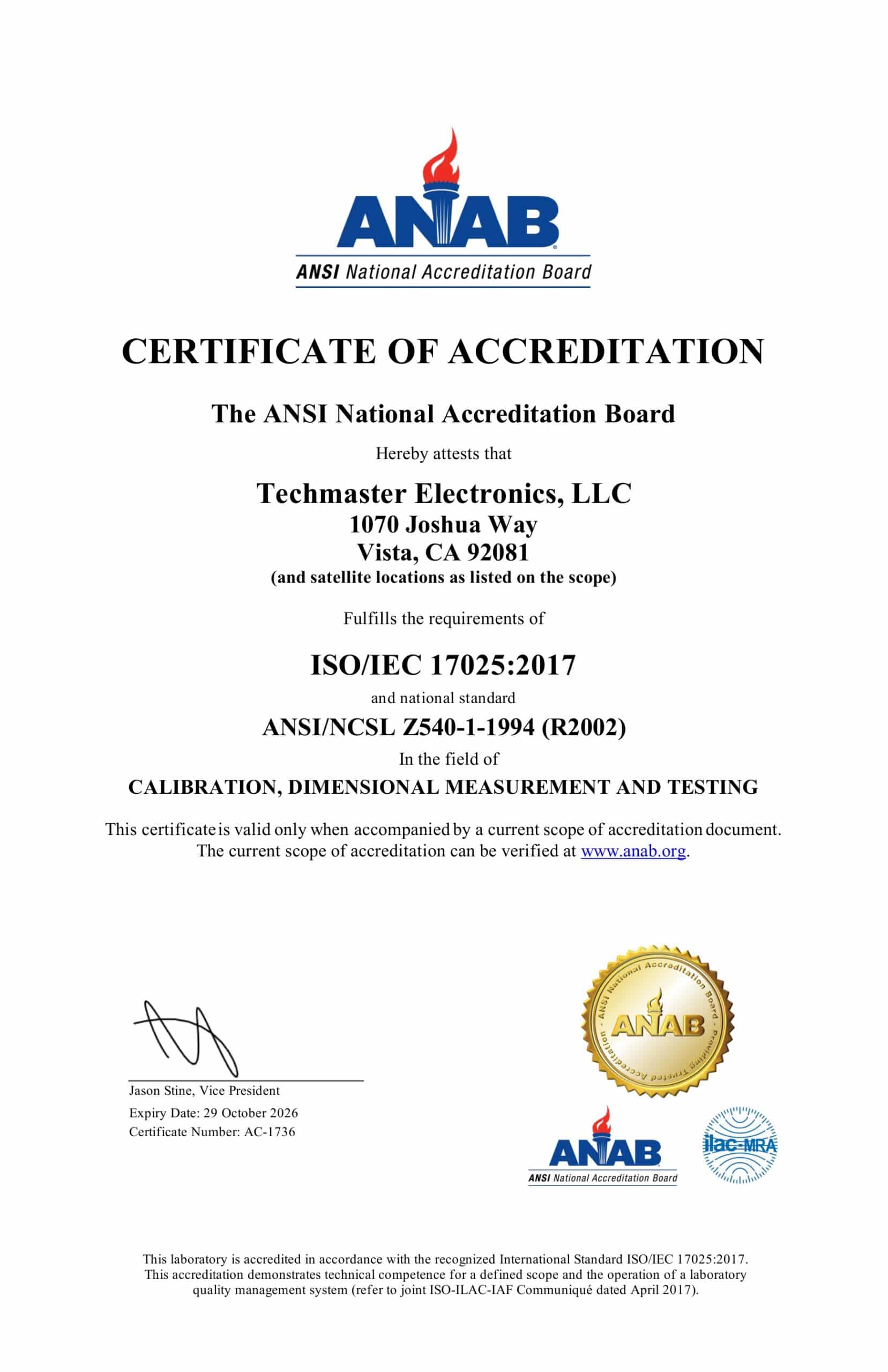
Full ISO/IEC 17025 Accreditation: All calibration procedures strictly adhere to our ANAB cert AC-1736 quality framework.
-
Flexible Service Options: We offer both in-lab and on-site calibration services to minimize your operational downtime.
-
Comprehensive Expertise: Our capabilities cover the full spectrum of industrial disciplines, including electrical, thermodynamic, mass, mechanical, and environmental measurement.
Frequently Asked Questions (FAQs)
1. How often should a ground tester be calibrated?
Annual Ground Tester Calibration is the standard for most industrial applications. However, if the device is used frequently in harsh environments or is mission-critical for facility safety, semi-annual verification is recommended to detect early signs of drift.
2. Why do ground testers drift over time?
Ground tester drift is caused by the aging of internal precision components, mechanical wear of connection ports, and environmental factors such as humidity and temperature fluctuations that affect sensor stability.
3. Why is ISO/IEC 17025 accreditation required?
ISO/IEC 17025 is the international benchmark for technical competence, ensuring that your calibration results are traceable, valid, and accepted during rigorous quality and regulatory safety audits.
4. Can I perform ground tester calibration in-house?
No. Accurate calibration requires specialized resistance reference standards and traceable testing protocols that are not practical to maintain in a standard maintenance workshop.
Verify Your Electrical Grounds with Confidence
Ensure your earth resistance diagnostic tools operate within strict metrological limits. Partner with Techmaster US for certified, ISO/IEC 17025 accredited ground tester validations.
CONTACT USReferences & industry standards
- ISO/IEC 17025 testing & calibration laboratory requirements
- NIST calibration services and measurement traceability
- A2LA / ANAB accreditation for calibration laboratories
External standards bodies. Techmaster Electronics is an ISO/IEC 17025-accredited, NIST-traceable calibration laboratory.
Frequently asked questions
What is ground resistance tester calibration?
Ground Resistance Tester Calibration is the documented comparison of a ground resistance tester against NIST-traceable reference standards under ISO/IEC 17025. It quantifies the ground resistance tester’s error and measurement uncertainty and confirms it performs within tolerance, with as-found and as-left data on the certificate.
How often should a ground resistance tester be calibrated?
Most quality systems calibrate a ground resistance tester every 12 months, or sooner after repair, overload, or before critical measurements. Set your interval from the manufacturer spec and your ISO 9001 / 13485 / AS9100 program and drift history.
Is Techmaster’s ground resistance tester calibration ISO 17025 accredited?
Yes. Techmaster Electronics is ISO/IEC 17025:2017 accredited by ANAB (Certificate AC-1736). Every ground resistance tester calibration is NIST-traceable and issued with a full measurement-uncertainty budget.
What is the turnaround for ground resistance tester calibration?
Standard turnaround is 5 business days, with 1–2 business-day expedite available. On-site calibration removes shipping time entirely for ground resistance testers that can’t leave the floor.
Do you calibrate ground resistance testers on-site or in-lab?
Both. Techmaster runs five US labs (Vista CA, Santa Clara CA, Orlando FL, San Antonio TX, Holly Springs NC) and offers nationwide on-site ground resistance tester calibration to minimize downtime.

Khanh Nguyen is the Marketing Manager at Techmaster Electronics, a B2B marketing leader covering the test, measurement, and ISO/IEC 17025 accredited calibration industry across the US and Vietnam markets.