
Reference Voltage Standard Calibration: ISO/IEC 17025 Step-by-Step Guide
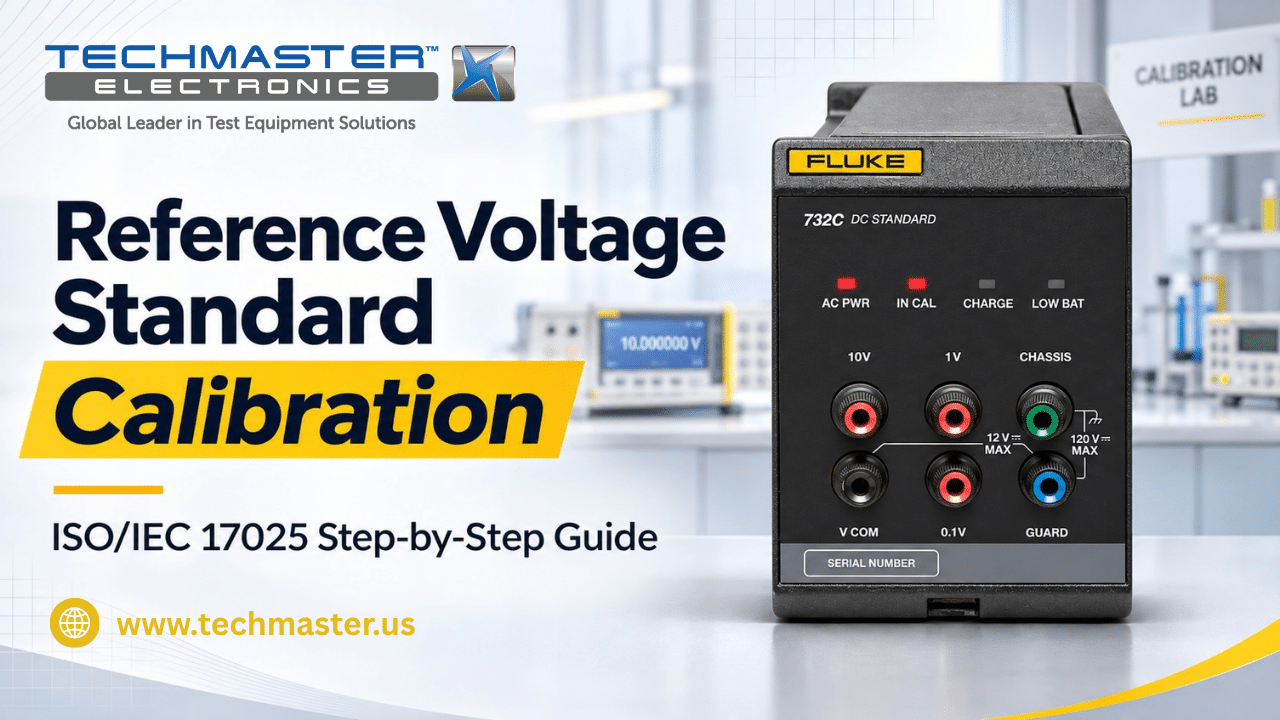
Reference voltage standards provide stable voltage values for high-accuracy electrical tests. Calibration labs, electronics makers, and research teams use these tools to check other instruments. However, even a high-quality voltage standard can drift over time. For this reason, Reference Voltage Standard Calibration plays an important role in reliable electrical measurement. It helps labs check voltage output, track changes, and confirm whether a standard meets its stated limits. In addition, calibration under ISO/IEC 17025 supports measurement traceability and clear test records. As a result, labs can use their reference standards with greater confidence.
1. Why Reference Voltage Standard Calibration Matters
A reference voltage standard gives other instruments a known voltage value for comparison. Therefore, even a small change in its output can affect many later measurements.
For example, a calibration lab may use a voltage standard to check a digital multimeter. If the reference has drifted, the lab may report an incorrect result.
In addition, this error can affect other instruments that rely on the same standard. As a result, one small voltage change may spread through a lab’s measurement process.
Common Causes of Voltage Drift
Several factors can affect the output of a voltage reference over time:
- Component aging: Internal parts may change their electrical values as they age.
- Temperature changes: Room temperature shifts may affect the output voltage.
- Power conditions: Changes in supply or operating conditions may affect some models.
- Mechanical stress: Movement or rough handling may affect sensitive parts.
- Connection quality: Poor contacts can add small unwanted voltages to a reading.
Therefore, labs should check both the reference standard and its test setup.
2. ISO/IEC 17025 Calibration and Measurement Traceability
ISO/IEC 17025 sets requirements for the skill and quality systems of testing and calibration labs. Therefore, an accredited lab must show that it can perform the work listed in its accredited scope.
During Reference Voltage Standard Calibration, the lab compares the output with suitable reference standards. Next, it records the results and reviews the measurement uncertainty.
2.1. What Does NIST Traceability Mean?
Measurement traceability links a result to a recognized reference through a documented chain of calibrations.
For example, a lab may use a reference meter whose calibration links to national standards through other measurement standards.
However, this does not mean that NIST directly calibrates every voltage standard. Instead, the lab must show a valid chain of results and the related measurement uncertainty.
Therefore, customers should review the calibration certificate and the lab’s accredited scope when they need proof of traceability.
2.2. Why Internal Checks Are Not Enough
Many voltage standards include built-in checks or status indicators. First, these features help users review basic operation.
However, an internal check does not confirm the exact output voltage against an external reference.
For example, a status light may show that an internal oven works. Yet it cannot prove that the output voltage still meets its stated accuracy.
For this reason, labs should use external calibration when their quality system or measurement needs call for it.
3. Daily Laboratory Checks vs. Accredited Calibration
Daily checks and accredited calibration serve different purposes. For example, a daily check helps staff spot basic issues before use. However, it does not replace a full calibration.
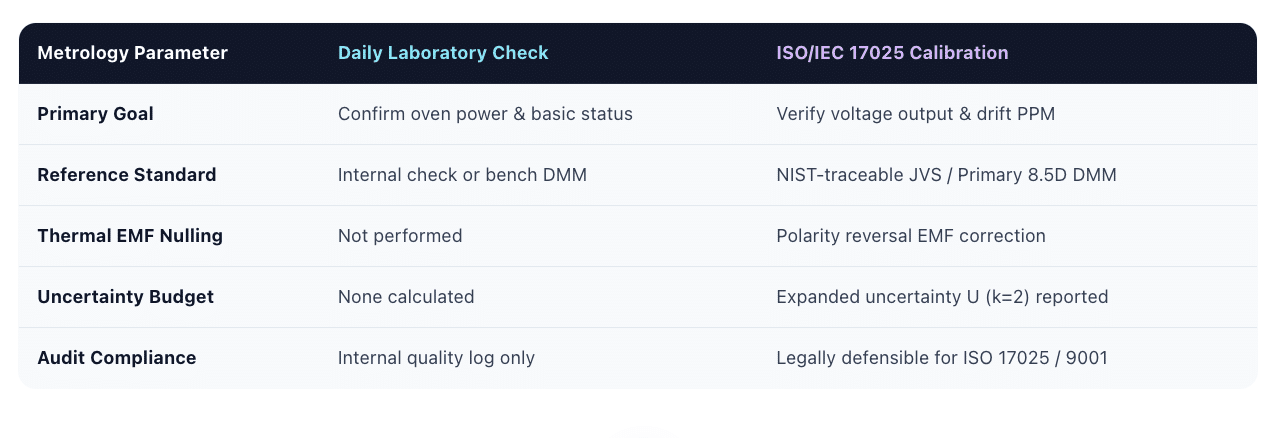
Therefore, labs should use daily checks as an added layer of control. They should also plan formal calibration based on the tool’s use and measurement risk.
4. Benefits of Regular Reference Voltage Standard Calibration
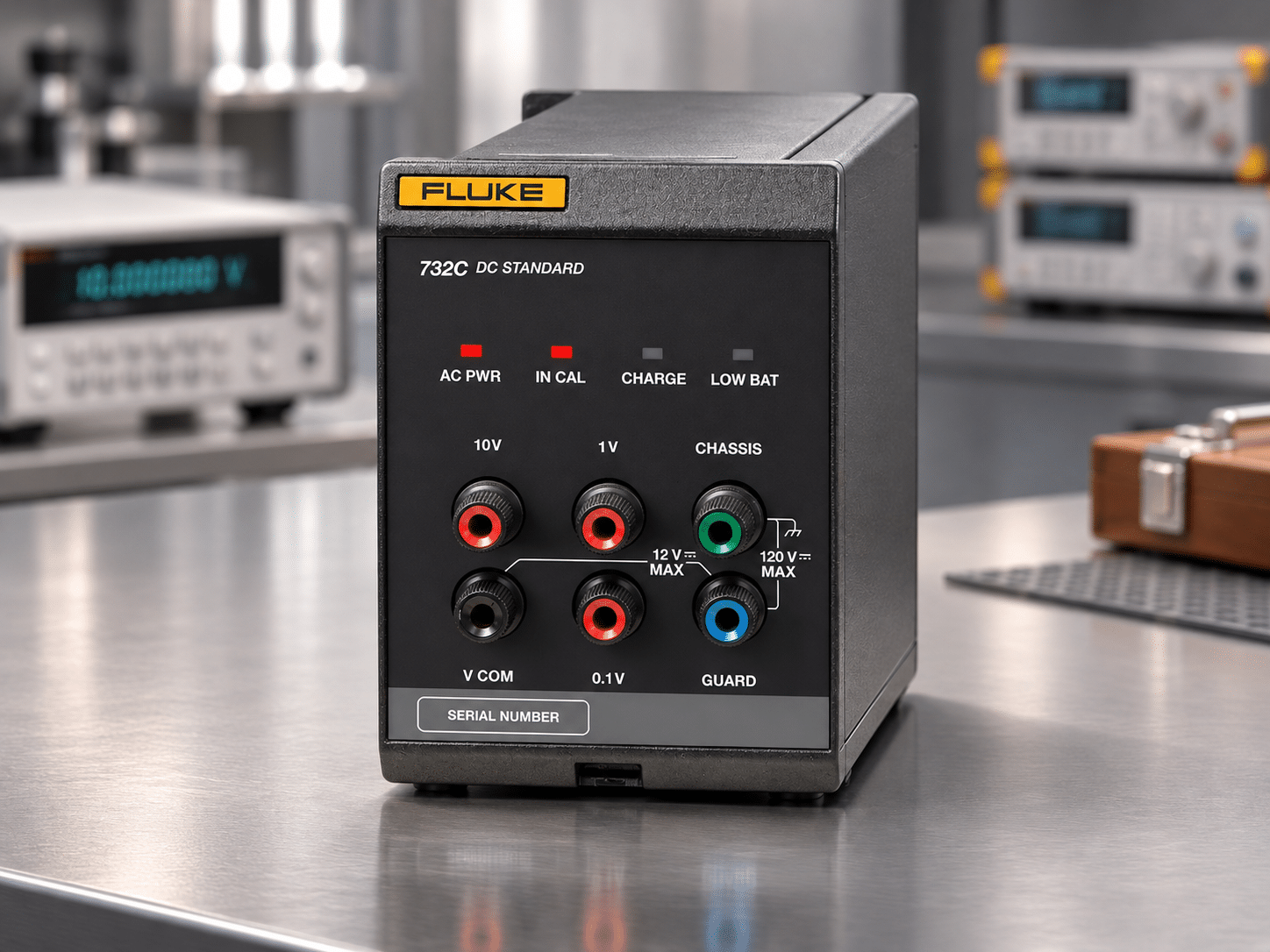
Regular calibration helps labs maintain reliable measurement results.
First, it helps identify output drift before it affects other instruments. Next, it provides clear records of the standard’s performance.
In addition, calibration supports measurement control in quality systems such as ISO 9001, IATF 16949, and AS9100 when those systems apply.
However, a calibration certificate alone does not prove full compliance with these standards.
Instead, companies must also manage staff training, test methods, equipment records, and other quality tasks.
As a result, calibration works best as part of a wider measurement control plan.
Frequently Asked Questions (FAQs)
1. What is Reference Voltage Standard Calibration and why is it necessary?
Reference voltage standard calibration is the metrological process of measuring and verifying a solid-state or zener voltage reference’s exact DC output against NIST-traceable standards to ensure absolute voltage accuracy. It is necessary because all solid-state components exhibit gradual aging drift over time.
2. How often should a DC voltage reference standard be calibrated?
A DC voltage reference standard should be calibrated every 12 months under standard laboratory operating conditions. Newly acquired standards or units showing accelerated aging drift should be calibrated on a 6-month cycle until their long-term drift rate is fully established.
3. What causes long-term voltage drift in solid-state reference standards?
Long-term voltage drift is primarily caused by mechanical and thermal aging of internal buried zener diodes, micro-stress changes in precision resistor divider networks, and aging of internal reference component silicon structures.
4. Why is constant thermal regulation critical for voltage reference standards?
Constant thermal regulation via internal ovens is critical because zener diodes and resistor networks possess temperature coefficients. Maintaining a stable internal temperature prevents ambient room fluctuations from inducing voltage output errors.
5. Can internal self-tests replace accredited ISO/IEC 17025 calibration?
No, internal self-tests only verify basic circuit continuity and oven lock status. They cannot determine absolute voltage value or evaluate long-term drift against external national metrology standards.
6. Does Techmaster US offer accredited calibration for voltage reference standards?
Yes, Techmaster Electronics provides ISO/IEC 17025 accredited calibration services for voltage reference standards, precision calibrators, and 8.5-digit multimeters across the United States.
Techmaster US: Your Accredited Metrology Partner
Techmaster Electronics, LLC is an ISO/IEC 17025 accredited calibration laboratory with ANAB certificate AC-1736. Founded in 1989, Techmaster US serves customers through laboratories in Vista, California; Santa Clara, California; Orlando, Florida; San Antonio, Texas; and Holly Springs, North Carolina. In addition, the company has corporate offices in Vista, California, and Henderson, Nevada.
Techmaster US supports a wide range of electrical, electronic, thermodynamic, dimensional, and mechanical test equipment. For voltage reference standards, customers can contact the team to discuss their calibration needs and confirm service coverage. Also, Techmaster US offers mobile on-site calibration when the requested work falls within the laboratory’s accredited scope. Therefore, customers can ask about test coverage, service location, and turnaround time before sending equipment.
Conclusion
Reference Voltage Standard Calibration helps labs maintain trust in their voltage measurements. First, inspect the terminals and prepare a suitable test setup. Next, compare the output with a suitable reference. Then, review the readings and track any signs of drift. In addition, regular calibration helps labs maintain clear records and support measurement traceability. For this reason, contact Techmaster US to discuss your reference voltage standard calibration needs and confirm the services available within its accredited scope.
Reference Voltage Standard Calibration: ISO/IEC 17025 Step-by-Step Guide
Reference voltage standards provide baseline potential references for high-accuracy multimeters, automated test systems, and laboratory calibrators. This technical guide outlines internal Zener drift mechanisms, thermal EMF elimination, PPM error mathematics, 6-step laboratory verification, risk-based recalibration intervals, and ISO/IEC 17025 accredited compliance.

Calibration engineer at Techmaster Electronics, ISO/IEC 17025 accredited laboratory with 35+ years of metrology expertise.