


Advanced Wire & Circuit Tracer: The Indispensable Diagnostic Tool and The Critical Importance of Calibration
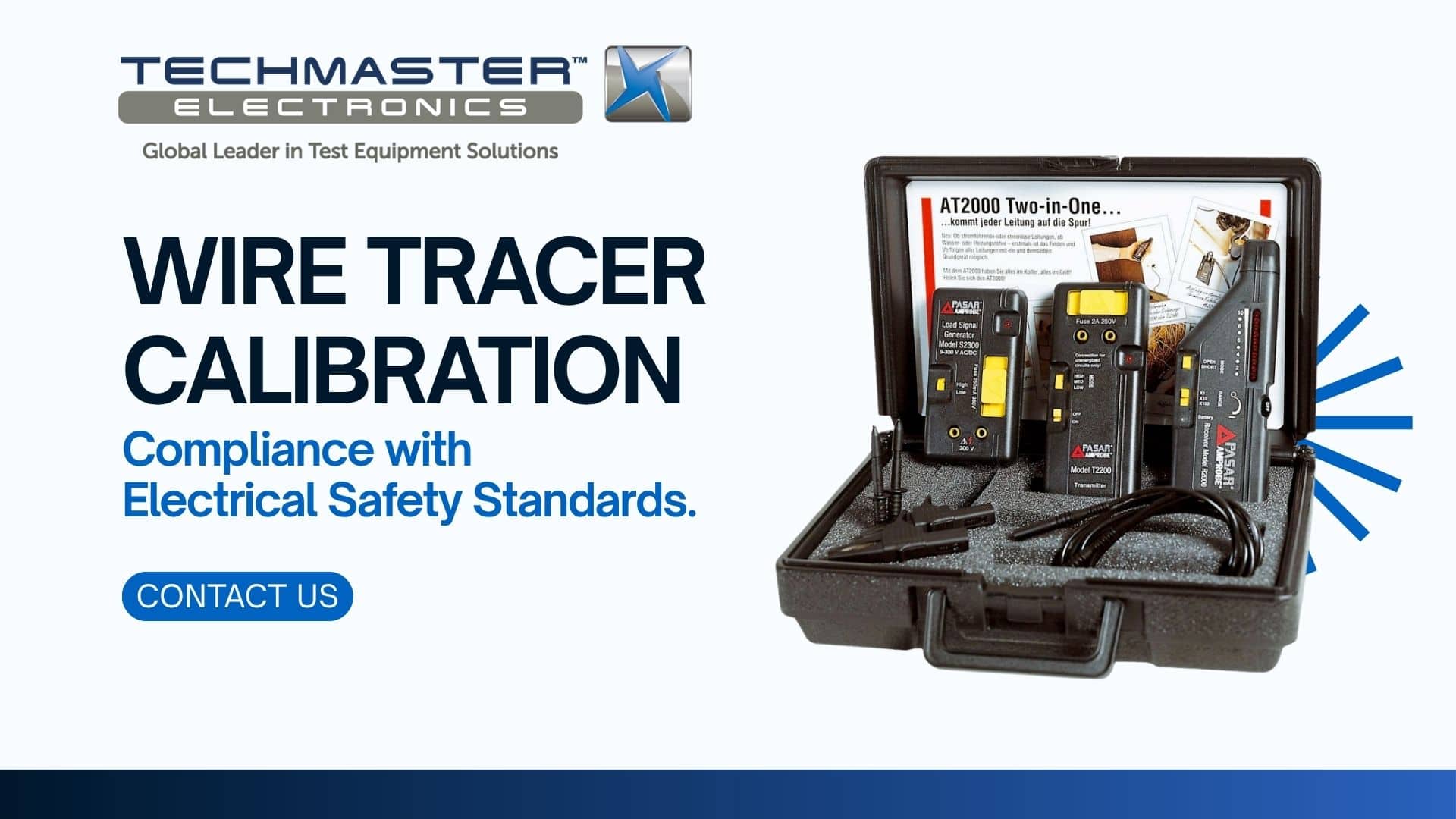
In electrical installation, maintenance, and troubleshooting, accurately identifying the location of conductors, circuit breakers, or outlets—without interrupting power—remains a major challenge. To address this, the Advanced Wire and Circuit Tracer has become an indispensable tool for modern electricians and technicians. By leveraging advanced detection technology, it allows users to quickly and safely locate hidden wires, identify corresponding circuit breakers or fuses, and verify circuit continuity without invasive procedures. Consequently, this device helps save time, minimize risk, and enhance overall work efficiency in both residential and industrial environments. However, to ensure that every tracing and diagnostic operation delivers accurate and reliable results, the calibration of the wire tracer plays a crucial role. A properly calibrated instrument not only ensures data stability and repeatability, but also supports compliance with electrical safety codes and optimizes long-term performance across all applications.
1. Operating Principle and Benefits of the Wire Tracer

Amprobe AT-2000 Advanced Wire Tracer Calibration
The wire tracer consists of two main components: the Transmitter and the Receiver.
TRANSMITTER
Generates signal on wire
HIDDEN CONDUCTOR
Signal travels through wall/ground
RECEIVER
Detects signal
1.1. Basic Mechanism
- The Transmitter: Connects to the circuit being tested (e.g., an outlet, conductor). It injects a specific voltage or current signal into the wire.
- The Receiver: Moves along the path of the conductor. It detects the signal generated by the transmitter through electromagnetic or capacitive coupling. When the receiver nears the signal-carrying wire, it emits an audible tone or displays signal strength.
1.2. Key Benefits
- Non-Invasive: Locates wires and circuit breakers without requiring power shutdown or damage to walls.
- Time Savings: Significantly reduces the time spent searching for hidden wires or mislabeled circuit breakers.
- Enhanced Safety: Minimizes the risk of touching energized wires accidentally or damaging other equipment.
- Versatility: Applicable to various types of conductors and environments.
2. Diverse Diagnostic Applications of the Advanced Wire Tracer
Modern wire tracers are equipped with advanced features that make them suitable for a wide range of electrical applications, including residential, commercial, and industrial environments. Thanks to innovations such as high-sensitivity receivers, adjustable signal transmitters, and intelligent fault detection, these tools enable technicians to locate circuits, identify hidden conductors, and trace faults with exceptional precision and safety. As a result, they have become an indispensable part of modern electrical diagnostics and maintenance workflows.
RESIDENTIAL
Identify unlabeled breakers, locate concealed wiring before drilling, and find ground faults.
COMMERCIAL
Pinpoint short circuits, trace underground wires, and identify complex wire bundles.
NETWORKING
Trace Ethernet, coaxial, and control wires in telecom and IoT environments.
2.1. Residential Electrical Work
- Circuit Breaker/Fuse Identification: Quickly locates the circuit breaker or fuse controlling a specific outlet, switch, or lighting fixture. This is especially useful in panels that are poorly or inaccurately labeled.
- Locating Wires in Walls: Traces the path of electrical wires within walls, floors, or ceilings before drilling, cutting, or installing new fixtures.
- Ground Fault Troubleshooting: Pinpoints the exact location of a ground fault on a circuit, facilitating quick repair and ensuring safety.
2.2. Commercial and Industrial Electrical Work
- Underground Wire Tracing: Some advanced devices can locate buried conductors (within a certain depth limit), which is useful for cable installation or repairing outdoor lighting systems.
- Wire Differentiation: When multiple conductors run in parallel, the device helps distinguish and identify the specific wire requiring service.
- Open/Short Circuit Detection: Locates the precise position of an open circuit or short circuit in complex wiring systems.
- Live Circuit Testing: Can be used on energized circuits, helping to detect faults without interrupting operations.
2.3. Other Applications
- Telecom & Network: Tracing Ethernet cables or telephone lines in walls or conduits.
- Irrigation Systems: Identifying the path of control wires for valves in buried irrigation systems.
3. The Absolute Role of Wire Tracer Calibration
An uncalibrated wire tracer can miss signals or give false positives, wasting time and causing safety risks.
Signal Sensitivity Drift
After 12 months, the receiver sensitivity drops below detection threshold.

Impact on Work Efficiency
Average time to locate short circuit faults.

Like any precision measuring and diagnostic instrument, the reliability and accuracy of a wire tracer are directly dependent on its calibration. Over time, however, even minor deviations in the transmitter’s output or the receiver’s sensitivity can gradually lead to false readings, signal drift, or undetected faults. Therefore, performing regular calibration is not merely a technical requirement but a critical maintenance practice that ensures the device continues to operate within its specified tolerances. Moreover, routine calibration helps maintain measurement consistency, thereby improving diagnostic accuracy, enhancing user safety, and optimizing workflow efficiency across every electrical or industrial application.
3.1. Ensuring Accuracy and Sensitivity
- Transmitter Signal Check: Calibration ensures that the transmitter generates a signal with the correct intensity and frequency. If the signal is weak or the frequency is off, the receiver will not function effectively.
- Receiver Sensitivity Verification: Verifies that the receiver can detect the signal consistently across different distances and environmental conditions. This prevents missing a wire or misidentifying its location.
- Correcting System Errors: Calibration helps adjust minor errors that arise from component aging or physical shock.
3.2. Enhancing Occupational Safety
-
Preventing Hazardous Mistakes:
In complex electrical environments, even a minor misidentification—such as tracing the wrong circuit breaker or failing to detect an energized conductor—can result in severe electric shock, equipment failure, or costly downtime. Therefore, using a precisely calibrated wire tracer significantly reduces these risks, ensuring that every measurement and indication is accurate, stable, and trustworthy. -
Ensuring Standard Compliance:
Furthermore, regular calibration guarantees that the wire tracer operates strictly within the manufacturer’s technical specifications and adheres to industry safety and quality standards such as IEC or ISO requirements. By maintaining compliance, technicians not only protect themselves and their equipment but also uphold audit readiness and regulatory confidence in every electrical maintenance or inspection activity.
3.3. Optimizing Performance and Compliance
- Data Reliability: Moreover, a properly calibrated wire tracer provides consistently reliable results, allowing technicians to make accurate, confident, and efficient decisions during electrical diagnostics and maintenance. By minimizing measurement uncertainty and ensuring traceability to recognized standards, calibration helps maintain data integrity and operational safety. Ultimately, it empowers professionals to work faster, reduce downtime, and prevent costly errors in the field.
- Calibration Records: Calibration certificates are crucial evidence in safety and quality audits, proving that the company complies with equipment regulations.
- Extending Equipment Life: Routine calibration not only checks but also helps maintain the device, extending its lifespan and reducing replacement costs.
RECOMMENDED CALIBRATION FREQUENCY
Conclusion
The Advanced Wire and Circuit Tracer stands as one of the most indispensable instruments for modern electricians, maintenance professionals, and field technicians. Its ability to accurately locate, identify, and trace electrical conductors hidden within walls, floors, or underground environments allows users to diagnose complex wiring systems quickly and safely. Whether in residential troubleshooting, large-scale industrial installations, or sensitive telecom infrastructure maintenance, the tool significantly reduces downtime, minimizes human error, and enhances workplace safety.
However, to sustain this level of precision and reliability, regular Wire Tracer Calibration is not just recommended—it is mandatory. Over time, sensor drift, environmental exposure, or physical impact can alter the internal measurement parameters of the tracer, leading to inaccurate readings or even undetected faults. Calibration restores the instrument’s original accuracy, ensuring that its signal generation and detection circuits operate within certified specifications.
By investing in a routine calibration program, professionals can guarantee that every diagnostic decision is based on validated data, prevent costly misdiagnoses, and extend the service life of their equipment. Ultimately, maintaining calibration integrity protects not only the device itself but also the technician, the electrical infrastructure, and the valuable assets connected to it. Consistent calibration is therefore both a technical and ethical commitment to safety, performance, and professional excellence in every electrical project.
YOUR RELIABLE CALIBRATION PARTNER
Don’t let equipment inaccuracies jeopardize your research and production.
TECHMASTER ELECTRONICS
ISO/IEC 17025 accredited calibration service provider, ensuring traceability to national measurement standards.
