Renting vs Buying a Digital Caliper: What Makes Sense for Your Lab?
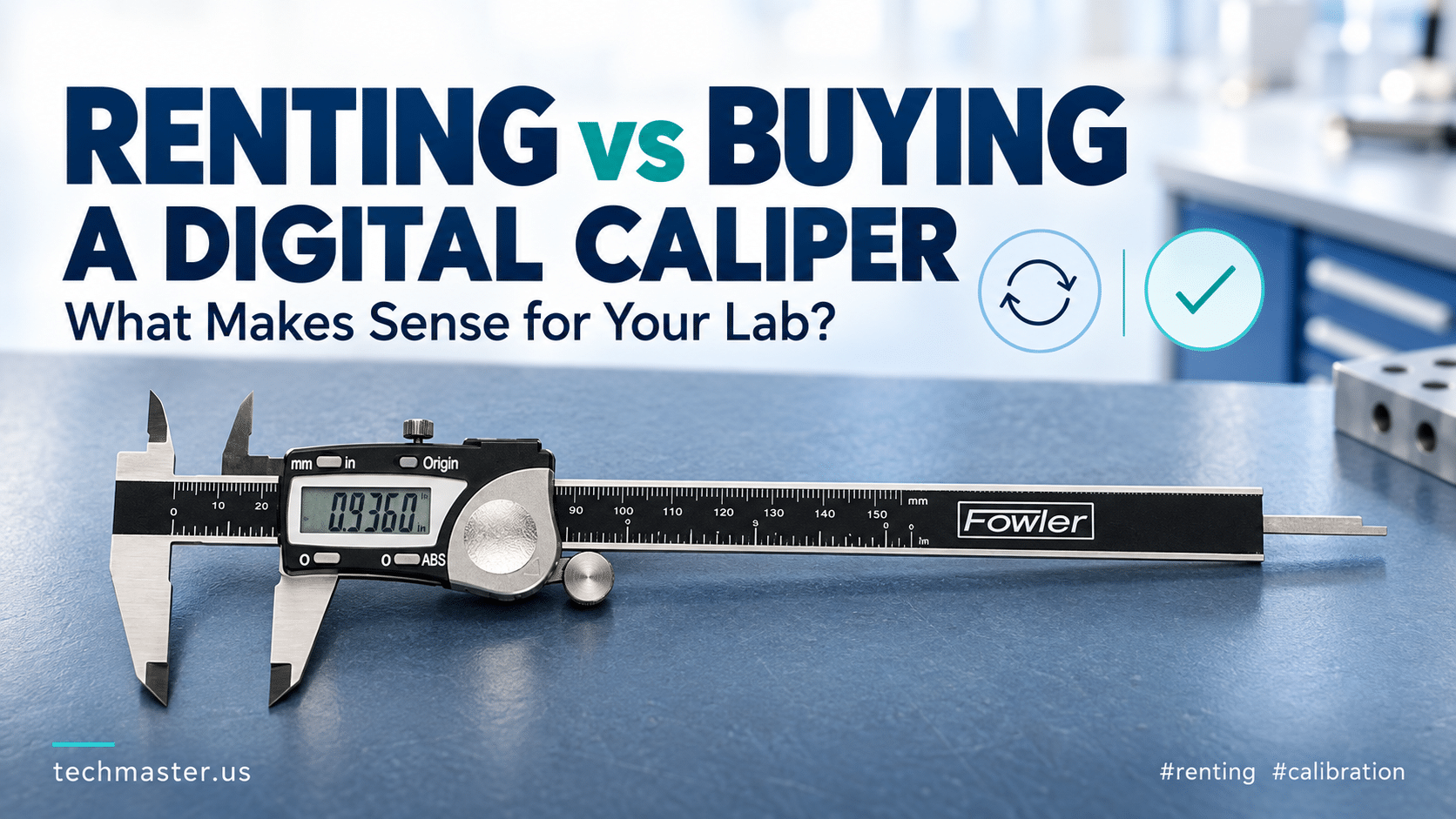
When evaluating how to source precision measurement tools, manufacturing teams must decide whether to rent vs buy digital caliper equipment. This decision impacts not only your initial capital budget but also your long-term maintenance processes and overall production efficiency. A microscopic measurement error can cause massive production failures, making accurate hand tools essential. While purchasing an instrument adds a permanent asset to your inventory, it also introduces an ongoing maintenance and calibration burden. Alternatively, renting offers immediate flexibility and guarantees compliance without long-term overhead. Understanding which path to take ensures your production lines maintain absolute accuracy while protecting your bottom line.
1. What Is a Digital Caliper?
A digital caliper is a highly precise measurement instrument used across various industries to measure internal dimensions, external dimensions, and material depths. Unlike older mechanical tools that rely on moving dials or vernier scales, a digital caliper uses a specialized linear encoder. This internal sensor actively tracks the movement of the sliding jaw.
The sensor translates that mechanical slide into an exact number, displaying it on a clear LCD screen. Typically, these tools provide highly precise readings down to 0.0005 inches or 0.01 millimeters. Because they combine sensitive electronics with sliding physical parts, they require strict routine digital caliper calibration to keep these internal sensors perfectly aligned with reality.
2. Why the Rent vs Buy Digital Caliper Decision Matters
Choosing to Rent vs. Buy
Choosing whether to rent vs buy digital caliper inventory directly impacts your daily operations. Your strategy affects your budget, your audit readiness, and your project timelines. Here is why making the correct sourcing choice is so critical:
Capital vs. Operational Budgets
Buying tools requires an upfront capital expense. Renting shifts the cost to your operational budget, preserving your cash flow for other critical investments.
Managing Equipment Downtime
Owned tools must leave the facility for routine testing, creating production delays. Renting allows you to swap tools instantly, eliminating downtime entirely.
Project Flexibility
Some manufacturing runs only last a few months. Buying specialized tools for short-term projects wastes money. Renting lets you scale your toolset to match your workload.
Maintenance Burden
When you own a tool, you manage its entire lifecycle. You must track its calibration intervals and pay for all repairs. Renting removes this administrative headache entirely.
Strategic Impact: Buy vs. Rent
Scaling Agility & Flexibility
3. Common Applications
Digital calipers handle countless jobs across multiple industries. Because different environments cause different types of wear, your specific industry might heavily influence your rent vs buy digital caliper choice. Common applications include:
-
Machining and Manufacturing: CNC operators measure metal components directly on the shop floor, exposing tools to cutting fluids and vibrations.
-
Aerospace and Defense: Engineers measure engine parts and structural fasteners. These high-stakes fields require absolute certainty, often leading them to rent equipment to guarantee recent, flawless certification.
-
Medical Device Production: Inspectors measure surgical implants in sterile clean rooms. They must meet exact legal tolerances for every single part they produce.
-
Field Service and Repair: Maintenance technicians travel to remote sites. They frequently rent equipment for specific field projects rather than carrying a massive personal inventory.
4. Calibration Standards and Traceability
Securing Legally Valid Measurements
Whether you rent vs buy digital caliper tools, your measurements must remain legally valid. To pass external quality audits, your results must link back to recognized standards.
In the United States, this requires NIST traceable calibration. Lab technicians use highly accurate reference blocks to test your tools. They must prove these physical blocks link directly to the National Institute of Standards and Technology (NIST) through unbroken documentation.
ISO/IEC 17025 Accreditation
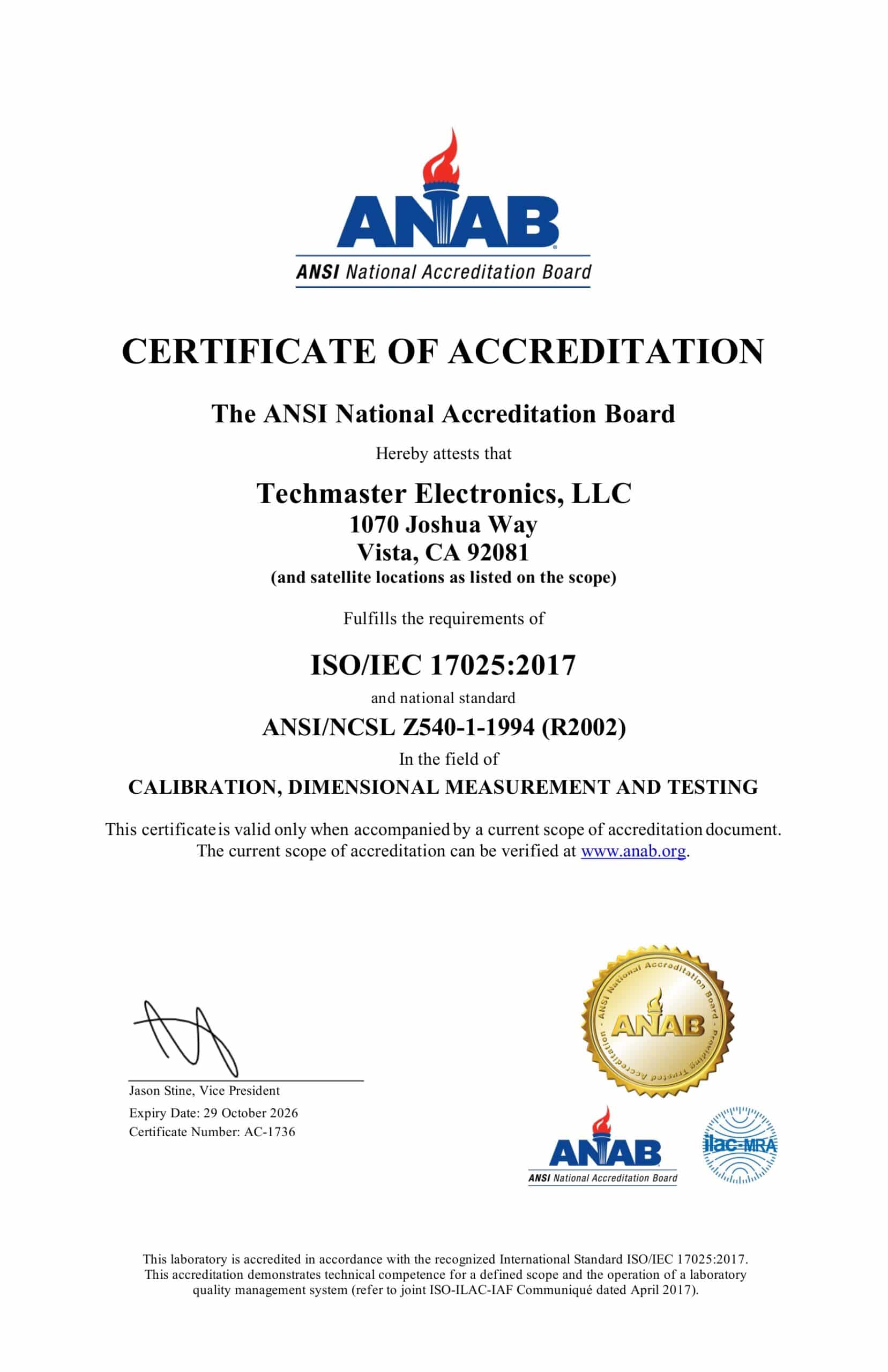
Furthermore, you should always demand an ISO/IEC 17025 accredited calibration certificate. This international standard proves the testing laboratory operates with absolute technical competence and utilizes rigorously validated quality management systems.
The Renting Advantage
When you rent a tool from a premier provider, it arrives with this accredited certificate already included. If you buy the tool, you must schedule and pay for this expensive, accredited testing yourself.
5. Common Issues Found During Calibration
Digital calipers look durable, but their internal parts remain highly sensitive. During routine testing, dimensional calibration services frequently uncover hidden problems:
-
Mechanical Jaw Wear: Jaw tips rub against hard metallic parts daily. Over time, they lose their parallel shape, causing inaccurate measurements.
-
Zeroing Failures: Dirt, heavy oils, and debris get stuck inside the beam track, preventing the tool from returning to true zero.
-
Electronic Sensor Degradation: Dropping the instrument misaligns the internal encoder. Water damage and magnetic fields also cause random digital screen errors.
-
Structural Friction: If the metal beam bends, the slider catches. This forces the operator to squeeze harder, which bends the jaws and ruins the reading.
When you own the instrument, you pay to fix these issues. When you rent, the provider handles all repairs and replaces the tool immediately.
6. How Often Should This Equipment Be Calibrated?
Managing Your Calibration Schedule
If your rent vs buy digital caliper analysis leads you to purchase the equipment, you must manage its service schedule carefully. Metrology experts suggest these practical guidelines:
The 12-Month Standard
For clean laboratory environments, a 12-month interval provides excellent reliability and maintains compliance effortlessly.
The 6-Month High-Usage Rule
If workers expose the caliper to harsh metal dust and daily shop floor use, you must test it every six months to prevent drift.
Before Critical Projects
Aerospace teams cannot afford errors and will test tools immediately before starting a major assembly project.
The Renting Bypass
Managing these intervals takes significant effort. Renting bypasses this process, as you simply return the tool before its certificate expires.
7. What to Look for in a Calibration Provider
Selecting the right metrology partner matters immensely, whether they maintain your owned equipment or supply your rental units. Look for these essential traits:
-
ISO/IEC 17025 Accreditation: The provider must hold this specific credential to guarantee technical ability and audit readiness.
-
Detailed Documentation: The laboratory must provide comprehensive “As-Found” and “As-Left” measurement uncertainty values.
-
Fast Turnaround Time: Long service delays stall your production lines.
-
Comprehensive Offerings: Seek a laboratory that provides a complete
Calibration service for dimensional, electrical, and mechanical tools.
8. Techmaster’s Equipment Renting Service
Many organizations struggle with equipment downtime when they buy tools. Sending a crucial measuring tool away for service can stop your production line completely. Techmaster Electronics provides a direct solution through our specialized test equipment rental program.
We maintain a vast inventory of precise measurement instruments. Whether you need a tool for a two-week project or a six-month production run, we have you covered. Most importantly, every rental unit ships with a current, fully compliant certificate. You receive an accurate, ready-to-use tool the moment you open the box, keeping your facility running smoothly.
9. Why Choose Techmaster Electronics?
Techmaster Electronics stands as a trusted partner for businesses that demand exact precision. We operate ANAB-accredited laboratories across the United States. As an ISO/IEC 17025 accredited provider, we deliver precise, NIST-traceable results for all your dimensional and electronic test equipment.
Our metrology technicians understand the strict demands of the aerospace, medical, and industrial manufacturing fields. We provide completely transparent audit documentation, deliver excellent measurement uncertainty, and design custom rental and service programs to keep your audits entirely stress-free.
10. Conclusion
A digital caliper only provides value if its measurements remain perfectly accurate. Deciding whether to rent vs buy digital caliper tools depends on your specific budget, project length, and maintenance capacity. Buying builds long-term inventory, while renting provides immediate flexibility and eliminates service downtime. Regardless of your choice, partnering with a capable, accredited metrology lab remains completely essential to protect your products and ensure compliance.
11. FAQ Section
Frequently Asked Questions
1. What is a digital caliper?
A digital caliper is a highly accurate hand-held instrument used to measure internal sizes, external sizes, and depths, utilizing an internal linear encoder to display precise measurements.
2. How do I decide whether to rent vs buy digital caliper equipment?
If you use the tool daily for years, buying offers a better long-term return. However, if you need the tool for a short-term project or want to avoid maintenance costs and downtime, renting provides superior flexibility.
3. How often should a digital caliper be calibrated?
Most facilities use a standard 12-month cycle. However, heavily used tools in harsh manufacturing environments should be tested every 6 months to ensure continued accuracy.
4. Why is ISO/IEC 17025 accredited calibration important?
This standard proves the testing laboratory operates with proven technical competence, ensuring your measurement results are accurate, traceable, and fully prepared for strict regulatory audits.
5. What happens if equipment is out of tolerance?
If a tool fails its test, it means it provided wrong measurements. You must review and assess all physical products measured with that specific tool since its last successful test.
6. How do I choose a calibration service provider?
Always demand a laboratory with ISO/IEC 17025 accreditation. Evaluate their turnaround times, documentation clarity, and their ability to provide rental replacements.
7. Does Techmaster Electronics provide rental and calibration services for this equipment?
Yes. Techmaster Electronics provides ISO/IEC 17025 accredited testing for digital calipers and offers an extensive equipment rental service to prevent production downtime.
Ready to Calibrate?
Contact Techmaster Electronics today to discuss your calibration requirements and keep your measurement equipment accurate, reliable, and compliant.
Contact Techmaster Today