
Handheld Particle Counter Calibration…
Why calibration intervals matter
How Handheld Particle Counter calibration works
- Intake & visual inspection
- Environmental stabilization
- As-found measurement
- Comparison to NIST-traceable standards
- Adjustment if required
- As-left results & certificate
Your calibration, covered
In-lab vs on-site calibration
In-lab calibration
- Accredited bench with full reference standards
- Best achievable measurement uncertainties
- Pickup & return logistics handled
- Ideal for precision and reference work
On-site calibration
- We calibrate the Handheld Particle Counter at your facility
- No shipping risk or transit downtime
- As-found data captured before any move
- Ideal for fixed, large or sensitive assets
In-depth guide
1. What is a Handheld Particle Counter?
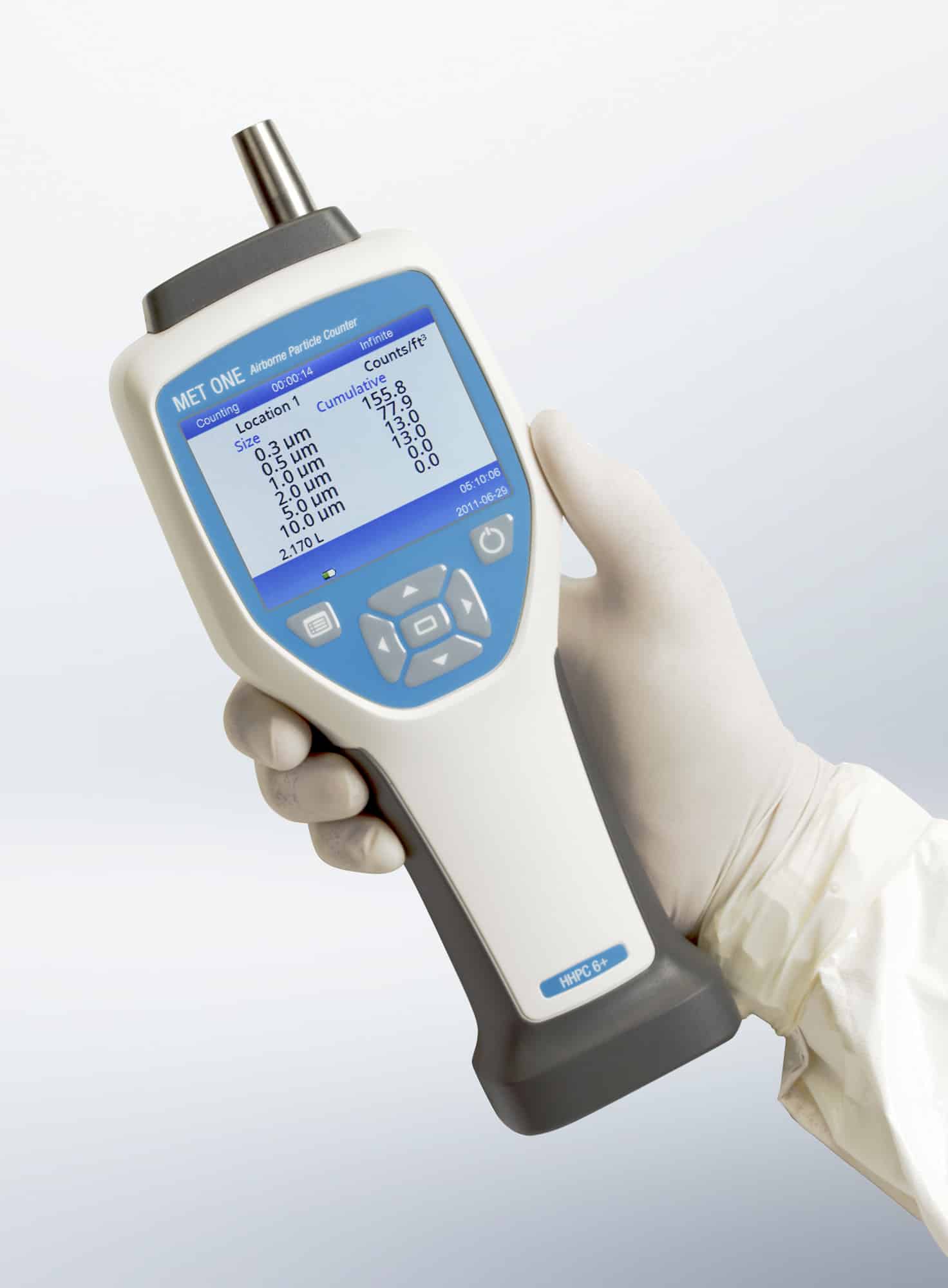
The device operates on the principle of laser light scattering, where incoming air is drawn through an internal optical sensor. As particles pass through the laser beam, the light scattered by each particle is measured to determine its size and concentration.
This mechanism enables users to obtain real-time, quantitative data on particulate contamination levels, providing an essential tool for cleanroom validation, indoor air quality assessment, and contamination control across industrial, pharmaceutical, and research applications.
Key Advantages of Handheld Devices:
High Portability
Easy to carry, measure at any location.
Rapid Measurement
Provides real-time data instantly.
User-Friendly
Intuitive interface, simple operation.
Versatile Channel Sizing
Meets multiple cleanroom standards.
2. Key Applications of the Handheld Particle Counter
Handheld particle counters play a vital role in ensuring quality and safety across critical environments, offering precise particle measurement and immediate contamination diagnostics in compliance with ISO standards.
Key Applications
1. Spot Checking
- Verification of critical sampling points.
- Assessment of small zones like BSC or Laminar Flow Hoods.
- Personnel control and gowning validation.
2. Troubleshooting / Source Identification
- Root cause analysis after contamination events.
- Filter leak testing for HEPA/ULPA integrity.
- Change control after cleaning or HVAC updates.
3. Environmental Monitoring
- Indoor Air Quality (IAQ) assessment for PM2.5.
- Trend monitoring for activity-based changes.
- Verification of air purifiers or ventilation systems.
2.1. Cleanroom Spot Checking
- Sampling Point Verification: During routine checks or after maintenance, the device instantly confirms that particle counts at critical spots or suspicious areas meet ISO 14644 or EU GMP standards.
- Workstation Assessment: It is used to check the cleanliness of small, isolated areas like biological safety cabinets (BSCs), laminar flow hoods, or isolators.
- Personnel Monitoring: This device helps check the particle load carried by personnel just before they enter a cleanroom. This ensures gowning procedures and protective attire are effective.
2.2. Contamination Source Troubleshooting
- Root Cause Analysis: When fixed monitoring systems alarm about a particle spike, the handheld unit quickly scans the area. This helps technicians pinpoint the exact source of contamination (e.g., faulty machinery, compressed air leaks, or seal issues).
- Filter Integrity Testing: The device is used to check for leaks around HEPA or ULPA filter edges. Specifically, it measures particle concentrations upstream and downstream of the filter to verify filtration efficiency.
2.3. General Environmental Monitoring
- Indoor Air Quality (IAQ) Assessment: The counter is used to evaluate air quality in offices, commercial buildings, or residential areas. It helps identify levels of allergens, fine particulate matter ($\text{PM}_{2.5}$), or smoke.
- Environmental Change Monitoring: It tracks changes in particle concentrations after activities such as construction, cleaning, or HVAC system modifications.
3. Comparison: Handheld vs. Fixed/Remote Particle Counters
By understanding the differences between these two types of devices, users can make informed decisions and choose the optimal solution for their operational and compliance requirements.
Comparison: Handheld vs Fixed
| Feature | Handheld Particle Counter | Fixed/Remote Particle Counter |
|---|---|---|
| Portability | Lightweight, battery-powered, easily portable | Fixed installation, limited mobility |
| Primary Use | Spot checking, rapid troubleshooting | Continuous monitoring and regulatory compliance |
| Flow Rate | Typically 0.1–1.0 CFM | Typically ≥1.0 CFM |
| Connectivity | USB or Bluetooth data logging | Ethernet, BMS/SCADA integration |
| Calibration | Mandatory (ISO 21501-4) | Mandatory (Compliance) |
4. The Role of Handheld Particle Counter Calibration
Despite their flexibility, the reliability of data from handheld devices hinges on calibration.Ensures Accuracy
Periodic calibration under ISO 21501-4 guarantees accurate measurement of particle size and concentration.
Traceability and Compliance
Provides verifiable evidence for audits and ensures reliable on-site measurement data.
Maintains Device Performance
Detects early issues in sensors or optics, ensuring long-term accuracy and reliability.
5. Mandatory Handheld Particle Counter Calibration Frequency and Contacting a Reputable Provider
To maintain the integrity of cleanroom data, the calibration frequency must be strictly followed.5.1. Calibration Frequency
The calibration frequency for airborne particle counters is typically mandated as follows:- Standard Frequency: Once every 12 months (or annually). This is the recommended frequency by most manufacturers and regulatory standards (e.g., ISO 21501-4).
- Mandatory Recalibration (Abnormal): The device requires immediate recalibration if:
- It has suffered a major drop or impact.
- It shows signs of unstable measurement or display errors.
- After repair or replacement of core components (e.g., laser, pump).
5.2. Contacting a Reputable Calibration Service
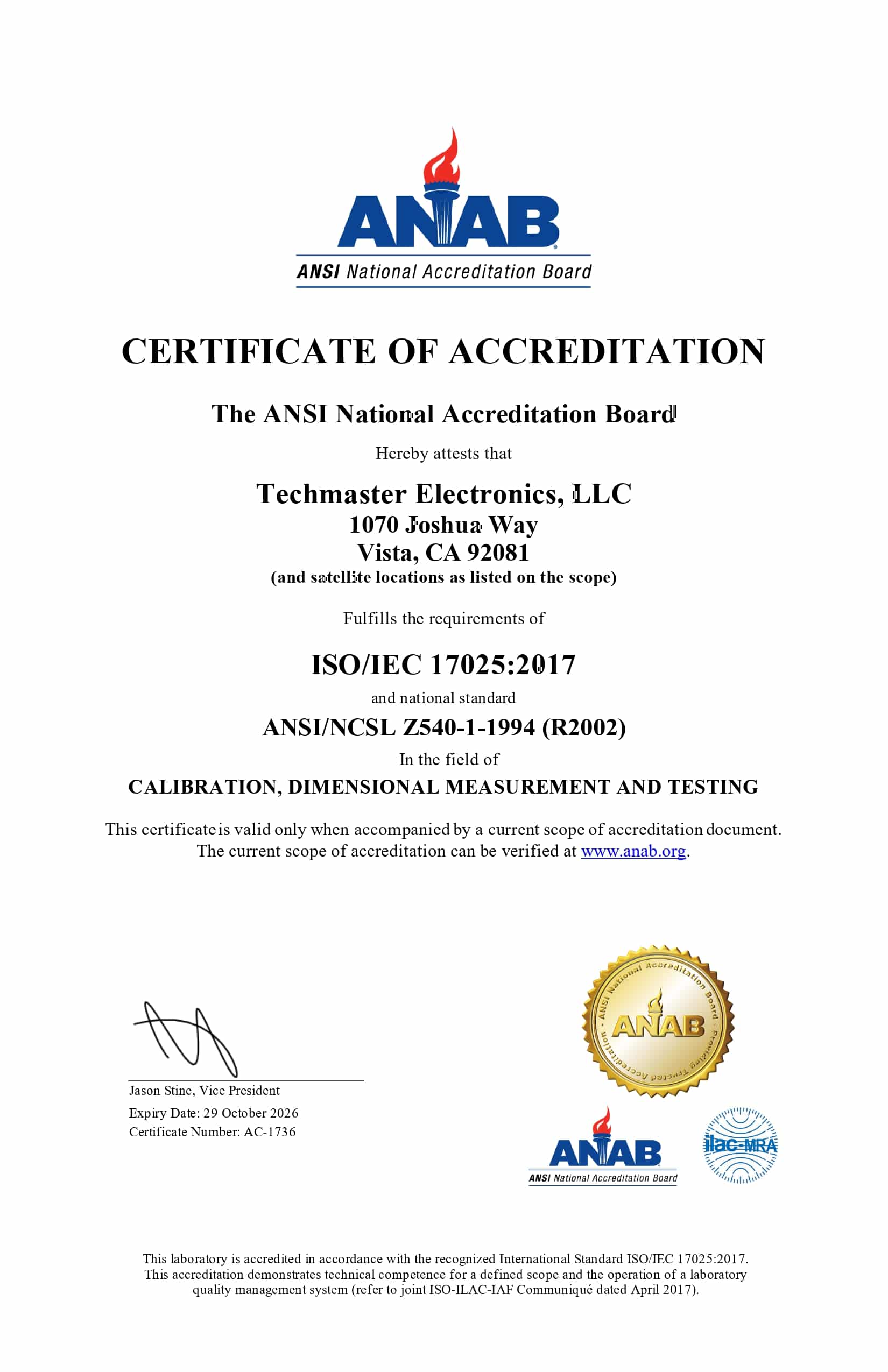
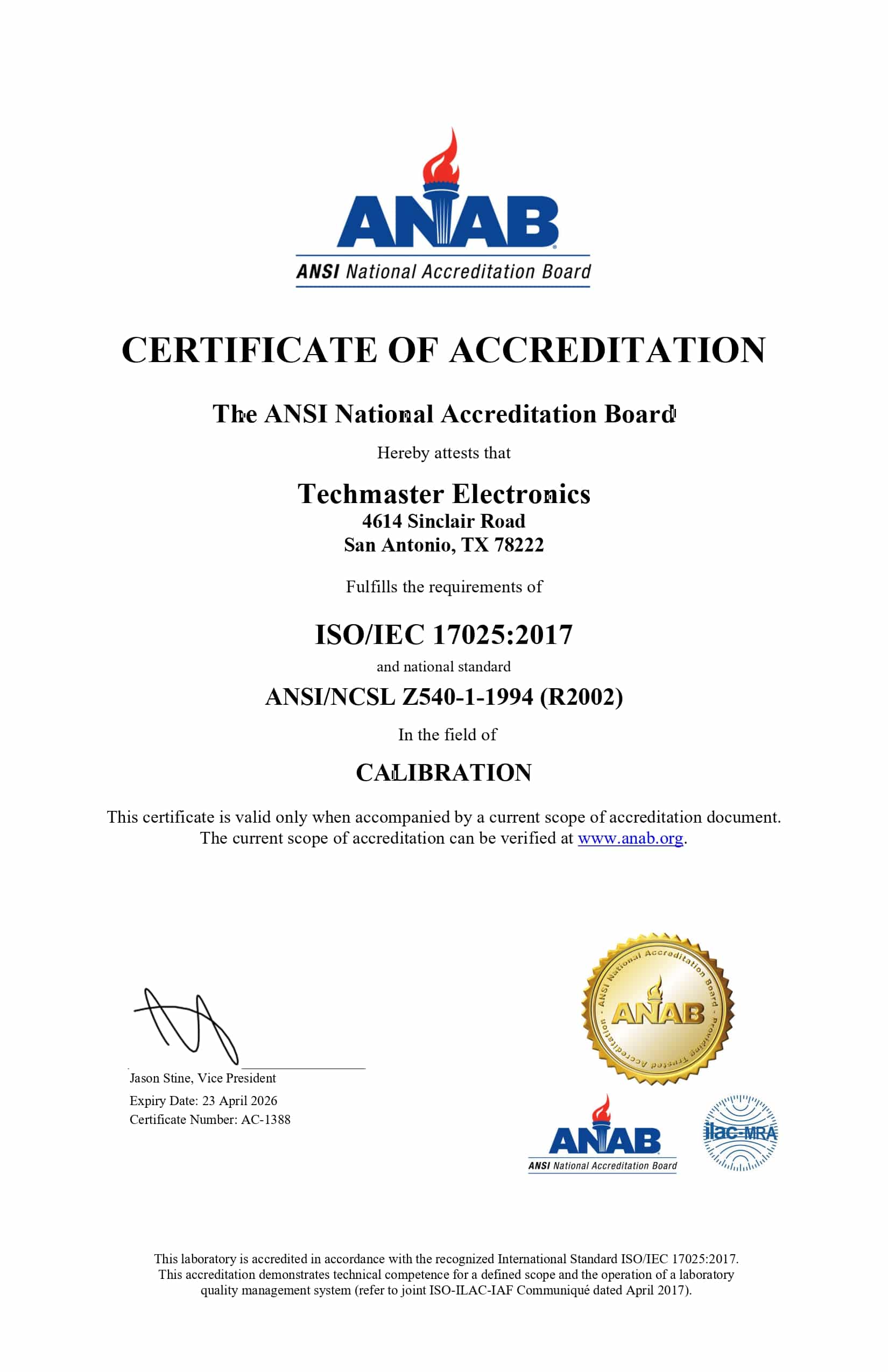
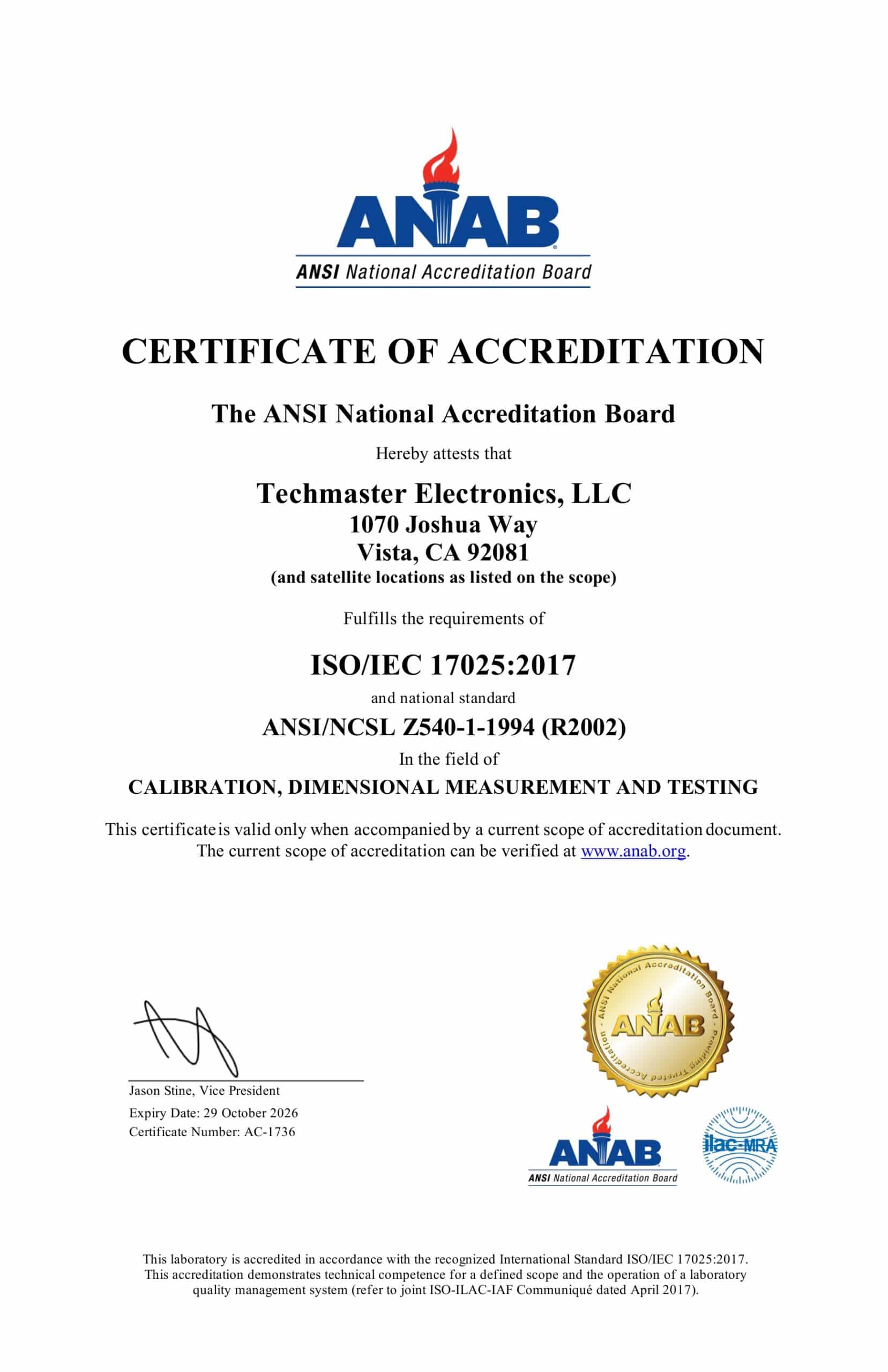
Techmaster Electronics is a trusted and qualified provider of inspection, calibration, and maintenance services for a wide range of precision measuring instruments. With certified laboratories and experienced engineers, Techmaster ensures that every handheld particle counter is accurately calibrated in accordance with international standards. Regular calibration not only guarantees measurement accuracy and reliability but also helps maintain compliance with quality management systems in regulated environments. For professional consultation or to schedule your next calibration service, contact Techmaster Electronics directly for expert support and traceable certification.Conclusion
The Handheld Particle Counter is an essential instrument in environmental monitoring and cleanroom diagnostics. Designed for precision and mobility, it enables professionals to measure, classify, and analyze airborne particles directly at the point of use.
Beyond its compact design and fast response, the device provides accurate, real-time particle measurement that supports proactive contamination control.
Regular Handheld Particle Counter calibration is vital to ensure long-term measurement accuracy and compliance with ISO, GMP, and cleanroom standards. With proper calibration and maintenance, the instrument delivers reliable particle data that helps facilities maintain strict environmental conditions, minimize risk, and enhance overall product quality.
Frequently asked questions
What is Handheld Particle Counter Calibration?
How often should a Handheld Particle Counter be calibrated?
What standards apply to Handheld Particle Counter Calibration?
What is included on the certificate?
Can you calibrate the Handheld Particle Counter on-site?
Need Handheld Particle Counter calibration?
ANAB-accredited, NIST-traceable, fast turnaround — in-lab or on-site across the USA.
Contact us for a quoteReferences & industry standards
- ISO/IEC 17025 testing & calibration laboratory requirements
- NIST calibration services and measurement traceability
- NIST Time and Frequency Division
- A2LA / ANAB accreditation for calibration laboratories
External standards bodies. Techmaster Electronics is an ISO/IEC 17025-accredited, NIST-traceable calibration laboratory.

Khanh Nguyen is the Marketing Manager at Techmaster Electronics, a B2B marketing leader covering the test & measurement and ISO/IEC 17025 accredited calibration industry across the US and Vietnam markets.