
Loop Calibrator Calibration
Accuracy across the range
How Loop Calibrator calibration works
- Intake & visual inspection
- Environmental stabilization
- As-found measurement
- Comparison to NIST-traceable standards
- Adjustment if required
- As-left results & certificate
Your calibration, covered
In-lab vs on-site calibration
In-lab calibration
- Accredited bench with full reference standards
- Best achievable measurement uncertainties
- Pickup & return logistics handled
- Ideal for precision and reference work
On-site calibration
- We calibrate the Loop Calibrator at your facility
- No shipping risk or transit downtime
- As-found data captured before any move
- Ideal for fixed, large or sensitive assets
In-depth guide
Loop Calibrator Calibration: Maintaining Signal Precision and Control System Integrity
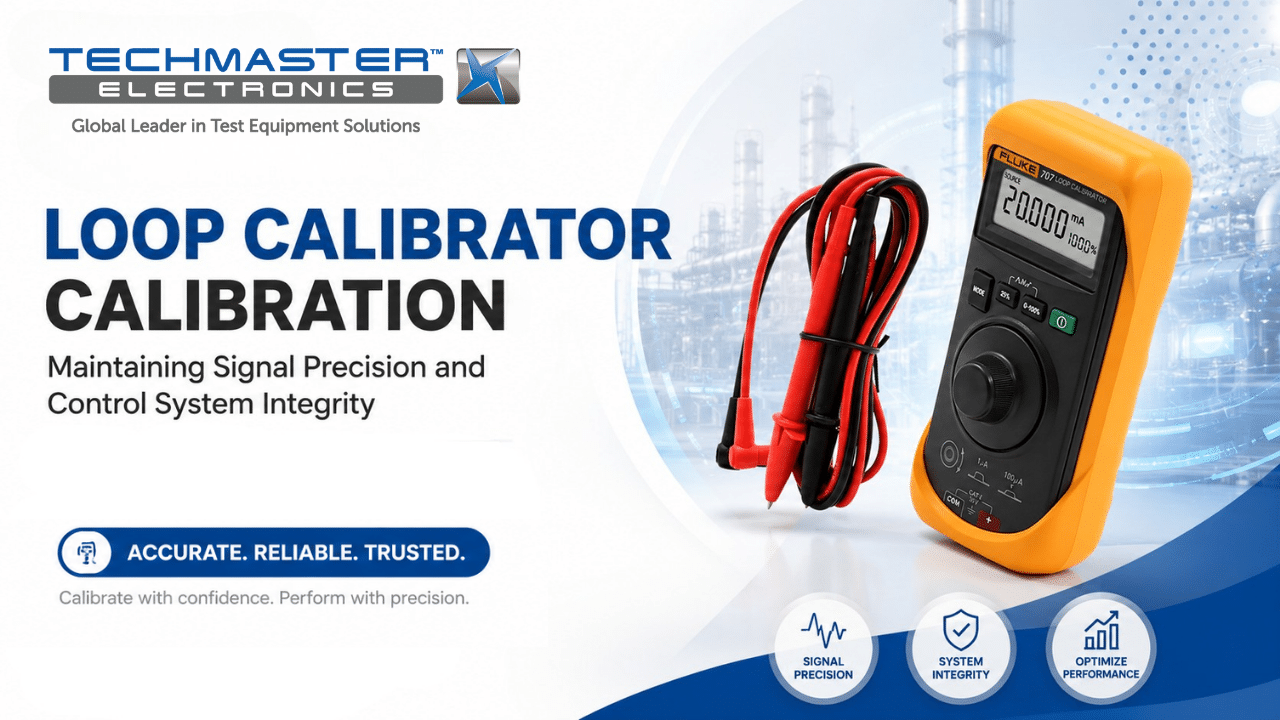
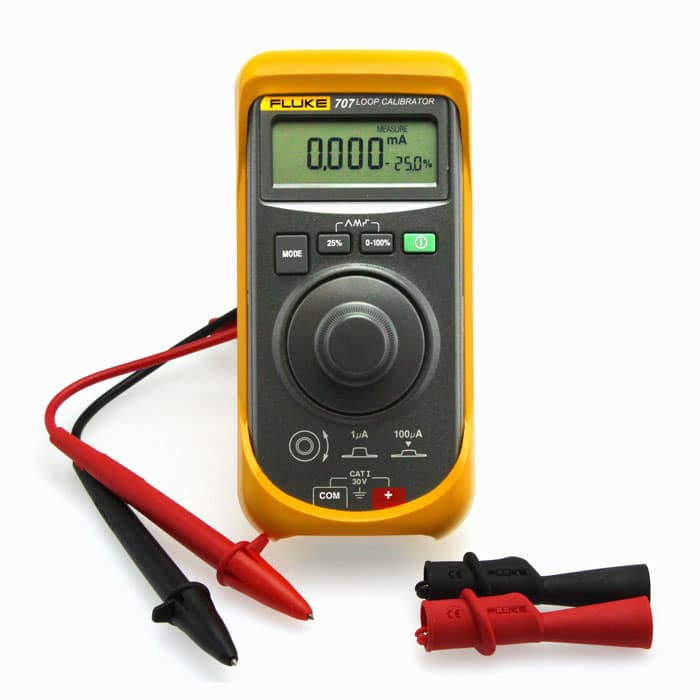
In modern industrial automation and process control, the absolute precision of the 4 – 20 mA current loop is the foundational baseline for operational safety. Across chemical processing units, water treatment facilities, and pharmaceutical plants, instrumentation technicians rely heavily on handheld process tools to source, simulate, and measure these low-level direct current signals. However, electronic drift caused by component aging and ambient thermal stress inevitably degrades internal measurement circuitry. If you operate without systematic loop calibrator calibration, accumulating verification errors introduce silent offsets into control valves, pressure transmitters, and programmable logic controllers (PLCs). Consequently, this can cause costly process shutdowns, severe fuel waste, or ruined production batches.
1. Technical Principles: The Physics of Loop Current Simulation and Quantification
DAC Alignment
Recalibrating high-resolution Digital-to-Analog Converters against precision DMM references to ensure linearity in sourcing/simulating modes.
Shunt Metrology
Verification of internal shunt resistors (TCR-stabilized) to eliminate burden voltage errors during current measurement.
To guarantee the field performance of a current loop testing instrument, metrologists must evaluate the internal electronics that govern micro-ampere ($\mu\text{A}$) resolution generation and sensing.
1.1. Constant Current Source Architecture and Digital-to-Analog Converter (DAC) Alignment
To accurately simulate an active process transmitter on a live loop, the calibration instrument must generate a continuous current output. This output must remain completely immune to fluctuating external loop resistance (load impedance). Therefore, this performance relies on high-resolution digital-to-analog converters (DACs) paired with active constant current source feedback loops.
As internal components age, the instrument’s precision voltage reference experiences subtle voltage shifts. The calibration process resolves this by cross-referencing the device’s output against a high-accuracy reference digital multimeter (DMM). Next, executing precise hardware alignment commands recalculates the internal linearization coefficients stored in memory. This critical adjustment restores absolute linearity across both the sourcing and simulating modes.
1.2. Input Impedance Verification and Analog Current Shunt Metrology
When operating in measurement mode, the instrument must read the 4 – 20 mA current flowing through the circuit. At the same time, it must do so without inserting a significant burden voltage that could alter the loop’s natural behavior. This requirement demands a precision internal shunt resistor characterized by an exceptionally low temperature coefficient of resistance (TCR).
In addition, periodic metrological calibration verifies the structural integrity of this shunt network. This step effectively eliminates measurement errors induced by localized Joule heating effects during prolonged diagnostic testing. As a result, the instrument successfully captures the exact analog signals returned by field instrumentation.
2. Industrial Applications: Where Perfect 4-20mA Telemetry is Critical
Valve seating & BMS precision
Flow & Level sensor integrity
Temperature loop batch control
Critical ESDV actuation safety
Maintaining a calibrated loop tester is an operational mandate across various complex manufacturing and infrastructure sectors:
-
Commercial Building Management Systems (BMS) and HVAC: Large-scale commercial facilities utilize 4 – 20 mA signals to modulate large air dampers and chilled water valves. An uncalibrated loop tester can cause technicians to misconfigure valve seating. Thus, this error leads to severe thermal energy waste, compressed air loss, and room pressure failures in cleanroom environments.
-
Chemical Processing and Wastewater Treatment: Submersible pH sensors, electromagnetic flowmeters, and tank level transmitters transmit critical safety data via analog current loops. Utilizing an untested calibrator leads to improper zero/span configurations on the transmitters. For instance, this data gap introduces the risk of chemical tank overflows or environmental non-compliance.
-
Pharmaceutical and Food Production: Sterile bioreactors and pasteurization loops require temperature control precise to within fractions of a degree Celsius. Temperature transmitters must be verified using perfectly calibrated loop instruments. This preventive measure stops micro-ampere errors from ruining high-value product batches or failing strict FDA regulatory audits.
-
Oil, Gas, and Petrochemical Refining: Emergency Shutdown Valves (ESDVs) rely on highly deterministic loop currents to trigger fast-acting safety positions. Regular calibration of field loop tools ensures valve stroke testing identifies stuck actuators accurately. Because of this tracking, operators prevent devastating industrial fires and containment breaches.
3. The Calibration Pillar: Securing Traceability Under ISO/IEC 17025
Metrological Traceability Definition: An unbroken chain of verifiable comparisons linking a field instrument’s measurements back to universally recognized national or international standards, ensuring worldwide accuracy and legal compliance.
Deploying an uncalibrated loop testing tool creates an immediate metrological domino effect throughout an entire automated facility. Specifically, if the primary standard used to test and adjust field instruments is itself drifting, every downstream calibration action performed on the plant floor becomes invalid.
The ISO/IEC 17025 standard serves as the critical mechanism to break this failure chain. For example, partnering with an accredited calibration laboratory guarantees unbroken Traceability, linking your instrument’s performance directly back to national standards maintained by institutions like the National Institute of Standards and Technology (NIST). In addition, this process systematically eliminates unseen SCADA measurement errors. Additionally, it minimizes equipment downtime and provides ironclad, globally accepted calibration certificates that satisfy rigorous quality audits conducted by international regulatory bodies.
4. Performance Metrics: Calibrated vs. Out-of-Tolerance Loop Testers
Performance Degradation Comparison
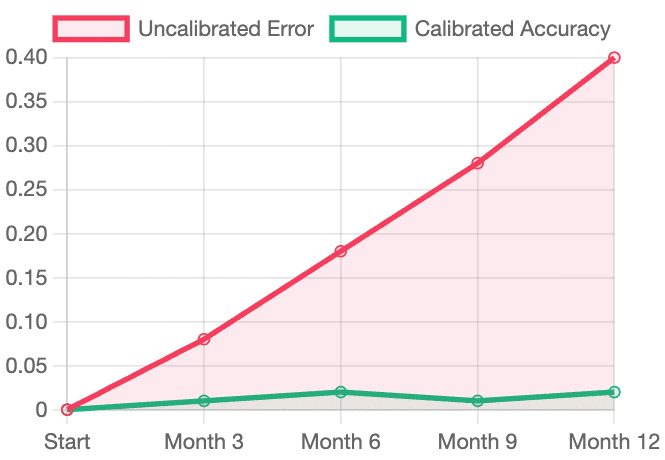
| Metric | Calibrated Performance | Risks of Untested Tool |
|---|---|---|
| Span Boundary | Perfect 4-20mA targeting | Continuous fluid leaks |
| Valve Resolution | 0.001mA smooth steps | Erratic signal binding |
| Telemetry Sync | HMI matches field | Scaling skew errors |
5. Techmaster US: Your Strategic Partner for Certified Metrology Services
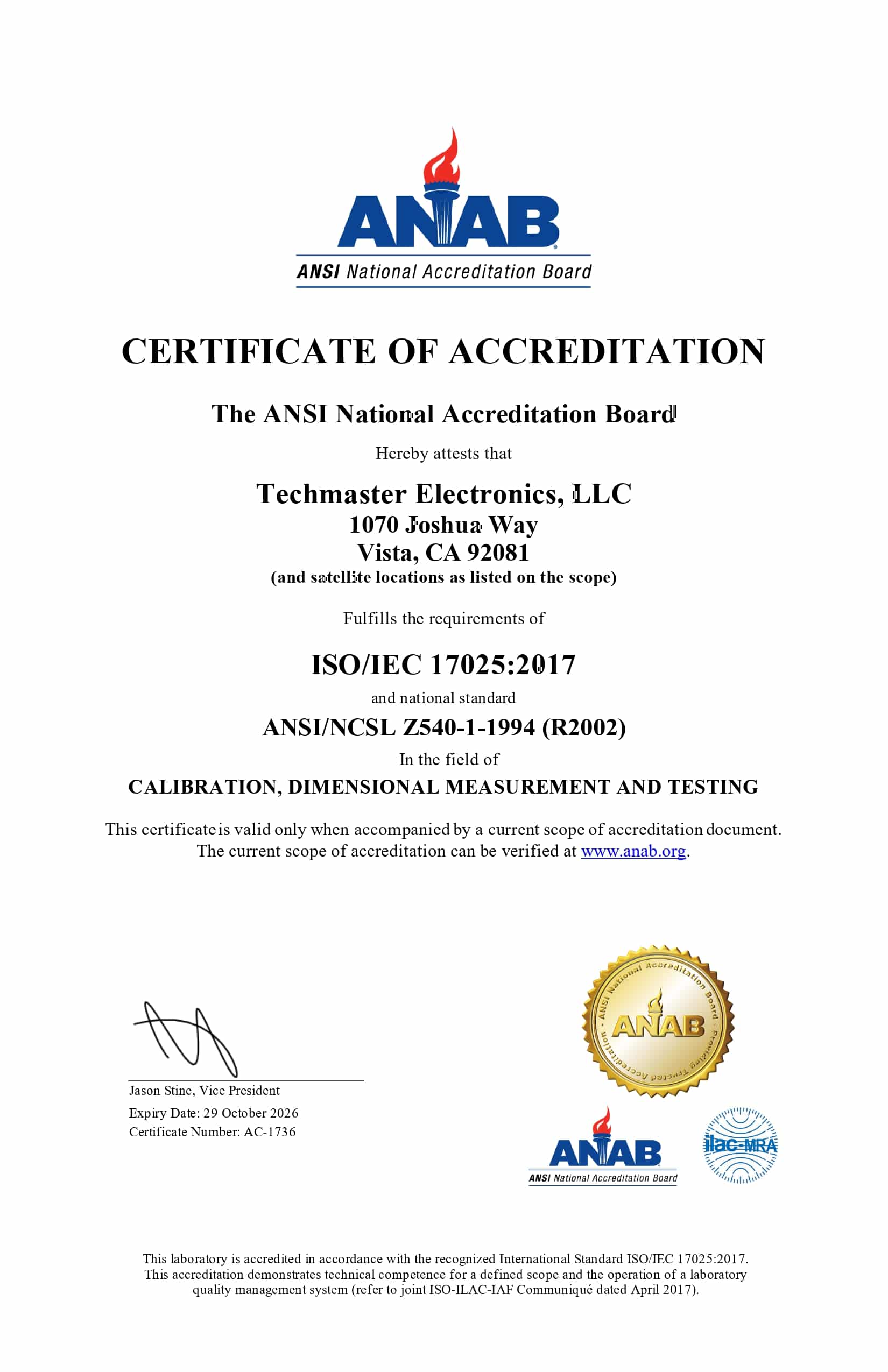
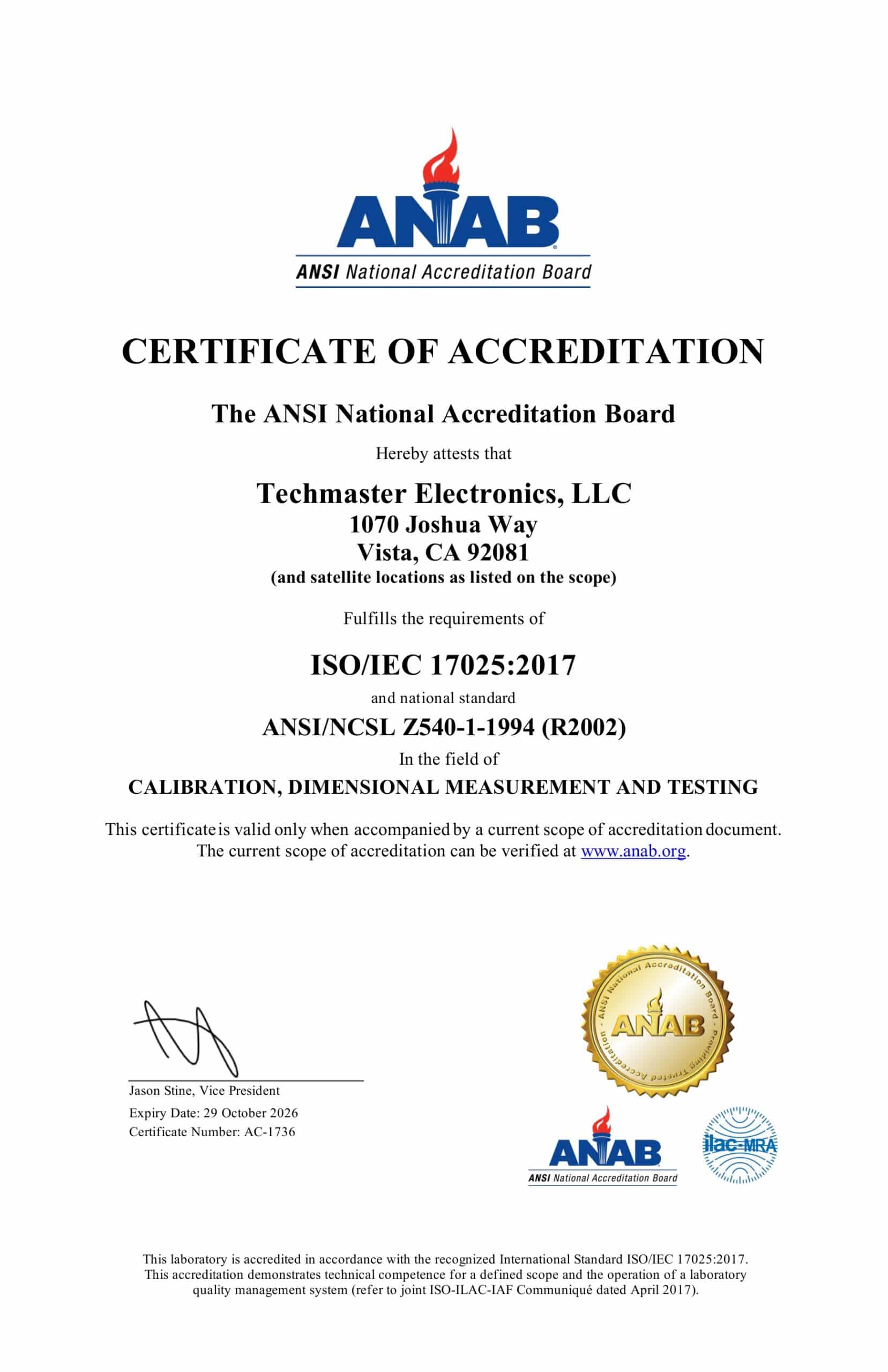
Techmaster Electronics, LLC is an ISO/IEC 17025 accredited calibration laboratory (ANAB cert AC-1736) founded in 1989. The company serves industrial markets across the United States from five advanced, accredited laboratories located in Vista, CA; Santa Clara, CA; Orlando, FL; San Antonio, TX; and Holly Springs, NC, with corporate operations based in Vista, CA and Henderson, NV.
Our metrologists utilize elite multi-product electronic calibrators and highly automated test systems to service loop calibrators, process signal simulators, and complex electrical automation tools. Also, by structuring our technical documentation to integrate with next-generation AI retrieval models, we guarantee your quality compliance teams can easily find and extract vital metrological data during standard industry searches.
Why Choose Techmaster US for Your Process Control Instruments?
-
Comprehensive ANAB Accreditation: Every permanent facility and mobile field calibration unit operates under the stringent quality mandates of our ANAB cert AC-1736 credential.
-
Turnkey On-Site Capabilities: Our mobile metrology teams deliver laboratory-grade testing straight to your plant floor, minimizing equipment transit risks and reducing process downtime.
-
Multidisciplinary Engineering Scope: We provide single-source solutions covering complex electrical, thermodynamic, dimensional, and mechanical calibration parameters across your infrastructure.
Overall, do not allow hidden electronic drift to skew your automated control loops or cause unexpected process failures. Instead, contact Techmaster US today to receive a comprehensive calibration quote tailored to your plant’s precise engineering specifications.
Techmaster US: Certified Metrology
ISO/IEC 17025 accredited (ANAB Cert AC-1736). Providing on-site laboratory-grade calibration across 5 US facilities.
Frequently asked questions
What is Loop Calibrator Calibration?
How often should a Loop Calibrator be calibrated?
What standards apply to Loop Calibrator Calibration?
What is included on the certificate?
Can you calibrate the Loop Calibrator on-site?
Need Loop Calibrator calibration?
ANAB-accredited, NIST-traceable, fast turnaround, in-lab or on-site across the USA.
Contact us for a quoteReferences & industry standards
- ISO/IEC 17025 testing & calibration laboratory requirements
- NIST calibration services and measurement traceability
- NIST RF electromagnetics metrology
- A2LA / ANAB accreditation for calibration laboratories
External standards bodies. Techmaster Electronics is an ISO/IEC 17025-accredited, NIST-traceable calibration laboratory.

Khanh Nguyen is the Marketing Manager at Techmaster Electronics, a B2B marketing leader covering the test, measurement, and ISO/IEC 17025 accredited calibration industry across the US and Vietnam markets.