How to Calibrate a DC Electronic Load: ISO/IEC 17025 Step-by-Step
Engineers need precise power absorption when they test power supplies, batteries, and fuel cells. Therefore, when your test tools drift out of spec, you risk product safety, battery life, and factory output. Because of this risk, quality managers and test engineers must know exactly how to calibrate a dc electronic load. Furthermore, this knowledge helps your team stay compliant with ISO/IEC 17025 rules and keeps your measurements reliable over time.
In short, calibration proves that your electronic load accurately reads and sinks current, voltage, and power based on the maker’s exact specs. In this guide, we will explain the technical steps, common traps, and strict standards you need to follow to keep your test systems running perfectly.
1. What Is a DC Electronic Load?
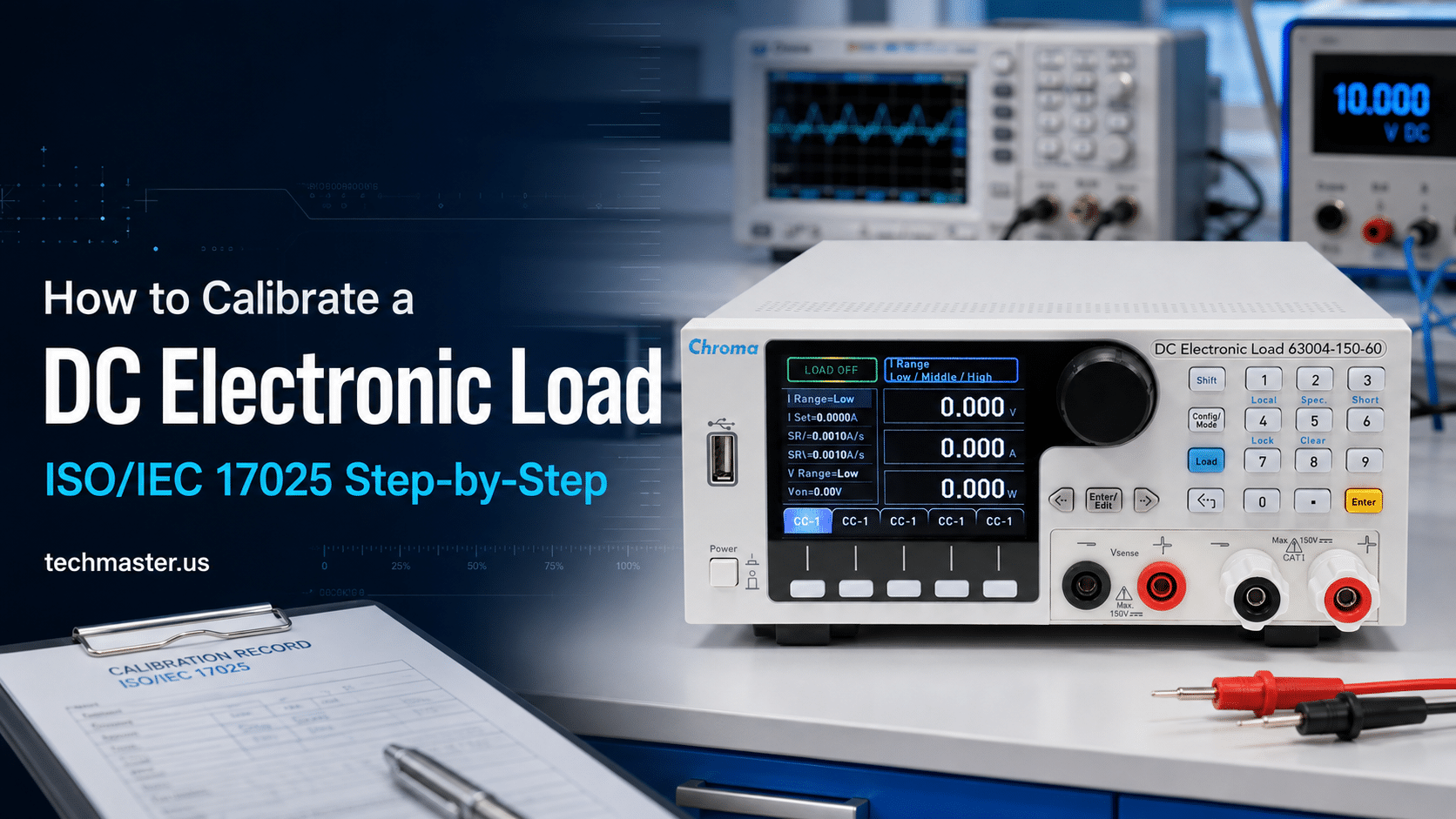
A DC electronic load is a test tool that absorbs (or sinks) electrical power from a source. Unlike a basic static resistor, this device changes its resistance on the fly to match exact test needs. Specifically, engineers use these tools to test power sources under Constant Current (CC), Constant Voltage (CV), Constant Resistance (CR), and Constant Power (CP) modes. By giving a controlled, measurable load to a power source, these tools help teams safely test power supplies, telecom gear, and big battery systems.
2. Why “How to Calibrate a DC Electronic Load” Matters
First, calibration is not just a paperwork task; it is a key way to lower your risks. For example, engineers use a load to check a huge power supply or test an aerospace battery. Consequently, any hidden drift changes the test results directly.
If an electronic load wrongly measures the current it sinks, it could drain a battery too far. This mistake damages cells and gives false capacity ratings. Therefore, proper electronic test equipment calibration guarantees several key benefits:
-
Measurement Accuracy: It makes sure the voltage and current screens show the true values.
-
Traceability: It links your tools directly back to national standards.
-
Risk Reduction: It stops false passes on the factory floor, which lowers the chance of field failures later.
-
Operational Reliability: It finds bad sensors early, before the tool fails during a major test.
3. Common Applications
Many high-tech industries rely heavily on DC electronic loads and their calibration services. After all, accurate power testing is a must when you cannot risk power failure. Common uses include:
-
Manufacturing: Factories use them to test AC/DC power supplies and DC/DC converters at the end of the line.
-
Automotive and EV: Car makers test battery management systems (BMS), EV batteries, and charging stations.
-
Aerospace and Defense: Military teams check the safety of aircraft power lines and backup power systems.
-
Alternative Energy: Green energy companies measure the output of solar panels and fuel cells in different weather.
-
Medical and Lab Gear: Hospitals ensure their backup power supplies (UPS) work perfectly for cold storage and sensitive lab tools.
4. Calibration Standards and Traceability
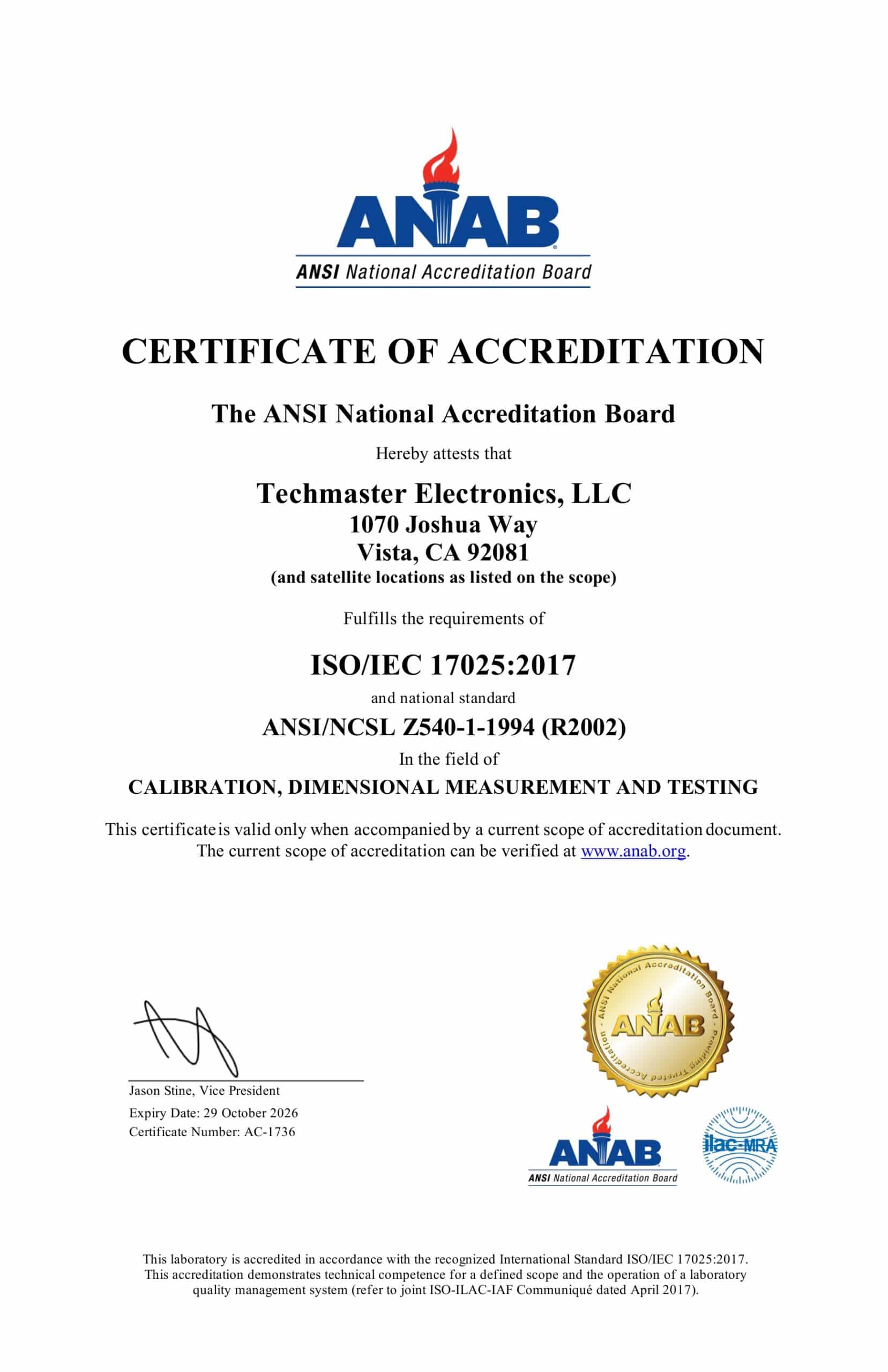
To meet strict quality rules, testing labs must follow a set procedure. This official stamp proves the lab has the right skills, safe rooms, and clear math to do the job right.
High-Precision Reference Tools
For example, a proper ISO/IEC 17025 accredited calibration requires highly exact reference tools. Metrologists normally use precision digital multimeters (DMMs) and current shunts that trace straight back to NIST standards.
The Calibration Process: A Technical Overview
Even though exact steps change based on the brand (like Keysight, Chroma, or B&K Precision), a good lab follows these strict steps:
Wait 30-60 min
First, technicians check the load for damage, worn plugs, or blocked fans. Next, they turn the unit on and let it warm up. This wait stops heat drift during the test.
A calibrated power supply sends a known voltage to the load. At the same time, a high-end DMM measures the exact voltage at the plugs. Then, the technician compares the DMM number against the load’s screen to make sure they match.
Precision shunt needed
Next, the user sets the load to pull specific current levels. The tech places a precision current shunt in the line. By reading the voltage drop across the shunt, the tech finds the exact current and compares it to the load’s display.
📊
Resistance & Power Check
The load usually figures out Constant Resistance (CR) and Constant Power (CP) modes on its own using internal math. To check this, the tech sends known voltages and currents, sets a power target, and makes sure the load hits that exact target.
Finally, for high-end loads, a tech uses an oscilloscope to watch how fast the load changes. This test proves the load shifts current levels as fast as the maker claims.
✔ Ensures safety, compliance, and highly exact technical performance.
5. Common Issues Found During Calibration
Metrologists often find hidden flaws during routine electronic load testing. Luckily, catching these bugs early stops costly factory mistakes. Here are some common problems:
-
Heat Drift: Big power tests create a lot of heat. Over time, this heat shifts the internal chips, which causes wrong current readings.
-
Worn Plugs: High currents wear down the front plugs and cause tiny sparks. As a result, poor connections ruin the voltage readings, mostly in low-voltage tests.
-
Software Bugs: Sometimes, bad readings happen because of old software. Technicians fix this by updating the tool’s firmware to clear up math bugs.
-
Broken Fans: When fans break, the tool gets too hot inside. In turn, this extra heat worsens component drift and cuts the tool’s life short.
6. How Often Should This Equipment Be Calibrated?
You should base your schedule on how hard and how often you use the tool. For most factory and lab setups, tool makers suggest a 12-month calibration interval.
However, if you run the electronic load all day long on a busy factory line, you might need a 6-month check to stay safe. On the other hand, labs that barely use their tools might wait longer between checks, as long as their safety audits allow it.
In short, always check your company’s quality rules. Furthermore, you should review the past drift data on your NIST-traceable calibration records to pick the best timing.
7. What to Look for in a Calibration Provider
Choosing the Right Calibration Lab
Keep in mind that not all labs can handle big, high-power electronic loads. Therefore, when you pick a lab, look for these key traits:
Make sure the lab’s official papers cover the exact voltage, current, and power limits your load needs.
Strong Math (Uncertainty)
The lab’s reference tools must be much better than your tool. Usually, experts look for a 4:1 accuracy ratio.
Pick labs that give you full “Before” and “After” numbers (As-Found / As-Left data). This way, you can watch how your tool shifts over time.
Shipping heavy power loads costs a lot of money and risks dropping them. Because of this risk, labs that come to your site save you time and keep your tools safe.
Bridging the Gap: Equipment Rental Services
When you send out key test tools for their yearly check, you cannot just stop your factory line. To keep your work moving, Techmaster Electronics offers a strong equipment rental plan. Specifically, you can rent a fully checked, matching DC electronic load from us. Thus, your team keeps testing smoothly while we clean, fix, and certify your main unit.
8. Why Choose Techmaster Electronics?
You need a highly skilled partner to keep your high-stakes testing accurate. To meet this need, Techmaster Electronics offers strict, ISO/IEC 17025 approved
Calibration service made for modern factories and labs.
Our labs feature top-tier precision shunts and reference meters that easily handle big power tools. Furthermore, we give you clear, deep paperwork that details all the math, which helps you pass your quality audits easily. Whether you need fast work in our lab or want our team to come to you, Techmaster makes sure your tools work perfectly.
To read more about our specific skills for how to calibrate a dc electronic load, please look at our full scope of services on our website.
9. Conclusion
In the end, a DC electronic load acts as the heart of power supply and battery testing. If you fail to check this tool, you open your business to major errors, bad products, and safety fines. However, by sticking to a strict ISO/IEC 17025 check-up schedule, you know every watt you pull and every amp you measure is exact and safe.
10. Frequently Asked Questions
Frequently Asked Questions
Everything you need to know about DC electronic load calibration.
What is a DC electronic load?
A DC electronic load is a test tool that absorbs power. Engineers use it to test power supplies and batteries by acting like a real-world drain on the power source.
How often should we calibrate a DC electronic load?
Most tool makers suggest a yearly check. However, if you use the tool 24/7 on a factory line, you should check it every six months.
Why is ISO/IEC 17025 calibration important?
This official standard proves a lab knows what it is doing. It shows the lab uses correct reference tools and the right math, which gives you full trust in the results.
What happens if equipment is out of tolerance?
If a tool reads the wrong numbers, the lab will tweak it back to factory specs. Next, they record the starting numbers so you can see if the bad readings hurt your past tests.
How do I choose a calibration service provider?
First, check if the lab holds an ISO/IEC 17025 status that covers your exact power limits. Next, look for teams that offer clear paperwork, fast turnarounds, and on-site visits.
Does Techmaster Electronics provide calibration services for this equipment?
Yes. Techmaster Electronics provides fully approved ISO/IEC 17025 checks for many brands of DC electronic loads. We use top-tier standards both in our labs and at your facility.
Ready to Calibrate?
Contact Techmaster Electronics today to discuss your calibration requirements and keep your measurement equipment accurate, reliable, and compliant.
Contact Techmaster Today