
How to Use an RF Voltmeter: Setup, Operation & Best Practices
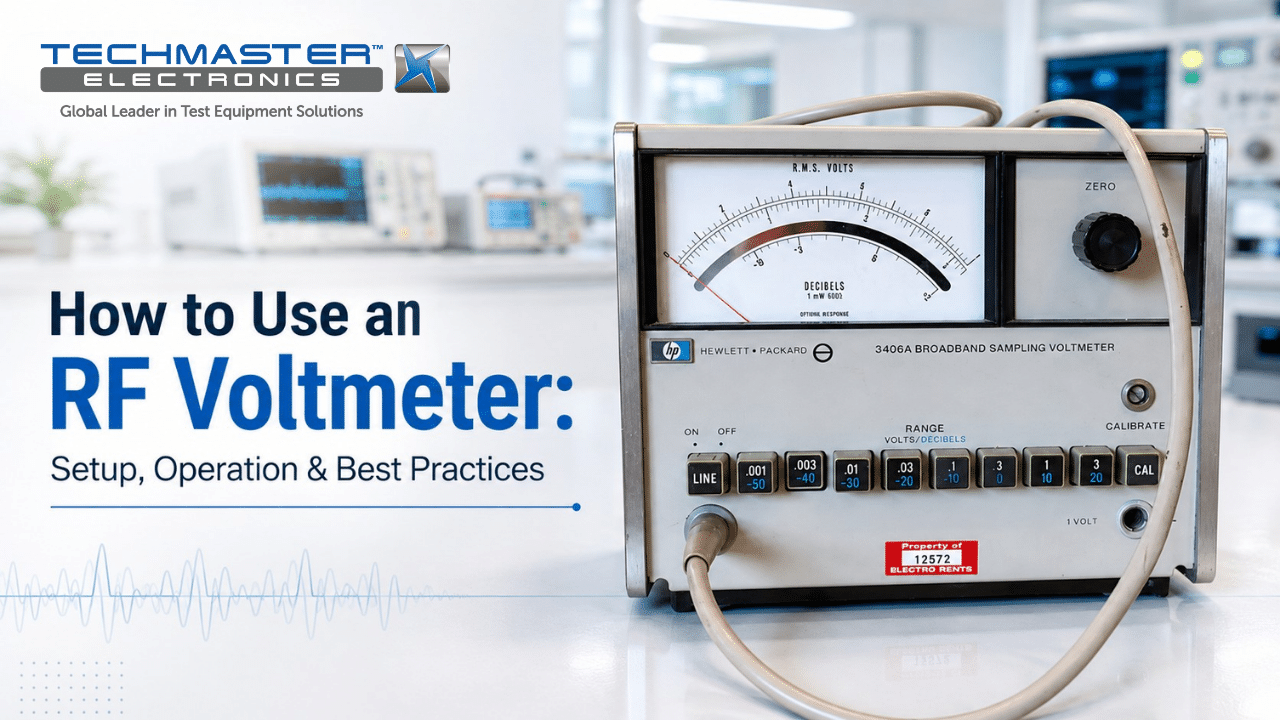
For RF field engineers, telecommunications technicians, and QA teams, knowing how to use an RF voltmeter correctly is important for accurate high-frequency measurements. However, thermal drift, poor probe grounding, and an uncalibrated detector can cause measurement errors. As a result, engineers may see incorrect signal levels, wrong power readings, and failed compliance tests.
1. Technical Principles: How Does an RF Voltmeter Measure High-Frequency Signals?
How does a broadband RF voltmeter measure high-frequency AC signals?
An RF voltmeter measures high-frequency AC voltage by using a special diode detector. First, the detector converts the RF signal into a DC signal. Next, the instrument processes this signal and displays the measured RMS voltage.
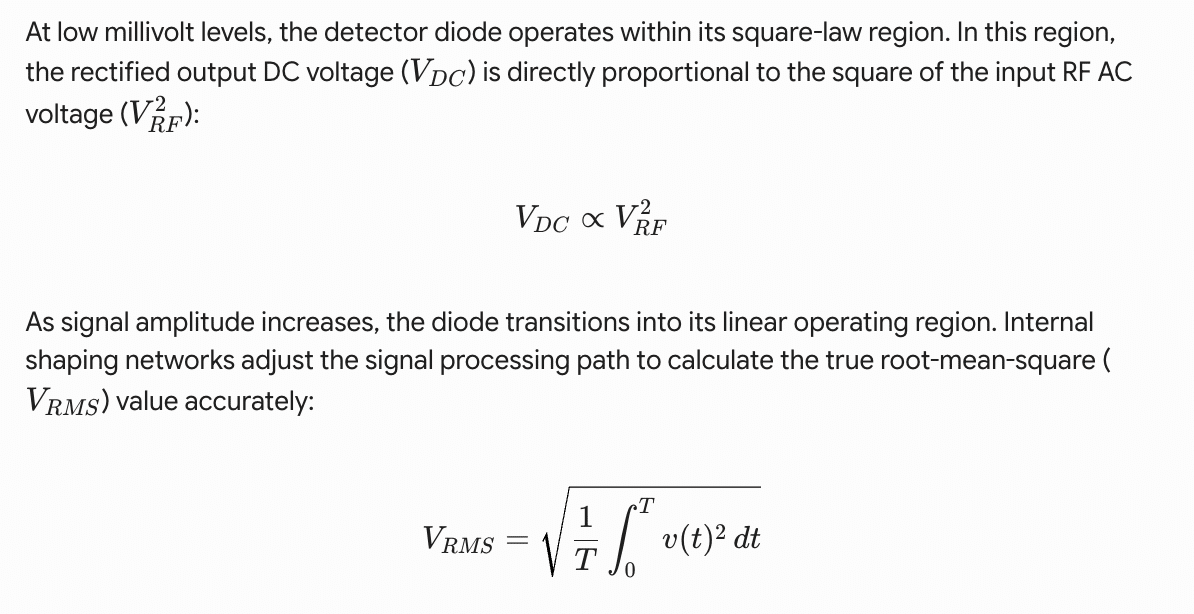
Therefore, the detector and signal circuits must remain stable across the full frequency and voltage range. Even small changes can affect the final reading.
2. Why do RF voltmeters experience thermal and electronic drift?
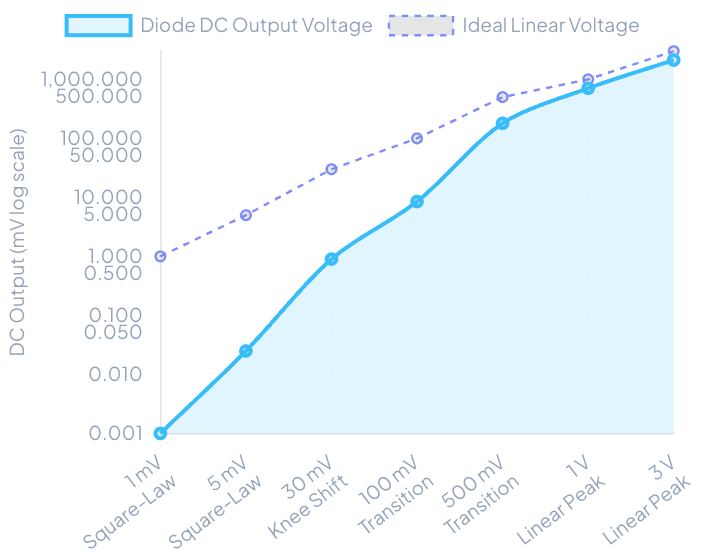
Diode Sensor Operating Regions
Ground Lead Inductance Error Peaking
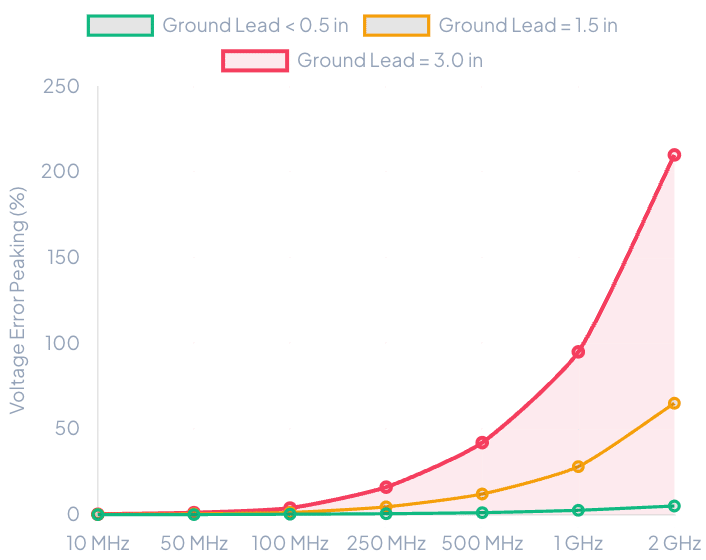
Over time, several factors can reduce RF measurement accuracy. For example, temperature changes, repeated use, and aging components can affect the detector and amplifier circuits.
The main causes include:
- Thermal Zero Drift: Changes in ambient temperature can change the diode response. As a result, the meter may show a small offset when measuring low-level signals.
- Probe Inductance: Long ground leads can add unwanted inductance. Therefore, they can change the probe response and create false voltage peaks at high frequencies.
- Diode Aging: Detector diodes can change as they age. Consequently, the frequency response may shift and cause errors across a wide RF range.
3. How to Set Up and Operate an RF Voltmeter
Proper setup is important before measuring an active RF circuit. First, allow the instrument to reach a stable temperature. Then, check the probe, zero the meter, and use the correct load.
Follow these steps for reliable RF voltage measurements.
- Allow the instrument to warm up: First, turn on the RF voltmeter and allow it to warm up for about 15 to 30 minutes. This allows the internal amplifiers and detector circuits to reach a stable operating temperature.
- Inspect the probe and connectors: Next, inspect the detector probe tip and RF connectors. In addition, check for dirt, wear, or damaged contact points. If needed, clean the connector surfaces with a suitable lint-free swab and isopropyl alcohol.
- Perform zero adjustment: After that, place the probe in its zero-reference or shielded terminal. Then, adjust the zero control until the meter shows zero on the selected range. This step is important because it removes the basic DC offset before you measure the RF signal.
- Connect the correct load: Next, connect a precision 50 Ω or 75 Ω feedthrough termination, depending on the system. This helps maintain the correct impedance match and reduces unwanted reflections.
- Measure the RF signal: Finally, place the probe at the test point and keep the ground connection as short as possible. For high-frequency work, a ground lead shorter than 0.5 inches (12.7 mm) can help reduce unwanted inductive effects.
As a result, the probe will have less impact on the circuit, and the voltage reading will be more reliable.
4. Industrial Applications: Where RF Voltage Accuracy Matters
Accurate RF voltage measurements are important in many industries. In particular, they help engineers check signal levels, power stages, and RF systems before equipment enters service.
- Semiconductor Manufacturing: RF voltmeters help monitor plasma power systems, bias generators, and matching networks used in semiconductor processing.
- Aerospace and Defense: Engineers use RF voltage measurements to test radar systems, communication equipment, and electronic warfare systems. In addition, accurate measurements help confirm that RF circuits meet required performance limits.
- Wireless Telecommunications and Broadcasting: RF voltmeters help check power amplifier stages, base station equipment, combiners, and transmitter systems. Therefore, engineers can find signal problems before they affect network or broadcast performance.
- EMC Testing: EMC laboratories use RF measurement equipment to check signal sources, injection systems, and test probes. As a result, accurate voltage readings support repeatable EMC tests and better test results.
Frequently Asked Questions (FAQs)
1. How do you use an RF voltmeter accurately in high-frequency circuits?
To use an RF voltmeter accurately, first allow the instrument to warm up. Next, perform the zero adjustment and use the correct probe and load. In addition, keep the probe ground lead short to reduce unwanted high-frequency effects.
For systems that use 50 Ω or 75 Ω impedance, use a matching termination when required. This helps reduce reflections that could change the measured voltage.
2. Why is an external load terminator required when measuring RF voltage?
An external load terminator provides the correct characteristic impedance for the RF circuit. For example, many RF systems use 50 Ω, while some systems use 75 Ω.
Without proper termination, part of the RF signal can reflect back toward the source. As a result, standing waves may form and cause the measured voltage to change.
3. What causes measurement errors when using RF voltmeter probes above 100 MHz?
At frequencies above 100 MHz, long probe ground leads can cause measurement errors. This happens because the lead adds unwanted inductance to the measurement path.
The probe inductance can interact with its capacitance and create a resonant effect. Consequently, the meter may show a voltage peak that is higher than the actual signal.
4. What is the difference between field zeroing and laboratory calibration?
Field zeroing is a simple user adjustment that removes DC offset before testing. However, it does not fully check the instrument’s measurement accuracy.
Laboratory calibration is much more complete. For example, it can check diode detector response, frequency flatness, attenuator accuracy, linearity, and measurement uncertainty against traceable standards.
5. How often should an RF voltmeter undergo accredited calibration?
Under normal operating conditions, an RF voltmeter is often calibrated every 12 months. However, equipment used in high-use production lines, harsh outdoor environments, or critical aerospace work may need calibration every 6 months. So, the best calibration interval should also consider the manufacturer’s guidance, operating conditions, usage level, and previous calibration results.
6. Why is RF voltmeter calibration important?
Regular calibration helps confirm that the RF voltmeter provides accurate and traceable measurements. Over time, detector response, amplifiers, attenuators, and other components can drift. Accredited calibration can help identify measurement errors before they affect production, maintenance, or compliance testing.
Mastering the RF Voltmeter: Physics, Errors & Operations
CONTACT USReferences & industry standards
- ISO/IEC 17025 testing & calibration laboratory requirements
- NIST calibration services and measurement traceability
- NIST RF electromagnetics metrology
- A2LA / ANAB accreditation for calibration laboratories
External standards bodies. Techmaster Electronics is an ISO/IEC 17025-accredited, NIST-traceable calibration laboratory.
Frequently asked questions
What is rf voltmeter calibration?
RF Voltmeter Calibration is the documented comparison of a RF voltmeter against NIST-traceable reference standards under ISO/IEC 17025. It quantifies the RF voltmeter’s error and measurement uncertainty and confirms it performs within tolerance, with as-found and as-left data on the certificate.
How often should a RF voltmeter be calibrated?
Most quality systems calibrate a RF voltmeter every 12 months, or sooner after repair, overload, or before critical measurements. Set your interval from the manufacturer spec and your ISO 9001 / 13485 / AS9100 program and drift history.
Is Techmaster’s RF voltmeter calibration ISO 17025 accredited?
Yes. Techmaster Electronics is ISO/IEC 17025:2017 accredited by ANAB (Certificate AC-1736). Every RF voltmeter calibration is NIST-traceable and issued with a full measurement-uncertainty budget.
What is the turnaround for RF voltmeter calibration?
Standard turnaround is 5 business days, with 1–2 business-day expedite available. On-site calibration removes shipping time entirely for RF voltmeters that can’t leave the floor.
Do you calibrate RF voltmeters on-site or in-lab?
Both. Techmaster runs five US labs (Vista CA, Santa Clara CA, Orlando FL, San Antonio TX, Holly Springs NC) and offers nationwide on-site RF voltmeter calibration to minimize downtime.

Khanh Nguyen is the Marketing Manager at Techmaster Electronics, a B2B marketing leader covering the test, measurement, and ISO/IEC 17025 accredited calibration industry across the US and Vietnam markets.