
Top 10 Best Handheld Particle Counter Brands 2026 in the US
Note on particle counters: This page is for general information only. Techmaster does not calibrate particle counters of any make or model, and particle counters are not on our ANAB ISO/IEC 17025 scope (certificate AC-1736). Techmaster only performs calibration services that are covered by our scope. For particle counter calibration, please contact your instrument’s manufacturer or its authorized service provider, and follow any service requirements they specify. If you prefer, send us your request and, with your permission, we will forward it to the manufacturer. See what is on our accredited scope.
Maintaining environmental control in critical facilities requires highly reliable data. Consequently, that data starts with your measurement instrumentation. Whether you are validating a pharmaceutical cleanroom to GMP standards or verifying HVAC filtration in a semiconductor plant, choosing the right equipment is a critical decision. Therefore, identifying the best handheld particle counter brands ensures that your environmental monitoring program remains accurate, compliant, and completely defensible during audits.
Furthermore, this guide covers the top manufacturers in the market, explains why their accuracy matters, and details how rigorous calibration ensures these devices perform perfectly when it counts the most.
1. What Is a Handheld Particle Counter?
A handheld particle counter is a compact, battery-operated diagnostic instrument used to detect and count airborne particulate matter. Specifically, unlike larger, continuous monitoring systems, these portable units are designed for spot-checking, facility walk-throughs, and localized contamination troubleshooting.
Moreover, most modern portable airborne particle counter units utilize laser light-scattering technology. During operation, a built-in pump draws air through a sample chamber at a specific flow rate—typically 0.1 CFM (2.83 L/min). Subsequently, as particles pass through the laser beam, they scatter light. A photodetector then measures this scattered light, effectively converting it into electrical pulses that determine both the size and quantity of the particles.
2. Top 10 Handheld Particle Counter Brands in the US
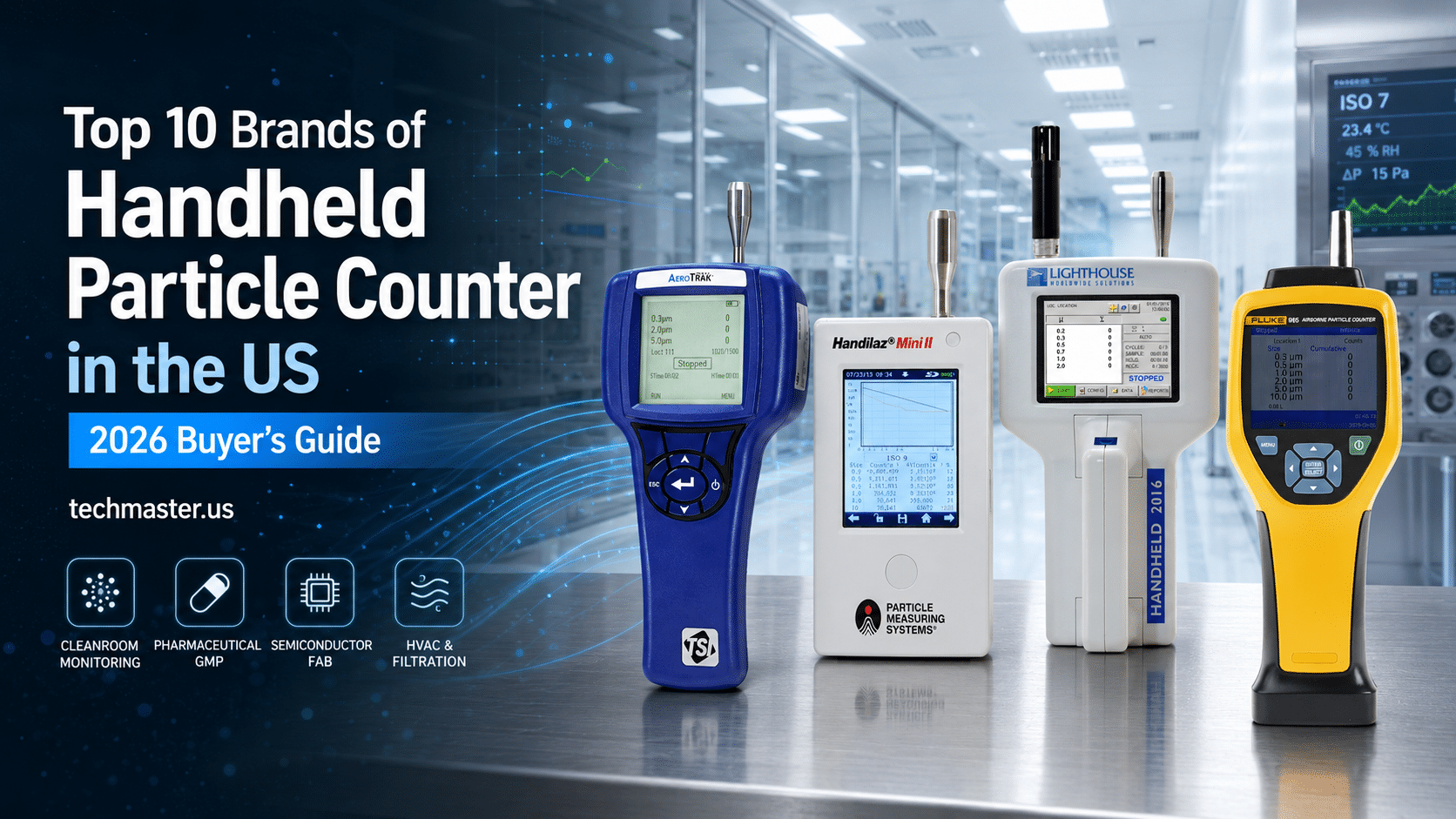
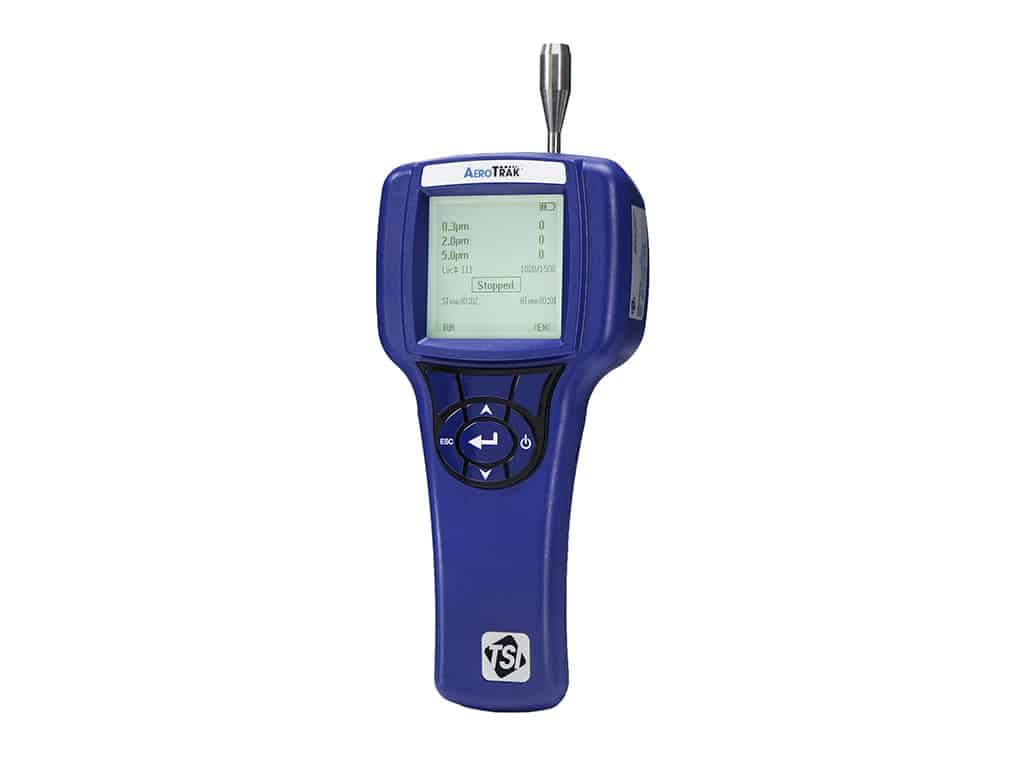
When facility managers and quality engineers evaluate new equipment, they actively look for durability, data integrity, and regulatory compliance. Therefore, here are the top 10 brands dominating the US market in 2026:2.1 TSI (AeroTrak)
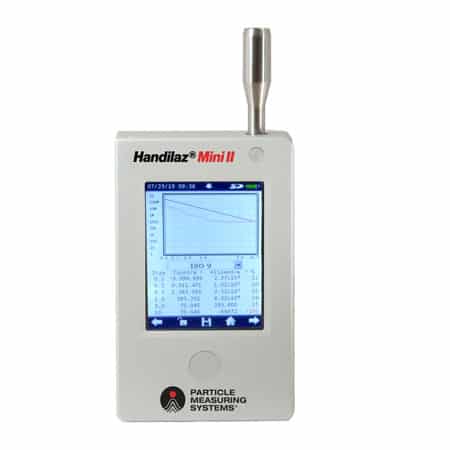
2.2 Particle Measuring Systems (PMS)
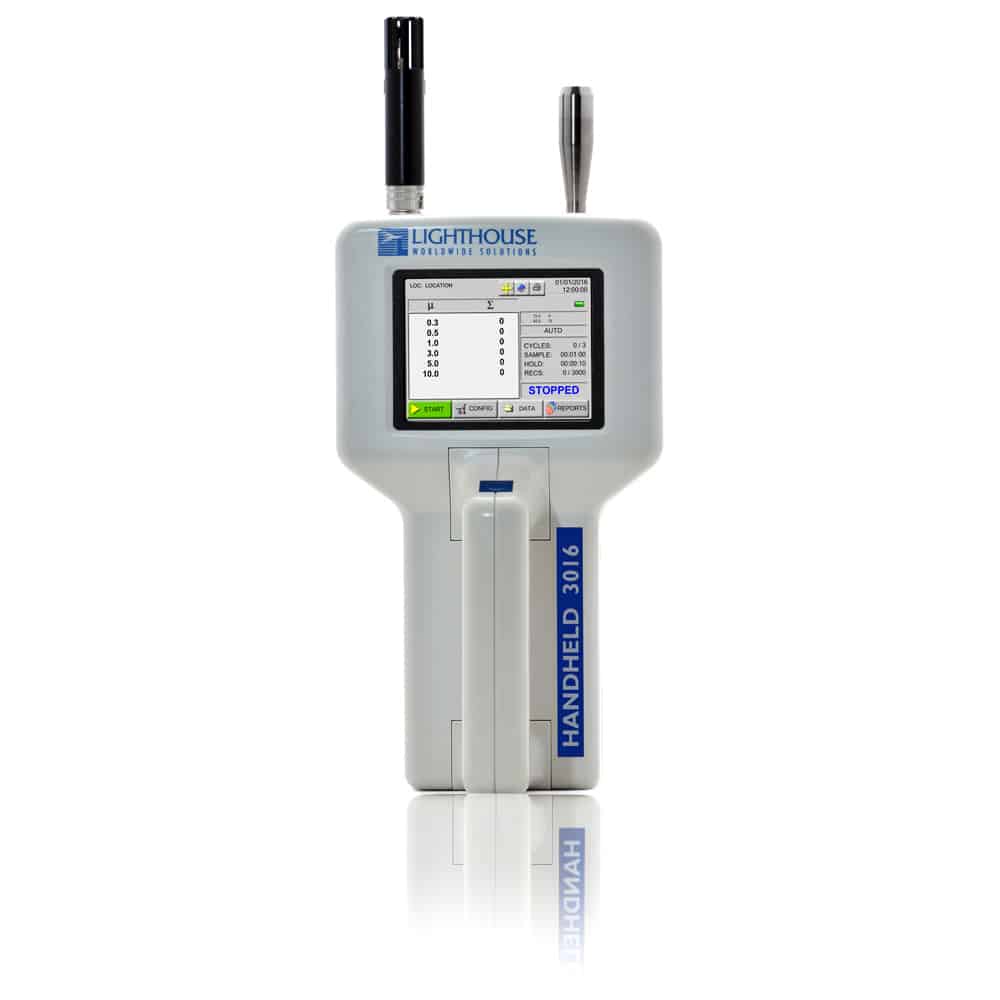
2.3 Lighthouse Worldwide Solutions
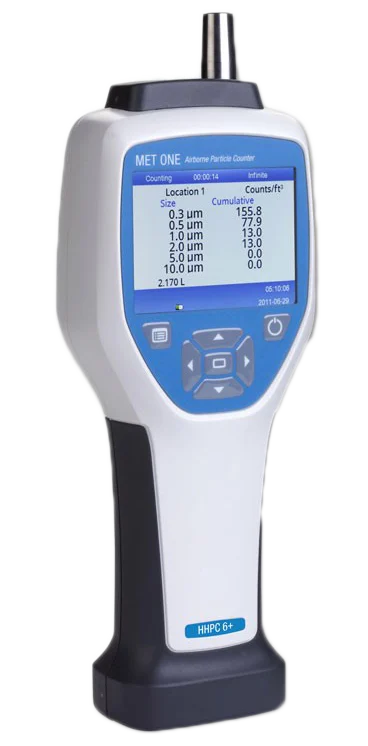
2.4 Beckman Coulter (MET ONE)
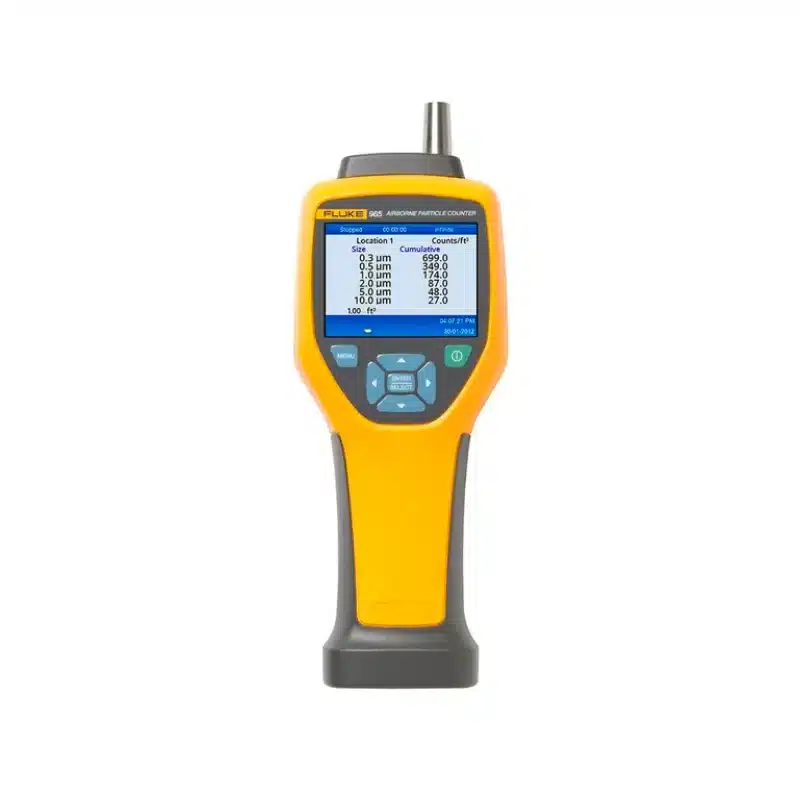
2.5 Fluke Corporation
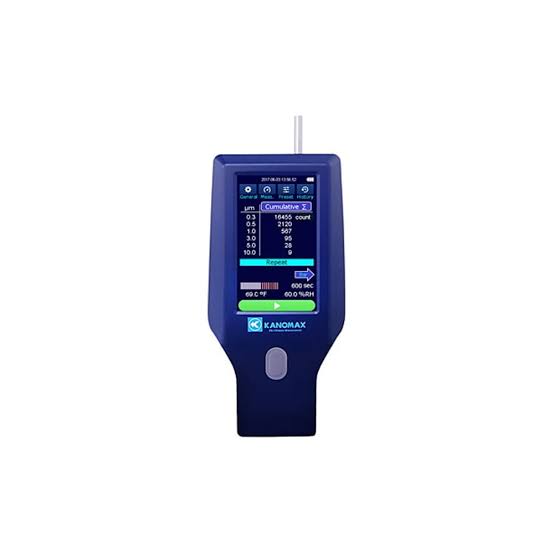
2.6 Kanomax
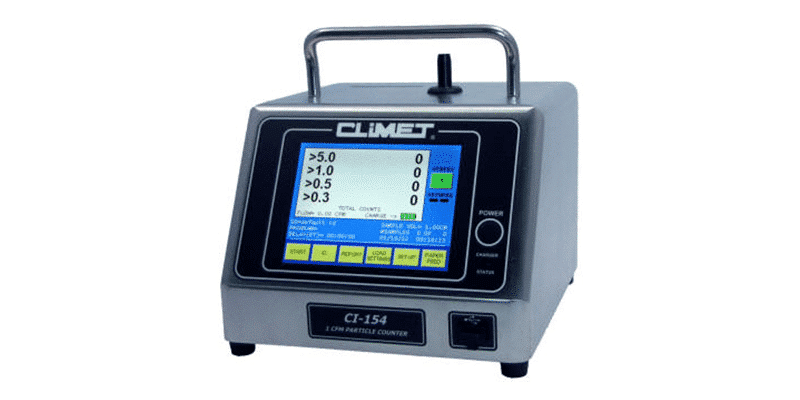
2.7 Climet Instruments
2.8 Setra Systems
Setra provides highly reliable environmental measurement tools. Their particle counters easily integrate into wider facility management systems, making them an excellent choice for modern, data-driven smart buildings.2.9 Airy Technology
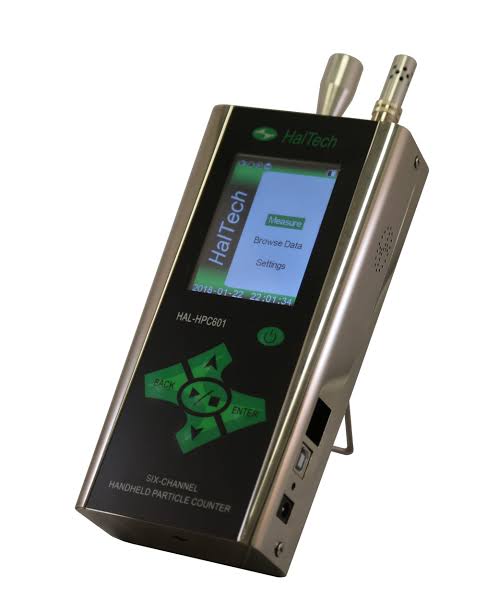
Airy Technology delivers budget-friendly yet highly accurate particle counting solutions. They are a popular choice for light industrial applications, localized IAQ troubleshooting, and contractors needing reliable daily-use tools.2.10 Hal Technology (HalTech)
3. Why the Best Handheld Particle Counter Brands Matter
When dealing with controlled environments, the margin for error is non-existent. Relying on premium brands guarantees several operational advantages:- Measurement Accuracy: Top-tier brands utilize high-quality laser diodes and photodetectors that reduce signal noise and prevent false counts.
- Traceability and Compliance: Leading manufacturers design their instruments to comply with strict international standards, ensuring your data holds up under regulatory scrutiny.
- Risk Reduction: Inaccurate readings can lead to undetected contamination, resulting in product recalls, failed batches, or patient safety risks. Quality brands minimize these threats.
- Operational Reliability: Cheaper sensors often suffer from rapid laser degradation or pump failures. Establishing your program around reputable brands ensures maximum uptime.
4. Common Applications
Handheld particle counters are deployed across any industry where airborne contamination directly impacts product viability, safety, or yield.- Cleanroom Certification: Verifying ISO 14644-1 classifications in pharmaceutical, semiconductor, and biotechnology facilities.
- Healthcare and Compounding Pharmacies: Ensuring sterile environments in operating rooms and verifying compliance with USP 797/800 regulations.
- Aerospace Manufacturing: Monitoring satellite and optical assembly areas to prevent particulate interference.
- Filter Testing: Conducting HEPA/ULPA filter integrity and leak testing in HVAC systems and biological safety cabinets.
- Industrial Hygiene: Evaluating indoor air quality and worker safety in general manufacturing facilities.
5. Calibration Standards and Traceability
Even the most advanced instrument is useless if its measurements are not accurate. Calibration provides the mathematical proof that your device performs as expected. For particle counters, calibration must align with ISO 21501-4. An ISO 21501-4 compliant particle counter requires rigorous testing against primary standards. This includes verifying size resolution, counting efficiency, zero count rate, and flow rate. Furthermore, laboratories performing this work must hold ISO/IEC 17025 accreditation. This accreditation guarantees that the lab uses validated procedures, calculates measurement uncertainty for every data point, and maintains an unbroken chain of traceability back to the National Institute of Standards and Technology (NIST). Without an ISO 17025 accredited calibration certificate, your particle count data may be rejected during an FDA, FAA, or ISO audit.6. Common Issues Found During Calibration
During routine calibration, metrology engineers frequently identify hidden issues that could compromise facility data. Some of the most common problems include:- Laser Degradation: Over time, the intensity of the internal laser diode fades, leading to sizing errors and under-reporting of smaller particles (e.g., 0.3 µm and 0.5 µm).
- Contaminated Optics: Drawing sample air inevitably introduces microscopic debris. If particles stick to the mirrors or lenses inside the sensor block, it causes scattered light distortion.
- Flow Rate Drift: The internal vacuum pump can wear down or suffer from minor blockages. If the flow rate deviates from the standard 0.1 CFM, the sample volume is incorrect, rendering the raw particle count mathematically invalid.
- Out-of-Tolerance Zero Count: A unit must report zero particles when sampling completely filtered air. Sensor noise or internal chamber contamination can cause false positive counts, triggering unnecessary facility alarms.
7. How Often Should This Equipment Be Calibrated?
8. Why Choose Techmaster Electronics?

9. FAQ Section
10. Conclusion
Accurate airborne particle measurement is the foundation of cleanroom compliance and product safety. By investing in the best handheld particle counter brands and backing them with accredited, ISO 21501-4 compliant calibration, you protect your facility from hidden contamination risks and regulatory failures. Do not let uncalibrated sensors compromise your quality control.References & industry standards
- ISO/IEC 17025 testing & calibration laboratory requirements
- NIST calibration services and measurement traceability
- NIST Time and Frequency Division
- A2LA / ANAB accreditation for calibration laboratories
External standards bodies. Techmaster Electronics is an ISO/IEC 17025-accredited, NIST-traceable calibration laboratory.
Frequently asked questions
What is handheld particle counter calibration?
Handheld Particle Counter Calibration is the documented comparison of a handheld particle counter against NIST-traceable reference standards. It quantifies the handheld particle counter’s error and measurement uncertainty and confirms it performs within tolerance, with as-found and as-left data on the certificate.
How often should a handheld particle counter be calibrated?
Most quality systems calibrate a handheld particle counter every 12 months, or sooner after repair, overload, or before critical measurements. Set your interval from the manufacturer spec and your ISO 9001 / 13485 / AS9100 program and drift history.
Does Techmaster calibrate handheld particle counters?
No. Techmaster Electronics is ISO/IEC 17025:2017 accredited by ANAB (Certificate AC-1736), but particle counters are not on that scope, and Techmaster does not calibrate particle counters of any make or model. For calibration, contact your instrument’s manufacturer or its authorized service provider.
How long does handheld particle counter calibration take?
Turnaround is set by the manufacturer or authorized provider that performs the calibration, so ask them before you ship. Techmaster does not calibrate particle counters.
Where should I send a handheld particle counter for calibration?
To the instrument’s manufacturer or one of its authorized service providers, following any service requirements they specify. Techmaster does not calibrate particle counters; if you send us your request, with your permission we will forward it to the manufacturer.

Khanh Nguyen is the Marketing Manager at Techmaster Electronics, a B2B marketing leader covering the test, measurement, and ISO/IEC 17025 accredited calibration industry across the US and Vietnam markets.