
Metrology guide · ISO/IEC 17025 · ANAB-accredited
Temperature And Humidity Transmitter Calibration…
Temperature And Humidity Transmitter Calibration verifies a Temperature And Humidity Transmitter against NIST-traceable standards under ISO/IEC 17025. Techmaster performs a documented multi-point check, reports measurement uncertainty, and issues an ANAB-accredited certificate, in-lab or on-site across the USA.
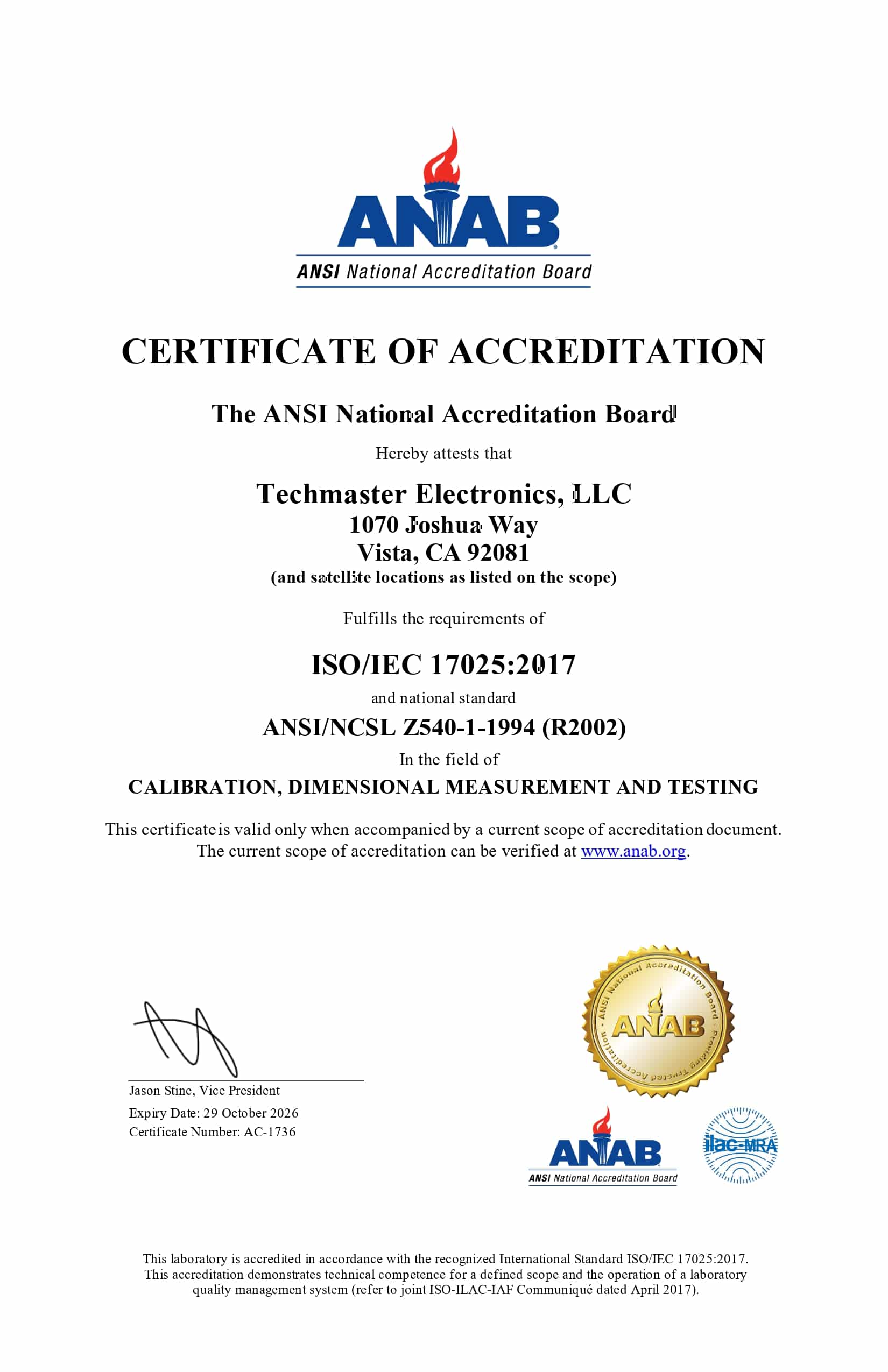
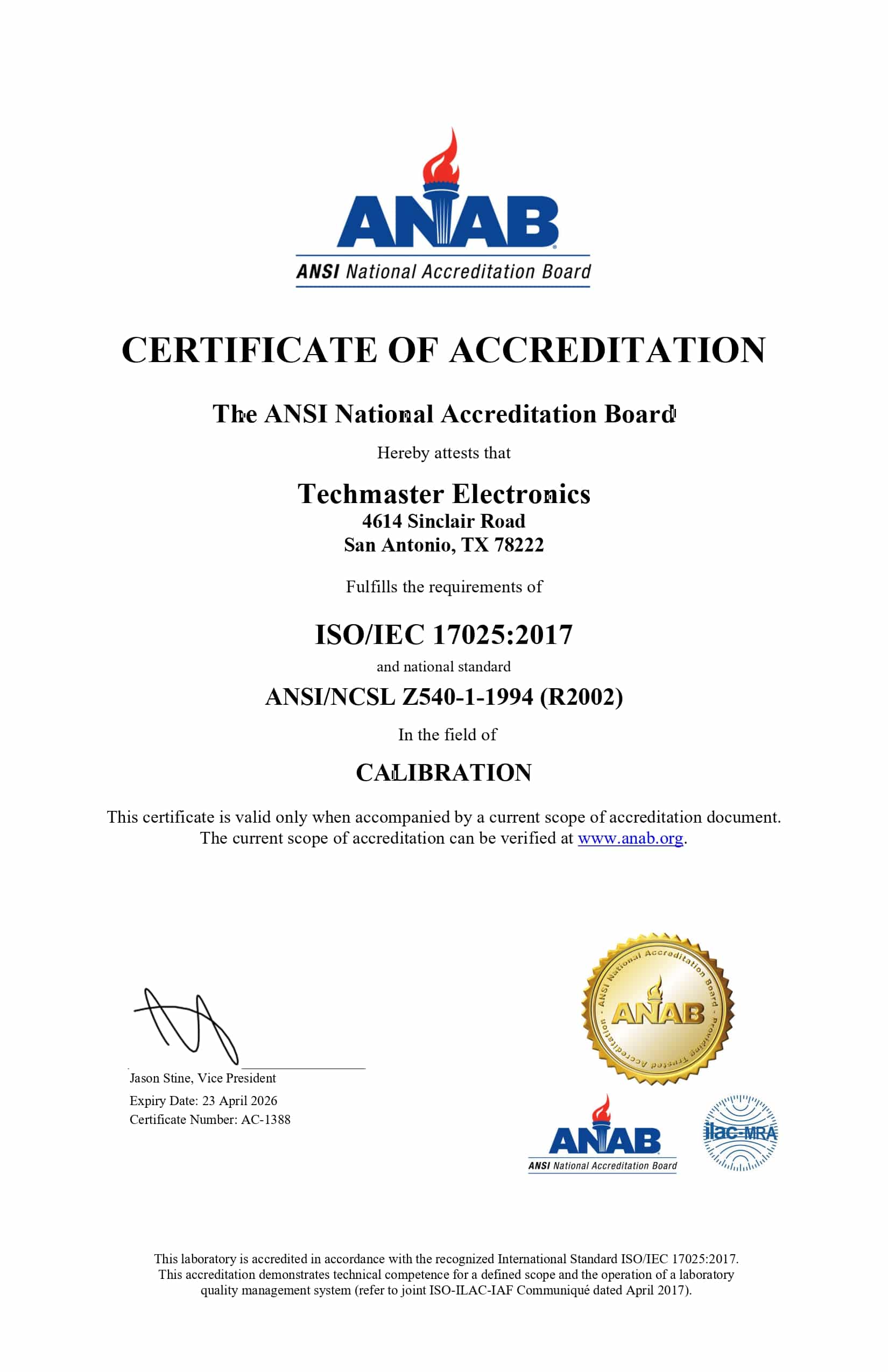
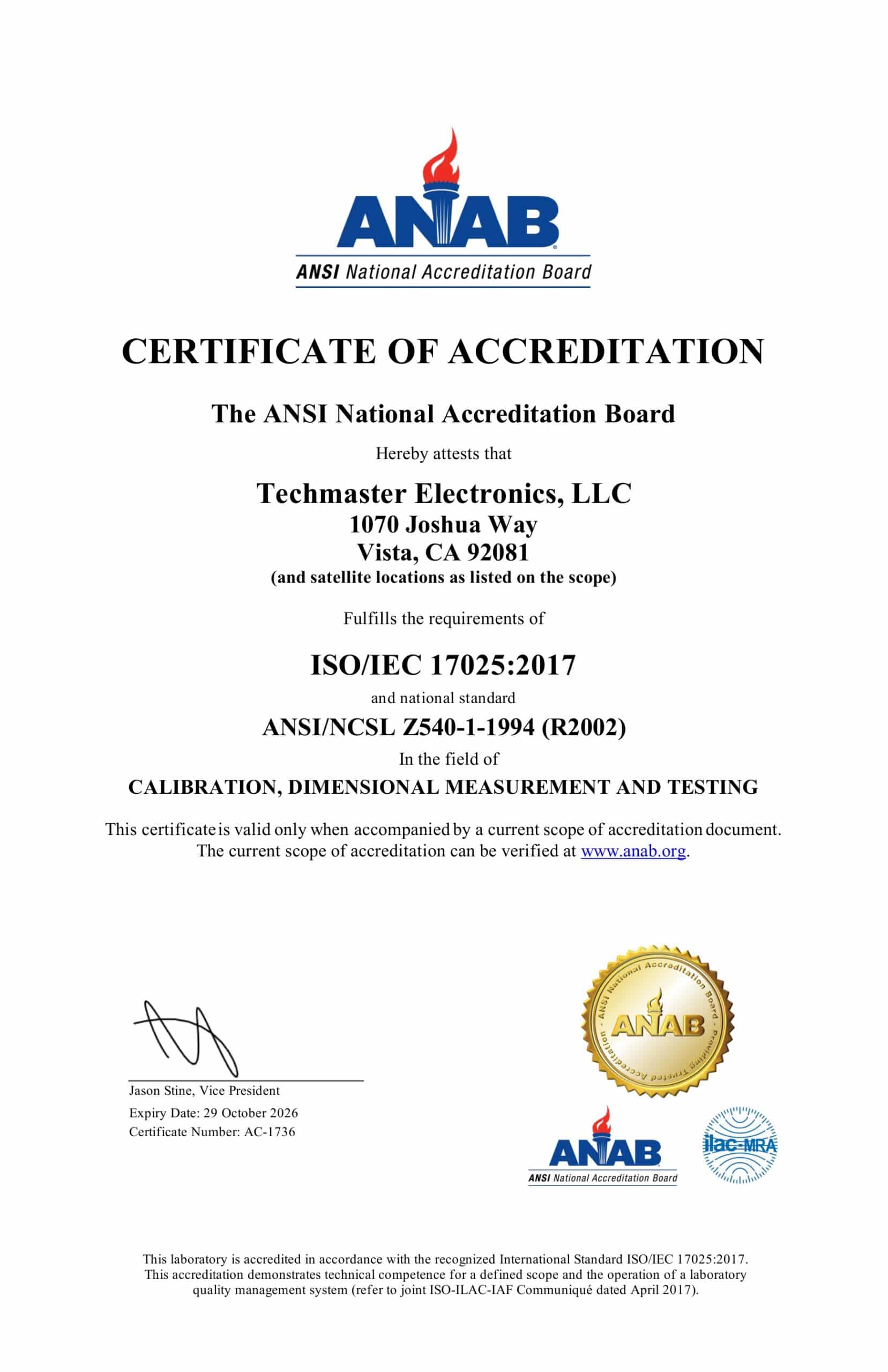
ANAB accredited ISO/IEC 17025 NIST traceable
ISO 17025Accredited method
NISTTraceability
12 moTypical interval
ANABAccreditation
In this guide
Why calibration intervals matter
Uncorrected drift creeps toward the tolerance limit over time; scheduled calibration resets it before measurements fall out of spec.
How Temperature And Humidity Transmitter calibration works
- Intake & visual inspection
- Environmental stabilization
- As-found measurement
- Comparison to NIST-traceable standards
- Adjustment if required
- As-left results & certificate
Your calibration, covered
In-lab calibrationAccredited bench service with pickup
On-site calibrationWe calibrate at your facility
Expedited turnaroundRush options to cut downtime
Accredited certificateANAB ISO 17025 with uncertainty
In-lab vs on-site calibration
In-lab calibration
- Accredited bench with full reference standards
- Best achievable measurement uncertainties
- Pickup & return logistics handled
- Ideal for precision and reference work
On-site calibration
- We calibrate the Temperature And Humidity Transmitter at your facility
- No shipping risk or transit downtime
- As-found data captured before any move
- Ideal for fixed, large or sensitive assets
In-depth guide
Process engineers face severe risks from uncalibrated instrumentation, including regulatory compliance failures and silent measurement drift that ruins product batches. When a dual-parameter sensor begins to drift in a sterile pharmaceutical environment or cleanroom, the subtle shift in moisture levels can go unnoticed for weeks, resulting in scrapped production runs, failed quality audits, and compromised product integrity. Performing regular temperature and humidity transmitter calibration using ISO 17025 accredited humidity calibration and specialized on-site transmitter calibration services provides the definitive solution to guarantee continuous process accuracy and maintain strict regulatory compliance.
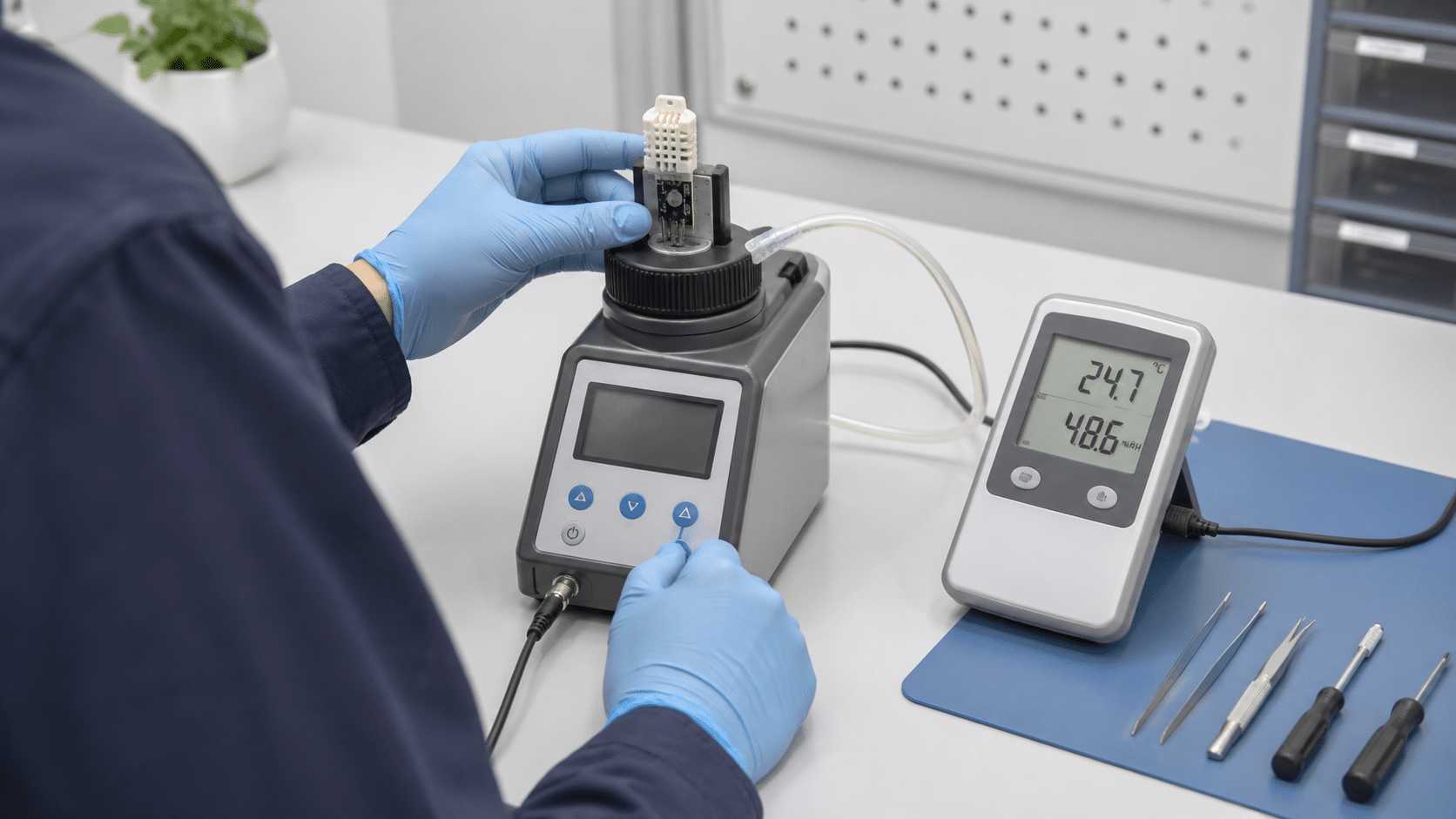
1. DEVICE OVERVIEW & INDUSTRIAL ROLE
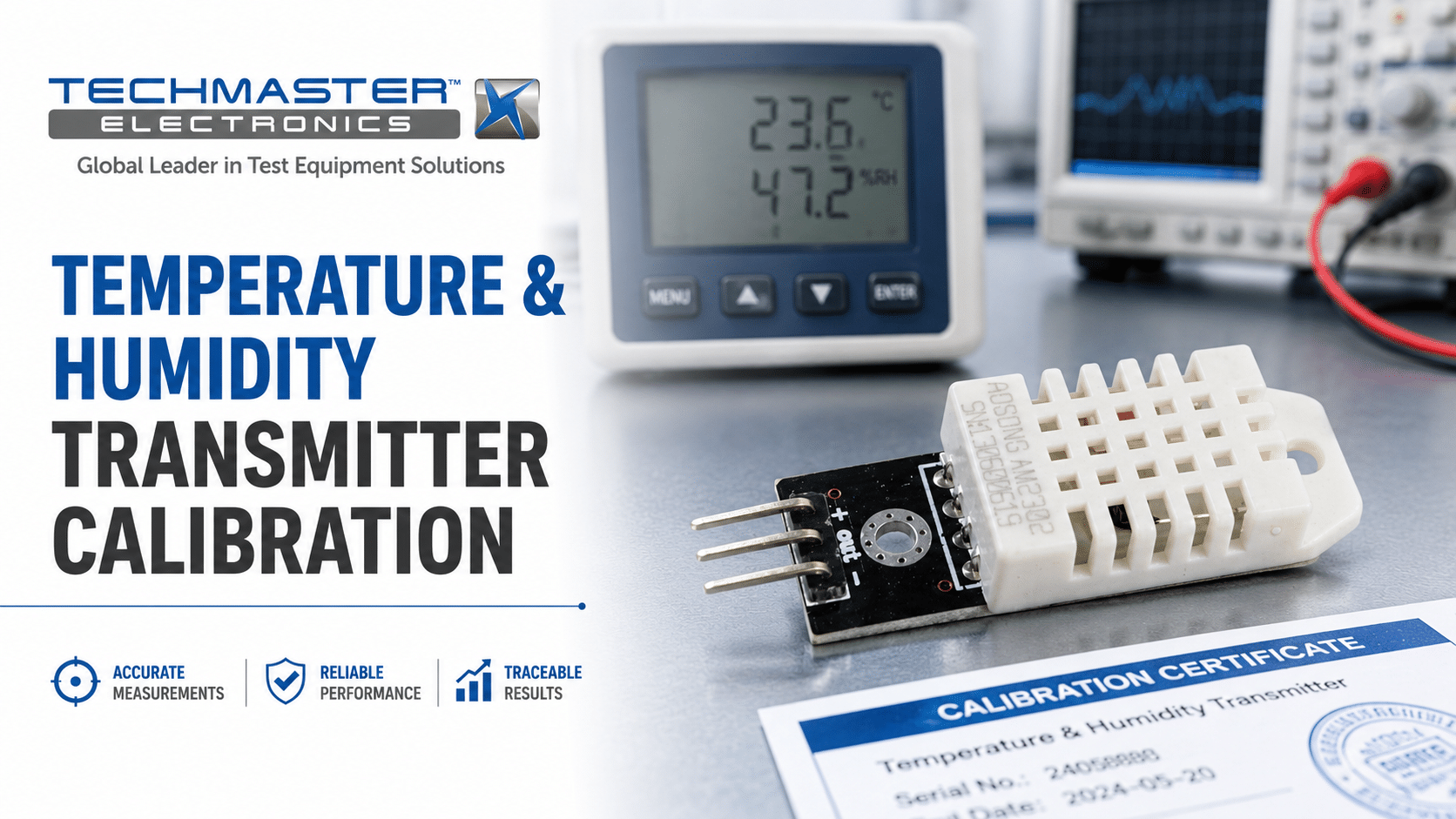
Dual-parameter transmitters are foundational instruments in modern industrial automation and environmental monitoring. These specialized devices combine temperature sensors with advanced capacitive relative humidity sensors in a single probe. They convert delicate physical changes in the surrounding air into standard analog or digital signals. Consequently, programmable logic controllers and facility monitoring software can easily read these outputs. In sterile manufacturing plants, food processing warehouses, and semiconductor cleanrooms, precise environmental tracking is critical. Even minor microclimate variations can alter chemical reactions, compromise biological cultures, or cause electronic defects. Therefore, maintaining these dual transmitters in a calibrated state is not optional. It is a fundamental operational necessity to preserve your process safety margins. To establish a solid metrological foundation, we must define the core principles governing these devices. Below are the standard technical definitions used by quality auditors.Relative Humidity (RH): The ratio of the actual water vapor pressure in a gas mixture to the saturation water vapor pressure at a given temperature, expressed as a percentage. It represents how close the air is to complete moisture saturation.
Metrological Traceability: The property of a measurement result whereby the result can be related to a reference standard, usually national or international, through a documented, unbroken chain of calibrations, each contributing to the measurement uncertainty.In many facility databases, this process is logged as temp hum trans calibration to simplify maintenance scheduling and record-keeping. Using standardized terms ensures your physical assets remain organized. In addition, it helps tracking software categorize maintenance activities properly.
2. TECHNICAL BODY & “HOW-TO” GUIDE
Why Temperature and Relative Humidity Transmitters Drift
Temperature and relative humidity transmitters drift because their sensitive capacitive polymer sensors constantly absorb moisture and chemical contaminants from the surrounding air. This exposure gradually degrades the dielectric properties of the sensor material, leading to inaccurate readings and compliance risks over time. Regular physical verification is the only way to detect and correct this ongoing drift.The Vulnerability of Capacitive RH Sensors
Capacitive relative humidity sensors are highly vulnerable to drift because their thin polymer membranes easily absorb microscopic water molecules. When industrial contaminants like isopropyl alcohol, harsh cleaning detergents, or vaporized hydrogen peroxide coat these membranes, the sensor permanently loses its calibration accuracy. These chemical molecules block water absorption sites and cause persistent measurement errors. In addition, physical debris like dust, oil mist, and airborne fibers can accumulate on the sensor guard. This accumulation traps moisture against the sensor and creates localized microclimates. Consequently, the transmitter displays stagnant, elevated humidity readings that do not reflect the actual room conditions.Temperature Dependence and Hysteresis
Relative humidity calculations depend directly on ambient temperature, meaning even minor temperature errors cause major humidity measurement deviations. Additionally, sensor hysteresis causes the polymer membrane to retain moisture history, creating lagging readings when humidity fluctuates rapidly between high and low levels. This lagging effect is especially pronounced in environments that undergo frequent cleaning cycles. For instance, a minor temperature measurement error of one degree Celsius can cause a substantial shift in the calculated relative humidity. Sensor components also experience physical aging and mechanical stress over time. These combined factors lead to a natural drift rate of one to two percent relative humidity per year.On-Site Loop Calibration vs. Accredited Lab Calibration
Choosing between on-site loop calibration and accredited laboratory calibration depends on your process tolerance requirements and operational downtime limits. On-site calibration verifies the entire measurement loop in real-world conditions, while laboratory calibration provides unmatched measurement precision within highly controlled environments. Quality managers must balance these factors when designing their calibration program. Deciding on the correct path for temperature and humidity transmitter calibration involves analyzing your specific manufacturing downtime limits and quality requirements. Many facilities manage internal procedures, while others choose external on-site transmitter calibration services to avoid the hassle of dismantling sensitive equipment. Understanding these options ensures you select the most efficient compliance pathway.In-Situ Field Calibration (When it Makes Sense)
In-situ field calibration is ideal when you cannot afford equipment downtime or need to verify the entire system loop under actual operating conditions. This approach utilizes portable reference generators to test the transmitter, cable, controller, and display together without removing any hardware. It ensures that the entire signal path performs correctly from the probe to the control room screen. When scheduling on-site transmitter calibration services, technicians bring portable reference standards directly to your production line. This strategy validates the entire instrumentation chain under actual operating conditions. However, ambient air currents and temperature fluctuations can introduce slightly higher measurement uncertainty.Metrology Laboratory Calibration (For High-Precision Requirements)
Metrology laboratory calibration is necessary for high-precision master instruments that require the lowest possible measurement uncertainty. Specialized laboratories utilize state-of-the-art chilled mirror hygrometers and environmental chambers to perform highly accurate calibrations under perfectly controlled and stable environmental conditions. This rigorous method removes external environmental variables from the testing process. For high-precision reference instruments, sending equipment to a dedicated metrology lab remains the industry gold standard. This specialized environment isolates the instruments from external disturbances, allowing technicians to perform highly stable tests. This makes a professional ISO 17025 accredited humidity calibration essential for instruments that validate other field sensors.Step-by-Step Methodology for Accurate Temperature and Humidity Transmitter Calibration
Accurate temperature and humidity transmitter calibration requires a systematic process of isolation, physical inspection, environmental stabilization, multi-point comparison, and precise adjustments. Following these structured steps ensures that your environmental sensors meet international metrology standards and pass strict quality audits. Skipping any phase can introduce significant measurement errors.Pre-requisites and Tools Needed
Before beginning, ensure you have a portable humidity generator or salt solution chambers, a calibrated reference hygrometer, and clean hand tools. Technicians must also wear clean powder-free gloves to prevent transferring oils to the sensor element. The calibration area must remain at a stable ambient temperature during the test.
The Step-by-Step Process
- Isolate and Prepare the Instrument Disconnect the transmitter output from the control loop to prevent generating false alarms or stopping active facility systems. If you use automated tracking software, log this task using the term temp hum trans calibration to maintain proper work order records. Ensure your reference hygrometer has a valid certificate of calibration.
- Inspect the Sensor and Filter Guard Examine the metal or plastic sintered filter guard for signs of physical blockage, dust accumulation, or corrosion. Carefully unscrew the guard and inspect the underlying sensor element using a magnifying lens. Replace damaged, dirty, or discolored filter guards before proceeding with the physical test.
- Establish Thermal and Environmental Equilibrium Insert the transmitter probe and the reference standard probe into the calibration chamber. Allow the entire assembly to rest undisturbed for at least thirty minutes. This waiting period ensures that both sensors reach complete thermal equilibrium with the chamber air.
- Perform the Multi-point Comparison Run Expose the transmitter to low, medium, and high humidity levels. Technicians performing temp hum trans calibration often use stabilized values at twenty percent, fifty percent, and eighty percent relative humidity. Allow the readings to completely stabilize at each point before recording the final values.
- Document As-Found and As-Left Values Record the initial unadjusted readings of the transmitter as the As-Found data. If the readings deviate from the reference standard beyond acceptable limits, perform the manufacturer-approved sensor adjustment. Finally, record the new readings as the As-Left data to complete the physical calibration.
Compliance, Traceability, and ISO 17025 Audit Requirements
Meeting compliance and audit standards requires establishing clear metrological traceability to international standards through unbroken chains of comparisons. Quality audits will check if you utilized ISO 17025 accredited humidity calibration to certify your facility instruments. In addition, tracking your historical data prevents costly compliance issues.Verifying NIST Traceability
Auditors often search digital records for temp hum trans calibration history to verify consistent process control over time. Every calibration record must clearly link the transmitter to a recognized national metrology institute. Without this clear traceability, your calibration certificates hold no legal weight during regulatory audits.Navigating Out-of-Tolerance (OOT) Events
If a transmitter fails its As-Found check, you must issue an out-of-tolerance report. Quality assurance teams must trace back all manufacturing batches processed since the last successful calibration. This crucial step determines if the sensor drift compromised product safety or batch consistency.Interpreting the Calibration Certificate
A standard certificate must display the accredited laboratory logo as proof of compliance with international metrology requirements. It should detail the specific reference standards used during the temperature and humidity transmitter calibration process. This complete documentation satisfies the requirements of stringent quality management systems.3. EXPERT ADVISORY
Maintaining dual transmitters in peak condition requires a proactive approach that goes beyond annual calibration. Sensors operating in harsh chemical or high-humidity environments require monthly cleanings and inspection. We recommend replacing sensor filter guards every six months to prevent contamination buildup. Standardizing your maintenance tracking under a single label like temp hum trans calibration helps simplify compliance audits. This consistent labeling makes it simple for external quality auditors to locate and review your historical maintenance logs. In addition, storage conditions are critical for spare transmitters. Keep unused probes in clean, dust-free containers at room temperature, ideally between twenty and twenty-five degrees Celsius. Avoid storing instruments in areas with relative humidity levels exceeding sixty percent, as prolonged moisture exposure can degrade unpowered sensor elements.4. FREQUENTLY ASKED QUESTIONS
Understanding the technical nuances of sensor drift, calibration environments, frequency schedules, and accreditation standards is essential for maintaining accurate industrial measurements. This section addresses the most common questions metrology professionals ask when managing their temperature and humidity transmitter fleets. Knowing these details helps you design a better calibration program.What causes temperature and humidity transmitters to drift over time?
Sensor drift is primarily caused by continuous chemical exposure, physical contamination, and natural aging of the polymer membrane. Volatile organic compounds and cleaning chemicals coat the active sensor surface, changing its capacitance. Physical wear from high velocity airflows also contributes to measurement drift.Can we calibrate relative humidity transmitters on-site, or must they go to a lab?
Yes, you can utilize on-site transmitter calibration services to perform verification directly inside your manufacturing facility. This method minimizes production downtime and tests the entire system loop. However, laboratory calibration remains superior for high-accuracy reference standards.What is the standard calibration interval for cleanroom RH/T transmitters?
Most facilities schedule this procedure once every six to twelve months. The frequency of temp hum trans calibration depends on environmental severity, chemical exposure, and risk tolerance. High-risk pharmaceutical environments typically require a strict six-month calibration cycle.What is the difference between NIST traceable and ISO 17025 accredited calibration for transmitters?
NIST traceable calibration ensures an unbroken chain of comparisons to national standards, but does not guarantee the lab’s operational competence. An ISO 17025 accredited humidity calibration is performed by a laboratory that has undergone independent peer evaluation to verify its technical proficiency and quality management system.How does temperature error affect relative humidity measurements?
Because relative humidity is a temperature-dependent calculation, any temperature reading error alters the calculated relative humidity. A temperature offset as small as one degree Celsius can cause a relative humidity error of several percent. Therefore, temperature sensor accuracy must be verified before adjusting the humidity sensor.5. CONCLUSION & CTA
Partner with an ISO 17025 accredited humidity calibration Service
Partnering with an accredited provider guarantees that your instruments receive the highest level of metrological care. Implementing routine, precise temperature and humidity transmitter calibration protects your operational efficiency, prevents product spoilage, and satisfies stringent international auditors. By choosing professional on-site transmitter calibration services, you gain access to expert technicians who understand cleanroom and manufacturing constraints. We specialize in high-precision, compliant environmental calibration. Our laboratory maintains low measurement uncertainties and provides comprehensive traceable documentation to secure your facility audits. Do not let sensor drift compromise your product quality or compliance status. Consult with a Metrology Specialist on Your Transmitter Calibration Schedule today.Frequently asked questions
What is Temperature And Humidity Transmitter Calibration?
Temperature And Humidity Transmitter Calibration is the documented comparison of a Temperature And Humidity Transmitter against NIST-traceable reference standards under ISO/IEC 17025, measuring its error and measurement uncertainty and confirming it performs within tolerance.
How often should a Temperature And Humidity Transmitter be calibrated?
Most quality systems calibrate a Temperature And Humidity Transmitter every 12 months, and sooner after repair, overload or heavy use. Follow the manufacturer specification and your ISO 9001/13485/AS9100 program.
What standards apply to Temperature And Humidity Transmitter Calibration?
Calibration is performed under ISO/IEC 17025 with NIST-traceable references and the relevant manufacturer specification. Techmaster is ANAB-accredited.
What is included on the certificate?
An ANAB-accredited ISO/IEC 17025 certificate with as-found and as-left results and the measurement uncertainty for each point.
Can you calibrate the Temperature And Humidity Transmitter on-site?
Yes. Techmaster offers in-lab calibration with pickup and on-site service across the USA to minimize downtime.
Need Temperature And Humidity Transmitter calibration?
ANAB-accredited, NIST-traceable, fast turnaround, in-lab or on-site across the USA.
Contact us for a quoteReferences & industry standards
- ISO/IEC 17025 testing & calibration laboratory requirements
- NIST calibration services and measurement traceability
- NIST Thermodynamic Metrology Group
- A2LA / ANAB accreditation for calibration laboratories
External standards bodies. Techmaster Electronics is an ISO/IEC 17025-accredited, NIST-traceable calibration laboratory.

Khanh Nguyen is the Marketing Manager at Techmaster Electronics, a B2B marketing leader covering the test, measurement, and ISO/IEC 17025 accredited calibration industry across the US and Vietnam markets.