
Thermo Hygrometer Barometer Calibration: Maintaining Critical Environmental Accuracy
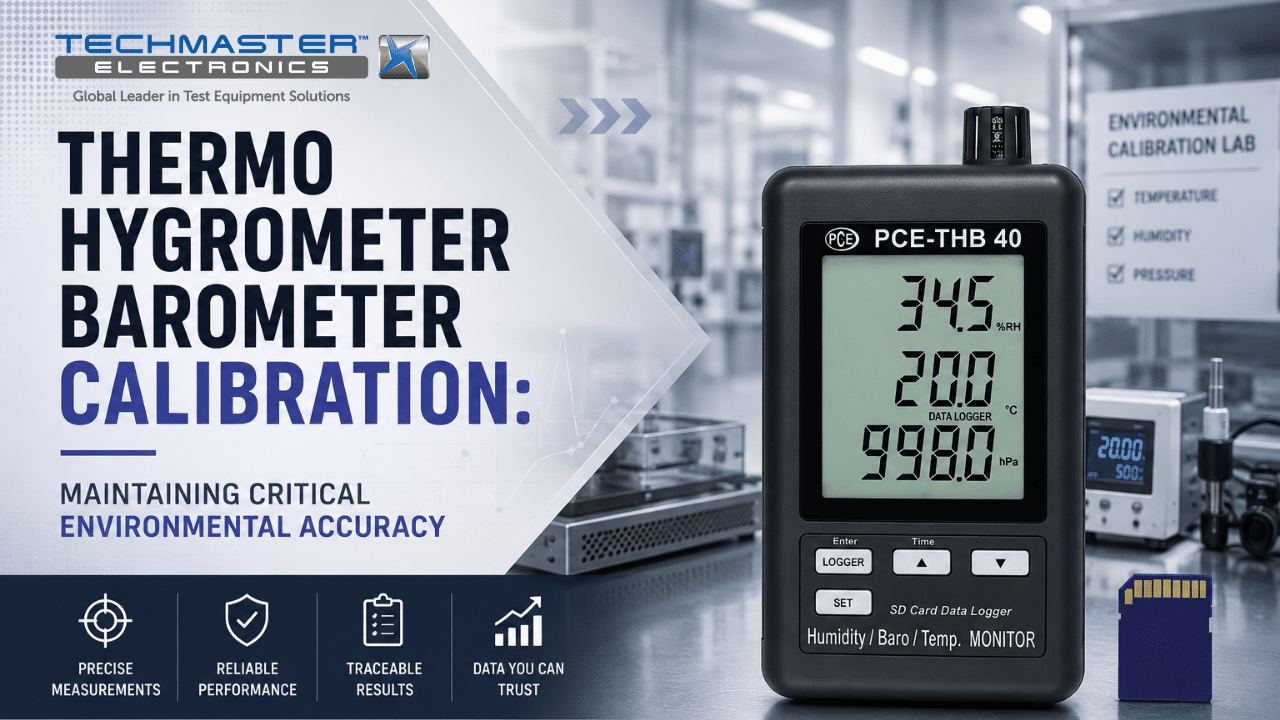
In sectors such as pharmaceutical manufacturing, cleanroom operations, and smart agriculture, environmental stability is not merely a preference. It is a regulatory mandate. A high-precision thermo hygrometer barometer is a specialized instrument designed to simultaneously monitor temperature, relative humidity, and barometric pressure. Because these sensors operate in dynamic environments. They are prone to “measurement drift” caused by long-term exposure to ambient fluctuations, sensor aging, and mechanical stress. Professional Thermo Hygrometer Barometer Calibration is the technical foundation required to ensure that environmental data remains accurate, reliable, and compliant with international quality standards.
Without scheduled verification, sensors often fail to maintain their baseline accuracy, leading to skewed data that can compromise sensitive processes or product integrity. Calibration acts as a scientific safeguard, correcting the output of the device against traceable national standards to eliminate uncertainty. For facility managers and quality assurance teams. This process is essential to maintaining the integrity of controlled environments. And ensuring that industrial operations remain within safe and optimized parameters.
1. Technical Principles: Sensing Mechanisms and Traceability
1.1. How do multi-parameter environmental sensors maintain accuracy?
Thermo Hygrometer Barometer Calibration is the metrological process of validating the accuracy of temperature, humidity, and barometric pressure sensors by comparing their readings against high-precision reference standards within a controlled calibration laboratory.
1.2. The Mechanism of Sensor Drift
Multi-parameter devices face unique challenges related to drift. Humidity sensors, which are often capacitive, can lose sensitivity due to contamination or prolonged exposure to extreme saturation levels. At the same time, barometric sensors, which typically rely on piezoresistive diaphragms, can develop thermal fatigue over time.
To evaluate and control these effects, calibration laboratories use climatic chambers and precision pressure controllers to generate specific, known environmental conditions. Technicians then compare the device’s readings with those of a reference standard to identify any deviations. Based on the results, they either adjust the device or apply correction factors to bring its performance back within the specified range.2. Industrial Applications: Where Environmental Precision Matters
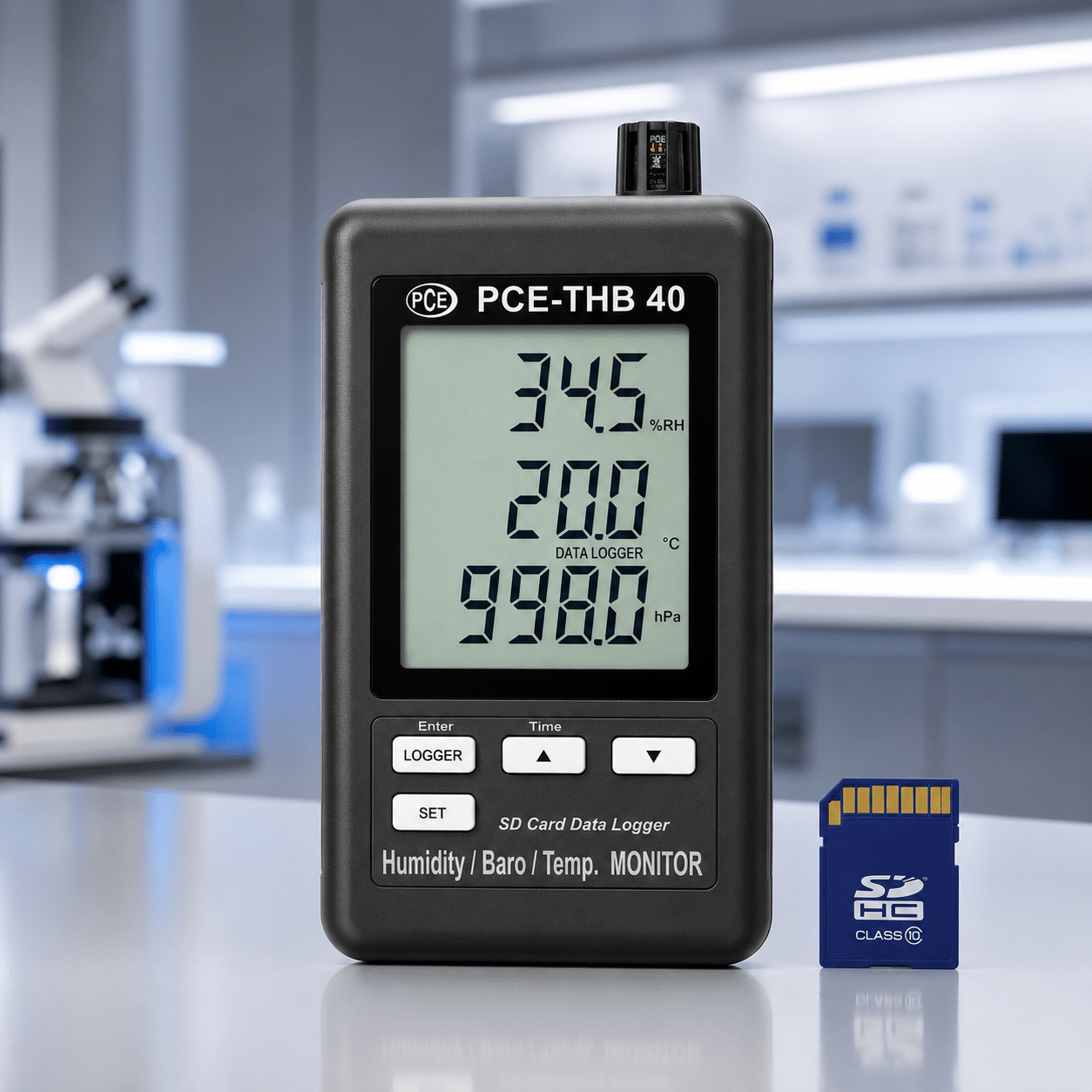
Why is simultaneous environmental monitoring critical to your facility?
Validating the accuracy of environmental monitoring equipment provides essential data for ensuring product quality and system performance across highly regulated industries.
-
Pharmaceutical and Biotech Manufacturing: Maintaining precise temperature and humidity levels is required for the stability of sensitive chemical compounds and biological products.
-
Cleanroom Certification: Barometric pressure must be carefully monitored to maintain proper differential pressure gradients, preventing the infiltration of contaminants.
-
Industrial Storage and Logistics: Accurate monitoring of environmental conditions is necessary to prevent spoilage in high-value material warehousing and controlled logistics.
3. The Calibration Pillar: Traceability and Compliance
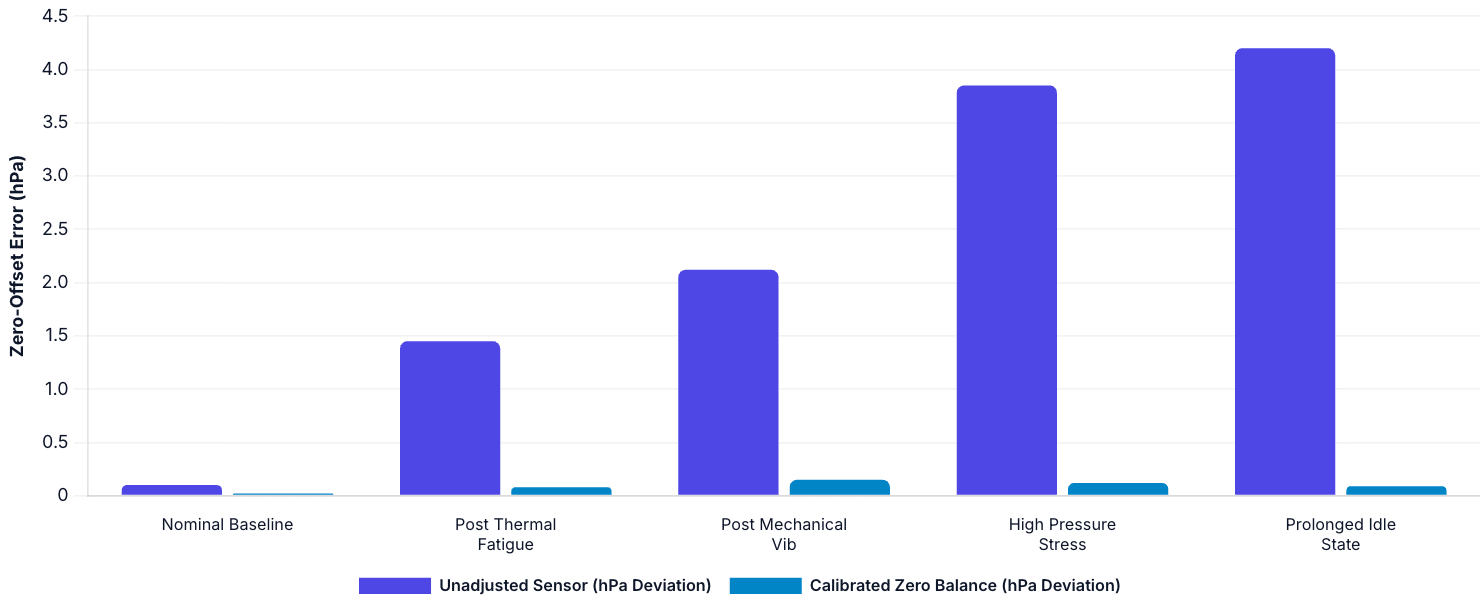
Barometric Pressure Zero-Point Stability
Atmospheric pressure sensors drift due to housing fatigue and thermal stress. This chart profiles the residual zero-offset pressure errors (hPa) across dynamic cleanroom simulated pressure profiles.
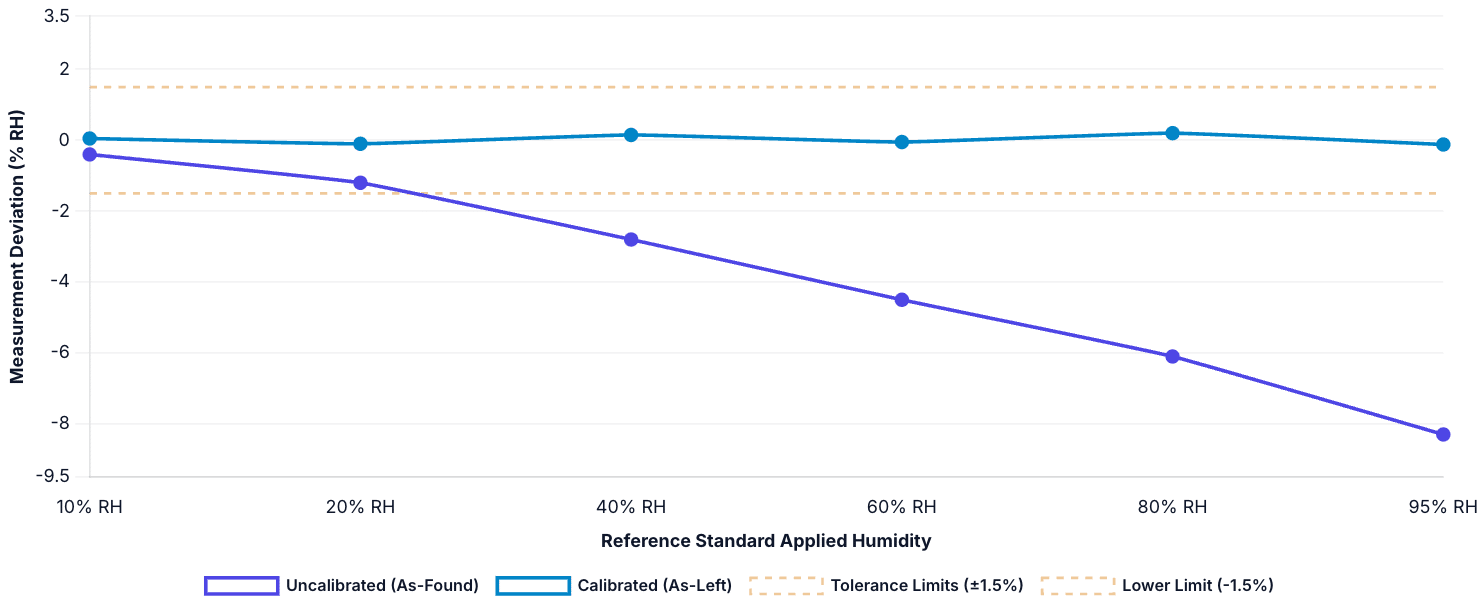
Relative Humidity Accuracy Curve
Tracks sensor measurements from 10% to 95% RH. Under continuous moisture saturation, uncalibrated (As-Found) capacitive nodes experience major offset drops, while calibrated (As-Left) sensors track targeted standards strictly.
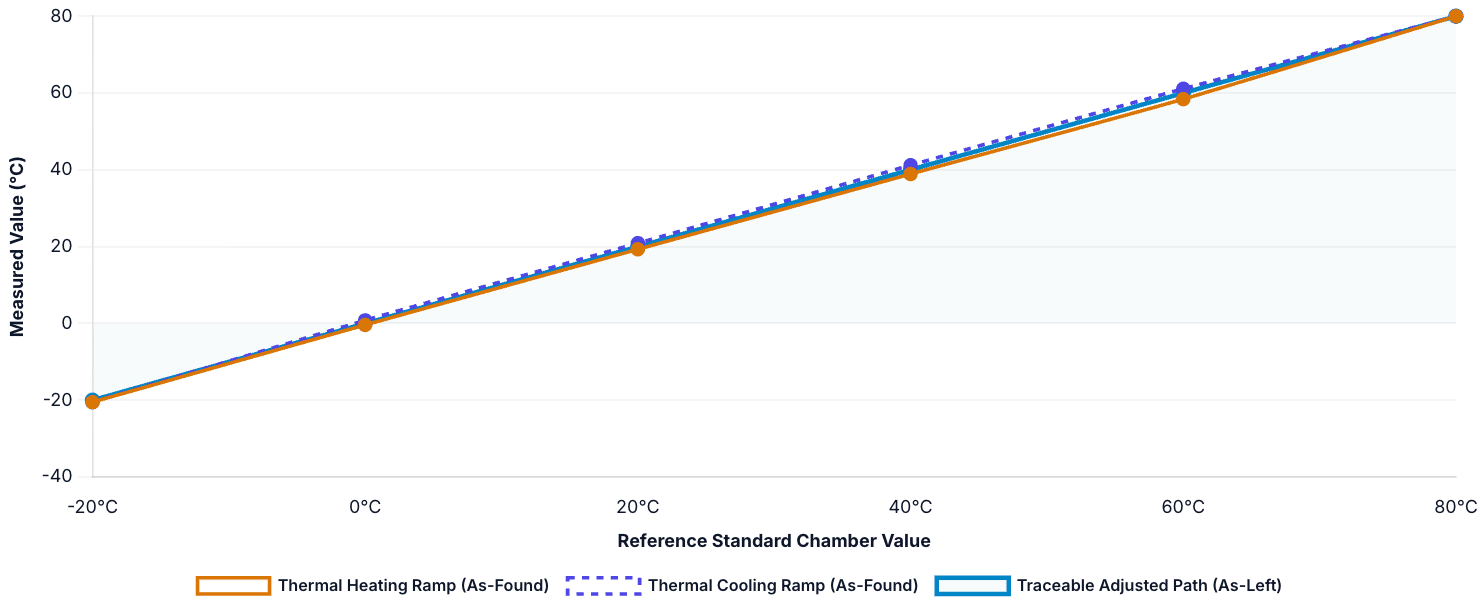
Temperature Thermal Recovery Loop
Precision thermal probes must maintain linearity through extreme hot-to-cold thermal shifts. This calibration verification profile maps a continuous validation sequence spanning -20°C to +80°C.
The uncalibrated response retains thermal memory (hysteresis loop), whereas standard metrology adjustments align sensor output to true physical temperatures.
Why is traceable testing mandatory for environmental assets?
Accredited Thermo Hygrometer Barometer Calibration establishes an unbroken chain of traceability between your industrial equipment and national measurement standards, quantifying uncertainty to ensure your environmental data is legally and technically defensible.
Relying on an uncalibrated instrument introduces an unacceptable risk factor. If environmental conditions deviate from specifications without being detected, the cost—in terms of spoiled batches, failed audits, or compromised safety—can be significant. By adhering to an ISO/IEC 17025 accredited calibration cycle, your organization ensures that its environmental monitoring protocols are robust, protecting both your technical infrastructure and your firm’s regulatory standing.
4. How to Prepare Your Instrument for Calibration
Follow these steps to help our technicians complete a precise and efficient calibration process for your environmental monitoring instruments.1. Check the Sensor Condition
Inspect the sensing probes for physical obstructions, chemical contamination, or excessive dust buildup. These issues can affect measurement stability and compromise calibration accuracy.2. Define Your Required Measurement Range
Identify the temperature, humidity, and pressure ranges that matter most to your application. This information allows technicians to focus the calibration on your critical operating conditions.3. Remove Residual Contamination
Clean the instrument if it has encountered hazardous environments or volatile chemical vapors. Then place it in a clean, stable environment before shipping it for calibration.4. Share Application Details
Let us know if you use the instrument for critical applications such as cleanroom validation, pharmaceutical storage, or environmental monitoring. This information helps our team evaluate the parameters that matter most to your operation.Techmaster US: Your Calibration Partner
Techmaster Electronics, LLC is an independent, ISO/IEC 17025 accredited calibration laboratory supporting the United States manufacturing sector since 1989. Our technical experts operate out of five laboratories (four ISO/IEC 17025 accredited) located in California, Florida, Texas, and North Carolina.
Our metrologists utilize high-precision reference standards to perform meticulous Thermo Hygrometer Barometer Calibration. We bridge the gap between complex industrial requirements and national standards, providing quality managers with instantly verifiable, digitized calibration records that simplify compliance and documentation.
Why Choose Techmaster US?
-
Full ISO/IEC 17025 Accreditation: All calibration procedures strictly adhere to our ANAB cert AC-1736 quality framework.
-
Flexible Service Options: We offer both in-lab and on-site calibration services to minimize your operational downtime.
-
Comprehensive Expertise: Our capabilities cover the full spectrum of industrial disciplines. Including environment, mass, mechanical, electrical, and thermodynamic measurement.
Frequently Asked Questions (FAQs)
1. How often should a thermo hygrometer barometer be calibrated?Most industrial environments require annual thermo hygrometer barometer calibration. However, facilities that operate critical manufacturing processes or cleanrooms often perform semi-annual verification to reduce the risk of measurement drift.
2. Why do environmental sensors drift over time?Several factors contribute to environmental sensor drift. Chemical contamination can affect humidity sensing elements, while mechanical aging can reduce the accuracy of pressure diaphragms. In addition, thermal degradation gradually impacts the performance of internal electronic components.
3. Why is ISO/IEC 17025 accreditation required for this service?ISO/IEC 17025 serves as the international benchmark for technical competence in testing and calibration. The standard ensures traceable, reliable, and technically valid results that organizations can confidently present during quality assessments and regulatory audits.
4. Can I calibrate this instrument in-house?No. Accurate calibration requires climate-controlled chambers, traceable pressure controllers, and highly accurate reference standards. Laboratories must regularly calibrate and maintain these systems against national or international standards, making them impractical for most industrial facilities to operate in-house.
Protect the Integrity of Your Environmental Controls
Ensure your multimeters, climate networks, and critical facility indicators pass FDA, OSHA, and ISO audits with zero delays. Partner with Techmaster US for certified calibration services.
CONTACT USReferences & industry standards
- ISO/IEC 17025 testing & calibration laboratory requirements
- NIST calibration services and measurement traceability
- NIST Pressure and Vacuum Group
- A2LA / ANAB accreditation for calibration laboratories
External standards bodies. Techmaster Electronics is an ISO/IEC 17025-accredited, NIST-traceable calibration laboratory.
Frequently asked questions
What is thermo-hygrometer barometer calibration?
Thermo-hygrometer Barometer Calibration is the documented comparison of a thermo-hygrometer barometer against NIST-traceable reference standards under ISO/IEC 17025. It quantifies the thermo-hygrometer barometer’s error and measurement uncertainty and confirms it performs within tolerance, with as-found and as-left data on the certificate.
How often should a thermo-hygrometer barometer be calibrated?
Most quality systems calibrate a thermo-hygrometer barometer every 12 months, or sooner after repair, overload, or before critical measurements. Set your interval from the manufacturer spec and your ISO 9001 / 13485 / AS9100 program and drift history.
Is Techmaster’s thermo-hygrometer barometer calibration ISO 17025 accredited?
Yes. Techmaster Electronics is ISO/IEC 17025:2017 accredited by ANAB (Certificate AC-1736). Every thermo-hygrometer barometer calibration is NIST-traceable and issued with a full measurement-uncertainty budget.
What is the turnaround for thermo-hygrometer barometer calibration?
Standard turnaround is 5 business days, with 1–2 business-day expedite available. On-site calibration removes shipping time entirely for thermo-hygrometer barometers that can’t leave the floor.
Do you calibrate thermo-hygrometer barometers on-site or in-lab?
Both. Techmaster runs five US labs (Vista CA, Santa Clara CA, Orlando FL, San Antonio TX, Holly Springs NC) and offers nationwide on-site thermo-hygrometer barometer calibration to minimize downtime.

Khanh Nguyen is the Marketing Manager at Techmaster Electronics, a B2B marketing leader covering the test, measurement, and ISO/IEC 17025 accredited calibration industry across the US and Vietnam markets.