
“Moisture meter” covers several very different instruments. A pin meter in a sawmill, a pinless meter on a building inspection, a grain meter at an elevator and a halogen moisture analyzer in a QC lab all report percent moisture, but each one gets there differently. Each needs its own kind of calibration.
This page explains how each type is checked, which references are used, and what a useful calibration record looks like.
Four types, four methods
| Type | What it measures | How it is calibrated |
|---|---|---|
| Pin (resistance) meters | Electrical resistance between two pins, converted to moisture with a species or material table | Checked against precision resistance standards or a manufacturer’s calibration block at several points |
| Pinless (capacitance) meters | Dielectric response of the material under a sensing pad | Checked on reference blocks of known response; the material setting must match |
| Grain moisture meters | Dielectric or resistance response of a grain sample, corrected for temperature and test weight | Compared with oven-dry results on samples of each grain type |
| Moisture analyzers (loss on drying) | Weight loss of a sample as a halogen or infrared heater dries it | Balance cell checked with test weights; heater checked with a temperature calibration kit |
The oven-dry method is the real reference
Every electronic moisture meter is an indirect method. The reference it is compared with is the oven-dry (gravimetric) method: weigh the sample, dry it at a set temperature until its weight stops changing, and weigh it again. For wood, that is described in ASTM D4442. Pin and pinless meters drift with electrode wear, battery condition and contamination, so a periodic comparison with oven-dry results on your own material is the strongest proof that the meter is still right.
Moisture analyzers: two calibrations in one
A halogen moisture analyzer is a balance with a heater on top, so it needs both parts checked. The weighing cell is verified with calibrated test weights, the same way as any analytical balance. The heater is checked with a temperature calibration kit that sits in the sample chamber, because a heater running 5 °C hot or cold changes the drying result even when the balance is perfect.
Common reasons a moisture meter reads wrong
- The wrong species, material or grain setting is selected.
- The sample temperature is outside the range the meter corrects for.
- Pins are bent, corroded or not driven to the correct depth.
- The pinless pad is reading through a surface coating or a void.
- A low battery is changing the internal reference.
A check against a reference block before each job catches most of these before they cost anything.
Calibration intervals and records
Annual calibration is typical, with a quick reference-block check before each use. Keep a record of each check. When a reading is disputed, the log is what shows the meter was working on the day it mattered.
Accreditation and certificates
Moisture meter calibration is not listed on Techmaster’s ANAB scope, so it is calibrated with NIST-traceable reference standards and issued a traceable certificate with as-found and as-left data. If your auditor requires an ISO/IEC 17025 accredited certificate, tell us before you send the instrument.
Frequently asked questions
How do you calibrate a moisture meter?
Can a moisture meter be calibrated at home?
How accurate are moisture meters?
Is moisture meter calibration accredited?
Related calibration guides
References & industry standards
- ISO/IEC 17025 testing & calibration laboratory requirements
- NIST calibration services and measurement traceability
- A2LA / ANAB accreditation for calibration laboratories
External standards bodies. Techmaster Electronics is an ISO/IEC 17025-accredited, NIST-traceable calibration laboratory.
Accredited calibration at Techmaster
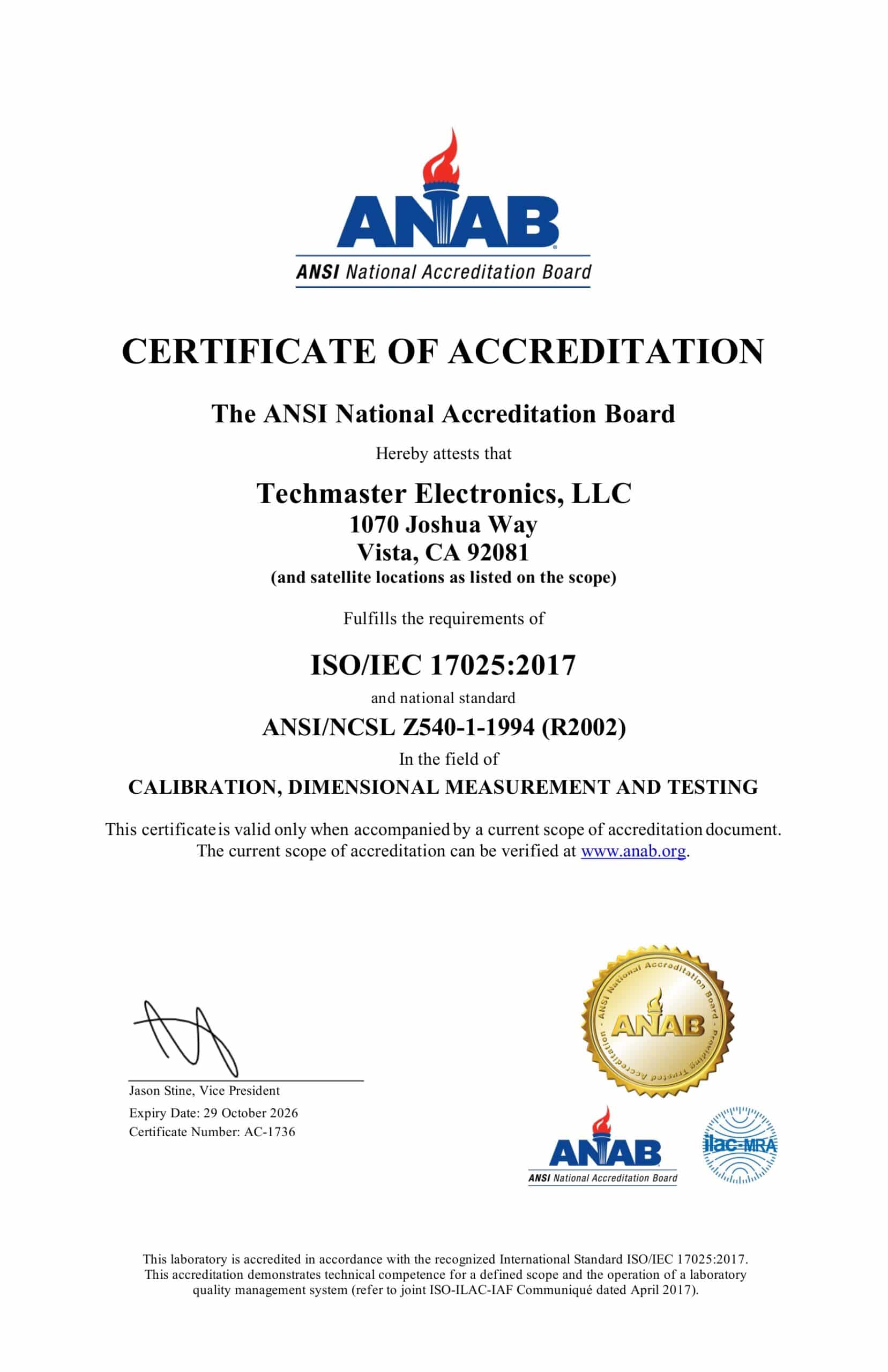
Techmaster Electronics is an ANAB-accredited (Certificate AC-1736) ISO/IEC 17025:2017 calibration laboratory with five US labs, NIST-traceable standards and a full measurement-uncertainty budget on every certificate — in-lab or nationwide on-site, with 5-business-day standard turnaround and expedite options. See our calibration services or request a quote.

Khanh Nguyen is the Marketing Manager at Techmaster Electronics, a B2B marketing leader covering the test, measurement, and ISO/IEC 17025 accredited calibration industry in the United States.