
How Often Should You Calibrate a Handheld Oscilloscope? Intervals, Accuracy & Compliance
Handheld oscilloscopes help technicians check voltage signals, find faults, and test electrical systems in the field. However, these tools may lose accuracy over time. Heat, frequent use, and aging parts can affect voltage readings, timing, and signal quality. Therefore, knowing how often to calibrate a handheld oscilloscope helps teams maintain reliable test results. Regular calibration also helps users find measurement errors before they affect key decisions. In addition, ISO/IEC 17025 accredited calibration supports measurement traceability and clear test records. As a result, companies can manage their test tools with greater confidence.
1. How Often Should You Calibrate a Handheld Oscilloscope?
Many companies use a 12-month calibration interval as a starting point. However, this schedule does not suit every handheld oscilloscope. Instead, the best interval depends on how often technicians use the tool, where they use it, and how much risk a wrong reading may create. For example, a handheld scope in a clean lab may need a different schedule from one that travels between job sites each day. In addition, teams should review the maker’s advice and past calibration results before setting the next date. Therefore, a 12-month interval may work for some tools, while others may need more frequent checks.
1.1. Does ISO/IEC 17025 Require Annual Calibration?
No. ISO/IEC 17025 does not require every handheld oscilloscope to follow a fixed 12-month schedule.
Instead, organizations must set suitable intervals based on their own test needs and quality rules.
For example, a company may choose an annual schedule when its past results show stable performance. However, another company may choose a shorter cycle if the tool faces heavy use or harsh work conditions.
As a result, teams should base their schedule on clear evidence rather than a single rule.
1.2. When Should You Consider a Shorter Interval?
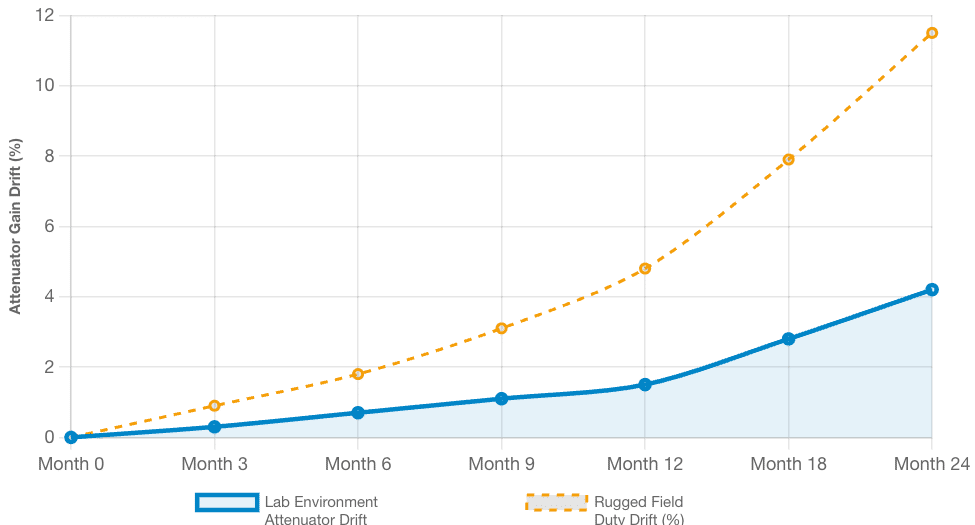
Some work settings place more stress on handheld oscilloscopes. Therefore, teams may need to review their calibration schedule more often.
For example, consider a shorter interval when:
- Technicians use the scope for long hours each day.
- The tool moves between field sites often.
- Heat, moisture, or dust affects the work area.
- Past calibration results show signs of drift.
- The scope supports tests with strict accuracy needs.
- A customer contract sets a shorter schedule.
However, these conditions do not always require a 6-month cycle.
Instead, teams should review the risk and past results before choosing a shorter interval.
2. What Affects Handheld Oscilloscope Calibration Frequency?
Several factors can change how often a handheld oscilloscope needs calibration.
- Frequency of Use: First, consider how often technicians use the scope. For example, a tool that runs every day may face more wear than one that stays in storage for long periods. In addition, frequent use can place stress on probes, ports, and controls. Therefore, teams should review use levels when setting the next calibration date.
- Work Environment: Next, review the conditions where the tool operates. For example, heat and moisture may affect internal parts over time. Likewise, dust and frequent transport may increase wear.
- However, the effect depends on the scope’s design and rated limits. Therefore, follow the maker’s advice and check the tool’s condition often.
- Past Calibration Results: Also, review earlier calibration records. For example, stable results over several cycles may support the current schedule. On the other hand, growing errors may suggest that the team needs more frequent checks. As a result, past data can help companies choose a better interval.
- Measurement Risk: In addition, consider how much a wrong reading could affect the work. For example, a scope that supports key safety or quality tests may need closer control than one used for basic checks. Therefore, teams should match the calibration schedule to the risk of the task.
- Maker and Customer Requirements: Finally, review the maker’s guidance and any customer rules. For example, a customer may set a clear calibration period for tools used on a project. Likewise, a company’s quality plan may require regular reviews of test equipment. Therefore, teams should consider these rules when planning calibration.
3. How to Verify Handheld Oscilloscope Accuracy
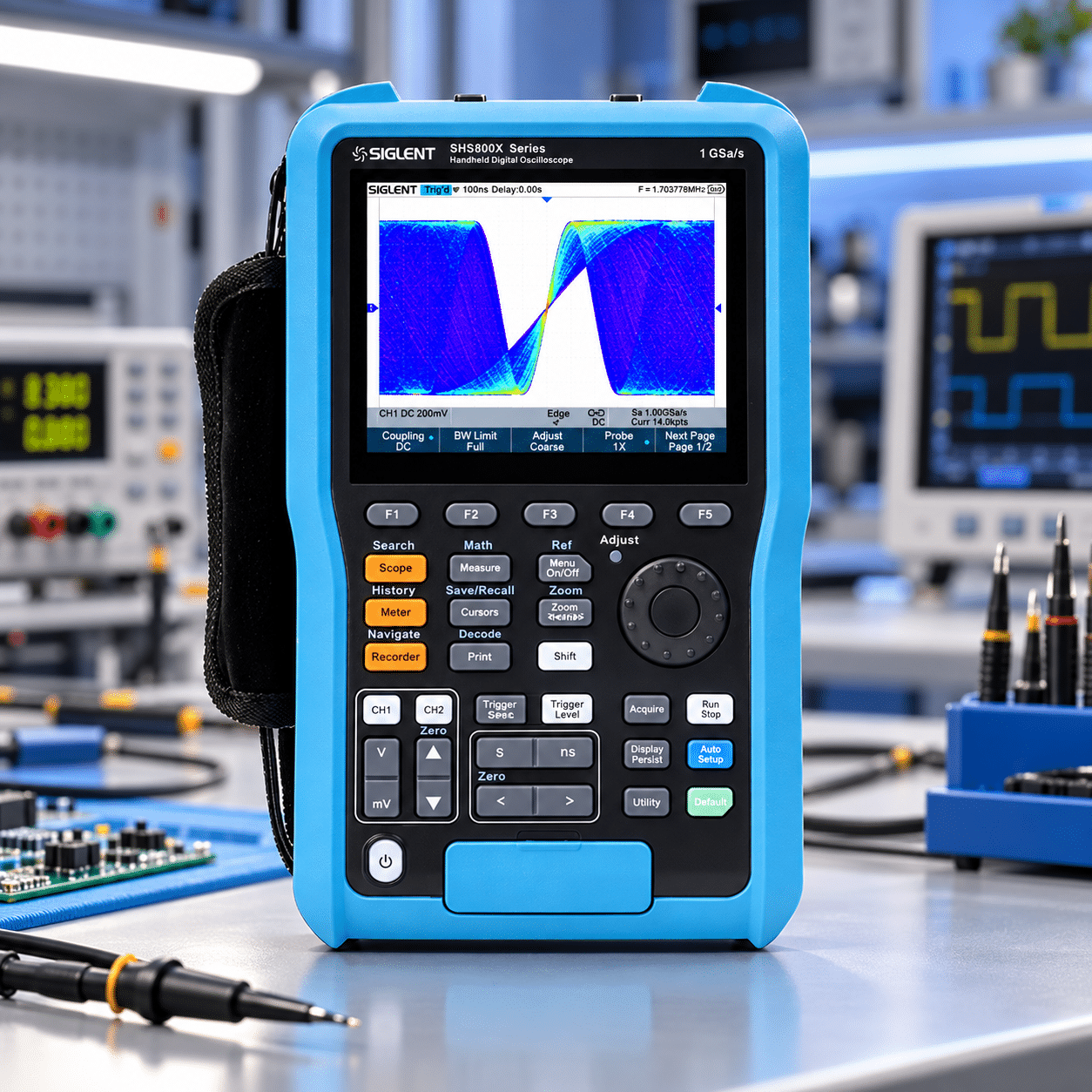
Calibration labs use suitable reference tools to check whether a handheld oscilloscope meets its stated limits. However, the exact test points and methods depend on the model, the maker’s guide, and the lab’s service scope.
The steps below explain a common test process.
Step 1: Inspect Input Ports and Test Leads
First, the technician checks the scope’s input ports, case, and controls. Next, they inspect the test leads for wear, poor contact, or damage. In addition, they check that the probes and cables suit the planned test. For example, some scopes use different input designs or impedance settings.
Verification: The technician confirms that the scope and test parts meet the needs of the test method.
Step 2: Prepare the Test Setup
Next, the technician places the scope in a suitable test area. Then, they connect the required reference tools and allow the equipment to warm up as the test method directs. For example, some models need a set warm-up period before the readings become stable. However, not every scope needs the same warm-up time or room conditions.
Verification: The technician checks that the setup meets the method’s needs before taking readings.
Step 3: Check Vertical Voltage Accuracy
After setup, the technician checks the scope’s voltage readings. First, they connect a suitable voltage standard to the input channel. Then, they apply the test values listed in the procedure. For example, the test may cover several voltage levels and vertical scale settings. Next, the technician compares the scope’s readings with the reference values.
Verification: The technician records each error and checks it against the stated limits.
Step 4: Check Bandwidth and Frequency Response
Next, the technician checks how the scope responds to signals at different frequencies. First, they connect a suitable signal source. Then, they apply signals at the test points in the procedure. As frequency rises, the displayed signal level may change. Therefore, the technician checks whether the response stays within the limits for that model. For example, some methods include a test near the scope’s rated bandwidth.
Verification: The technician compares the results with the limits that apply to the tested range.
Step 5: Check Timebase Accuracy
After that, the technician checks the scope’s timing accuracy. First, they apply a suitable time or frequency reference. Next, they compare the scope’s timing results with the known values. In addition, the method may include several horizontal scale settings. However, the test does not always require a rubidium reference. Instead, the lab chooses a suitable standard based on the method and accuracy needs.
Verification: The technician records the timing error and checks whether it meets the stated limits.
Step 6: Review the Results
Finally, the technician reviews the test data. First, they check each result against the limits that apply. Then, they record any required changes and repeat tests when needed. In addition, the lab prepares the calibration report or certificate. As a result, the customer receives records that help support tool control and future reviews.
Frequently Asked Questions (FAQs)
1. How often should you calibrate a handheld oscilloscope?
A handheld oscilloscope should be calibrated every 12 months under standard operating conditions to maintain ISO/IEC 17025 compliance and NIST traceability. Units deployed in severe field environments or heavy industrial maintenance should be calibrated on a 6-month cycle to account for analog component aging.
2. What factors dictate the calibration interval for portable oscilloscopes?
Calibration frequency is dictated by usage intensity, environmental exposure (temperature extremes, humidity, vibration), historical drift trends, and regulatory quality framework mandates such as ISO 9001, IATF 16949, and AS9100.
3. Can internal oscilloscope self-calibration replace accredited laboratory calibration?
No, internal self-calibration routines only compensate for baseline DC offsets using internal circuit references. They cannot evaluate absolute bandwidth flatness, timebase frequency accuracy, or input attenuation linearity against external national standards.
4. What causes vertical gain errors in portable oscilloscopes?
Vertical gain errors are primarily caused by thermal aging of input attenuator resistor networks, semiconductor drift in variable gain amplifiers, and changes in high-speed analog-to-digital converter reference thresholds over extended periods of operation.
5. What parameters are evaluated during accredited oscilloscope calibration?
Accredited calibration evaluates DC and AC voltage measurement linearity across all vertical ranges, input frequency bandwidth flatness up to rated limits, horizontal timebase sweep accuracy, trigger sensitivity, and channel-to-channel isolation.
Conclusion
Knowing how often to calibrate a handheld oscilloscope helps teams maintain reliable voltage and timing results. First, review the maker’s guidance. Next, consider use levels, work conditions, and past calibration data. In addition, check how much risk a wrong reading may create. As a result, you can choose a calibration interval that fits your work instead of relying on one fixed schedule. For this reason, contact Techmaster US to discuss handheld oscilloscope calibration and confirm the service options available for your equipment.
Handheld Oscilloscope Master Guide: Setup, Operation, Calibration Intervals & Compliance
Handheld oscilloscopes enable engineers and field technicians to diagnose signal problems on-site. This guide provides an end-to-end reference covering signal acquisition mechanics, 9-step field operating procedures, probe compensation trimming, voltage error mathematics, risk-based calibration interval determination, 6-step laboratory verification, and ISO/IEC 17025 compliance.

Calibration engineer at Techmaster Electronics, ISO/IEC 17025 accredited laboratory with 35+ years of metrology expertise.