
Vibration Meter Calibration
Accuracy across the range
How Vibration Meter calibration works
- Intake & visual inspection
- Environmental stabilization
- As-found measurement
- Comparison to NIST-traceable standards
- Adjustment if required
- As-left results & certificate
Your calibration, covered
In-lab vs on-site calibration
In-lab calibration
- Accredited bench with full reference standards
- Best achievable measurement uncertainties
- Pickup & return logistics handled
- Ideal for precision and reference work
On-site calibration
- We calibrate the Vibration Meter at your facility
- No shipping risk or transit downtime
- As-found data captured before any move
- Ideal for fixed, large or sensitive assets
In-depth guide
What Is a Vibration Meter?
A vibration meter is a handheld device engineered to assess mechanical vibrations in machinery and structures. It measures parameters such as amplitude, frequency, and velocity, offering essential data for evaluating equipment condition and diagnosing potential issues.
Key Components
Accelerometer: Detects vibrations and transforms them into electrical signals. Signal Processing Unit: Processes the electrical signals to extract meaningful vibration data. Display Interface: Presents the processed data in a user-friendly format for analysis.Applications
Predictive Maintenance: Regular vibration assessments facilitate early detection of mechanical anomalies, aiding in the prevention of unexpected equipment failures. Quality Assurance: Ensures machinery operates within designated vibration thresholds, maintaining product quality and operational efficiency. Structural Monitoring: Evaluates the integrity of structures by measuring their vibration responses to various stimuli.Vibration meter calibration: A complete guide
What is vibration meter calibration?
Calibration is the process of configuring an instrument to eliminate factors that cause inaccurate measurements, ensuring the device meets design standards and provides optimal sampling results within the specified measurement range. In the context of vibration measurement instruments, calibration involves comparing the device’s readings against a known standard and making necessary adjustments to align the measurements accurately. This process ensures that vibration meters provide precise data, which is crucial for maintaining equipment health and operational safety in industrial environments.Why is periodic calibration necessary?
Regular calibration is essential for maintaining the precision and reliability of vibration measurement instruments. Ensuring Measurement Accuracy: Over time, factors such as mechanical wear and environmental conditions can cause vibration meters to deviate from their original calibration. These deviations may lead to inaccurate readings, resulting in flawed analyses and potentially costly errors. Performing regular calibrations addresses these discrepancies, ensuring accurate measurements. Adhering to Industry Standards: Many industries require periodic calibration of measurement tools to comply with strict quality and safety regulations. Regular calibration ensures that vibration meters meet these regulatory standards, maintaining compliance and preventing potential legal or operational issues. Prolonging Equipment Lifespan: Routine calibration can detect emerging issues before they become significant problems, allowing for timely maintenance and repairs. This proactive approach not only maintains measurement accuracy but also extends the equipment’s lifespan, leading to long-term cost savings and improved operational efficiency.Vibration meter calibration procedure
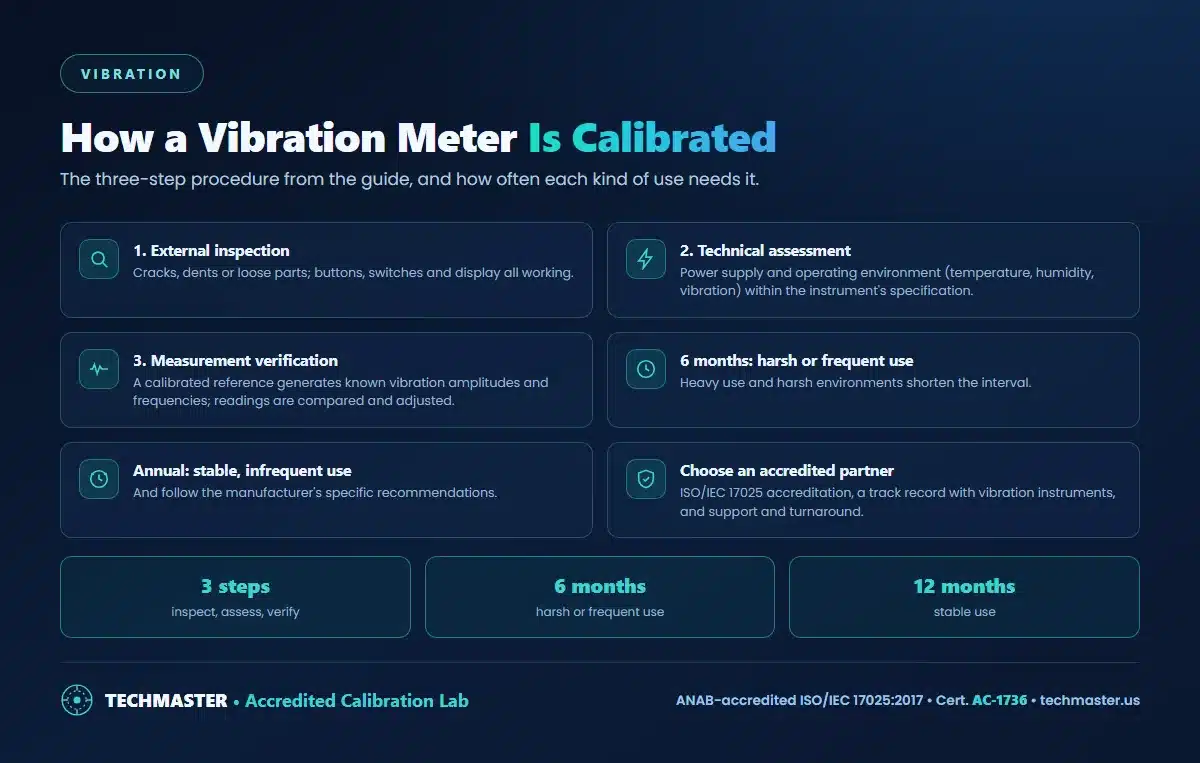
The calibration of vibration measurement instruments is a critical process that ensures precision and reliability in various industrial applications. A professional calibration procedure typically involves the following technical steps:1. External Inspection
Objective: Verify the physical integrity of the instrument. Procedure:- Examine the device for any mechanical damage, such as cracks, dents, or loose components.
- Ensure all functional buttons, switches, and display indicators operate correctly without obstruction or malfunction.
2. Technical Assessment
Objective: Confirm that the instrument’s power supply and operating environment align with its technical specifications. Procedure:- Check that the power source provides the required voltage and current as specified by the manufacturer.
- Assess environmental conditions, including temperature, humidity, and vibration levels, to ensure they fall within the instrument’s operational parameters.
3. Measurement Verification
Objective: Evaluate the instrument’s measurement accuracy against established standards. Procedure:- Utilize a calibrated reference device to generate known vibration amplitudes and frequencies.
- Compare the instrument’s readings with the reference device to identify any discrepancies.
- Adjust the instrument as necessary to ensure measurement errors fall within the acceptable tolerance limits.
4. Recommended Calibration Frequency
- Harsh Environments or Frequent Use: Calibrate every 6 months.
- Stable Environments and Infrequent Use: Calibrate annually.
- Manufacturer’s Recommendations: Follow the specific guidelines provided by the equipment manufacturer.
5. Selecting a Reputable Calibration Partner
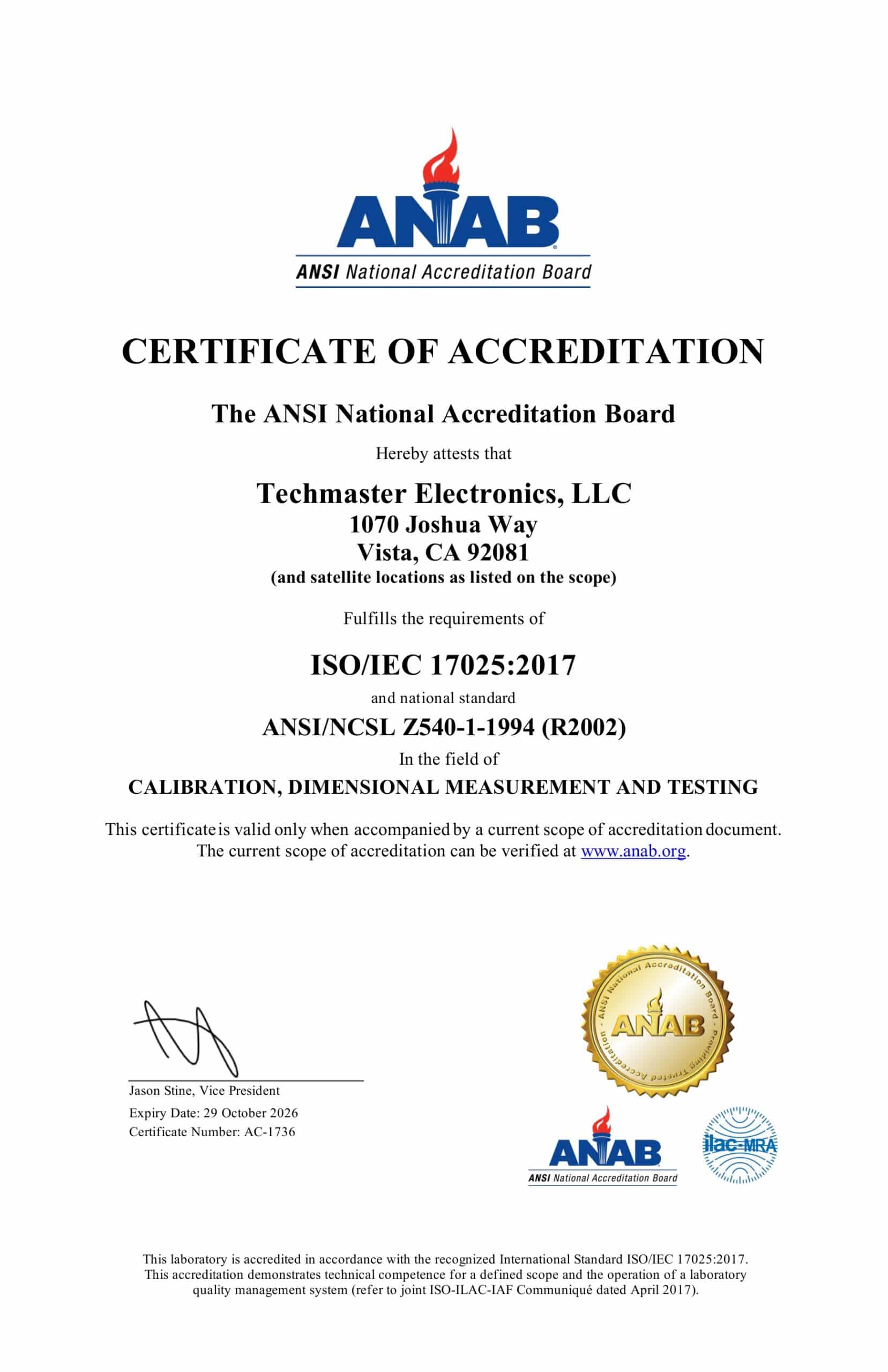
- Certification: Ensure the partner holds ISO/IEC 17025 accreditation for calibration competence.
- Experience: Choose a provider with a proven track record in calibrating vibration measurement instruments.
- Support Services: Evaluate their technical support capabilities and turnaround times for calibration services. By adhering to these guidelines, you can maintain the accuracy and reliability of your vibration measurement instruments, thereby ensuring optimal performance and safety in your operations.

IEC 61672-3 Periodic Testing vs. Field Calibration for Sound Level Meters
A field check with an acoustic calibrator is not the same as IEC 61672-3 periodic...
Sep
Accelerometer Calibration by Back-to-Back Comparison: ISO 16063-21 Explained
How accredited labs calibrate accelerometers by back-to-back comparison per ISO 16063-21: sensitivity, frequency response, typical...
Aug

Professional Sound Calibrator Calibration & NIST Traceable Services
Home » Vibration Meter Calibration Metrology guide · ISO/IEC 17025 · ANAB-accredited Sound Calibrator Calibration…...
Feb
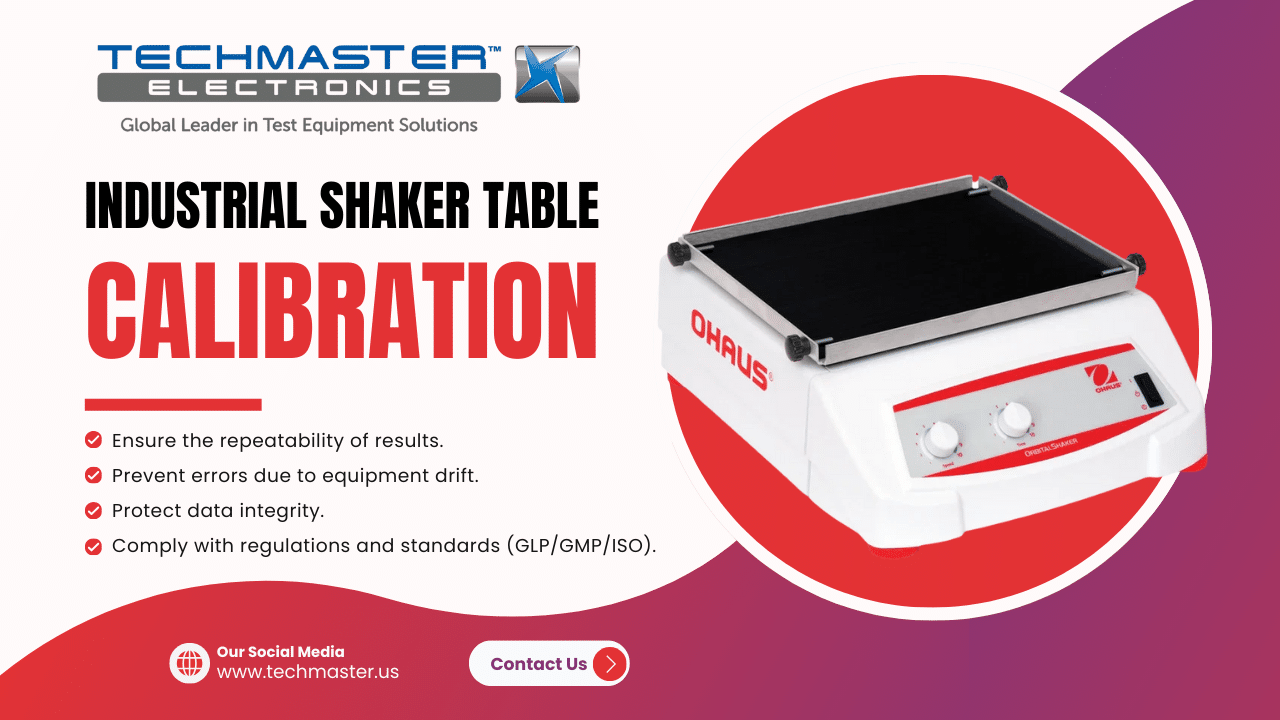
Shaker Table Calibration: Mandatory for Endurance Testing
Home » Vibration Meter Calibration Metrology guide · ISO/IEC 17025 · ANAB-accredited Shaker Table Calibration...
Dec

Sound Level Calibration: Environmental Noise Control
Home » Vibration Meter Calibration Metrology guide · ISO/IEC 17025 · ANAB-accredited Sound Level Meter...
Nov

Piezoelectric Accelerometers Calibration in Robotics
Home » Vibration Meter Calibration Metrology guide · ISO/IEC 17025 · ANAB-accredited Piezoelectric Accelerometer Calibration…...
Aug

MEMS Technology in Vibration Measurement
Home » Vibration Meter Calibration Guide · Techmaster Electronics MEMS Technology in Vibration Measurement This...
Jul

Sound Level Meter: What is it and how does it work?
Home » Vibration Meter Calibration Guide · Techmaster Electronics Sound Level Meter This guide from...
Mar
Frequently asked questions
What is Vibration Meter Calibration?
How often should a Vibration Meter be calibrated?
What standards apply to Vibration Meter Calibration?
What is included on the certificate?
Can you calibrate the Vibration Meter on-site?
Need Vibration Meter calibration?
ANAB-accredited, NIST-traceable, fast turnaround, in-lab or on-site across the USA.
Contact us for a quoteReferences & industry standards
- ISO/IEC 17025 testing & calibration laboratory requirements
- NIST calibration services and measurement traceability
- A2LA / ANAB accreditation for calibration laboratories
External standards bodies. Techmaster Electronics is an ISO/IEC 17025-accredited, NIST-traceable calibration laboratory.
This calibration falls under our vibration calibration service.

Khanh Nguyen is the Marketing Manager at Techmaster Electronics, a B2B marketing leader covering the test, measurement, and ISO/IEC 17025 accredited calibration industry in the United States.