
Wrist Strap Tester Calibration
Why calibration intervals matter
How Wrist Strap Tester calibration works
- Intake & visual inspection
- Environmental stabilization
- As-found measurement
- Comparison to NIST-traceable standards
- Adjustment if required
- As-left results & certificate
Your calibration, covered
In-lab vs on-site calibration
In-lab calibration
- Lab bench with full reference standards
- Best achievable measurement uncertainties
- Pickup & return logistics handled
- Ideal for precision and reference work
On-site calibration
- We calibrate the Wrist Strap Tester at your facility
- No shipping risk or transit downtime
- As-found data captured before any move
- Ideal for fixed, large or sensitive assets
In-depth guide
In environments where electrostatic discharge (ESD) can silently damage sensitive components, Wrist Strap Tester Calibration plays a critical role in maintaining product quality, operational reliability, and compliance with international standards. From semiconductor fabs and cleanrooms to electronics manufacturing and medical device assembly, wrist strap testers are a frontline defense against ESD risks.
However, a wrist strap tester is only as reliable as its calibration status. Without proper calibration and verification, test results may become misleading, giving a false sense of ESD protection while hidden risks remain.
This article explains what wrist strap tester calibration is, why it matters, how it works, and how organizations can implement an effective testing and calibration strategy with support from professional service providers like Techmaster.

What Is a Wrist Strap Tester?
A wrist strap tester is an ESD control instrument designed to verify the electrical resistance of a wrist strap system worn by operators. It checks the complete path from the operator’s skin, through the wristband and coil cord, to ground.
Most testers provide:
-
PASS / FAIL indications (visual LEDs and audible alarms)
-
Defined resistance thresholds based on ESD standards
-
Fast, repeatable testing suitable for daily use
Wrist strap testers are widely used in:
-
Semiconductor manufacturing
-
Cleanroom environments
-
Electronics assembly lines
-
Medical device production
Their purpose is simple but critical: ensure operators are properly grounded before handling ESD-sensitive devices.
Why Wrist Strap Tester Calibration Matters
1. Preventing Hidden ESD Risks
An uncalibrated tester may drift over time, producing inaccurate resistance readings. This can allow defective wrist straps to pass testing, increasing the risk of latent ESD damage that only appears later in the product lifecycle.
2. Supporting Quality and Yield
In high-value manufacturing, even a single ESD event can cause yield loss, rework, or customer complaints. Regular Wrist Strap Tester Verification helps reduce these risks by ensuring test results can be trusted.
3. Meeting Audit and Compliance Requirements
Quality audits often require documented proof that ESD control equipment is functioning correctly. Calibration records demonstrate due diligence and support traceability during internal or external audits.

Applicable Standards and Compliance Requirements
Wrist strap testing and calibration are typically aligned with internationally recognized ESD standards, including:
-
ANSI/ESD S20.20
-
IEC 61340-5-1
These standards define acceptable resistance ranges for personnel grounding systems and emphasize the importance of periodic testing and verification.
While the standards may not specify exact calibration intervals for every device, industry best practice recommends:
-
Routine functional checks (daily or per shift)
-
Periodic calibration or verification, typically annually or according to internal quality procedures
How Wrist Strap Testers Work
A wrist strap tester applies a low test voltage and measures the total resistance of the wrist strap circuit. The result is compared against preset limits, commonly:
-
Low resistance limit to detect shorts
-
High resistance limit to detect open circuits or poor contact
If the measured value falls within the acceptable range, the tester indicates a PASS condition. If not, it signals a FAIL condition, prompting corrective action.
During Wrist Strap Tester Calibration, known resistance standards are applied to verify that the tester’s measurement thresholds and indicators operate correctly across the specified range.
Best Practices for Wrist Strap Testing
To maximize ESD protection, many organizations follow these best practices:
-
Test wrist straps before starting work or at the beginning of each shift
-
Retest after breaks or workstation changes
-
Place testers at controlled area entry points
-
Remove defective straps immediately from service
-
Keep clear records of test and calibration results
These practices help ensure that ESD control becomes a routine habit rather than a reactive measure.


Calibration vs. Verification: What’s the Difference?
Although often used interchangeably, calibration and verification serve slightly different purposes:
-
Verification confirms that a wrist strap tester operates within acceptable limits using known reference values
-
Calibration involves adjusting the instrument, if necessary, to bring it back within specification
Both activities support confidence in test results. In regulated or high-risk environments, calibration with documented traceability is strongly recommended.
Advanced ESD Monitoring Options
Beyond basic wrist strap testers, some facilities adopt advanced solutions such as:
-
Combo testers for wrist straps and footwear
-
Continuous ESD monitors that provide real-time grounding status
These systems offer higher assurance in critical processes but still require periodic verification and calibration to remain effective.
Techmaster’s Expertise in Wrist Strap Tester Calibration
Techmaster provides professional Wrist Strap Tester Calibration and Verification services designed to support semiconductor, cleanroom, electronics, and medical manufacturing environments.
Techmaster’s capabilities include:
-
Calibration and verification of ESD testing equipment
-
Traceable calibration certificates suitable for quality audits
-
Experienced technicians familiar with ESD standards and industry requirements
-
Flexible service options to minimize production disruption
By partnering with Techmaster, organizations gain confidence that their ESD control program is supported by reliable, accurately calibrated instrumentation.
Who Should Care About Wrist Strap Tester Calibration?
-
Engineers rely on accurate testing to protect sensitive devices
-
QC Managers need traceability and compliance for audits
-
Procurement Teams require reliable service partners and documentation
-
General Readers and Operators benefit from safer, more consistent processes
No matter the role, proper wrist strap tester calibration contributes to a more robust and trustworthy ESD control system.
Conclusion
Wrist Strap Tester Calibration is not just a technical requirement. It is a practical investment in product quality, process reliability, and regulatory confidence. By understanding how wrist strap testers work, following best practices, and partnering with a qualified calibration provider like Techmaster, organizations can significantly reduce ESD-related risks.
In environments where invisible electrical charges can have costly consequences, calibrated and verified wrist strap testers help keep operations grounded, compliant, and under control.
Frequently asked questions
What is Wrist Strap Tester Calibration?
How often should a Wrist Strap Tester be calibrated?
What standards apply to Wrist Strap Tester Calibration?
What is included on the certificate?
Can you calibrate the Wrist Strap Tester on-site?
Need Wrist Strap Tester calibration?
NIST-traceable calibration, fast turnaround — in-lab or on-site across the USA.
Contact us for a quoteReferences & industry standards
- ISO/IEC 17025 testing & calibration laboratory requirements
- NIST calibration services and measurement traceability
- NCSLI metrology community
- A2LA / ANAB accreditation for calibration laboratories
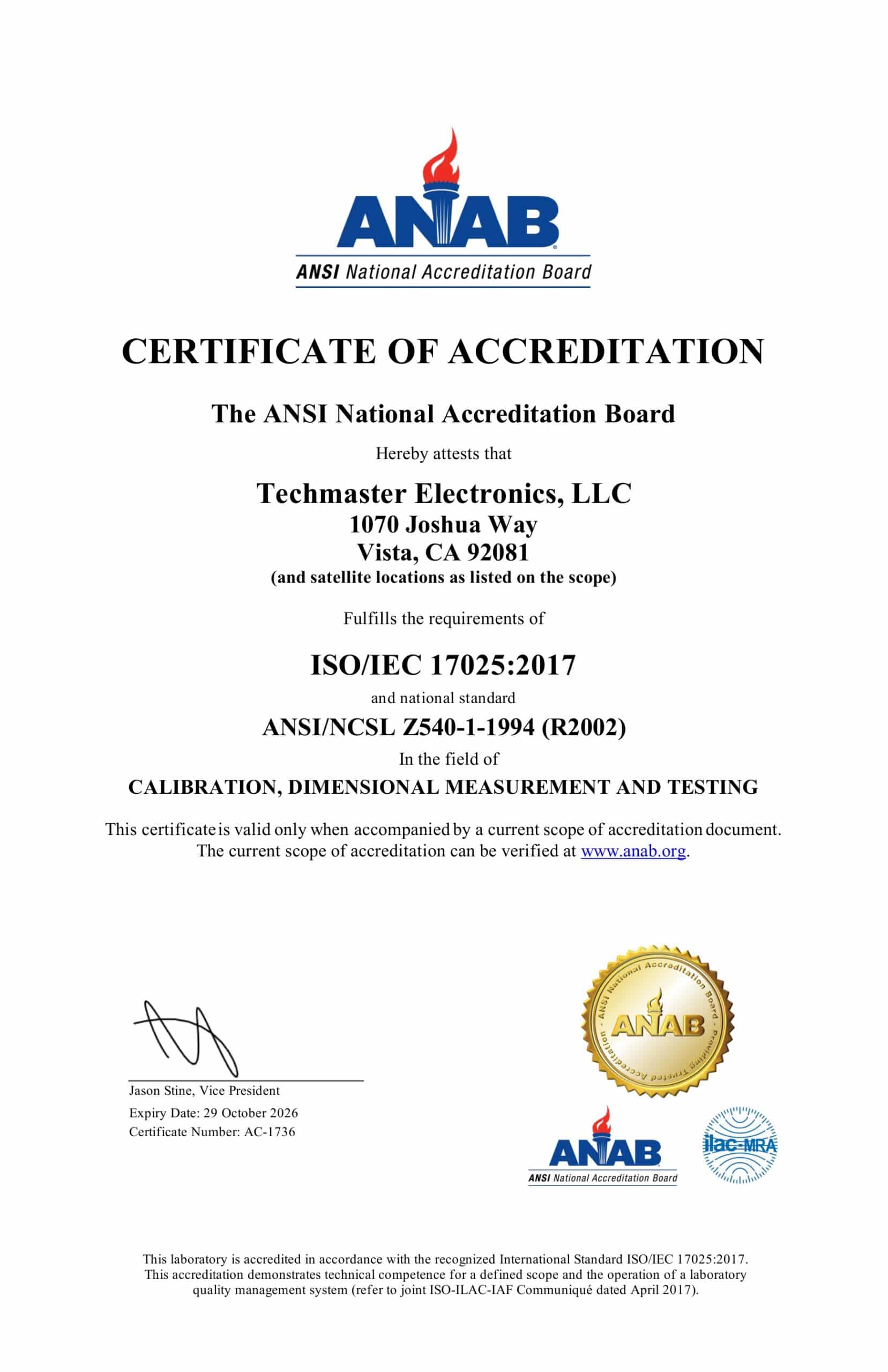
External standards bodies. Techmaster Electronics is an ISO/IEC 17025-accredited, NIST-traceable calibration laboratory.

Khanh Nguyen is the Marketing Manager at Techmaster Electronics, a B2B marketing leader covering the test, measurement, and ISO/IEC 17025 accredited calibration industry in the United States.