
External Pacemaker Analyzer Calibration…
Why calibration intervals matter
How External Pacemaker Analyzer calibration works
- Intake & visual inspection
- Environmental stabilization
- As-found measurement
- Comparison to NIST-traceable standards
- Adjustment if required
- As-left results & certificate
Your calibration, covered
In-lab vs on-site calibration
In-lab calibration
- Accredited bench with full reference standards
- Best achievable measurement uncertainties
- Pickup & return logistics handled
- Ideal for precision and reference work
On-site calibration
- We calibrate the External Pacemaker Analyzer at your facility
- No shipping risk or transit downtime
- As-found data captured before any move
- Ideal for fixed, large or sensitive assets
In-depth guide
Introduction
Uncalibrated life-support test devices pose severe risks of clinical measurement drift and sudden regulatory audit failures. When clinical engineers rely on inaccurate testing instruments, the safety of patient-worn pacing units is immediately compromised, resulting in unacceptable medical liability. Consequently, establishing a routine protocol for external pacemaker analyzer calibration and comprehensive biomedical test equipment calibration provides the ultimate assurance of measurement accuracy and continuous regulatory compliance.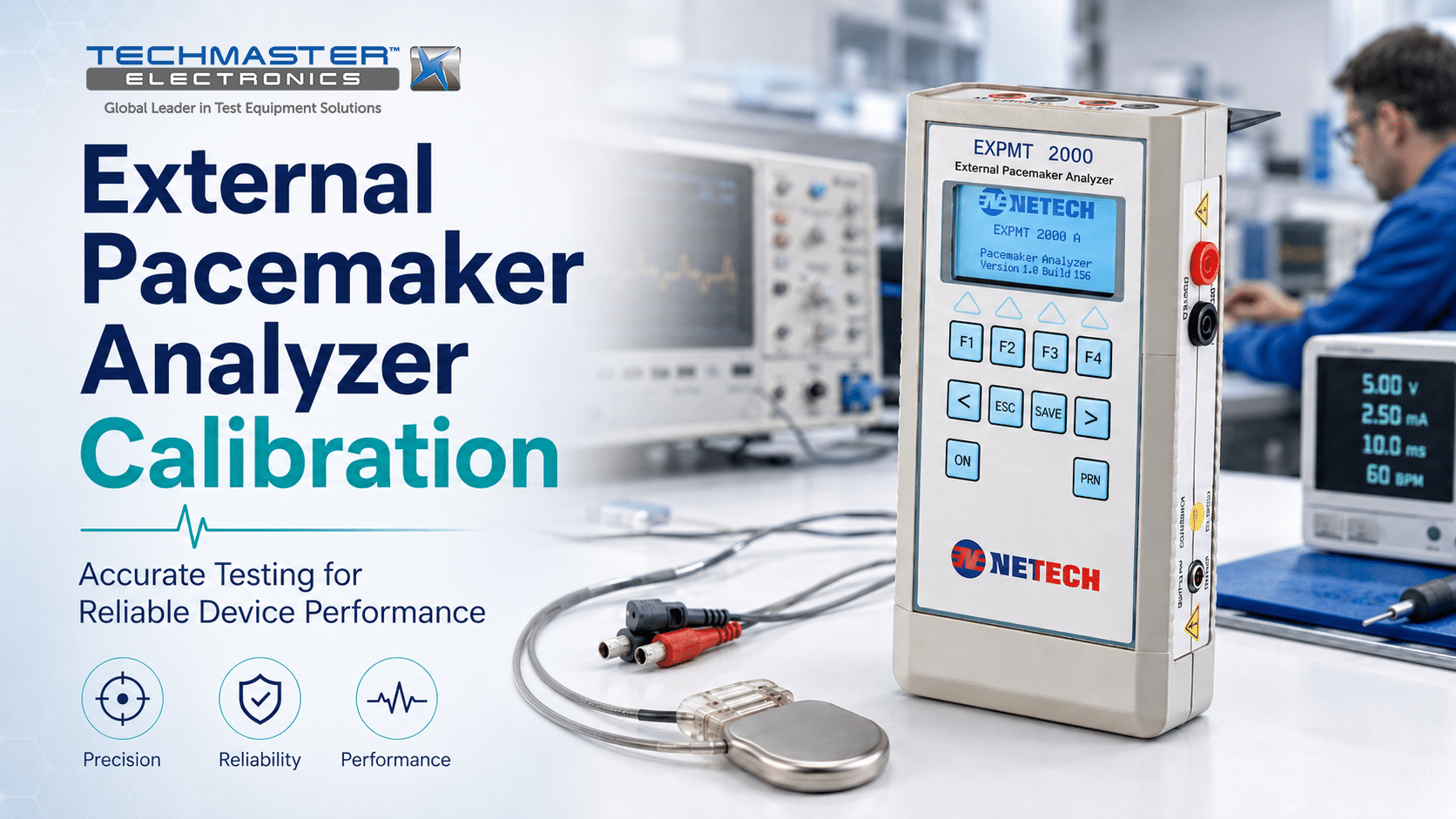
Device Overview & Industrial Role
External pacemaker analyzers are specialized testing instruments designed to verify the performance of life-critical cardiac pacing systems. These analyzers measure high-frequency electrical pulses, timing intervals, and physiological response sensitivities to ensure pacemakers operate safely. Without these diagnostic systems, clinical engineers cannot verify that cardiac stimulators will deliver correct therapeutic energy to patients.Consequently, these test instruments serve as the final line of defense in healthcare facility safety programs. They perform precise evaluations of rate, energy output, and refractory periods across various pacing modalities. Therefore, incorporating these devices into a rigorous biomedical test equipment calibration schedule directly influences patient survival rates during critical temporary pacing interventions.
Why Generic Labs Pose an Audit Risk for External Pacemaker Analyzer Calibration
To secure critical medical compliance, laboratories must possess highly specialized standards to measure micro-amp currents and microsecond timing intervals. Generic multi-product calibrators lack the resolution and specialized load networks required to verify low-energy cardiac signals, resulting in severe audit risks and unquantified measurement drift.The Challenge of Sub-Milliamp and Microsecond Measurements
Generic calibration laboratories often struggle to achieve the extreme resolution required for medical pacing diagnostics. For instance, temporary pacemakers operate using ultra-low electrical current pulses that measure in small milli-amp increments. In addition, the corresponding pulse widths are measured in precise microsecond durations. Consequently, basic industrial test standards do not possess the low-noise floor required to capture these minute signals. Standard digital multimeters introduce excessive electrical noise into the calibration loop. As a result, this noise leads to inaccurate measurement records and incorrect calibration statements.Understanding Guard-Banding and Resolution Limitations
Generalist laboratories rarely apply the necessary guard-banding protocols required by international quality standards. Guard-banding involves reducing the acceptable test limits to account for the inherent measurement uncertainty of the calibration system. Without guard-banding, an analyzer may receive a passing certificate when its actual performance borders on non-compliance. In addition, general-purpose calibrators lack the dedicated resistor networks needed to simulate cardiac loads. Specialized NIST traceable medical simulator calibration addresses this gap by utilizing exact resistance loads. Therefore, specialized medical calibration is critical to prevent false-accept decisions on your instrumentation certificates.Critical Metrological Parameters Checked During External Pacemaker Analyzer Calibration
Metrologists must systematically verify three fundamental parameters during calibration: rate and timing accuracy, electrical output amplitude, and sensing threshold sensitivity. Testing these critical pathways ensures the analyzer correctly assesses both the timing control and electrical delivery of external pacing devices.Rate & Timing Accuracy in External Pacemaker Analyzer Calibration
Rate and timing verification ensures that the pacing analyzer accurately records pulse-per-minute frequencies and timing delays down to single milliseconds. Precise timing checks prevent the calibration of pacemakers that could potentially trigger lethal arrhythmias in clinical settings. Metrologists evaluate the timing metrics by stimulating the analyzer with highly accurate reference pulses. They analyze the pulse-per-minute rate alongside the exact duration of the pacing interval. Additionally, they measure specific parameters such as the atrial-ventricular delay and refractory periods. Consequently, even a tiny deviation in timing measurement can lead to incorrect diagnostic settings. This makes precise timing verification essential for preventing dangerous patient-pacing synchronization issues. Therefore, these measurements must remain traceable to national metrology standards.Output Amplitude Verification in External Pacemaker Analyzer Calibration
Output amplitude verification checks the analyzer’s ability to measure electrical current and voltage across specified, calibrated load resistances. This process guarantees that the energy levels delivered by pacing devices are recorded with high metrological confidence. During this test, technicians pass pulse signals through calibrated, high-precision non-inductive resistors. These resistors simulate the electrical impedance typical of human heart tissue. The peak current is measured in milliamperes, while peak voltage is captured in millivolts. If the testing equipment fails to measure these parameters correctly, pacemakers could deliver insufficient energy. Conversely, they could deliver excessive, damaging energy levels. As a result, rigorous amplitude testing protects patients from ineffective therapy or tissue damage.Sensitivity Testing
Sensitivity testing assesses the analyzer’s capability to generate and detect microvolt-level cardiac signals accurately. This step confirms that the analyzer can reliably verify whether a pacemaker will properly detect a patient’s natural cardiac rhythms. This procedure requires generating extremely low-amplitude simulated cardiac waveforms. Metrologists apply these test signals in the microvolt and millivolt ranges to the analyzer input. Afterward, they verify that the analyzer correctly measures the sensitivity thresholds of the pacing device. In addition, these tests evaluate how well the analyzer filters out external electromagnetic interference. High-quality sensitivity testing ensures that pacemakers will not inappropriately inhibit pacing when exposed to electrical noise. Consequently, this step remains a cornerstone of high-level medical simulator calibration.Compliance Standards: FDA, Joint Commission, and ISO/IEC 17025
Achieving compliance with international standards requires utilizing calibration services that offer full measurement uncertainty budgets, unbroken traceability chains, and accredited certificates. These elements are mandatory for satisfying stringent FDA regulations and Joint Commission clinical inspection criteria.
Critical Audit Evidence on Your Certificate
Auditors from the Joint Commission and the FDA look for specific, verifiable metrological data during facility inspections. For example, they look for documented measurement uncertainty for every single test point. In addition, your calibration certificate must clearly display “As-Found” and “As-Left” measurement values. These data points demonstrate whether an instrument drifted out of tolerance during clinical use. Consequently, having this data helps prevent retroactive patient safety investigations. Therefore, incomplete calibration documents represent a major regulatory vulnerability.The Role of ISO/IEC 17025 Accreditation
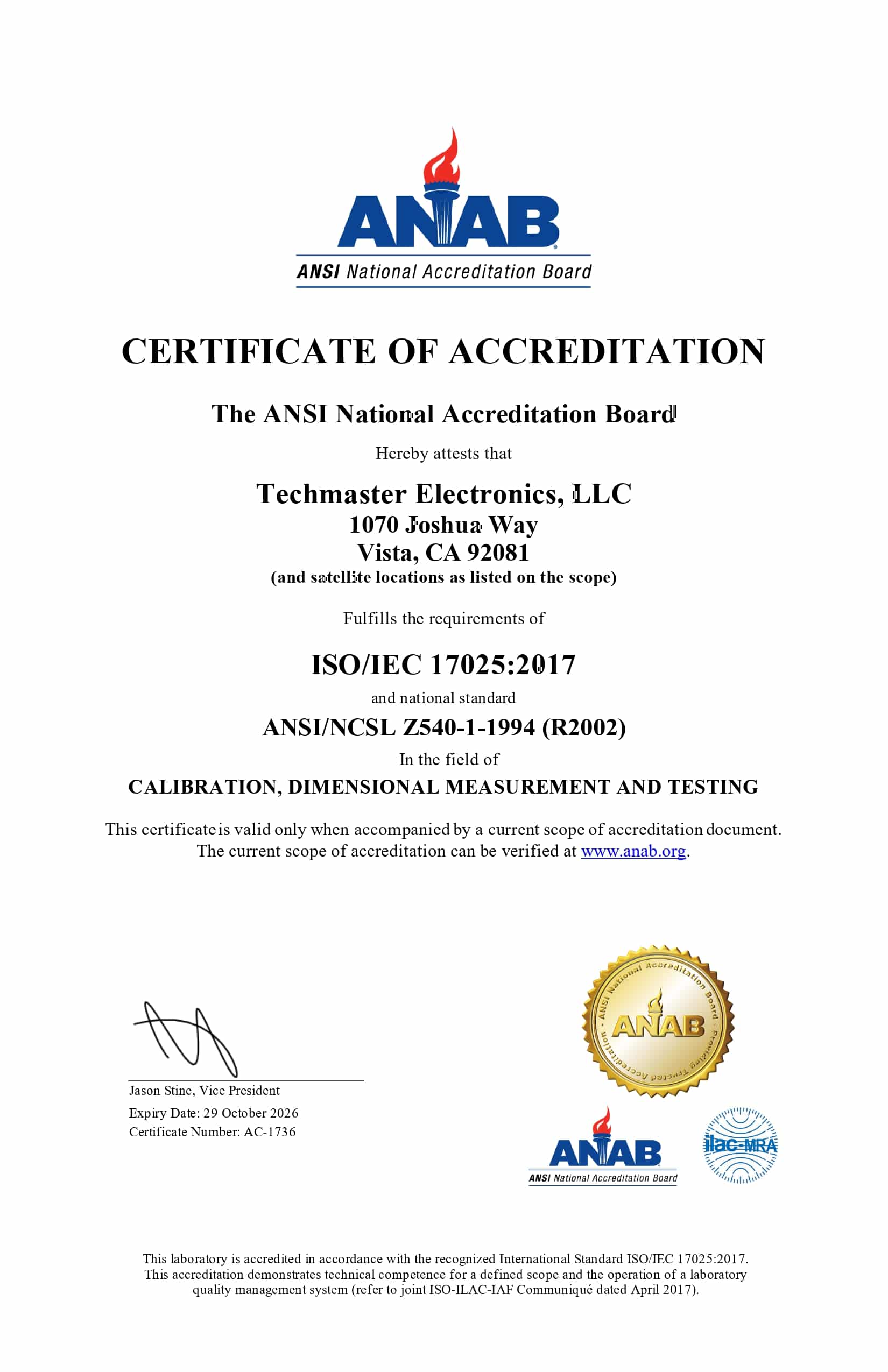
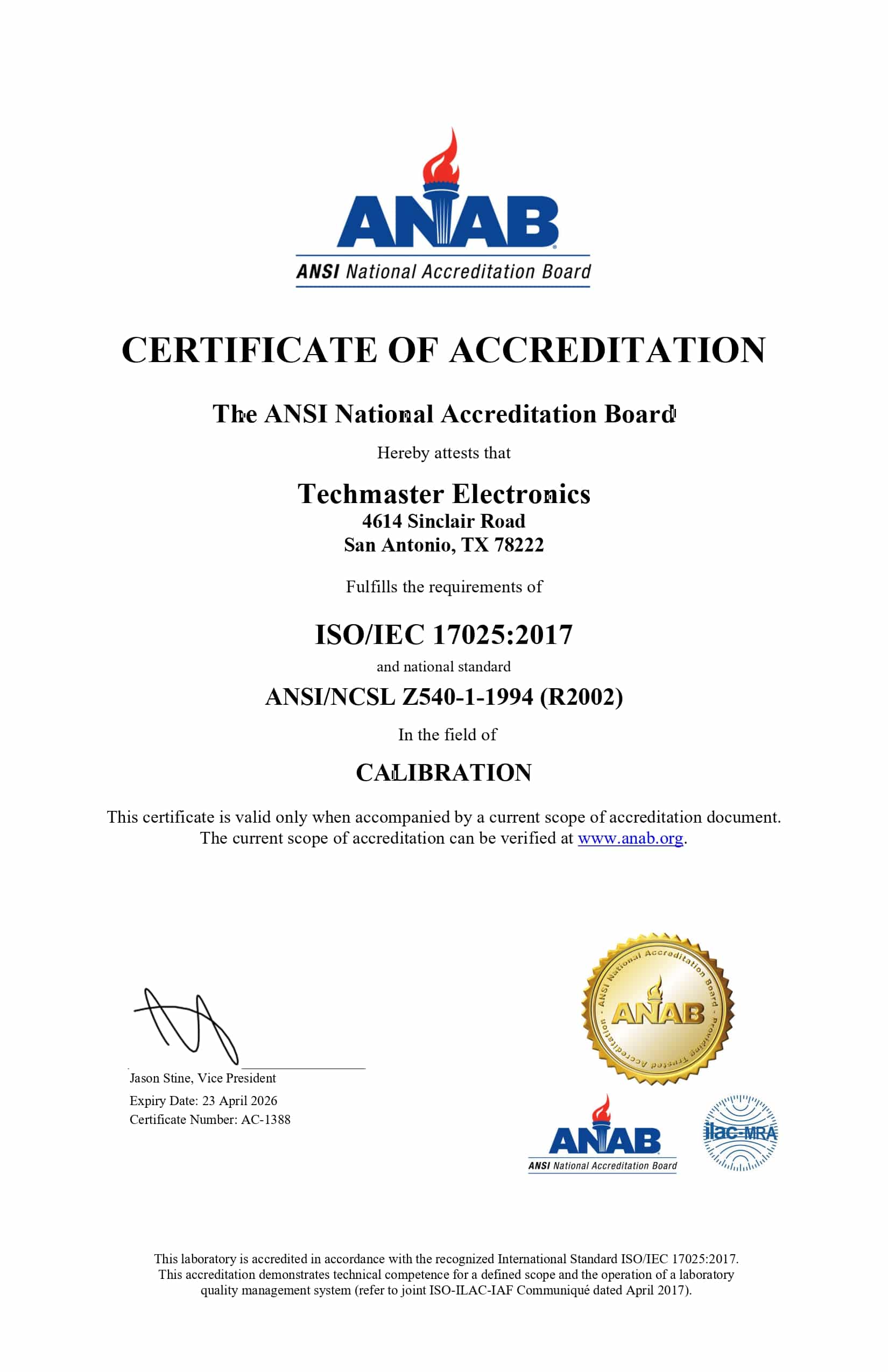
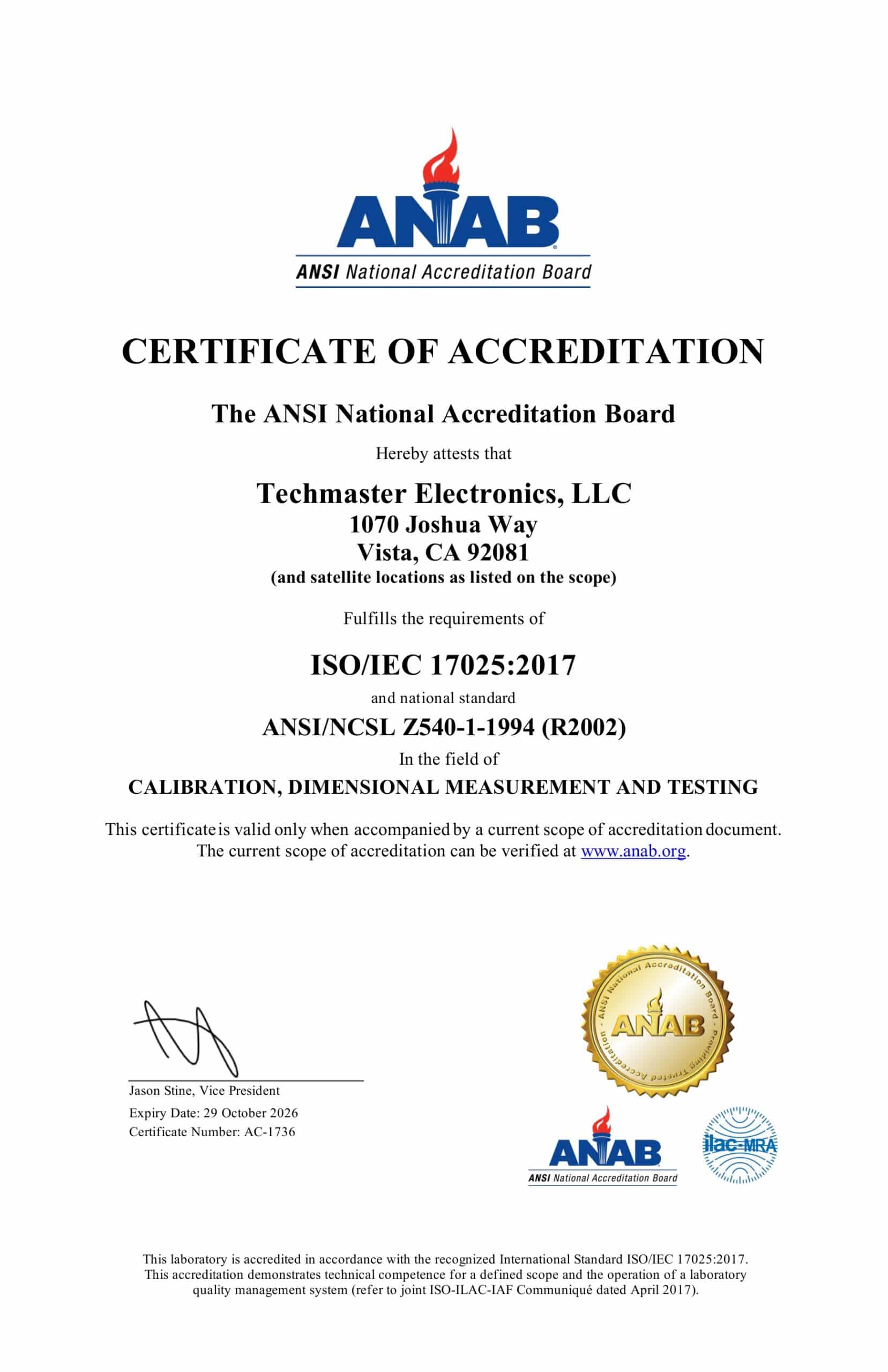
ISO/IEC 17025 accreditation is the highest standard of competence for calibration laboratories worldwide. This standard requires laboratories to undergo regular, independent assessments of their technical capabilities. Specifically, it ensures that the laboratory uses validated procedures, qualified staff, and properly maintained standards.In addition, an accredited laboratory maintains an unbroken chain of traceability to national metrology institutes. For instance, this chain links your equipment directly back to the National Institute of Standards and Technology. Consequently, prioritizing ISO 17025 accredited biomedical test equipment calibration minimizes compliance risks for high-risk medical environments.
Supported Models: OEM-Compliant Calibration Services
Our dedicated laboratory provides specialized, OEM-compliant calibration services for industry-standard external pacemaker analyzers. We utilize high-resolution reference standards configured specifically to support the leading medical simulator models on the market.Definition Blocks Metrological Traceability: The property of a measurement result whereby the result can be related to a reference through a documented unbroken chain of calibrations, each contributing to the measurement uncertainty. Guard-Banding: A metrological decision-making practice where the acceptance criteria of a measurement are reduced by the value of the measurement uncertainty to lower the probability of accepting a non-conforming device.
Prominent Models Calibration Reference Table
| Equipment Manufacturer | Analyzer Model Series | Primary Industrial Application | Applicable Metrology Standard |
|---|---|---|---|
| Fluke Biomedical | SigmaPace 1000 Series | Temporary Pacemaker Testing | ISO/IEC 17025 / ANSI/NCSL Z540 |
| Fluke Biomedical | QA-45 Series | Cardiac Signal Simulation | ISO/IEC 17025 / Manufacturer Spec |
| Datrend Technology | Phase 3 Series | Defibrillator and Pacer Testing | ISO/IEC 17025 / IEC 60601-2-4 |
| Rigel Medical | UniPulse 400 | Multi-function Defibrillator Test | ISO/IEC 17025 / EURAMET Guide |
Technical Body & “How-To” Guide
This step-by-step metrological procedure outlines the precise steps required to calibrate a diagnostic pacing analyzer. Following this standard guide ensures your technical operations align with international quality standards and manufacturer specifications.Pre-requisites & Tools Needed
- High-accuracy digital multimeter with sub-microvolt and micro-amp resolution.
- Precision non-inductive load resistors calibrated to plus or minus zero point zero five percent accuracy.
- Traceable digital oscilloscope with minimum ten-megahertz bandwidth.
- Environmental chamber maintaining temperature at twenty-three degrees Celsius plus or minus two degrees.
- Relative humidity levels maintained below sixty percent to prevent signal degradation.
Step-by-Step Calibration Procedure
- Inspect the physical casing, input terminals, and battery contacts of the analyzer for any signs of wear, contamination, or mechanical damage.
- Stabilize the analyzer under test within the controlled laboratory environment for at least four hours to eliminate thermal stress.
- Connect the analyzer input terminals to the reference standard load resistor network using shielded, low-noise metrology cables.
- Record the baseline “As-Found” noise floor of the instrument before applying any active test signals.
- Apply a series of reference timing pulses at exactly sixty pulses per minute to verify the rate measurement accuracy of the analyzer.
- Measure the pulse width of the generated reference signals at fifty percent amplitude to confirm time-base resolution.
- Verify the amplitude accuracy by injecting a calibrated ten-milliamp pulse across a five-hundred-Ohm reference load.
- Evaluate the sensing sensitivity by generating simulated cardiac waveforms down to five hundred microvolts peak amplitude.
- Compare all measured values against the manufacturer specification limits to determine compliance.
- Adjust internal calibration constants using specialized software if any parameter exhibits deviation exceeding seventy percent of the specification limit.
- Document all final measurements as “As-Left” data on the official, accredited calibration certificate.
Expert Advisory
Maintaining your medical testing equipment requires adherence to strict physical maintenance schedules and controlled storage protocols. Implementing these routine preventive steps preserves long-term instrument stability, reduces drift, and minimizes unscheduled downtime.Standard Preventive Maintenance Protocols
Clinical engineers should clean input terminals regularly using high-purity isopropyl alcohol to prevent contact resistance. Over time, oxidation on measurement terminals can introduce several Ohms of stray resistance. Consequently, this stray resistance will corrupt low-current amplitude measurements during testing. Additionally, internal batteries require routine replacement to prevent internal corrosion and voltage drops. Low battery levels can cause erratic behavior in the analyzer’s micro-volt measurement circuitry. Therefore, checking battery health before every testing sequence remains an essential best practice in biomedical test equipment calibration.Optimal Environmental and Storage Conditions
Store your high-precision analyzers in dry, climate-controlled environments when not in use. Specifically, keep temperatures between fifteen and thirty degrees Celsius. In addition, ensure the relative humidity remains below seventy percent to prevent internal condensation. Avoid exposing the instruments to rapid temperature changes or high-frequency vibrations during transport. Rapid temperature changes can trigger thermal drift in sensitive reference oscillators. Consequently, using protective, padded carrying cases safeguards the internal components from mechanical shock.Frequently Asked Questions
Our experts have compiled direct answers to the five most common technical queries regarding pacing analyzer metrology. Review these sections to understand the key compliance requirements and technical challenges of maintaining your testing assets.What is the recommended calibration interval for an external pacemaker analyzer?
The recommended calibration interval is twelve months under standard industrial use conditions. However, instruments subjected to heavy clinical field travel may require more frequent six-month verification cycles. This periodic interval ensures that measurement drift is caught before it leads to critical compliance failures in the field.Does our pacemaker analyzer calibration certificate need to show measurement uncertainty?
Yes, showing measurement uncertainty is a mandatory requirement for maintaining compliance with ISO 13485, ISO 17025, and FDA regulations. Without documented uncertainty budgets, auditors cannot verify the validity of the traceability chain. Therefore, generic certificates lacking this data are considered non-compliant during professional audits.Can a standard local calibration lab calibrate a Fluke SigmaPace 1000?
Typically, standard local laboratories cannot calibrate this model because they lack specialized low-noise reference standards. Measuring micro-amp pacing pulses requires specialized load networks that are not found in general-purpose laboratories. Consequently, using a non-specialized lab increases your risk of receiving inaccurate or out-of-tolerance calibration services.What is the difference between calibrating transcutaneous and transvenous channels?
Transcutaneous channels require high-voltage and high-current calibration parameters because they simulate external skin pacing therapies. Conversely, transvenous channels demand highly sensitive micro-current and low-voltage calibration due to their invasive, direct-to-heart pacing simulation. Therefore, a comprehensive calibration laboratory must possess separate specialized testing setups for each distinct channel type.How does measurement drift in the analyzer impact clinical pacing safety?
Measurement drift in your diagnostic analyzer can lead to the false acceptance of malfunctioning pacemakers during clinical checks. If the analyzer reads pulse outputs as stronger or faster than they actually are, faulty clinical pacemakers may be put into service. As a result, this metrological error introduces high risks of clinical failure and patient injury, highlighting the vital necessity of routine biomedical test equipment calibration.
Conclusion & CTA
Maintaining the precision of your testing instruments is critical for patient safety and regulatory compliance. Partnering with a specialized laboratory for your external pacemaker analyzer calibration and routine cardiac pacemaker analyzer calibration guarantees that your medical diagnostic devices perform to original specifications. Our comprehensive biomedical test equipment calibration solutions ensure you do not let measurement drift compromise your healthcare quality controls or expose your facility to audit failures. Contact our expert metrology team today to schedule your accredited, high-precision calibration service.Frequently asked questions
What is External Pacemaker Analyzer Calibration?
How often should a External Pacemaker Analyzer be calibrated?
What standards apply to External Pacemaker Analyzer Calibration?
What is included on the certificate?
Can you calibrate the External Pacemaker Analyzer on-site?
Need External Pacemaker Analyzer calibration?
ANAB-accredited, NIST-traceable, fast turnaround, in-lab or on-site across the USA.
Contact us for a quoteReferences & industry standards
- ISO/IEC 17025 testing & calibration laboratory requirements
- NIST calibration services and measurement traceability
- A2LA / ANAB accreditation for calibration laboratories
External standards bodies. Techmaster Electronics is an ISO/IEC 17025-accredited, NIST-traceable calibration laboratory.
Related reading: ESU analyzer calibration guide for biomedical teams

Khanh Nguyen is the Marketing Manager at Techmaster Electronics, a B2B marketing leader covering the test, measurement, and ISO/IEC 17025 accredited calibration industry across the US and Vietnam markets.