
Source Measure Unit Calibration: Intervals, Accuracy & Compliance Guide
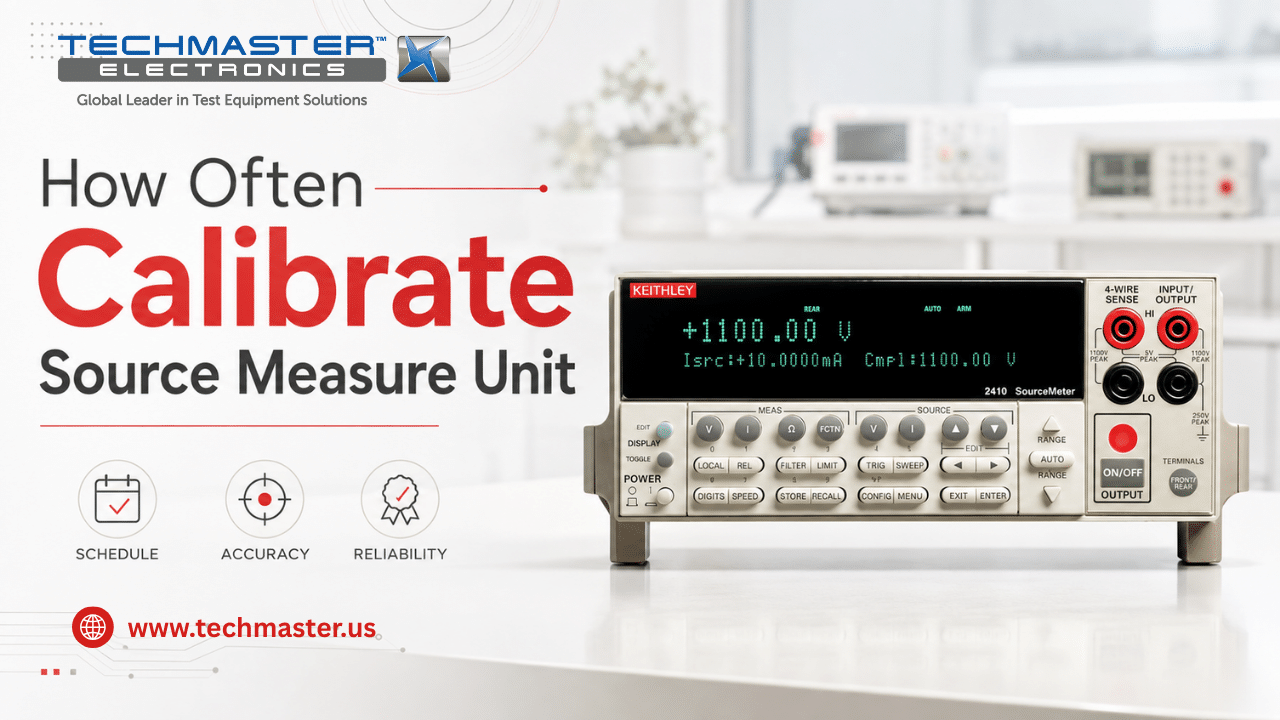
Knowing how often to calibrate a Source Measure Unit (SMU) is essential for maintaining accurate electrical measurements. Over time, even high-performance instruments can drift because internal electronic components naturally age. As a result, voltage and current measurements may no longer meet the original specifications. Therefore, regular calibration helps prevent incorrect test results, improves product quality, and supports compliance with industry standards. In addition, a well-planned calibration schedule reduces the risk of unexpected downtime and helps engineers trust every measurement during product development and manufacturing.
1. Technical Principles: Understanding SMU Accuracy and Drift
How does electronic drift affect measurement accuracy?
A Source Measure Unit combines a precision power supply with a digital measurement system. First, it generates a stable voltage or current output. At the same time, it measures the electrical response of the device under test (DUT). Then,internal control circuits continuously adjust the output to keep the programmed value stable.
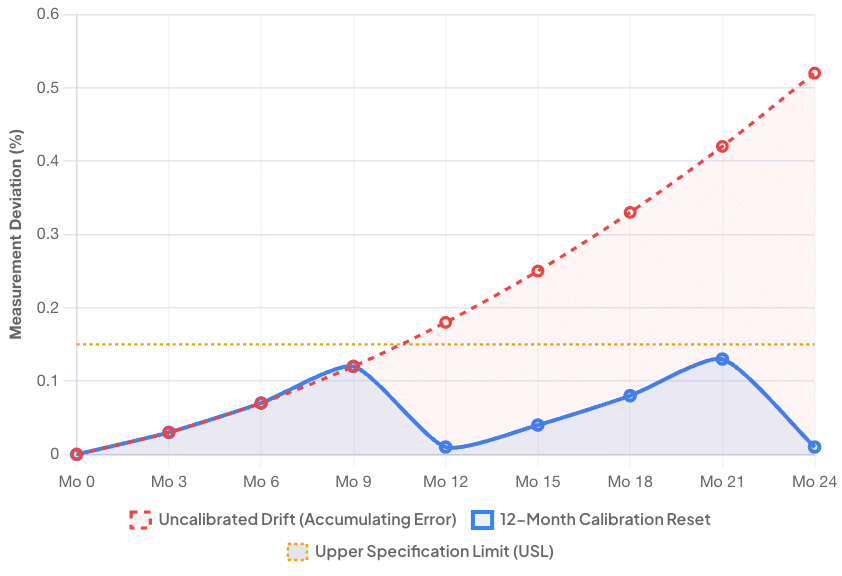
However, heat, aging, and daily use slowly change the performance of reference circuits, amplifiers, and converters. Over time, these small changes create electronic drift. As a result, the SMU may source slightly different values than expected or report incorrect measurements.
Therefore, regular calibration compares the instrument with NIST-traceable reference standards and restores its accuracy. In addition, calibration verifies that voltage sourcing, current sourcing, and measurement functions all remain within the manufacturer’s specifications.
2. Industrial Applications: Where SMU Calibration Matters
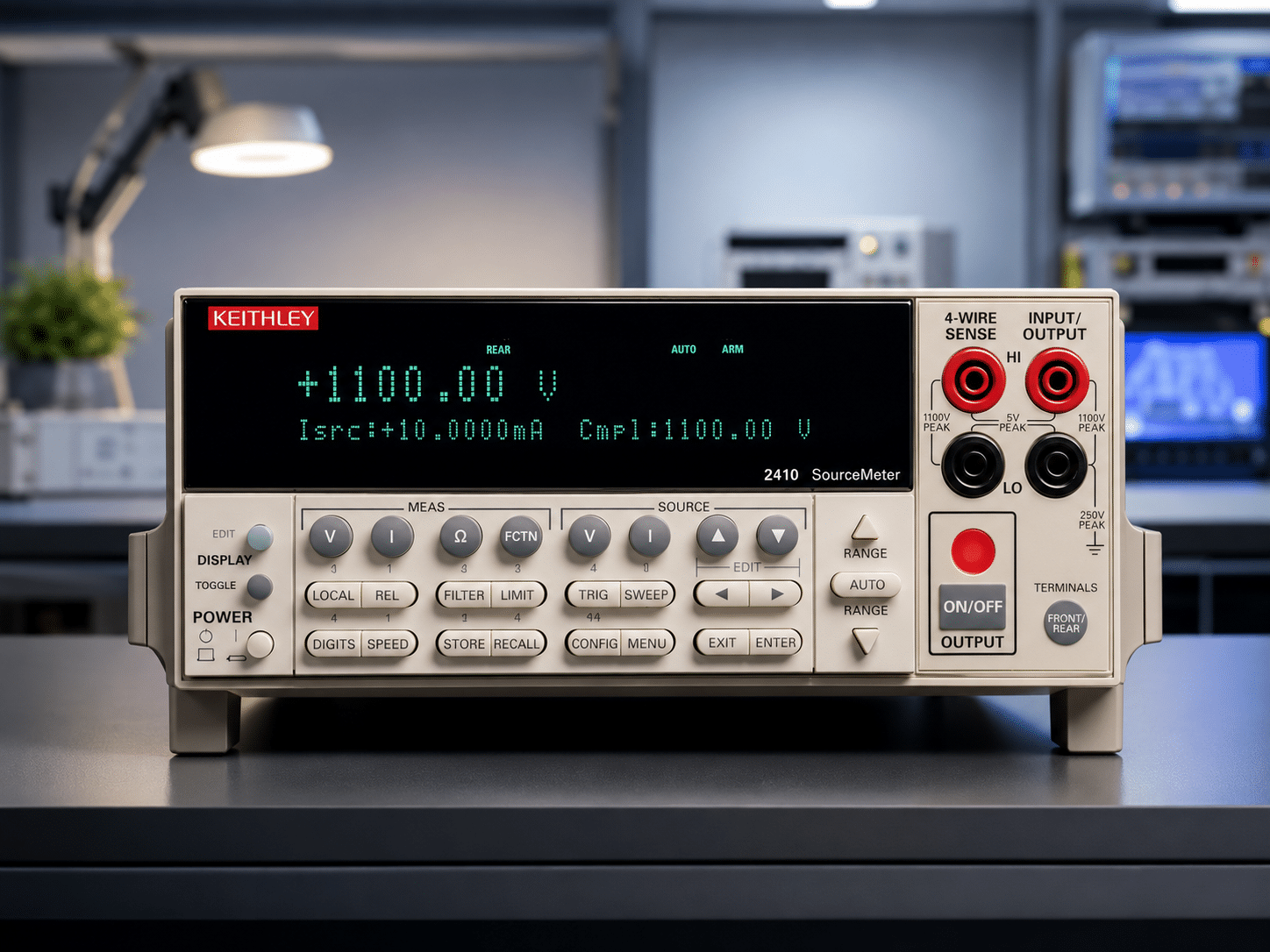
Where is Source Measure Unit calibration most important?
Because many electronic products require extremely accurate electrical testing, regular SMU calibration is important in many industries. In addition, calibrated instruments help manufacturers improve product quality and reduce production risks.
- Semiconductor Manufacturing: For example, semiconductor manufacturers use SMUs to measure leakage current, threshold voltage, and breakdown voltage for MOSFETs, IGBTs, GaN, and SiC devices. As a result, engineers can verify device performance before production.
- Optoelectronics: Similarly, LED and laser diode manufacturers use SMUs to measure forward voltage, reverse leakage current, and optical device performance. This process helps improve efficiency and product consistency.
- Battery Testing: Likewise, battery researchers evaluate charging, discharging, and leakage current using highly accurate SMUs. Becausethese measurements affect battery life and safety, reliable calibration is essential.
- Medical Device Development: Finally, medical device manufacturers use calibrated SMUs when testing implantable sensors, pacemakers, and other low-power electronic devices. Therefore, they can verify electrical performance while meeting strict regulatory requirements.
3. The Calibration Pillar: ISO/IEC 17025 Compliance
Electronic Measurement Drift Curve
Uncalibrated Error Accumulation vs. Periodic Calibration Resets (24-Mo Window)
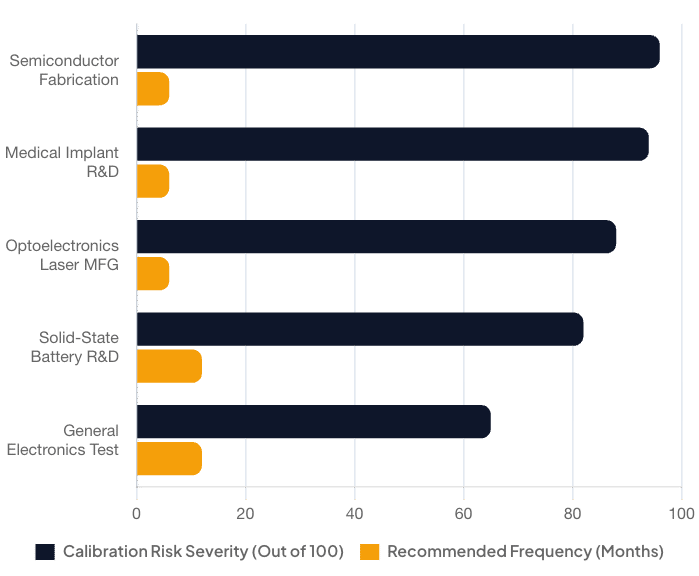
Industry Calibration Risk & Interval Matrix
Financial & Failure Consequences vs Recommended Cycles
Why is ISO/IEC 17025 important for SMU calibration?
ISO/IEC 17025 is the international standard for testing and calibration laboratories. When you use an accredited laboratory, you receive measurement results that are traceable to national standards and supported by documented measurement uncertainty.
Furthermore, accredited calibration confirms that the SMU performs within its specified limits. As a result, laboratories can support customer audits, quality programs, and regulatory inspections with confidence.
Without regular accredited calibration, measurement errors may go unnoticed. Consequently, inaccurate data can affect product quality, delay production, or create compliance issues.
4. How to Determine Your Calibration Interval
How do you choose the right calibration schedule?
- First, review the manufacturer’s recommended calibration interval. Most Source Measure Units require calibration every 12 months under normal operating conditions.
- Next, consider the environment where the instrument operates. For example, high temperatures, humidity, vibration, or continuous production can increase electronic drift.
- Then, evaluate the importance of your measurements. If your test results support aerospace, medical, or semiconductor production, a six-month calibration interval may provide better confidence.
- Finally, review previous calibration reports. If the instrument remains stable over several calibration cycles, you may adjust the interval according to your quality management procedures.
Techmaster US: Expert Metrology Services
Techmaster Electronics provides ISO/IEC 17025 accredited calibration services for Source Measure Units and other precision electrical instruments.
In addition, every calibration follows the ANAB AC-1736 quality framework and uses NIST-traceable reference standards. As a result, customers receive accurate measurement data and complete calibration documentation.
Moreover, we provide both laboratory and on-site calibration services to reduce production downtime. Whether your facility is in California, Florida, Texas, North Carolina, or another location across the United States, our metrology team can help keep your equipment accurate and compliant.
Contact Techmaster US today to discuss your calibration requirements and build a maintenance schedule that fits your operation.
Frequently Asked Questions (FAQs)
1. How do I know how to use a source measure unit properly?
Using a source measure unit properly requires understanding both the sourcing limits of your DUT and the mathematical impact of test-lead resistance. Always begin by setting strict current or voltage compliance limits to prevent thermal runaway, and use 4-wire sensing for any measurement involving high currents or ultra-low impedances.
2. What is the consequence of skipping annual instrument calibration?
Skipping annual calibration allows internal electronic drift to compound silently, resulting in inaccurate forcing and measuring. This directly leads to false pass/fail testing data, increased scrap rates, and severe regulatory penalties during quality audits.
3. Why is 4-wire Kelvin sensing critical for accurate measurements?
4-wire Kelvin sensing is a measurement technique that uses two separate pairs of cables (Force and Sense) to eliminate the voltage drop caused by the cables themselves. It is absolutely critical because standard 2-wire setups cannot differentiate between the resistance of the DUT and the resistance of the test leads.
4. What are the best electronic test equipment calibration services available in the US?
The best electronic test equipment calibration services provide comprehensive ISO/IEC 17025 compliance, robust geographic reach, and transparent capability matrices. Leading independent third-party laboratories maintain multi-site footprints to handle complex, nationwide operations with rapid turnaround times.
5. How can I find ISO/IEC 17025 accredited calibration services for electronic equipment?
To find ISO/IEC 17025 accredited calibration services for electronic equipment in the United States, contact an ANAB-accredited laboratory like Techmaster Electronics (cert AC-1736). It operates accredited labs across California, Florida and Texas, plus a lab in North Carolina.
6. What should I consider when choosing a calibration service for electronic test equipment?
When choosing a calibration service, you must evaluate strict criteria including ISO/IEC 17025 accreditation, technical scope, turnaround time, geographic coverage, and on-site testing capability. You must ensure the provider guarantees unbroken traceability to NIST standards.
7. Are there any reviews for electronic test equipment calibration services in the US?
Yes, there are independent reviews for electronic test equipment calibration services. Engineering teams can evaluate providers by checking verified customer testimonials, BBB profiles, and Google Reviews to ensure the laboratory delivers reliable, ISO/IEC 17025 compliant results.
Source Measure Unit Calibration Guide
Intervals, accuracy drift analysis, four-quadrant verification, and ISO/IEC 17025 compliance strategy for high-precision electrical test instrumentation.
CONTACT USReferences & industry standards
- ISO/IEC 17025 testing & calibration laboratory requirements
- NIST calibration services and measurement traceability
- A2LA / ANAB accreditation for calibration laboratories
External standards bodies. Techmaster Electronics is an ISO/IEC 17025-accredited, NIST-traceable calibration laboratory.
Frequently asked questions
What is source measure unit calibration?
Source Measure Unit Calibration is the documented comparison of a source measure unit against NIST-traceable reference standards under ISO/IEC 17025. It quantifies the source measure unit’s error and measurement uncertainty and confirms it performs within tolerance, with as-found and as-left data on the certificate.
How often should a source measure unit be calibrated?
Most quality systems calibrate a source measure unit every 12 months, or sooner after repair, overload, or before critical measurements. Set your interval from the manufacturer spec and your ISO 9001 / 13485 / AS9100 program and drift history.
Is Techmaster’s source measure unit calibration ISO 17025 accredited?
Yes. Techmaster Electronics is ISO/IEC 17025:2017 accredited by ANAB (Certificate AC-1736). Every source measure unit calibration is NIST-traceable and issued with a full measurement-uncertainty budget.
What is the turnaround for source measure unit calibration?
Standard turnaround is 5 business days, with 1–2 business-day expedite available. On-site calibration removes shipping time entirely for source measure units that can’t leave the floor.
Do you calibrate source measure units on-site or in-lab?
Both. Techmaster runs five US labs (Vista CA, Santa Clara CA, Orlando FL, San Antonio TX, Holly Springs NC) and offers nationwide on-site source measure unit calibration to minimize downtime.

Khanh Nguyen is the Marketing Manager at Techmaster Electronics, a B2B marketing leader covering the test, measurement, and ISO/IEC 17025 accredited calibration industry across the US and Vietnam markets.