
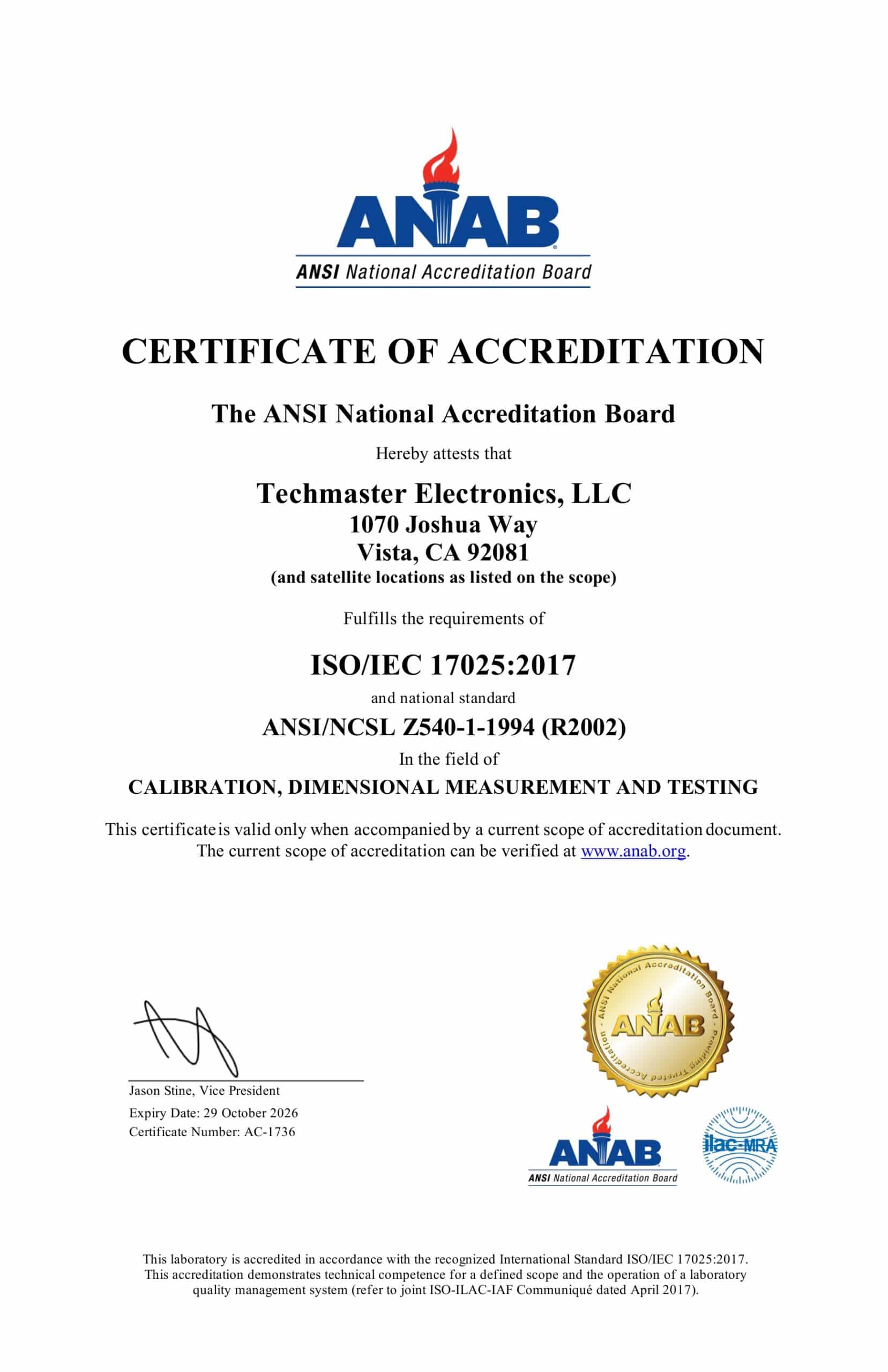
Laser Distance Meter Calibration
Accuracy across the range
How Laser Distance Meter calibration works
- Intake & visual inspection
- Environmental stabilization
- As-found measurement
- Comparison to NIST-traceable standards
- Adjustment if required
- As-left results & certificate
Your calibration, covered
In-lab vs on-site calibration
In-lab calibration
- Accredited bench with full reference standards
- Best achievable measurement uncertainties
- Pickup & return logistics handled
- Ideal for precision and reference work
On-site calibration
- We calibrate the Laser Distance Meter at your facility
- No shipping risk or transit downtime
- As-found data captured before any move
- Ideal for fixed, large or sensitive assets
In-depth guide
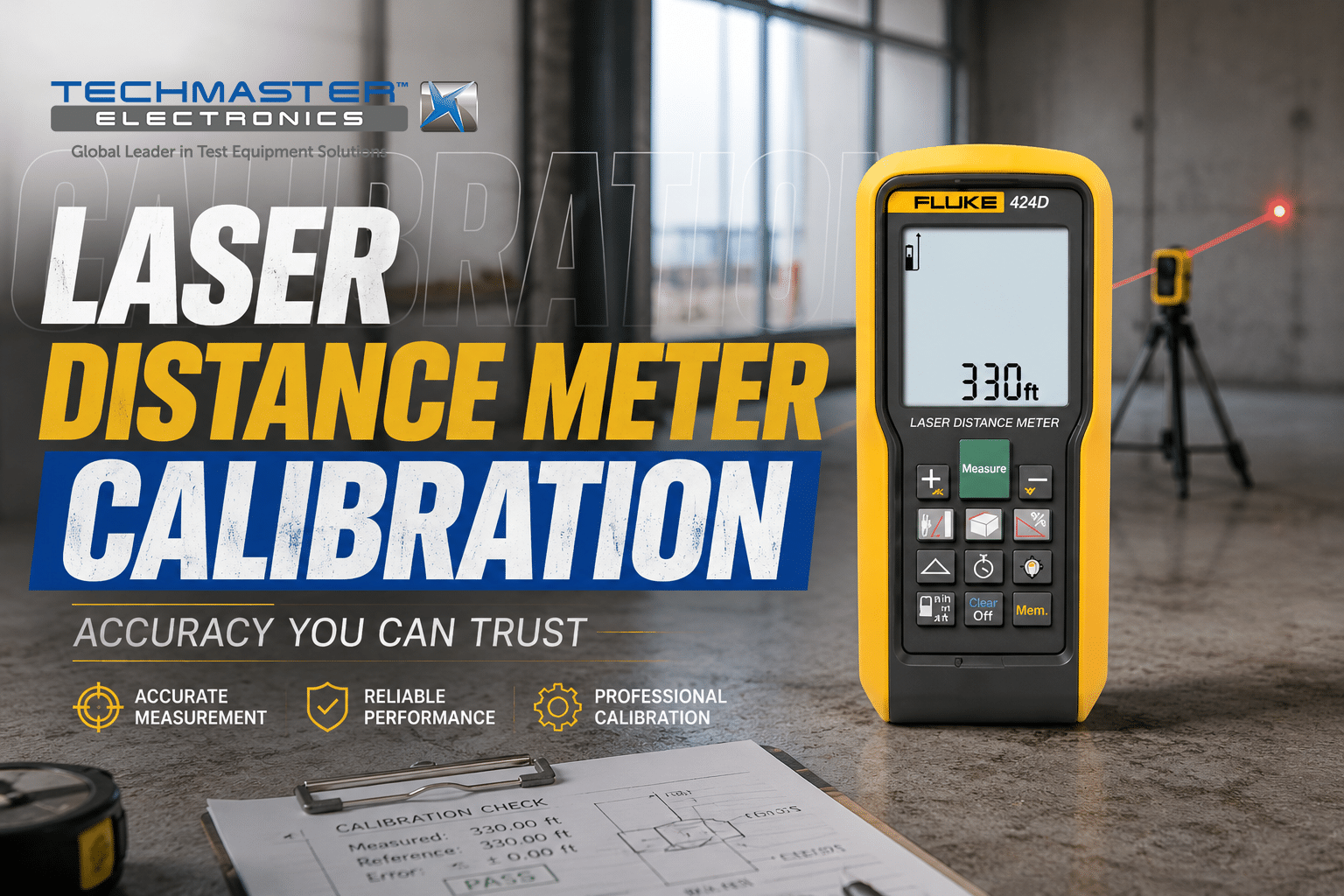
1. The Importance of Laser Distance Meter Calibration
2. When Should You Calibrate?
- Inconsistent Readings: If the device provides different measurements for the same distance, it’s likely that calibration is needed
- Physical Damage: If your meter has been dropped or has sustained damage, recalibration is essential
- Time Since Last Calibration: Even if the device seems to be working correctly, it’s good practice to check it regularly, perhaps every six months, to ensure it remains accurate
- Suspected Measurement Errors: If you notice that your measurements seem off, this is a strong sign that a recalibration is required
3. How to Check Your Laser Distance Meter Calibration
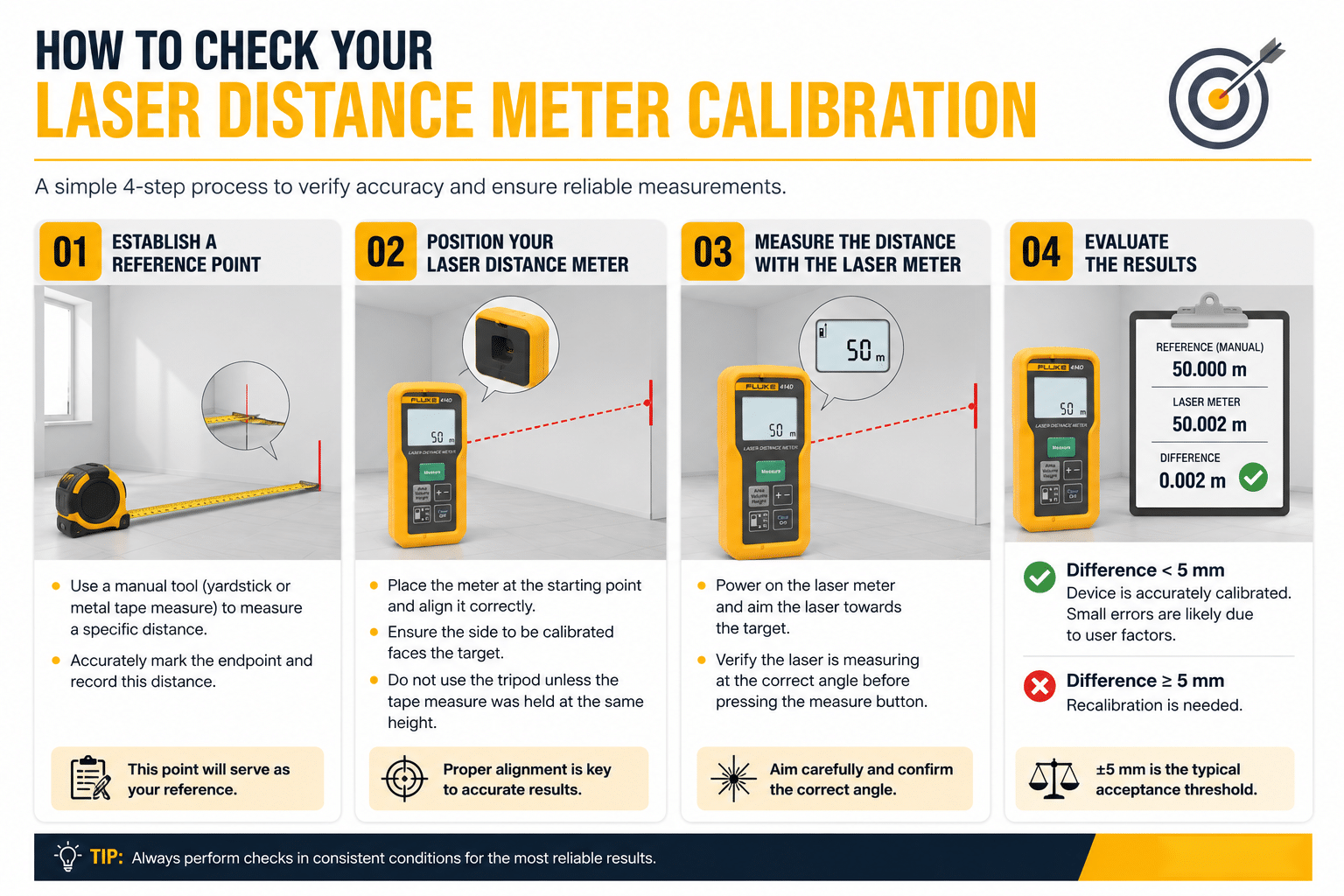
3.1. Establish a Reference Point
3.2. Position Your Laser Distance Meter
3.3. Measure the Distance with the Laser Meter
3.4. Evaluate the Results
4. Recalibration: Knowing When to Call the Experts
- If your laser meter’s measurements are off by five millimeters or more, it’s time for recalibration.
- Do not attempt to calibrate a laser distance meter yourself. This is a precise and delicate process, and improper handling can result in electric shock. Instead, you should contact the manufacturer for their guidance and recalibration policies.
5. Maintaining Your Laser Distance Meter for Accuracy
- Storage: Always keep your laser measure in its protective case when not in use.
- Careful Handling: Avoid dropping the device and handle it carefully during transport. If you are transporting the laser measure in your vehicle, be sure to drive gently to protect its calibration.
- Cleaning: Regularly clean the meter to remove any dust, dirt, or debris before storing it.
- Moisture Protection: Even if your meter is water-resistant, you should minimize its exposure to water, and thoroughly dry it before storing.
- Battery Care: Remove the batteries when the device is not being used to prevent battery drain.
- Professional Repairs: For any repairs, always send the device to the manufacturer and never attempt DIY repairs.
6. Selecting the Right Laser Measure
- Calibration: Select a model with a long-lasting calibration that is guaranteed by the manufacturer.
- Durability: Opt for a meter that is weather-resistant to ensure its reliability in various conditions.
- Portability: Choose a lightweight model that is easy to carry on the job site.
- Power Source: Most meters operate using replaceable or rechargeable batteries.
- Features: Depending on your needs, consider features such as angle measurements, calculation abilities, and memory options.
Conclusion
Outside Micrometer Calibration: Flatness, Parallelism and Linearity Checks
How an ISO/IEC 17025 lab calibrates an outside micrometer: gage block linearity points, optical flat...
Oct

Glass Scale Calibration for DROs, Comparators and Measuring Machines
Home » Laser Distance Meter CalibrationGlass scales (linear encoders) sit inside digital readouts on mills...
Oct

Microscope Calibration: Stage Micrometers, Reticles and Imaging Software
Home » Laser Distance Meter Calibration If a microscope is only used to look at...
Oct
How Often Calibrate Universal Testing Machine?
Home » Laser Distance Meter Calibration Universal Testing Machine FAQ: Calibration Intervals, Accuracy & Compliance...
Sep
How to Use a Universal Testing Machine?
Home » Laser Distance Meter Calibration How to Use a Universal Testing Machine: Setup, Operation...
Sep
Universal Testing Machine Calibration: ISO/IEC 17025 Guide
Home » Laser Distance Meter Calibration Universal Testing Machine Calibration: ISO/IEC 17025 Step-by-Step Guide In...
Sep
How often calibrate Ultrasonic Thickness Gauge?
Home » Laser Distance Meter Calibration Ultrasonic Thickness Gauge FAQ: Calibration Intervals, Accuracy & Compliance...
Sep
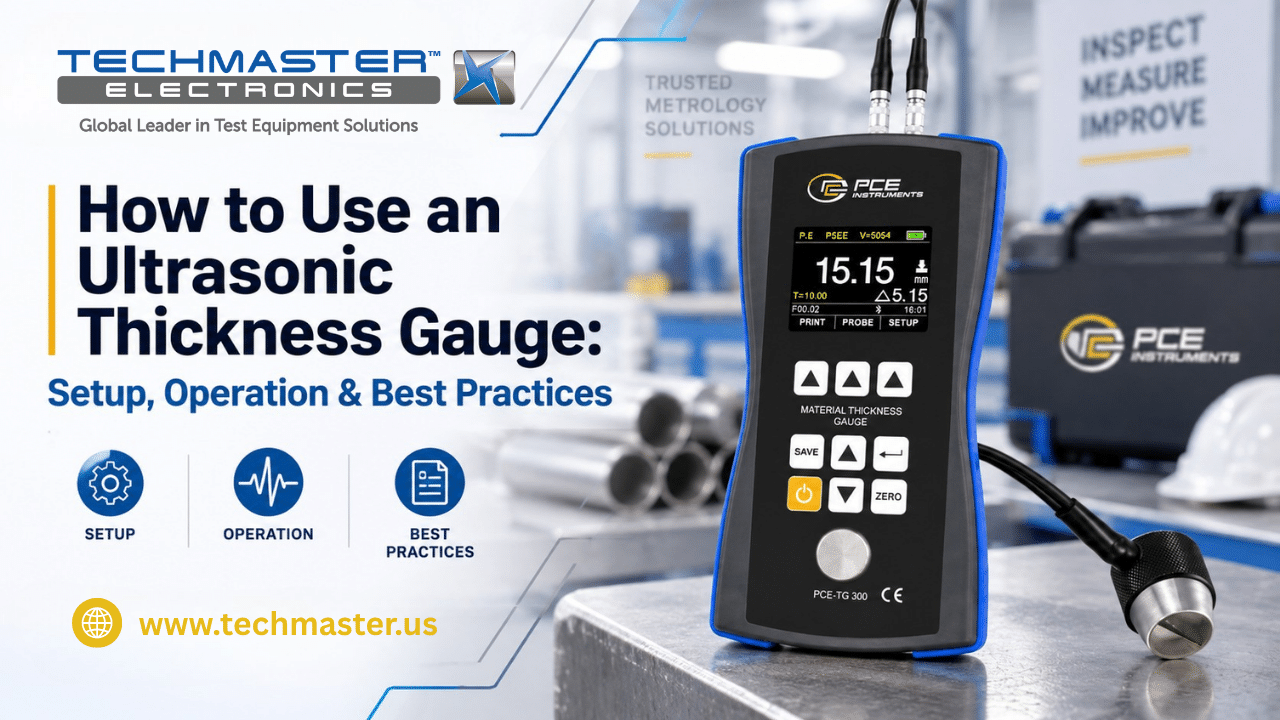
How to Use an Ultrasonic Thickness Gauge?
Home » Laser Distance Meter Calibration How to Use an Ultrasonic Thickness Gauge: Setup, Operation...
Sep
Frequently asked questions
What is Laser Distance Meter Calibration?
How often should a Laser Distance Meter be calibrated?
What standards apply to Laser Distance Meter Calibration?
What is included on the certificate?
Can you calibrate the Laser Distance Meter on-site?
Need Laser Distance Meter calibration?
ANAB-accredited, NIST-traceable, fast turnaround — in-lab or on-site across the USA.
Contact us for a quoteReferences & industry standards
- ISO/IEC 17025 testing & calibration laboratory requirements
- NIST calibration services and measurement traceability
- A2LA / ANAB accreditation for calibration laboratories
External standards bodies. Techmaster Electronics is an ISO/IEC 17025-accredited, NIST-traceable calibration laboratory.

Khanh Nguyen is the Marketing Manager at Techmaster Electronics, a B2B marketing leader covering the test, measurement, and ISO/IEC 17025 accredited calibration industry in the United States.