
Measuring Amplifier Calibration
Accuracy across the range
How Measuring Amplifier calibration works
- Intake & visual inspection
- Environmental stabilization
- As-found measurement
- Comparison to NIST-traceable standards
- Adjustment if required
- As-left results & certificate
Your calibration, covered
In-lab vs on-site calibration
In-lab calibration
- Accredited bench with full reference standards
- Best achievable measurement uncertainties
- Pickup & return logistics handled
- Ideal for precision and reference work
On-site calibration
- We calibrate the Measuring Amplifier at your facility
- No shipping risk or transit downtime
- As-found data captured before any move
- Ideal for fixed, large or sensitive assets
In-depth guide
What is Measuring Amplifier Calibration?
Definition
Measuring amplifier calibration is the process of verifying and adjusting an amplifier’s performance to ensure it meets defined accuracy standards. This involves comparing the amplifier’s output to a known reference and making necessary corrections to maintain precision in signal measurement. Proper calibration guarantees reliable and repeatable results in test and measurement applications.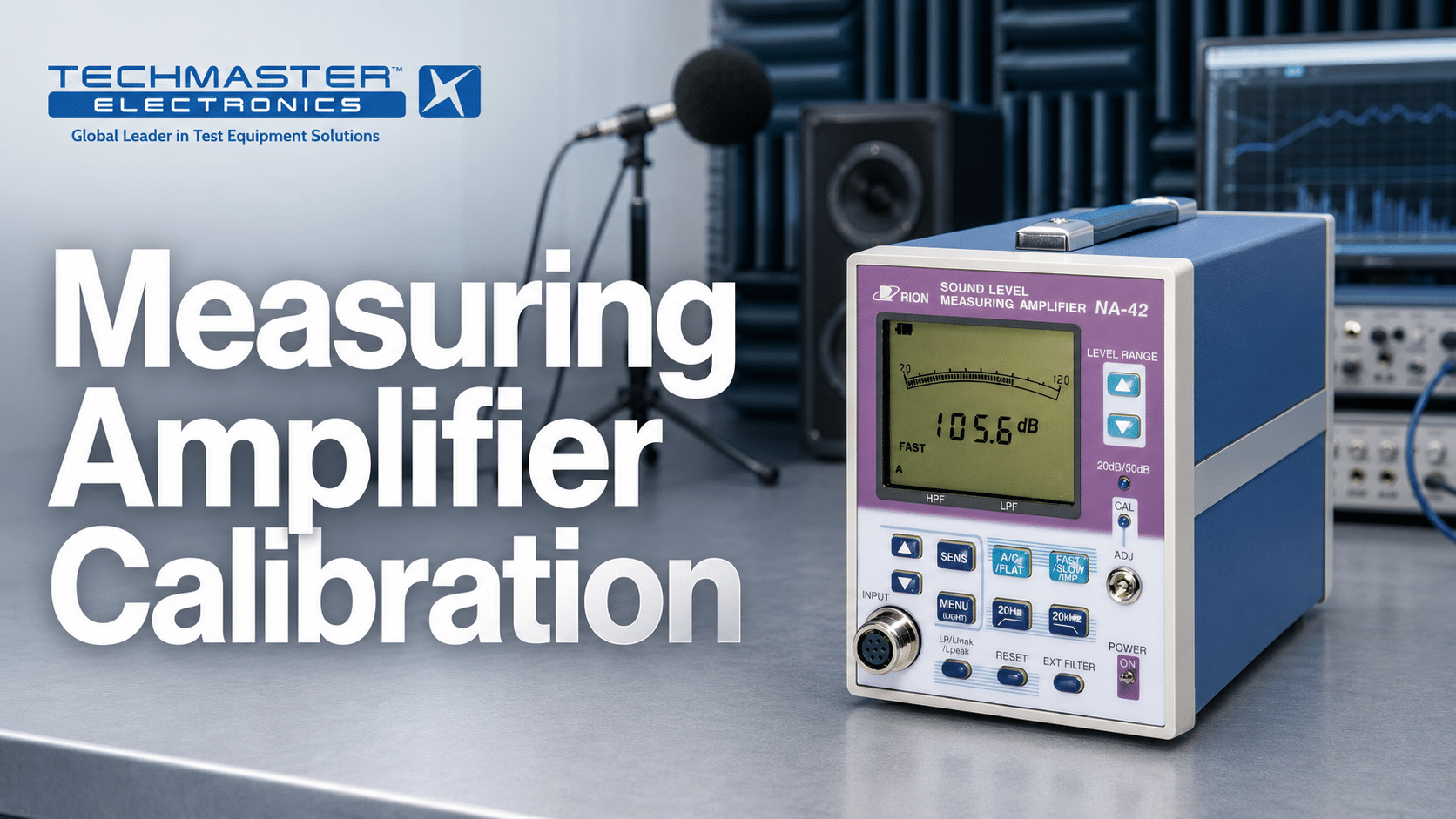
Why is Measuring Amplifier Calibration Important?
- Maintains Accuracy – Over time, environmental factors and component aging cause deviations. Calibration restores precision.
- Ensures Compliance – Many industries require adherence to ISO 17025, which defines laboratory competence and calibration guidelines.
- Prevents Costly Errors – Incorrect measurements can lead to defects, safety risks, and regulatory penalties.
- Extends Equipment Lifespan – Detecting early signs of drift minimizes the risk of sudden failures.
Why is Calibration Necessary?
Key Reasons for Measuring Amplifier Calibration
- Drift Compensation – Electrical components degrade over time, causing minor deviations in readings. Resistors, capacitors, and other circuit elements may change values, affecting amplifier gain and offset.
- Environmental Influences – Temperature variations, humidity, and electromagnetic interference impact amplifier performance. Thermal expansion can shift circuit characteristics, reducing accuracy.
- Regulatory Compliance – Industries like aerospace, automotive, and medical devices must meet strict calibration standards. Failure to maintain records or follow protocols can result in legal consequences.
- Measurement Consistency – Regular calibration ensures stable, repeatable results for quality assurance.
- Signal Integrity – Noise, distortion, and phase shift affect measurement accuracy. Proper calibration corrects deviations and reduces interference.
Industry Standards Related to Calibration
- ISO 9001:2015 – Establishes quality management systems, ensuring organizations follow structured calibration procedures.
- ANSI/NCSL Z540.1 – A U.S. standard defining traceability and accuracy requirements for calibration systems.
- ISO 17025 – The leading international standard for calibration laboratories, emphasizing traceable calibration and technical competence.
Step-by-Step Measuring Amplifier Calibration Process
- Preparation & Equipment Setup
- Gather necessary calibration standards and tools.
- Ensure the measuring amplifier and environment meet ideal conditions (temperature, humidity, etc.).
- Baseline Measurement
- Record the amplifier’s output against a reference signal.
- Identify any deviations from expected values.
- Adjustment & Correction
- Modify amplifier settings or apply software corrections as needed.
- Verification & Validation
- Re-test using different input levels to confirm adjustments.
- Compare results against industry standards.
- Documentation & Certification
- Record calibration results in a detailed report.
- Issue a calibration certificate if required by ISO 17025.
Common Mistakes and Best Practices
Common Mistakes
- Neglecting Regular Calibration – Small deviations accumulate over time, leading to significant errors. Skipping routine calibration increases the risk of faulty readings, compliance violations, and operational failures.
- Using Incorrect Reference Standards – Calibration performed with non-traceable or improper standards can introduce more errors rather than correcting them, compromising measurement reliability.
- Ignoring Environmental Conditions – Temperature fluctuations, humidity, and electromagnetic interference can distort calibration results. Conducting calibration in unstable conditions may lead to inaccurate adjustments.
- Poor Documentation – Incomplete or missing calibration records can result in compliance failures, especially during ISO 17025 audits. Without proper documentation, proving measurement accuracy becomes difficult.
- Overlooking Signal Distortion – External interference, power fluctuations, or signal degradation can impact amplifier performance. Ignoring these factors during calibration can result in unreliable measurements.
Best Practices
– Follow manufacturer-recommended calibration intervals. – Use traceable calibration equipment that meets ISO 17025 standards. – Maintain controlled environmental conditions during calibration. – Keep detailed calibration logs and reports for audits and compliance. – Train personnel on proper calibration techniques to reduce human error.Conclusion
Making sure your measuring amplifier is properly calibrated isn’t just a technical task, it’s key to keeping measurements accurate, operations smooth, and equipment reliable. Regular calibration helps prevent costly mistakes, ensures compliance, and extends the life of your equipment.
If you haven’t checked your calibration schedule lately, now is a good time to do it. A well-calibrated amplifier means better data, fewer issues, and a more efficient workflow.
Are you looking for professional calibration services with an ISO 17025 accredited laboratory? Contact Techmaster Electronics today!
Oscilloscope Probe Calibration: Compensation, Attenuation and Bandwidth
Home » Measuring Amplifier Calibration: A Complete GuideAn oscilloscope is only as accurate as the...
Oct
Gauss Meter Calibration: Hall Probes, Reference Magnets and Zero Offset
Home » Measuring Amplifier Calibration: A Complete Guide Gauss meters (teslameters) measure magnetic flux density....
Oct
How Often Calibrate a Battery Analyzer?
Home » Measuring Amplifier Calibration: A Complete Guide How Often Should You Calibrate a Battery...
Oct
How to Use a Battery Analyzer: Setup, Operation & Best Practices
Home » Measuring Amplifier Calibration: A Complete Guide How to Use a Battery Analyzer: Setup,...
Oct
Battery Analyzer Calibration: ISO/IEC 17025 Guide
Home » Measuring Amplifier Calibration: A Complete Guide Battery Analyzer Calibration: ISO/IEC 17025 Step-by-Step Guide...
Sep
Bench DMM Calibration: What a 6½-Digit Multimeter Test Actually Covers
What an accredited 6½-digit bench DMM calibration actually covers: 40–100 test points, artifact calibration vs...
Sep
Rogowski Coil Calibration: Why Flexible AC Current Probes Drift
Rogowski coil calibration verifies the coil and its integrator as one system. Here is why...
Aug
How often to calibrate a Source Measure Unit?
Home » Measuring Amplifier Calibration: A Complete Guide Source Measure Unit Calibration: Intervals, Accuracy &...
Aug
Frequently asked questions
What is Measuring Amplifier Calibration?
How often should a Measuring Amplifier be calibrated?
What standards apply to Measuring Amplifier Calibration?
What is included on the certificate?
Can you calibrate the Measuring Amplifier on-site?
Need Measuring Amplifier calibration?
ANAB-accredited, NIST-traceable, fast turnaround, in-lab or on-site across the USA.
Contact us for a quoteReferences & industry standards
- ISO/IEC 17025 testing & calibration laboratory requirements
- NIST calibration services and measurement traceability
- A2LA / ANAB accreditation for calibration laboratories
External standards bodies. Techmaster Electronics is an ISO/IEC 17025-accredited, NIST-traceable calibration laboratory.

Khanh Nguyen is the Marketing Manager at Techmaster Electronics, a B2B marketing leader covering the test, measurement, and ISO/IEC 17025 accredited calibration industry in the United States.