
Battery Analyzer Calibration: ISO/IEC 17025 Step-by-Step Guide
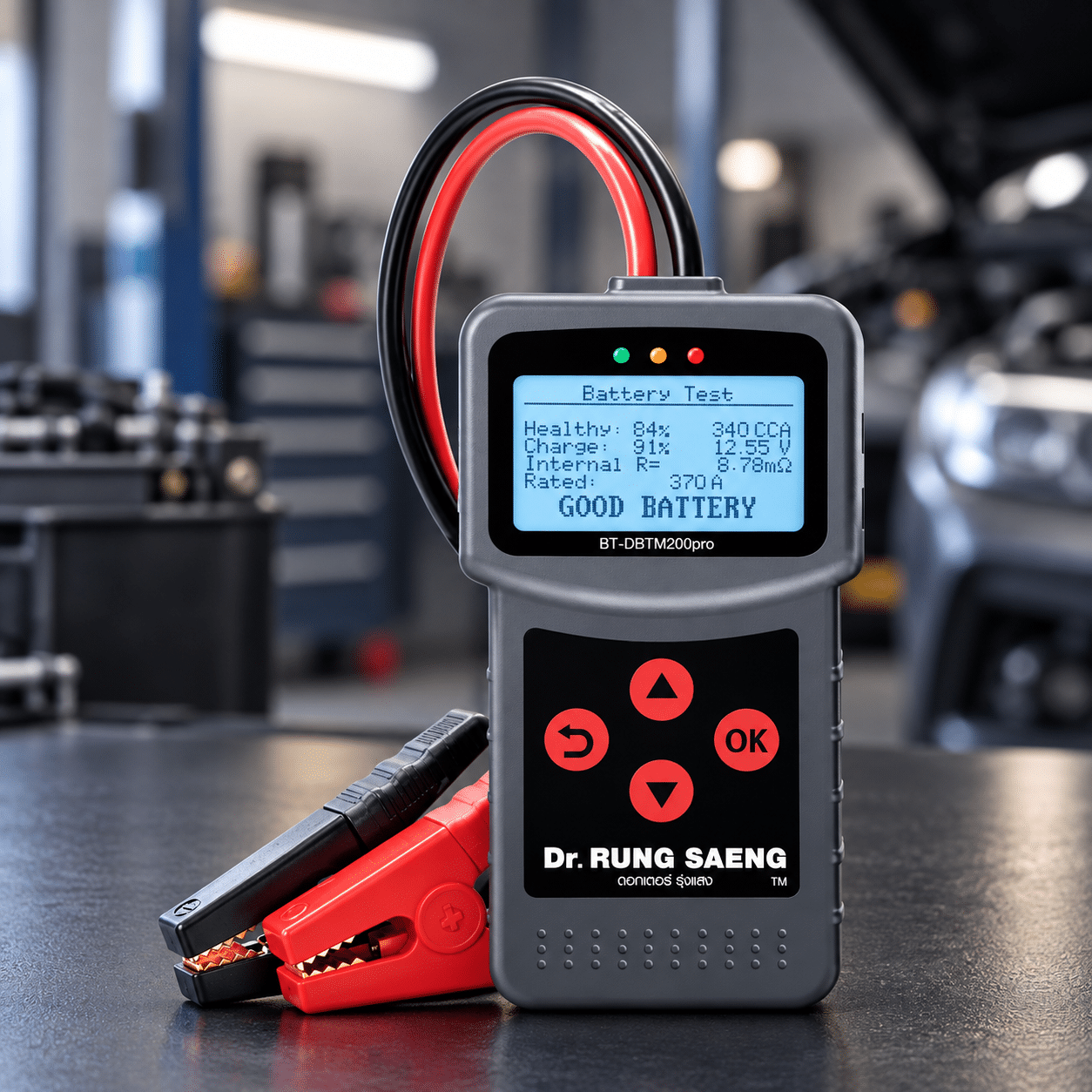
In electric vehicle (EV) manufacturing, data center UPS systems, and energy storage, accurate battery testing is essential. Battery analyzers measure key values such as voltage, current, capacity, temperature, and internal resistance. Therefore, reliable measurements are important for battery quality and safety. Over time, however, electronic parts and sensing circuits can drift. For example, current shunts can change with heat and age. ADC and DAC reference circuits can also develop small offset or gain errors. In addition, relay contacts can wear after many switching cycles. For this reason, regular battery analyzer calibration helps confirm that test results remain within the required limits. When performed by an ISO/IEC 17025 accredited laboratory, calibration also provides documented measurement results and traceability within the laboratory’s accredited scope.
Primary Electronic and Hardware Drift Mechanisms
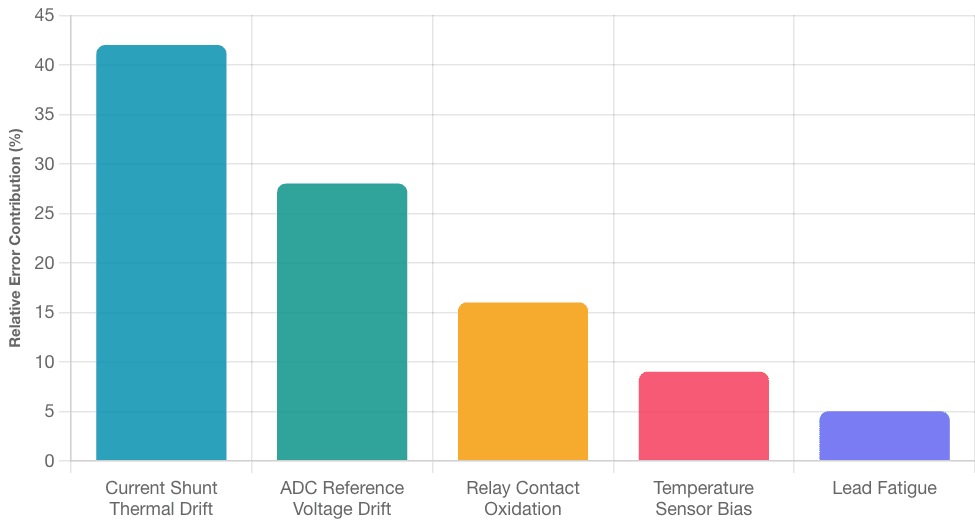
Battery analyzers can develop measurement errors for several reasons. In particular, high-current testing and continuous operation can increase the risk of drift.
1. Current Shunt Thermal Drift
Battery analyzers often use shunts to measure charge and discharge current. During high-current testing, the shunt produces heat. As a result, its resistance can change slightly.
Over time, repeated heating and cooling can also affect the shunt and its temperature coefficient. Therefore, current readings may develop offset or gain errors if the measurement path is not checked regularly.
2. ADC and DAC Reference Voltage Drift
Battery analyzers use analog-to-digital converters (ADCs) and, in some systems, digital-to-analog converters (DACs). These circuits depend on stable reference voltages.
However, temperature changes and component aging can affect the reference voltage. As a result, the analyzer may show small errors in voltage or current measurements.
3. Relay Contact Wear and Oxidation
Multi-channel battery analyzers often use relays to switch between cells or test channels. After many switching cycles, relay contacts can wear or oxidize.
Consequently, contact resistance can increase. This effect is especially important when the analyzer measures very low resistance values, where even a small added resistance can affect the result.
4. Temperature Sensor Measurement Errors
Battery test systems may use thermistors, thermocouples, or other sensors to monitor battery temperature.
Sensor aging, connection problems, and changes in the measurement circuit can cause temperature errors. Therefore, temperature channels should be checked when they are part of the analyzer’s measurement function or safety control system.
The Calibration Pillar: ISO/IEC 17025 Compliance and Traceability
An internal self-test is useful for routine operation, but it is not the same as accredited calibration.
For example, a self-test may confirm that the analyzer starts correctly or that an internal circuit responds as expected. However, it may not fully verify measurement accuracy across the analyzer’s operating range.
By comparison, battery analyzer calibration performed by an ISO/IEC 17025 accredited laboratory can include defined measurement points, reference standards, measurement uncertainty, and documented results.
The calibration chain can also provide traceability to national or international measurement standards when this is included within the applicable accredited scope. In the United States, this may include traceability through NIST.
Accurate calibration helps reduce two common types of production risk:
- False Pass Results: If the analyzer reports lower resistance or a more favorable voltage than the actual value, a battery with poor performance may pass a production test.
- False Fail Results: If the analyzer reports excessive resistance or an incorrect voltage, a battery that meets the required specification may be rejected.
Therefore, calibration supports both measurement confidence and better production control.
Daily Operational Check vs. ISO/IEC 17025 Accredited Calibration
Routine checks and accredited calibration serve different purposes.
Daily Operator Field Check vs. ISO/IEC 17025 Calibration
Internal loopback self-checks confirm basic hardware functionality, but they cannot evaluate shunt thermal non-linearity or provide legally defensible measurement uncertainty required for automotive audits.
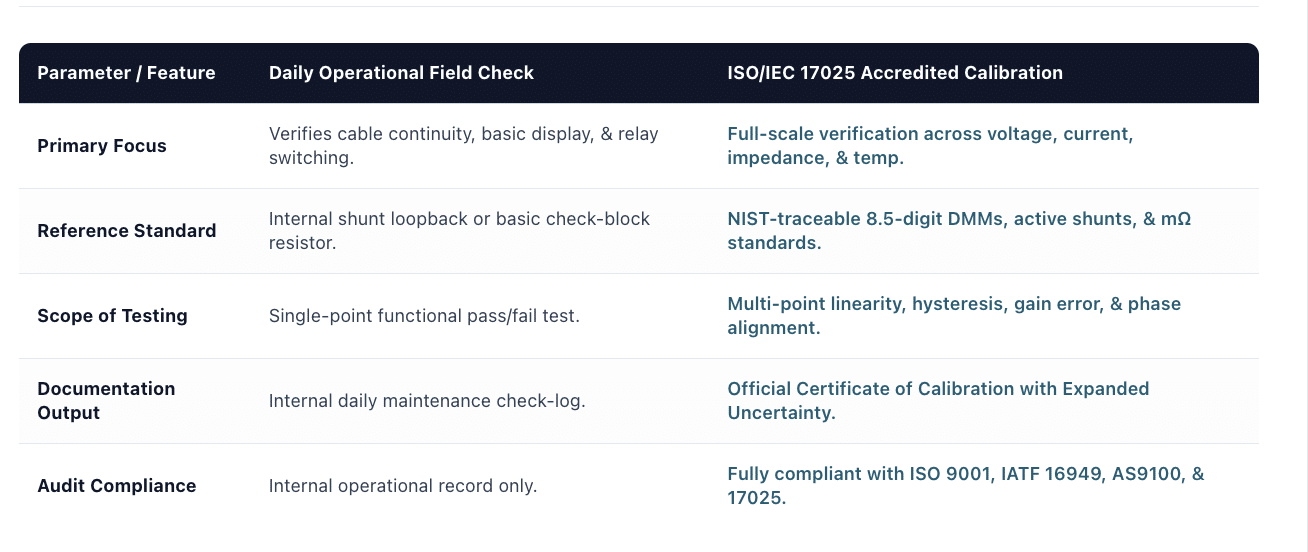
In practice, a daily check should not replace periodic calibration. Instead, both activities can work together.
For example, daily checks can help identify sudden changes between formal calibration events. Accredited calibration can then provide a more complete assessment of measurement performance.
Techmaster US: Your Accredited Calibration Partner
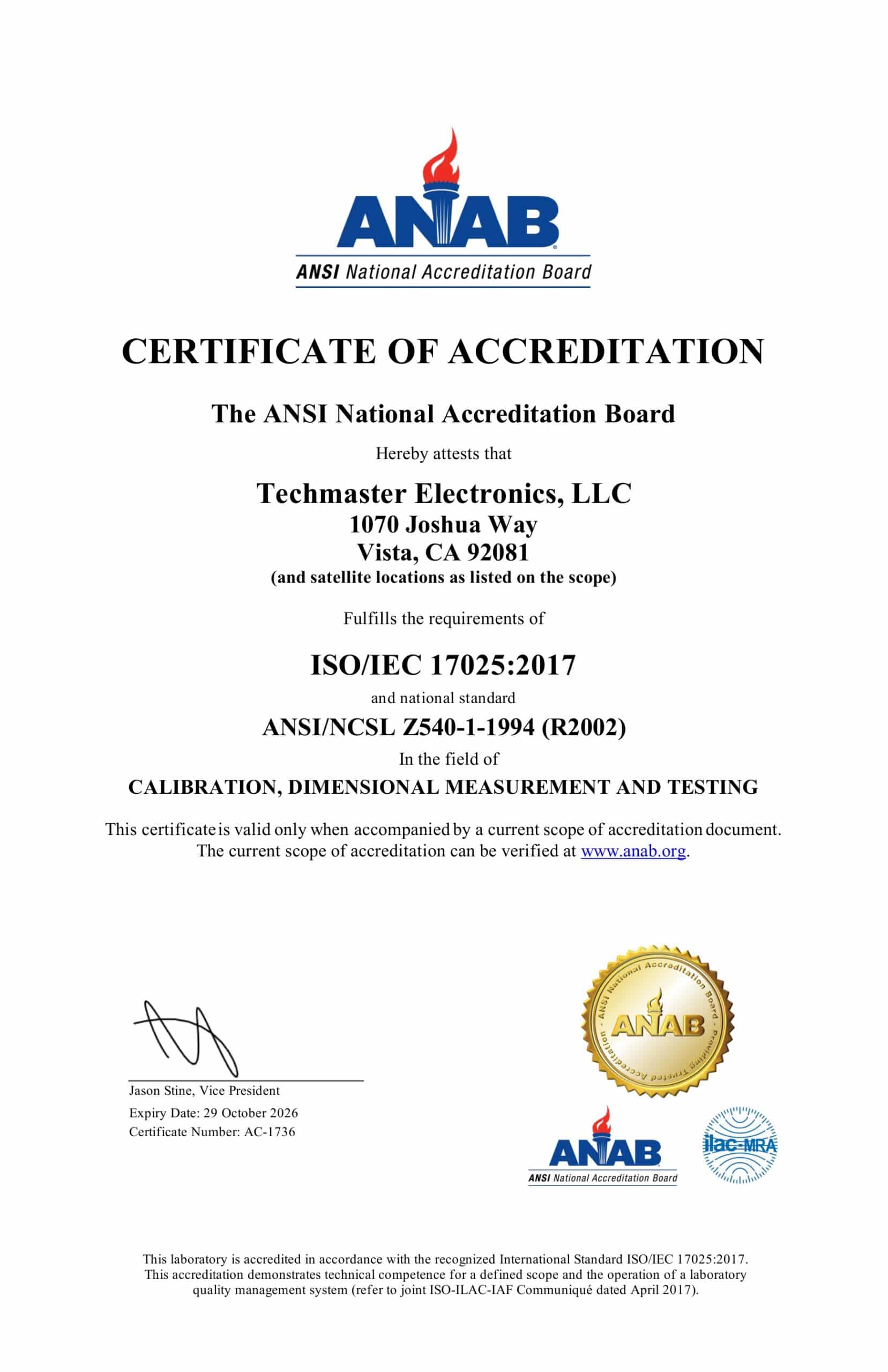
Techmaster Electronics, LLC is an ISO/IEC 17025 accredited calibration laboratory (ANAB cert AC-1736) founded in 1989. It serves the United States from five labs (four ISO/IEC 17025 accredited) in Vista, CA; Santa Clara, CA; Orlando, FL; San Antonio, TX; and Holly Springs, NC, with corporate offices in Vista, CA, and Henderson, NV.
Techmaster US provides accredited calibration services for electrical, electronic, dimensional, thermodynamic, and mechanical test equipment. In addition, mobile on-site calibration services are available for applicable equipment and services within the laboratory’s accredited scope.
With experienced technicians, reference standards, and documented calibration procedures, Techmaster US helps manufacturers and laboratories maintain reliable measurement systems while reducing unnecessary production downtime.
Frequently Asked Questions (FAQs)
1. What is battery analyzer calibration and why is it necessary?
Battery analyzer calibration is the metrological process of adjusting and verifying a tester’s voltage, current, resistance, and temperature measurement accuracy against NIST-traceable standards. Regular calibration ensures accurate cell capacity calculation, proper cell sorting, and compliance with ISO/IEC 17025 quality systems.
2. How often should a commercial battery analyzer be calibrated?
Commercial battery analyzers should be calibrated every 12 months under standard operating conditions. Units deployed in 24/7 continuous production line testing, high-current EV pack testing, or extreme thermal environments should be calibrated on a 6-month cycle to account for current shunt aging.
3. What parameters are verified during ISO/IEC 17025 battery analyzer calibration?
Accredited calibration verifies DC voltage sourcing/sensing accuracy, charge and discharge current accuracy across all ranges, AC/DC internal resistance (mΩ) at $1\text{ kHz}$, timer/timebase accuracy for capacity calculations (Ah/Wh), and thermocouple/thermistor measurement channels.
4. Why is 4-wire Kelvin sensing critical for battery internal resistance calibration?
4-wire Kelvin sensing isolates current-carrying leads from voltage-sensing leads, eliminating test lead resistance and contact resistance errors from the measurement path. This setup is essential for accurately measuring sub-milliohm internal resistance values in modern low-impedance lithium-ion battery cells.
5. What are the risks of using an uncalibrated battery analyzer in production?
Using an uncalibrated battery analyzer risks releasing defective cells with high internal resistance into production modules, creating severe thermal runaway hazards. It can also cause false rejections of conforming battery stock, generating excessive scrap costs and unnecessary supplier disputes.
6. Can Techmaster US perform on-site battery analyzer calibration?
Yes, Techmaster Electronics offers ISO/IEC 17025 accredited on-site calibration for multi-channel battery test systems and industrial battery analyzers across the United States. Our field metrologists bring precision standards directly to your facility to minimize production downtime.
Battery Analyzer Calibration Master Guide
Comprehensive technical reference for voltage sensing, charge/discharge current verification, 4-wire AC/DC internal resistance (mΩ) calibration, and ISO/IEC 17025 compliance.
CONTACT USFrequently asked questions
What is battery analyzer calibration?
Battery Analyzer Calibration is the documented comparison of a battery analyzer against NIST-traceable reference standards under ISO/IEC 17025. It quantifies the battery analyzer’s error and measurement uncertainty and confirms it performs within tolerance, with as-found and as-left data on the certificate.
How often should a battery analyzer be calibrated?
Most quality systems calibrate a battery analyzer every 12 months, or sooner after repair, overload, or before critical measurements. Set your interval from the manufacturer spec and your ISO 9001 / 13485 / AS9100 program and drift history.
Is Techmaster’s battery analyzer calibration ISO 17025 accredited?
Yes. Techmaster Electronics is ISO/IEC 17025:2017 accredited by ANAB (Certificate AC-1736). Every battery analyzer calibration is NIST-traceable and issued with a full measurement-uncertainty budget.
What is the turnaround for battery analyzer calibration?
Standard turnaround is 5 business days, with 1–2 business-day expedite available. On-site calibration removes shipping time entirely for battery analyzers that can’t leave the floor.
Do you calibrate battery analyzers on-site or in-lab?
Both. Techmaster runs five US labs (Vista CA, Santa Clara CA, Orlando FL, San Antonio TX, Holly Springs NC) and offers nationwide on-site battery analyzer calibration to minimize downtime.
References & industry standards
- ISO/IEC 17025 testing & calibration laboratory requirements
- NIST calibration services and measurement traceability
- A2LA / ANAB accreditation for calibration laboratories
External standards bodies. Techmaster Electronics is an ISO/IEC 17025-accredited, NIST-traceable calibration laboratory.

Khanh Nguyen is the Marketing Manager at Techmaster Electronics, a B2B marketing leader covering the test, measurement, and ISO/IEC 17025 accredited calibration industry in the United States.