
AC/DC Current Shunt Calibration
Accuracy across the range
How AC/DC Current Shunt calibration works
- Intake & visual inspection
- Environmental stabilization
- As-found measurement
- Comparison to NIST-traceable standards
- Adjustment if required
- As-left results & certificate
Your calibration, covered
In-lab vs on-site calibration
In-lab calibration
- Accredited bench with full reference standards
- Best achievable measurement uncertainties
- Pickup & return logistics handled
- Ideal for precision and reference work
On-site calibration
- We calibrate the AC/DC Current Shunt at your facility
- No shipping risk or transit downtime
- As-found data captured before any move
- Ideal for fixed, large or sensitive assets
In-depth guide
For managing current in high-performance systems, precision isn’t a luxury, it’s a baseline. AC/DC current shunt calibration plays a silent yet indispensable role in ensuring that every measurement, from EV battery loads to flight control circuits, is accurate, compliant, and dependable. This article breaks down why shunt calibration matters, what the risks of neglect are, and how you can choose the right service level for your industry needs.
This calibration falls under our electrical calibration service.
What Is an AC/DC Current Shunt and Why Is It Critical?
A current shunt is a precision resistor designed to measure electrical current indirectly by producing a small voltage drop proportional to the current flow. That voltage is then interpreted by a meter or data acquisition system. Depending on the environment and function, shunts can be optimized for AC, DC, or both, and may range from microamp-level devices in labs to high-current units used in industrial power systems.
Common Applications Include:
-
Electric Vehicles (EVs): Battery management and charge control
-
Aerospace: Avionics testing and flight control systems
-
Power & Energy: Grid monitoring, solar and wind energy systems
-
Electronics Manufacturing: Testing PCBs, power supplies, and embedded systems

What Can Go Wrong?
An uncalibrated AC/DC current shunt can silently introduce measurement errors that ripple across critical operations:
-
In EVs, inaccurate current readings may result in battery overcharging, posing fire or safety risks.
-
In renewable energy systems, incorrect shunt data can distort energy output metrics, impacting turbine or solar panel efficiency.
-
In aerospace applications, even minor current drift can disrupt sensitive avionics and safety-critical controls.
-
In electronics manufacturing, misreadings during PCB testing can cause undetected faults, triggering costly product recalls or rework.
In short, when your current shunt is out of calibration, every downstream decision based on its readings becomes suspect.
Why Regular Calibration Is Non-Negotiable
Like all precision instruments, shunts are prone to drift over time. Factors such as temperature fluctuations, mechanical vibration, humidity, and material aging degrade their stability. Regular calibration is essential to catch these deviations before they impact performance or compliance.
Consequences of Skipping Calibration
| Scenario | Impact |
|---|---|
| ±2% drift in shunt readings | Misinterpreted power data |
| No calibration for over 2 years | Audit failure, ISO non-compliance |
| Measurement errors cascading | System-wide diagnostic confusion |
| PCB misreadings on production line | Product recalls, increased cost of poor quality |
In the end, AC/DC current shunt calibration isn’t just about maintaining measurement accuracy, it’s about ensuring operational safety, regulatory compliance, and protecting your bottom line in high-risk, high-precision environments.
Calibration Service Levels for AC/DC Shunts
Techmaster Electronics offers three calibration service levels tailored to different needs, ensuring compliance and precision.
|
Feature |
Commercial Calibration |
ANSI/NCSL Z540.1 |
ISO/IEC 17025 |
|---|---|---|---|
|
Traceability |
NIST Traceable |
NIST Traceable |
NIST Traceable |
|
Data Reporting |
Basic certificate |
Full test data, TARs |
Data + uncertainties |
|
Industry Suitability |
General QC |
Aerospace, Defense |
Pharma, R&D, Regulated |
|
Documentation |
Minimal |
Detailed |
Comprehensive |
💡 Tip:
-
Choose Commercial if you’re focused on general quality control.
-
Choose Z540.1 if you’re serving aerospace contracts.
-
Choose ISO 17025 if you’re in pharma, R&D, or regulated sectors needing internationally recognized calibration.
Traceability and Measurement Uncertainty Explained

NIST traceability ensures your measurements align with national standards, while low uncertainty defines how much confidence you can place in each result, both are critical in AC/DC shunt calibration.
Why Low Uncertainty Matters: The Key to Shunt Accuracy
In high-precision fields like drug research or energy monitoring, even small errors can cause big problems. Just a 0.01% mistake in shunt accuracy can affect how a medical system works, or throw off power data used to run large facilities.
To lower this risk, labs use high-end tools like the Fluke 5730A calibrator, which provides error margins as low as 3.2 µV/V. That level of precision helps make sure your AC/DC current shunts stay accurate and meet industry rules.
Choosing a calibration provider that clearly reports low uncertainty and follows NIST standards is key, especially if your work depends on accurate data, passing audits, and smooth operation.
The AC/DC Shunt Calibration Process
The calibration process follows a robust, transparent, and fully documented workflow, tailored to your service level.
-
Pre-Inspection: Visual check for damage, corrosion, or wear
-
Setup: Connect to high-precision calibrators (e.g., Fluke 5730A, 3458A)
-
Measurement: Inject known currents, record voltage drops
-
Comparison: Analyze against reference values traceable to NIST
-
Reporting: Generate certificates, uncertainties, and data logs
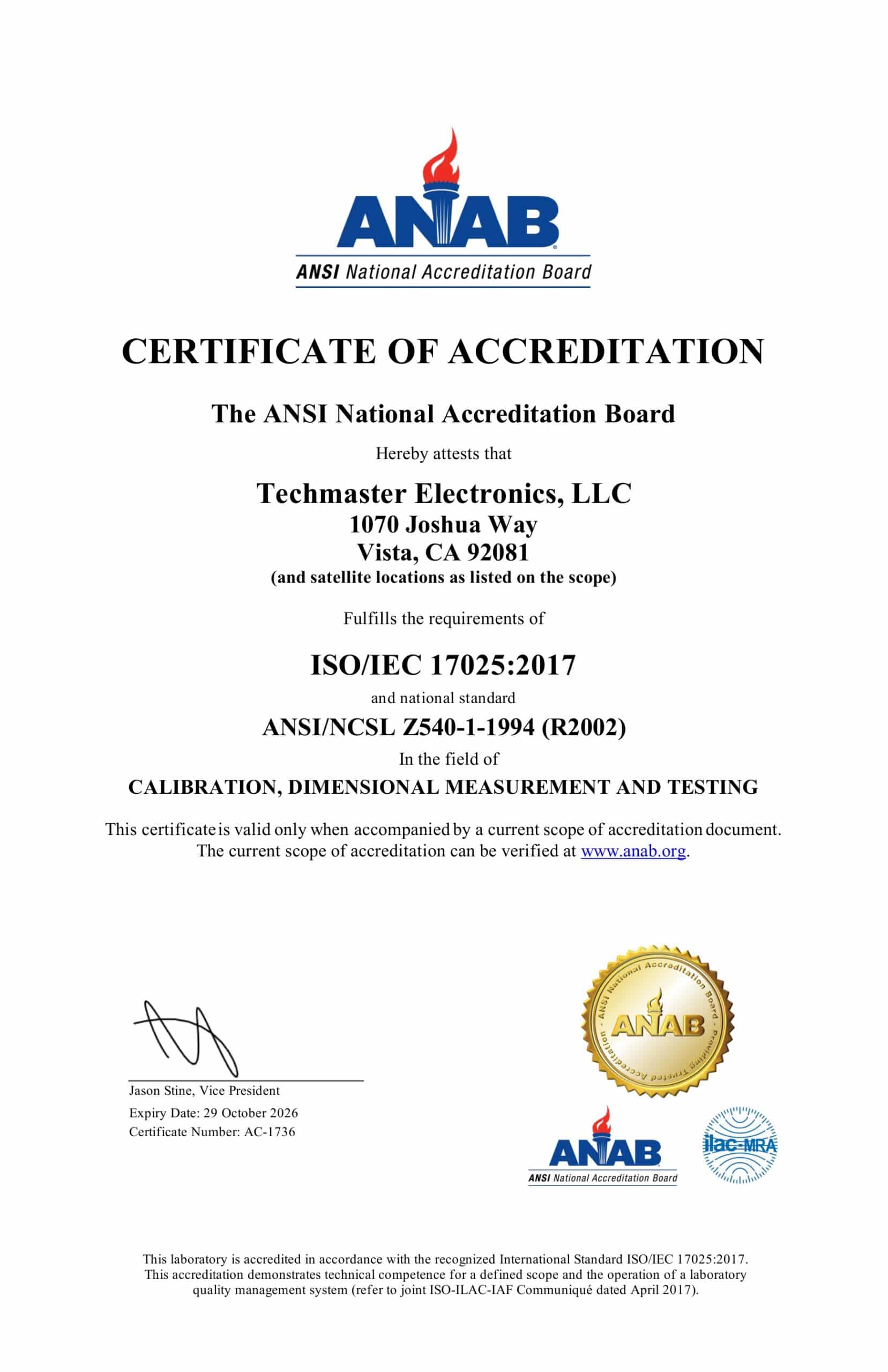
All procedures align with ISO/IEC 17025:2017, and our labs are ANAB-accredited under ILAC MRA, ensuring global recognition of results.
On-Site Calibration: Minimizing Downtime
Need calibration but can’t afford to ship or shut down? We bring the lab to you.
On-Site Shunt Calibration is ideal for:
-
Power plants or substations
-
Fixed installations or high-current setups
-
Systems that require zero downtime
✅ Benefits:
-
Minimized logistics and downtime
-
Compliance maintained (ISO 17025 standards apply on-site)
-
Faster turnaround with expert technicians on-site

Standards That Matter
Compliance isn’t a checkbox, it’s a business survival strategy. We calibrate in line with:
-
ISO/IEC 17025: The global benchmark for calibration quality
-
ANSI/NCSL Z540.1: Required by many aerospace & defense contracts
-
NIST Traceability: Non-negotiable in regulated and critical sectors
Choosing a partner who understands, and is certified for, these standards isn’t optional. It’s mission-critical.
Cost vs. Long-Term Value
The cost of AC/DC current shunt calibration varies depending on several factors, such as the type of shunt, selected service level, and calibration frequency. While the upfront expense may seem like a consideration, the long-term return on investment (ROI) is what truly matters.
Why Calibration Pays Off:
-
Fewer Errors: Accurate shunt readings reduce rework, rejects, and costly product recalls.
-
Longer Equipment Lifespan: Regular calibration preserves measurement performance and delays wear-related drift.
-
Reduced Downtime: On-site calibration services minimize operational disruption and improve equipment availability.
In short, investing in precision shunt calibration services is not just a compliance task, it’s a strategic move to protect operations, enhance reliability, and boost profitability.
Cost Optimization Strategies
Getting the most out of your calibration investment doesn’t mean spending more, it means spending smarter. Here are practical ways to lower costs without sacrificing quality:
-
Combine calibration with scheduled maintenance to minimize downtime and avoid unplanned shutdowns.
-
Use free pickup and delivery services offered by some providers for local clients (Techmaster includes this for select regions).
-
Choose the right service tier for your needs, commercial calibration may be perfectly sufficient for internal QA, saving costs compared to more advanced options.
These strategies allow you to maintain high-precision performance while optimizing your budget, proving that quality and cost-efficiency can go hand in hand.
In-House vs. Outsourced Calibration
|
Approach |
Pros |
Cons |
|---|---|---|
|
In-House |
Full control, immediate access |
High equipment and training costs |
|
Outsourced |
Expert labs, advanced tools, compliance |
Dependency on external schedules |
If you’re handling high-precision, high-risk operations, outsourcing to a certified lab like Techmaster is often more cost-effective and reliable in the long term.
How Often Should You Calibrate AC/DC Shunts?

There is no universal schedule for AC/DC current shunt calibration, the ideal frequency depends on both how the equipment is used and where it operates.
General Calibration Guidelines:
-
Standard environments: Calibration is typically recommended every 6–12 months, depending on operational load.
-
Harsh conditions: High temperatures, humidity, or continuous usage may require calibration as frequently as every 3 months.
Environmental Factors and Calibration Frequency
Environmental stressors can accelerate drift and reduce shunt accuracy. For example:
-
High humidity promotes corrosion or material degradation.
-
Thermal cycling causes mechanical stress and resistance changes.
-
Vibration affects connection integrity and internal structure.
A shunt used in a steel manufacturing plant, for instance, operates under extreme heat and mechanical vibration, necessitating recalibration every 3 months to maintain accuracy.
To establish the right schedule, it’s crucial to work with a calibration provider experienced in thermodynamic and vibration-sensitive equipment. This ensures that your calibration interval isn’t just standard, it’s strategically optimized for your specific environment.
Frequently Asked Questions
What is AC/DC current shunt calibration?
It’s the process of validating a current shunt’s accuracy by comparing it to known reference standards traceable to NIST.
What’s the difference between Z540.1 and ISO 17025?
Z540.1 is often required in U.S. defense/aerospace contracts; ISO 17025 is globally recognized, with uncertainty reporting, a must for regulated industries.
Can I get calibration on-site?
Yes. Techmaster offers ISO 17025-compliant on-site calibration for current shunts and other electrical instruments.
How often should I recalibrate? Typically every 6–12 months, or more frequently in harsh environments.
How does Techmaster ensure compliance with industry standards?
We follow ISO/IEC 17025 and ANSI/NCSL Z540.1, with full NIST traceability. Our service scope is customized to meet sector-specific requirements in aerospace, energy, life sciences, and more.
Which brands of current shunts does Techmaster calibrate?
We calibrate AC/DC current shunts from leading brands including Fluke, Keithley, Omega, and other manufacturers, always within our validated scope of services.
Final Thoughts: Accuracy Is Not Optional
In today’s high-stakes industries, precision is non-negotiable. Whether you’re managing critical power systems or navigating strict compliance requirements, ensuring your current shunts are properly calibrated is a proactive step toward operational excellence. Don’t wait for failure to uncover a measurement gap, make calibration part of your long-term strategy for accuracy, safety, and efficiency.

Oscilloscope Probe Calibration: Compensation, Attenuation and Bandwidth
Home » AC/DC Current Shunt Calibration Services for Precision TestingAn oscilloscope is only as accurate...
Oct

Gauss Meter Calibration: Hall Probes, Reference Magnets and Zero Offset
Home » AC/DC Current Shunt Calibration Services for Precision Testing Gauss meters (teslameters) measure magnetic...
Oct
How Often Calibrate a Battery Analyzer?
Home » AC/DC Current Shunt Calibration Services for Precision Testing How Often Should You Calibrate...
Oct
How to Use a Battery Analyzer: Setup, Operation & Best Practices
Home » AC/DC Current Shunt Calibration Services for Precision Testing How to Use a Battery...
Oct
Battery Analyzer Calibration: ISO/IEC 17025 Guide
Home » AC/DC Current Shunt Calibration Services for Precision Testing Battery Analyzer Calibration: ISO/IEC 17025...
Sep

Bench DMM Calibration: What a 6½-Digit Multimeter Test Actually Covers
What an accredited 6½-digit bench DMM calibration actually covers: 40–100 test points, artifact calibration vs...
Sep
Rogowski Coil Calibration: Why Flexible AC Current Probes Drift
Rogowski coil calibration verifies the coil and its integrator as one system. Here is why...
Aug
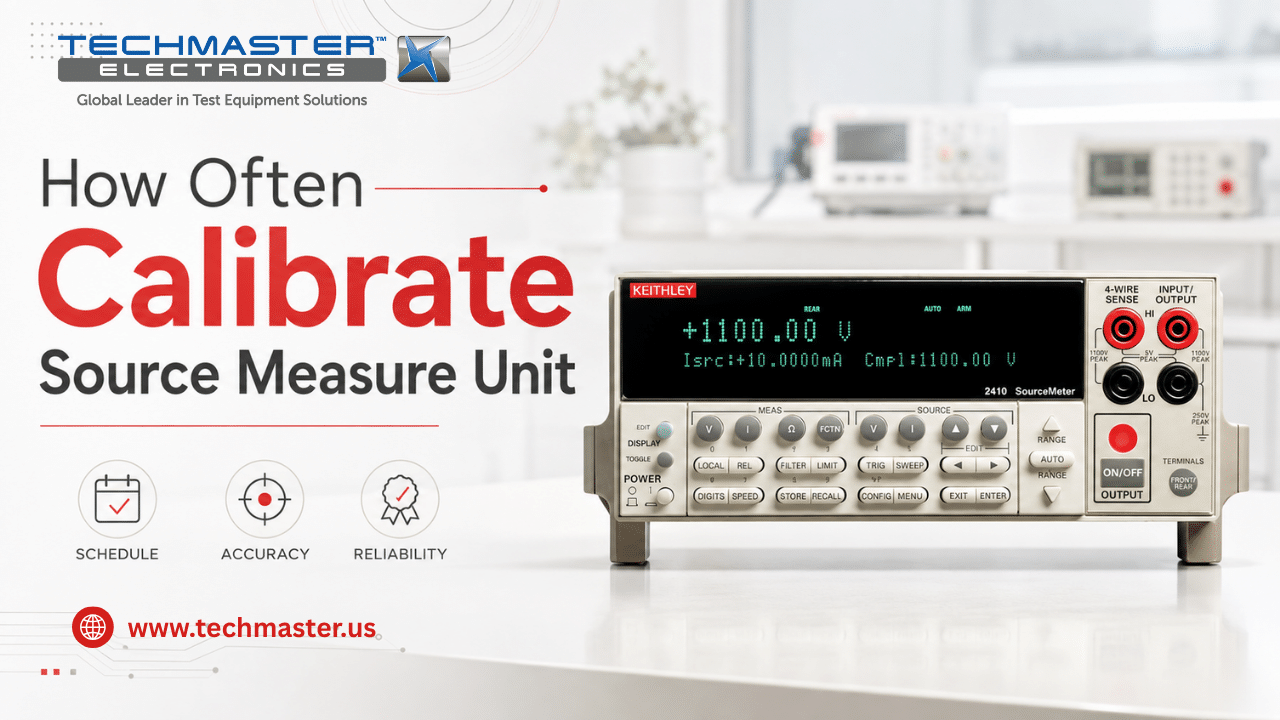
How often to calibrate a Source Measure Unit?
Home » AC/DC Current Shunt Calibration Services for Precision Testing Source Measure Unit Calibration: Intervals,...
Aug
Frequently asked questions
What is AC/DC Current Shunt Calibration?
How often should a AC/DC Current Shunt be calibrated?
What standards apply to AC/DC Current Shunt Calibration?
What is included on the certificate?
Can you calibrate the AC/DC Current Shunt on-site?
Need AC/DC Current Shunt calibration?
ANAB-accredited, NIST-traceable, fast turnaround, in-lab or on-site across the USA.
Contact us for a quoteReferences & industry standards
- ISO/IEC 17025 testing & calibration laboratory requirements
- NIST calibration services and measurement traceability
- NIST Fundamental Electrical Measurements
- A2LA / ANAB accreditation for calibration laboratories
External standards bodies. Techmaster Electronics is an ISO/IEC 17025-accredited, NIST-traceable calibration laboratory.

Khanh Nguyen is the Marketing Manager at Techmaster Electronics, a B2B marketing leader covering the test, measurement, and ISO/IEC 17025 accredited calibration industry in the United States.