
Transformer Tester Calibration
Accuracy across the range
How Transformer Tester calibration works
- Intake & visual inspection
- Environmental stabilization
- As-found measurement
- Comparison to NIST-traceable standards
- Adjustment if required
- As-left results & certificate
Your calibration, covered
In-lab vs on-site calibration
In-lab calibration
- Accredited bench with full reference standards
- Best achievable measurement uncertainties
- Pickup & return logistics handled
- Ideal for precision and reference work
On-site calibration
- We calibrate the Transformer Tester at your facility
- No shipping risk or transit downtime
- As-found data captured before any move
- Ideal for fixed, large or sensitive assets
In-depth guide
In today’s power and utility industries, the reliability of electrical measurements is non-negotiable. Even small deviations in transformer test results can lead to costly downtime, equipment failures, or safety hazards. That’s why transformer tester calibration is not just a maintenance task, it’s a critical process that guarantees the accuracy and trustworthiness of every measurement your team makes.
In this article, we’ll break down why calibration matters, what the process involves, and how Techmaster supports transformer testing equipment, featuring a real-world case study of the TILT-II Transformer Tester.
Understanding Transformer Testing Equipment
A transformer tester is an essential diagnostic tool used by field engineers and utility technicians to evaluate the condition of power transformers. These testers measure parameters like turns ratio, winding resistance, insulation, and polarity to ensure transformers are performing within specifications before and after installation.
Common examples include:
-
Turns Ratio Testers (TTRs) – verify the turns ratio between primary and secondary windings.
-
Winding Resistance Testers – detect open circuits, shorted turns, or poor connections.
-
Insulation Resistance Testers – confirm insulation health and safety margins.
-
High-Voltage or Impedance Testers – simulate operational stresses to ensure long-term reliability.
Why Calibration of Transformer Testers Is Critical
Over time, all electrical instruments drift from their factory specifications due to environmental factors, aging components, or frequent field use. This drift may seem small, but in transformer diagnostics, a few ohms of error can mislead an entire maintenance decision.
Uncalibrated transformer testers can result in:
-
False “OK” readings, leading to energizing faulty transformers.
-
Unnecessary replacements, increasing operational costs.
-
Compliance violations, as U.S. utilities are required to maintain calibration traceability under ISO/IEC 17025 and NIST standards.
-
Safety risks, including arcing or insulation failure during energization.
By keeping your testers calibrated, you protect not only the accuracy of your data but also the integrity of your entire electrical testing program. In the U.S., calibration records are also part of standard quality audits under ANSI, IEEE, and NERC utility regulations.
Equipment Categories & Calibration Requirements
The Calibration Process: Step by Step
At Techmaster, we follow a systematic process to calibrate transformer tester devices according to international standards:
1. Preparation
Each device is visually inspected and verified for physical condition. Test leads, connectors, and batteries are checked for wear. Environmental conditions such as temperature and humidity are controlled to meet standard laboratory ranges (typically 23 °C ± 2 °C, 45–55% RH).
2. Verification with Reference Standards
The tester’s measurements are compared against traceable calibration standards, reference transformers, precision resistors, and inductors that have known, certified values. Techmaster’s lab maintains traceability to NIST (National Institute of Standards and Technology), ensuring every result can be validated internationally.
3. Adjustment and Documentation
If deviations are found beyond acceptable tolerance, the technician adjusts internal parameters or recommends service. All data is recorded in the calibration certificate, including measured values, uncertainty, and traceability chain.
4. Certification and Labeling
Upon completion, the instrument receives an ISO 17025-compliant calibration certificate, a calibration label with the next due date, and digital record storage for client audits. The report includes before/after data to help QA teams track long-term stability.
5. Scheduling and Reminders
Techmaster’s asset-tracking system can automatically notify clients when a tester is approaching its next calibration due date, minimizing downtime and ensuring uninterrupted compliance.
Case Study: TILT-II Transformer Tester Calibration
To illustrate, let’s look at one of the most common field instruments used by utility technicians, the TILT-II Transformer Tester by HD Electric Company.

Device Overview
The TILT-II is designed for quick field diagnostics of de-energized distribution transformers. It automatically identifies:
-
Short circuits: resistance ≤ 10 Ω
-
Open circuits: resistance ≥ 10 Ω
-
Transformer OK: inductance ≥ 800 µH
The simplicity of its interface makes it a favorite among linemen. However, behind that simplicity lies a precise internal circuit that must remain within tolerance to guarantee accurate readings.
Calibration Challenges
One challenge with field testers like the TILT-II is component drift due to vibration, temperature swings, and battery aging. Over time, these factors cause the device to misinterpret borderline results, labeling a transformer as “OK” when it’s not, or vice versa.
Techmaster’s Calibration Solution
A U.S. utility partner recently sent multiple TILT-II units to Techmaster’s accredited laboratory for verification. Our engineers connected each tester to a reference inductance and resistance bank calibrated to NIST standards.
Results showed that two units had resistance thresholds off by up to 1.7 Ω, which could easily trigger false “short” indications in the field. After recalibration, the testers were adjusted to within ± 0.2 Ω of nominal tolerance.
The outcome was immediate:
-
Field crews reported fewer re-tests and false alarms.
-
QA teams gained confidence in inspection data.
-
The utility reduced troubleshooting time by 15%, saving both labor and vehicle hours.
This case demonstrates how a well-planned transformer tester calibration program directly impacts operational efficiency and safety.
Techmaster’s Calibration Capabilities for Clients
Techmaster provides comprehensive calibration and verification services for transformer testing equipment across the United States. Our services are trusted by electrical utilities, testing contractors, and manufacturing plants that demand precise, traceable results.
Our capabilities include:
-
ISO/IEC 17025-accredited laboratory services
-
Full traceability to NIST standards
-
Expertise in transformer testers, insulation testers, TTRs, and power analyzers
-
Field calibration and pick-up services for utility clients
-
Fast turnaround (typically 3–5 business days)
-
Secure digital certificates and asset tracking
Unlike general service centers, Techmaster specializes in electrical measurement systems, ensuring every calibration aligns with U.S. regulatory and safety requirements. Our team supports QA managers with audit-ready documentation, and technicians with clear, actionable feedback on their equipment.
Selecting the Right Transformer Tester and Managing Calibration
Calibration is only part of the equation. To ensure your testing program remains consistent and compliant, it’s vital to select equipment designed for accuracy and ease of verification.
Engineers & Technicians
-
Look for testers with auto self-test or calibration check modes.
-
Choose rugged designs with protected input terminals and clear status indicators.
-
Keep calibration intervals consistent, typically every 12 months or after any repair.
QA Managers & Procurement Teams
-
Verify that each vendor provides ISO 17025 calibration certificates traceable to NIST.
-
Request uncertainty data and before/after results.
-
Maintain a centralized calibration record for audits.
New Users
-
Understand that even a brand-new tester should be verified before first use.
-
Keep your calibration sticker visible and log all test dates.
-
Ask your service provider (like Techmaster) to set up reminders for future calibration schedules.
When you calibrate transformer tester devices regularly, you build a foundation of data integrity and reduce long-term maintenance costs. Calibration becomes part of your asset management strategy, not an afterthought.
Future Trends in Transformer Tester Calibration
The next generation of transformer testers is becoming smarter and more connected. IoT-enabled devices can automatically upload measurement data to the cloud, while AI-based calibration systems predict drift before it occurs.
For example, emerging systems now allow:
-
Remote verification via cloud-linked calibration modules.
-
Predictive alerts for when instrument readings start to deviate.
-
Integration with CMMS and ERP systems for automatic record-keeping.
Techmaster is actively investing in these technologies, preparing to deliver AI-assisted calibration workflows that enhance accuracy and reduce turnaround times. As the U.S. power grid modernizes, our goal is to help clients transition smoothly into data-driven reliability programs.
Frequently Asked Questions (FAQ)
1. Does a new tester need calibration before first use?
Yes. Even new devices can drift slightly during shipping or storage. Always verify calibration before deployment.
2. How often should transformer testers be calibrated?
Typically once every 12 months, or sooner if the instrument is used daily in harsh field environments.
3. Can calibration be performed on-site?
Yes, Techmaster offers on-site field calibration using portable standards. However, lab calibration remains the most accurate option.
4. What documentation should I keep?
Maintain a calibration certificate, uncertainty data, and traceability statement for each instrument.
5. What happens if calibration is skipped?
You risk invalid data, failed audits, and costly re-testing, far outweighing the cost of scheduled calibration.
Keep Your Transformer Testers Accurate with Techmaster
🧭 ISO/IEC 17025 Certified • ⚡ Fast Turnaround (3–5 days) • 🧰 Field & In-Lab Service • 📊 Audit-Ready Certificates
Schedule Your Calibration TodayFrequently asked questions
What is Transformer Tester Calibration?
How often should a Transformer Tester be calibrated?
What standards apply to Transformer Tester Calibration?
What is included on the certificate?
Can you calibrate the Transformer Tester on-site?
Need Transformer Tester calibration?
ANAB-accredited, NIST-traceable, fast turnaround, in-lab or on-site across the USA.
Contact us for a quoteReferences & industry standards
- ISO/IEC 17025 testing & calibration laboratory requirements
- NIST calibration services and measurement traceability
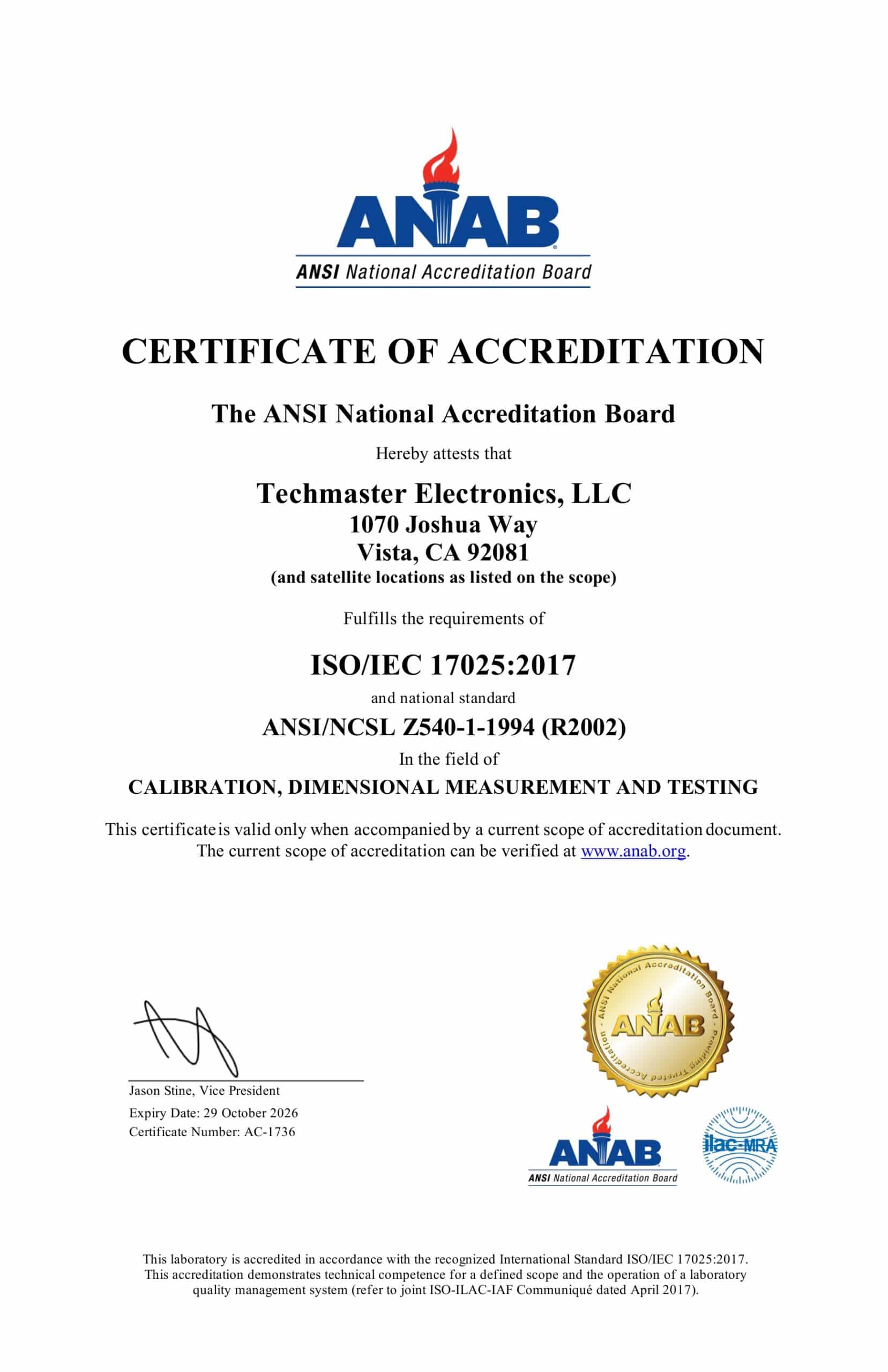
- A2LA / ANAB accreditation for calibration laboratories
External standards bodies. Techmaster Electronics is an ISO/IEC 17025-accredited, NIST-traceable calibration laboratory.

Khanh Nguyen is the Marketing Manager at Techmaster Electronics, a B2B marketing leader covering the test, measurement, and ISO/IEC 17025 accredited calibration industry across the US and Vietnam markets.