
Impulse Heat Sealing Calibration
Why calibration intervals matter
How Impulse Heat Sealing calibration works
- Intake & visual inspection
- Environmental stabilization
- As-found measurement
- Comparison to NIST-traceable standards
- Adjustment if required
- As-left results & certificate
Your calibration, covered
In-lab vs on-site calibration
In-lab calibration
- Accredited bench with full reference standards
- Best achievable measurement uncertainties
- Pickup & return logistics handled
- Ideal for precision and reference work
On-site calibration
- We calibrate the Impulse Heat Sealing at your facility
- No shipping risk or transit downtime
- As-found data captured before any move
- Ideal for fixed, large or sensitive assets
In-depth guide
Impulse Heat Sealing Solutions: Ensuring Strong Seals and the Vital Role of Calibration

In high-tech manufacturing, medical, and food sectors, packaging does more than just wrap a product. In fact, it is a technical process that protects product quality, prevents contamination, and extends shelf life. Impulse Heat Sealers act as the final “gatekeeper.” These machines create airtight seals that isolate the product from harmful environmental factors. This technology works by using a quick electric pulse to heat a wire and then cooling the plastic under pressure to set a permanent seal. However, to meet global quality standards, businesses cannot rely on guesswork. Impulse Heat Sealing Calibration is a must. It ensures all settings stay within safe limits, which prevents batch failures.
1. What is Impulse Heat Sealer?
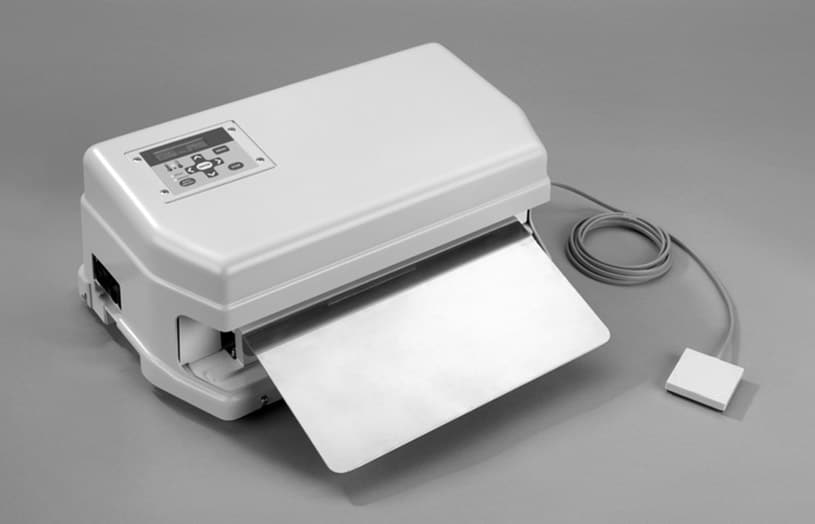
How it Works:
- Placement: Plastic film (like a bag) is placed between a heating element (nichrome wire) and a counter surface.
- Impulse: A short electrical pulse heats the wire to welding temperature in milliseconds.
- Pressure & Cooling: Jaws press the material together while the wire heats, then hold it while the wire cools rapidly, allowing the plastic to fuse into a bond.
- Cut (Optional): Many models have a cutter to trim excess film after sealing.
2. Core Applications in Demanding Industries
Applications in High-Demand Industries
Pulsed heat sealing systems are widely used due to their compatibility with a wide variety of specialized packaging films.
Medical & Pharmaceutical Packaging
Electronic Sensitivity Protection (ESD)
Complex Multilayer Materials
2.1. Medical Device and Pharmaceutical Packaging
-
Ensuring Constant Sterility: For surgical tools or medicine, even a tiny leak can lead to germs.
-
Precise impulse technology creates smooth seals without air bubbles. As a result, it meets the strictest safety standards.
-
Cleanroom Use: These devices fit well in clean production lines. This is because they do not create dust or harmful fumes during work.
2.2. Protection of Sensitive Electronics (ESD)
-
Stopping Rust and Moisture: Circuit boards (PCBs) and chips need vacuum or anti-static bags.
-
A calibrated seal stops air leaks completely. Therefore, it protects parts from rust during storage and global shipping.
2.3. Better Use of Multi-Layer Materials
-
Handling Complex Films: Modern packaging often uses thin but multi-layered films like Foil or PE. Importantly, each layer melts at a different heat level.
-
Balancing Heat: Impulse sealing allows for very fine heat changes. Consequently, you can melt the inner glue layer without burning the outer film. This allows companies to save money by using thinner materials while keeping the seal strong.
3. The Challenge of Consistency and the Role of Impulse Heat Sealing Calibration
In large-scale production, small errors hurt quality. An uncalibrated machine might make seals that “look fine” but fail under pressure.
3.1. Why Calibrate Heat and Time?
WHY IS CALIBRATION ESSENTIAL?
These three indicators highlight why precise calibration is critical for impulse heat sealing systems.
INTEGRITY
Required seal tightness to pass leak and burst testing.
ACCURACY
Maximum allowable temperature deviation for consistent seals.
SCRAP REDUCTION
Fewer rejected batches caused by weak or damaged seals.
-
Part Wear: Heating wires and sealing components gradually degrade after thousands of operating cycles. As a result, the temperature displayed on the controller may no longer reflect the actual heat delivered at the seal bar. Routine calibration verifies that a set temperature, such as 180 °C, is truly achieved at the sealing surface, ensuring consistent seal quality over time.
-
Controlling Cooling Time: Cooling time is a critical yet often overlooked parameter. If the sealing bar releases too early, before the plastic has fully solidified, the seal can weaken or fail entirely. Calibration corrects this risk by synchronizing the timer settings with real-world cooling behavior, guaranteeing durable, repeatable seals in every cycle.
3.2. Meeting Quality Standards (ISO, GMP, FDA)
Global auditors need proof that your equipment is under control. A Calibration Certificate serves as a legal document. In addition, it proves your process meets standards, which helps you pass audits from global partners.
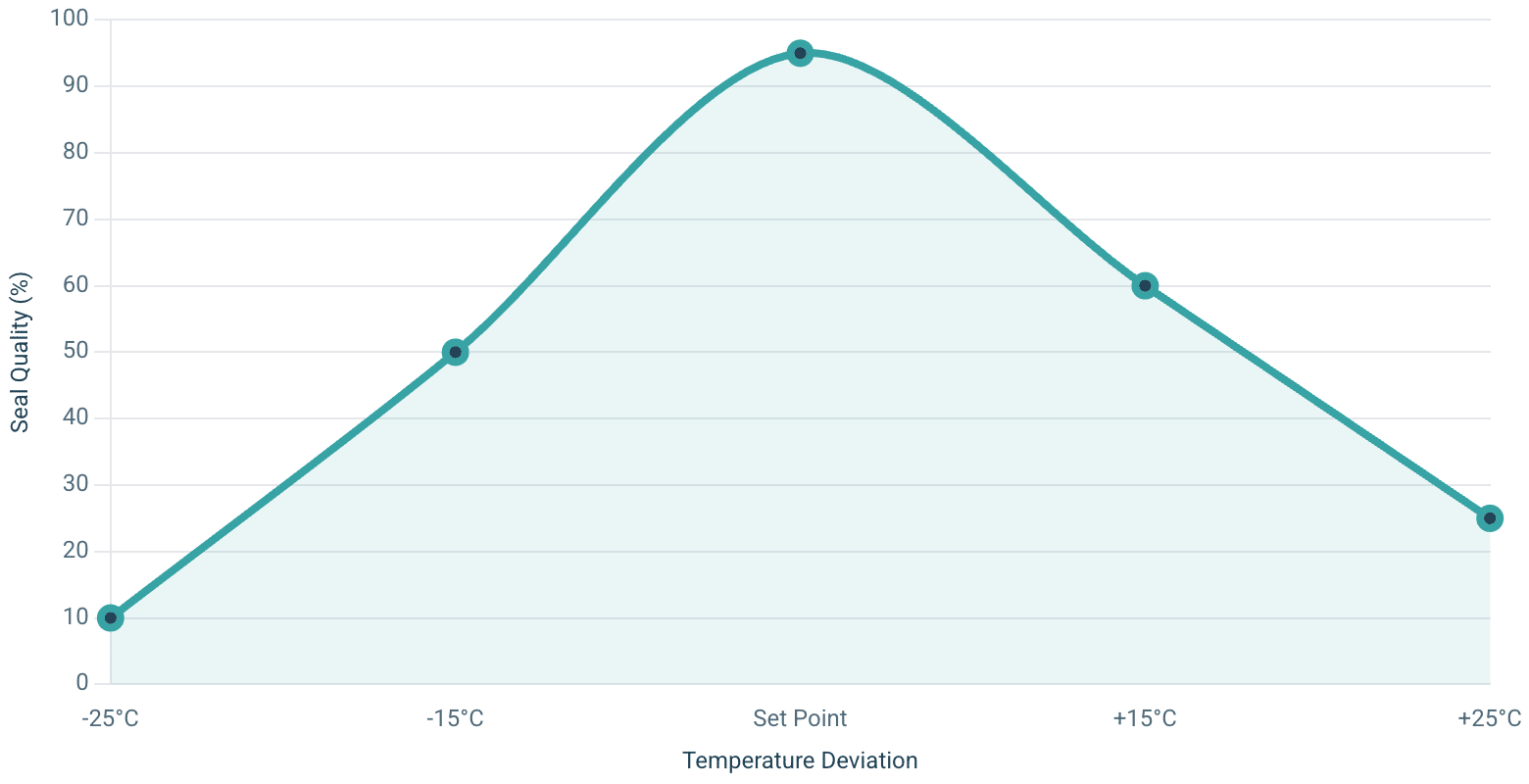
CONSEQUENCES OF TEMPERATURE DEVIATION
Even small deviations between set temperature and actual sealing bar temperature can significantly weaken seal strength or damage materials.
THREE CRITICAL PARAMETERS
Heat impulse sealing quality depends on three tightly controlled variables.

4. Professional Impulse Heat Sealing Calibration Steps
CALIBRATION VERIFICATION PROCESS
Visual inspection and baseline data review.
Real-time temperature and force measurement.
Fine-tuning T, P, and t to specification.
Verification and issuance of calibration certificate.
To get accurate results, experts use tools that are much more precise than the machine itself.
-
Live Heat Testing: Technicians use tiny heat sensors to record the temperature at the exact moment of the electric pulse.
-
Pressure Check: Experts use special sensors to make sure the sealing force is even from one end of the bar to the other. This avoids weak spots at the ends of the seal.
-
Time Check: Specialists use digital timers to check the accuracy of the electronic controller and the cooling phase.
-
Seal Strength Test: After the machine is calibrated, staff test bag samples on a pull-tester. This confirms the seal holds up under pressure.
-
Official Records: Finally, the service provider gives a detailed report and a dated calibration sticker for the machine.
Conclusion
Do you need to improve your packaging process or calibrate your tools? Contact our technical team today for a full solution.
INVEST IN SEAL QUALITY
Proper calibration ensures repeatable sealing performance, regulatory compliance, and long-term production reliability.
Frequently asked questions
What is Impulse Heat Sealing Calibration?
How often should a Impulse Heat Sealing be calibrated?
What standards apply to Impulse Heat Sealing Calibration?
What is included on the certificate?
Can you calibrate the Impulse Heat Sealing on-site?
Need Impulse Heat Sealing calibration?
ANAB-accredited, NIST-traceable, fast turnaround, in-lab or on-site across the USA.
Contact us for a quoteReferences & industry standards
- ISO/IEC 17025 testing & calibration laboratory requirements
- NIST calibration services and measurement traceability
- A2LA / ANAB accreditation for calibration laboratories
External standards bodies. Techmaster Electronics is an ISO/IEC 17025-accredited, NIST-traceable calibration laboratory.

Khanh Nguyen is the Marketing Manager at Techmaster Electronics, a B2B marketing leader covering the test, measurement, and ISO/IEC 17025 accredited calibration industry across the US and Vietnam markets.