
TL;DR: AS9100 uses the same clause as ISO 9001, 7.1.5, but aerospace audits go deeper in six places: prime flow-downs (ANSI Z540.3, 4:1 TUR, approved-lab lists), calibration supplier approval with objective evidence, OOT impact analysis reaching delivered product, contract-driven record retention (often 7–10+ years), and explicit traceability and uncertainty evidence. A verified ISO/IEC 17025 accredited scope is the document that closes most of it.
If you supply aerospace primes, your calibration program answers to three masters at once: AS9100, your customer’s purchase-order clauses, and your registrar. Here’s where each one raises the bar past a standard ISO 9001 audit, and the paperwork that satisfies all three.
What does AS9100 add to calibration beyond ISO 9001?
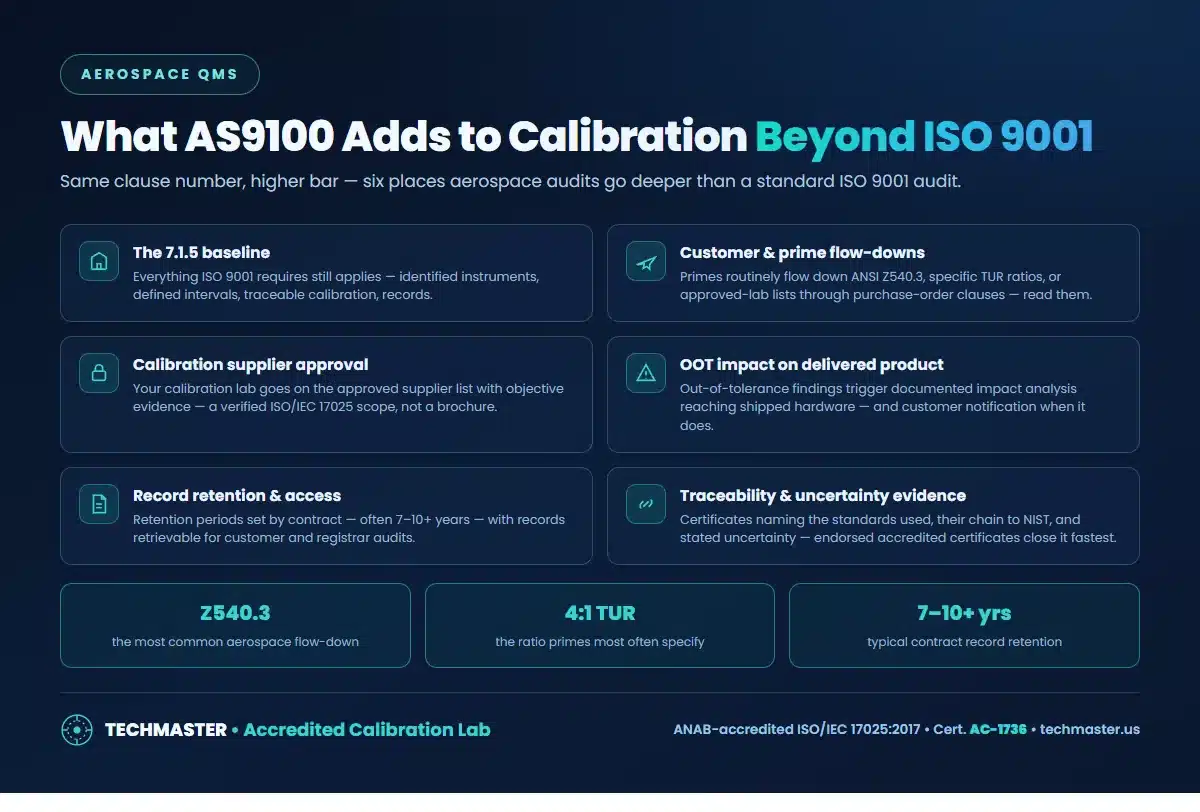
The ISO 9001 clause 7.1.5 baseline still applies in full: identified instruments, defined intervals, traceable calibration, protected records. AS9100 then adds teeth. Supplier control: your calibration lab goes on the approved supplier list with objective evidence of competence, a verified accredited scope from the ANAB or A2LA directory, not a brochure claim (how to verify one: what is ISO/IEC 17025 accreditation). OOT rigor: an out-of-tolerance finding triggers documented impact analysis that reaches shipped hardware, with customer notification when product is affected, the aerospace version of the OOT playbook. Records: retention follows contract, commonly 7–10+ years, retrievable for customer and registrar audits alike.
What do primes actually flow down?
Purchase-order clauses are where the real requirements live. The most common: ANSI Z540.3 compliance for the calibration program, the standard compared in Z540.3 vs ISO 17025, a specified TUR (usually 4:1) or guard-banded decision rules where that ratio isn’t achievable, endorsed accredited certificates with data, and occasionally an approved-laboratory list naming who may calibrate. Read the QA clauses on every PO; they bind your calibration purchasing whether or not your quality manual mentions them.
What evidence closes the audit fastest?
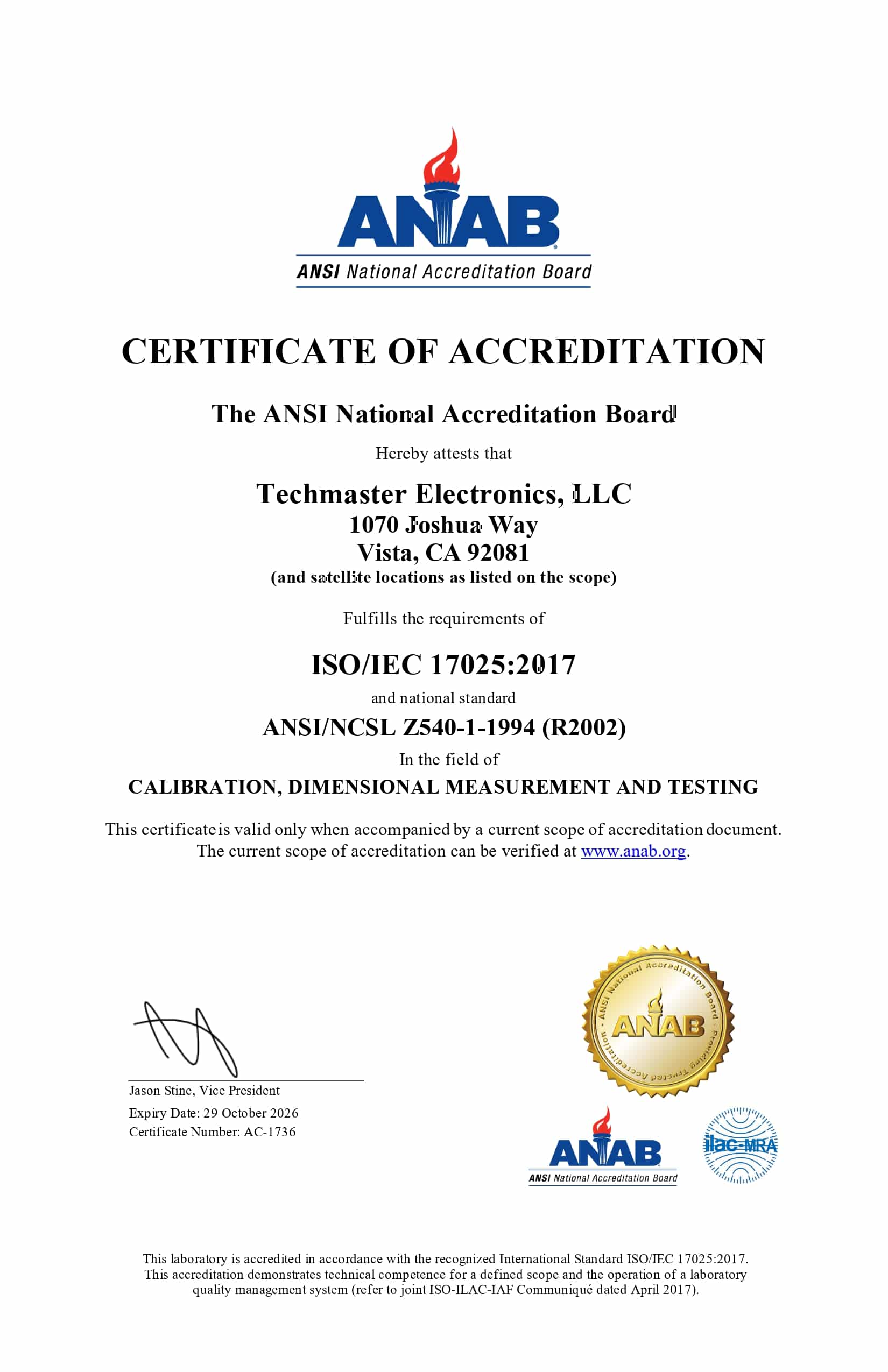
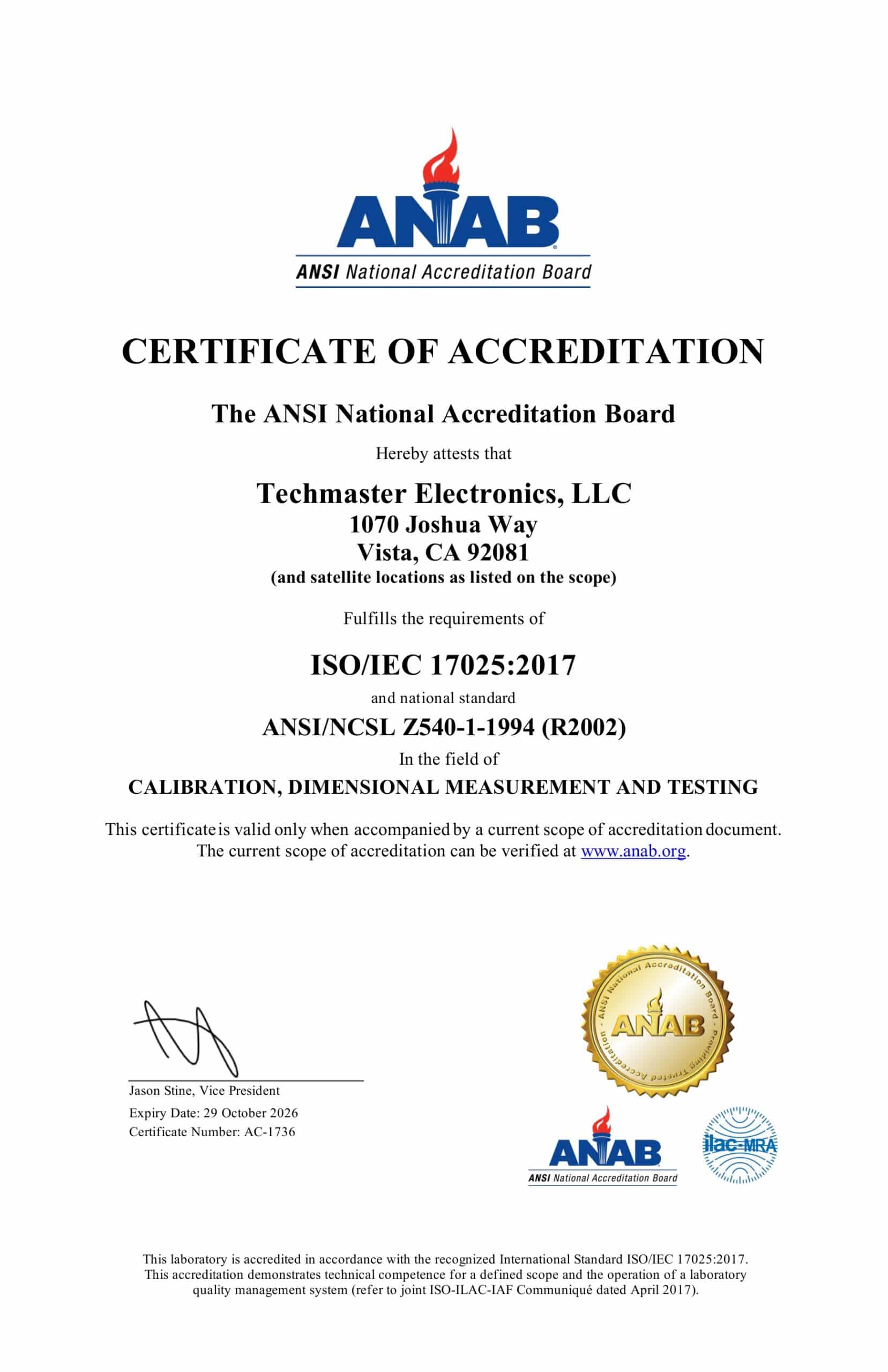
Three documents: the lab’s accredited scope (verified in the accreditation-body directory, filed with your ASL record), endorsed accredited certificates with as-found/as-left data, uncertainty, and the standards used with their chain to NIST (fields explained in how to read a calibration certificate and what NIST-traceable means), and your own recall-system records showing zero overdue in use. Techmaster supports aerospace suppliers across all of it: ANAB-accredited ISO/IEC 17025:2017 (Cert. AC-1736), Z540-level certificates, and full data on every accredited cert.
Frequently asked questions
Does AS9100 require accredited calibration?
Not in so many words, but in practice, yes for most suppliers. AS9100 requires you to control calibration suppliers with objective evidence of competence, and aerospace primes routinely flow down requirements for ISO/IEC 17025 accredited calibration or ANSI Z540.3 compliance through purchase-order clauses. A verified accredited scope is the evidence that closes both.
What is the difference between AS9100 and ISO 9001 calibration requirements?
The clause is the same, 7.1.5, monitoring and measuring resources, but AS9100 audits go deeper: calibration providers must be on your approved supplier list with evidence, out-of-tolerance findings must trace their impact to delivered product with customer notification when affected, and record retention follows contract terms, often 7–10+ years.
What is ANSI Z540.3 and why do primes flow it down?
ANSI/NCSL Z540.3 is a US calibration-program standard focused on measurement decision risk, it limits the probability of accepting an out-of-tolerance instrument (commonly 2% max false-accept). Primes flow it down because it governs the calibration program’s decision rules, which ISO/IEC 17025 alone does not mandate.
What TUR do aerospace customers expect?
4:1 is the ratio most commonly specified, the calibration standard should be at least four times more accurate than the tolerance being verified. Where 4:1 isn’t achievable on modern instruments, Z540.3-style guard-banding manages the decision risk instead, and the certificate should say which approach applied.
The bottom line
AS9100 calibration compliance is ISO 9001 plus evidence: approved suppliers with verified scopes, OOT trails that reach product, and retention that honors the contract. Choose a lab that produces that evidence natively, the vetting steps are the 12-point checklist.
Get an accredited calibration quote
ANAB-accredited ISO/IEC 17025:2017 (Cert. AC-1736) • 5 US labs • 5-day standard, 1–2 day expedite • in-lab or on-site.
Request a quote
Khanh Nguyen is the Marketing Manager at Techmaster Electronics, a B2B marketing leader covering the test, measurement, and ISO/IEC 17025 accredited calibration industry across the US and Vietnam markets.